

Illustrative patient discussing an oral appliance and care coordination with a dental clinician
Specialized Care

Custom Sleep Apnea Appliances in Acton

Sleep sometimes comes up during an ordinary dental check-up. For adults in Acton, here is what happens next: a medical sleep assessment first, then, if your physician agrees, a dental review of whether a custom appliance could suit you.

It came up in the dental chair

From a passing comment to a proper plan

You mention you are always tired, or that your partner complains about snoring, and the conversation turns to sleep. A dentist cannot diagnose sleep apnea, but can suggest you talk to your physician. That medical assessment is the step that decides what is going on and what treatment fits.

For some adults diagnosed with obstructive sleep apnea, the physician may consider a custom oral appliance. Most designs sit over the upper and lower teeth and ease the lower jaw forward overnight, helping keep the airway open. The dental assessment then checks your teeth, gums and jaw. Later, the medical team confirms whether the treatment is controlling the condition.

If you are coming from Acton, bring any sleep results and your physician's advice once you have them, and mention whatever treatment you already use. We will explain dental suitability, the possible records and how we liaise with your sleep-care provider or arrange a referral, without interrupting care already in place.

Learn the next steps
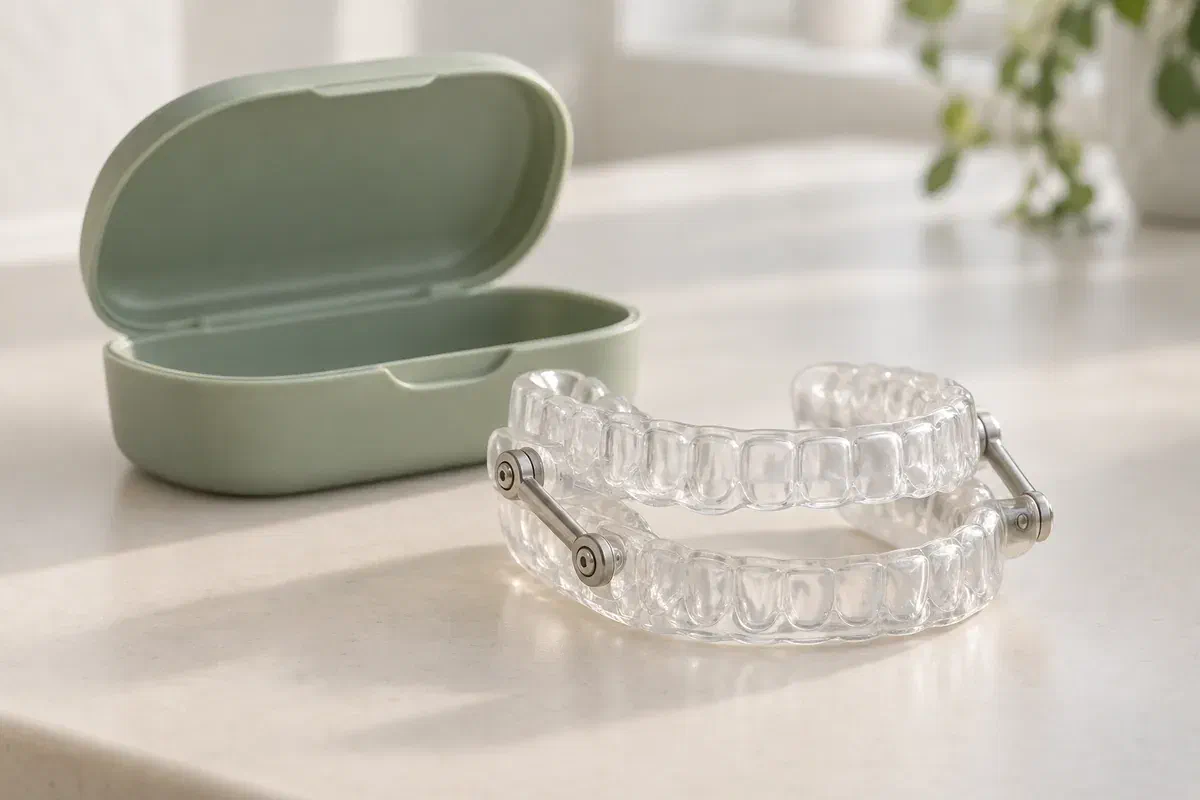
Illustrative connected upper and lower oral-appliance trays beside a pale sage storage case
Where things stand for you

Three situations, three different first steps

Knowing if a physician has already studied your sleep helps us point you the right way. The dental team handles appliance questions; the diagnosis belongs to your physician.

Tired and snoring, but never assessed

Witnessed pauses in breathing, waking unrefreshed, or nodding off in the afternoon should be raised with your family doctor. Snoring may or may not signal sleep apnea, and only medical assessment can say. Do not let a quieter night convince you all is well.

Diagnosed, but treatment has stalled

Describe what you were prescribed and why it is not working for you. Your sleep-care team can help solve those problems and advise whether an oral appliance belongs in the plan, alone or alongside other treatment. Keep up the current therapy for now.

Dental issues you already know about

Mention worn or loose teeth, gum problems, dentures, implants or jaw soreness. Any of these can affect whether an appliance is a sensible choice and how it would be made. Ask whether dental treatment comes first and how your bite would be monitored.

The Canadian Dental Association holds that snoring or suspected obstructive sleep apnea calls for medical assessment, with the dentist collaborating with the physician, before oral appliance therapy is considered.

Why the order matters

Medical answers first, so the dental work is worth doing

Following the right sequence spares you from investing in a device that may not suit your diagnosis. Once your physician has assessed you, a consultation lets you ask why an appliance could make sense, how it compares with other treatments and what its limits are. A small, quiet device is appealing, yet the deciding point is whether it controls the condition.

It also sets out the team. The dental side fits the appliance, adjusts it and looks after your teeth. The medical side decides how and when breathing is retested. Agreeing on that before fabrication keeps everyone, including you, clear on the next step.

Patient information: AASM and AADSM — custom appliances, dental oversight, and follow-up sleep testing

A choice your physician supports

Your sleep results and recommendations guide the decision; ask if anything more would help. The appliance should be chosen because it suits your diagnosis and history, with your sleep physician involved, not simply because it seems easier.

An honest look at your teeth

Ask how the appliance would stay put and whether your gums and jaw would tolerate it. Mention planned dental work and any other appliance. These findings can change the timing or design, or bring in another provider.

A defined checkpoint

Ask when the response will be measured and how. Better sleep and less snoring are good signs but cannot confirm control on their own. Find out what the next step is if the result falls short.

The route from Acton

After the medical assessment, four dental stages

Timing follows your physician's recommendations and our findings. Ask early about each stage and its fees, from assessment and fabrication to adjustments, dental reviews and the sleep follow-up arranged by your physician.

  1. Review the medical findings

    We read through the sleep study, your medical background and the physician's advice, and you describe any difficulty with current treatment. We confirm how your physician will be kept informed and which treatment continues in the meantime.

  2. Check suitability and take records

    Your teeth, gums, restorations and jaw movement are examined. If an appliance looks appropriate, the clinician explains the design and the impressions or scans needed, and whether a dentist with suitable training or a referral is involved.

  3. Fit and adjust as directed

    At delivery, the clinician confirms a comfortable fit and shows you how to wear, remove, clean and store the device. Adjust it only as you are told. Moving it forward yourself to quiet snoring faster can cause discomfort or bite changes.

  4. Confirm the effect, then keep reviewing

    Your physician arranges testing of effectiveness, which may include another sleep study. Dental reviews follow the appliance and your teeth and bite. Ask how results are passed between offices and what happens if treatment is not enough.

Once you are wearing it

Simple care, early reporting, regular checks

Your instructions depend on the appliance and plan. Keep both the dental and sleep-care contacts at hand so each kind of concern goes straight to the right clinician.

Looking after the appliance

Follow your instructions on wear, adjustment, cleaning and storage. Keep it in the case when it is out of your mouth and bring it with you to reviews. A crack or a loose fit means a phone call to us for interim advice; household repairs can make things worse.

Tooth, gum and jaw changes

Tell us about sore teeth, tender gums, jaw ache that does not ease, or a feeling that your teeth come together differently. Ask at fitting which symptoms mean stopping use and being seen. Never force the device in or keep adjusting it when it feels wrong.

Updates to your physician

Report returning symptoms, difficulty using the appliance and new health issues. Attend follow-up testing even if you feel fine. If you cannot keep wearing it, ask promptly what treatment to use so sleep apnea is not left unmanaged.

Patient information: American Academy of Dental Sleep Medicine — appliance discomfort and dental effects · NHLBI — sleep deficiency and its effects on driving and daily function

Acton treatment options

An appliance is one possibility, not the default.

What suits you reflects the kind and severity of your sleep apnea, your health, your response to treatment so far and your dental condition. Your physician weighs these alongside the dental findings.

When it is the recommended medical treatment

Positive airway pressure, with support

Raise mask, comfort or routine problems with your sleep-care team before stopping. They may adjust equipment, offer support or discuss alternatives. A dental consultation should not override their recommendation on its own.

When medical and dental assessments support it

A custom appliance, coordinated and reviewed

Go through the design, its limitations, the adjustment plan and the testing your physician intends. Ask how dental effects will be followed over the years. A good fit matters, but it does not guarantee control of sleep apnea for everyone.

When another or additional approach is needed

Other medically guided measures

Based on your diagnosis and response, your physician may suggest other measures or a specialist. Ask how they fit with prescribed treatment and when reassessment is due. Lifestyle and position changes should not be relied on in place of effective therapy without review.

Patient information: NHLBI — sleep-apnea treatment options and individualized medical care

First-time questions

Getting from a hunch to a treatment plan

Come with whatever sleep information you have, even if it is only a partner's description, and we will help you see where the dental part fits.

(905) 876-4488
My dentist mentioned sleep apnea. Does that mean I have it?
No. A dentist may notice things worth raising with your physician, such as snoring complaints or daytime tiredness, but only a medical assessment can diagnose sleep apnea. Ask your family doctor about next steps.
Do I need a referral from my doctor to discuss an appliance?
Ask the clinic about its process. Either way, your physician’s diagnosis and recommendations should be in place before an appliance is planned, and the dental team will want to coordinate with them.
What happens if the sleep assessment shows I do not have sleep apnea?
Your physician will explain the results and any other causes of your symptoms. A sleep apnea appliance would not be appropriate without that diagnosis. If snoring alone is the concern, ask your physician what they recommend.
Can I start the dental assessment while I wait for my sleep study?
Talk to us and your physician. It is generally best for the medical findings to guide whether an appliance is considered, so the dental work is planned around the right treatment.
Will my regular dental check-ups change once I have an appliance?
You will likely have additional reviews to check the appliance and watch for changes in your teeth and bite. Keep routine dental care going too, and bring the appliance to visits.
Is there anything I should avoid doing with the appliance?
Avoid adjusting it beyond instructions, repairing it yourself, or using it to replace prescribed treatment without advice. Also avoid hot water or harsh cleaners unless your instructions allow them, and keep it away from pets.
Sleep appliance consultations for Acton

Once your physician has weighed in, let's talk.

Reach our Bronte Street practice when you have a diagnosis and recommendations. We will review dental suitability, explain any records needed and set out how we work with your sleep-care provider or arrange referral.

Diagnosis, dental suitability, who provides each part of care, retesting and fees need individual review. An appliance cannot guarantee sleep apnea control or stand in for prescribed treatment without coordinated advice.

Visit Milton Dental Clinic
Unit 1, 342 Bronte St. S, Milton, ON L9T 5B7
Get directions Clinic hours
Monday–Thursday
11am–7pm
Friday–Sunday
By appointment only

Areas we serve

  • Milton
  • Oakville
  • Mississauga
  • Georgetown
  • Halton Hills
  • Acton
  • Campbellville
  • Brampton
  • Burlington
  • Puslinch
  • Rockwood
  • Erin
  • Caledon
  • Etobicoke
  • Old Milton
  • Bronte Meadows
  • Timberlea
  • Dorset Park
  • Dempsey
  • Clarke
  • Beaty
  • Coates
  • Harrison
  • Scott
  • Willmott
  • Ford
  • Bowes
  • Cobden
  • Walker
  • Mountain View
  • Milton Heights
  • Hawthorne Village
  • Valley View
  • Fallingbrook
  • Nassagaweya
  • Trafalgar
  • Esquesing
  • Nelson
  • Brookville
  • Moffat
  • Glen Williams
  • Norval
  • Limehouse
  • Stewarttown
  • Ashgrove
  • Hornby
  • Silver Creek
  • Speyside
  • Scotch Block
  • North Oakville
  • River Oaks
  • Glen Abbey
  • West Oak Trails
  • Palermo
  • Bronte Creek
  • College Park
  • Joshua Creek
  • Uptown Core
  • Preserve
  • Iroquois Ridge
  • Lisgar
  • Meadowvale
  • Meadowvale Village
  • Churchill Meadows
  • Erin Mills
  • Central Erin Mills
  • Streetsville
  • East Credit
  • Creditview
  • Heartland
  • Sheridan
  • Mount Pleasant
  • Credit Valley
  • Huttonville
  • Churchville
  • Springbrook
  • Northwest Brampton
  • Bram West
  • Fletcher's Meadow
  • Fletcher's Creek South
  • Alton Village
  • Orchard
  • Millcroft
  • Headon Forest
  • Tansley
  • Brant Hills
  • Tyandaga
  • Kilbride
  • Lowville
  • Aberfoyle
  • Morriston
  • Arkell
  • Hillsburgh
  • Freelton
  • Carlisle
  • Waterdown
  • Flamborough
  • Mountsberg

How can we help?

Milton Dental Clinic

Have a question about your smile? Choose the option that works best for you.

For urgent dental concerns, please call.
Messages are reviewed during clinic hours.