

Illustrative patient discussing an oral appliance and care coordination with a dental clinician
Specialized Care

Custom Sleep Apnea Appliances in Puslinch

Family doctor, sleep clinic, dentist: who handles which part of a sleep apnea appliance? From Puslinch, get a plain map of the roles, from diagnosis and dental suitability through fitting to the testing that confirms the result.

Who does what

Several clinicians, one treatment plan

Sleep apnea care can feel like a relay. Your family doctor may arrange a sleep assessment, a sleep physician or clinic interprets it and recommends treatment, and, if an oral appliance is suggested, a dentist assesses your mouth, makes and adjusts the device, and watches your teeth over time. Each hand-off matters.

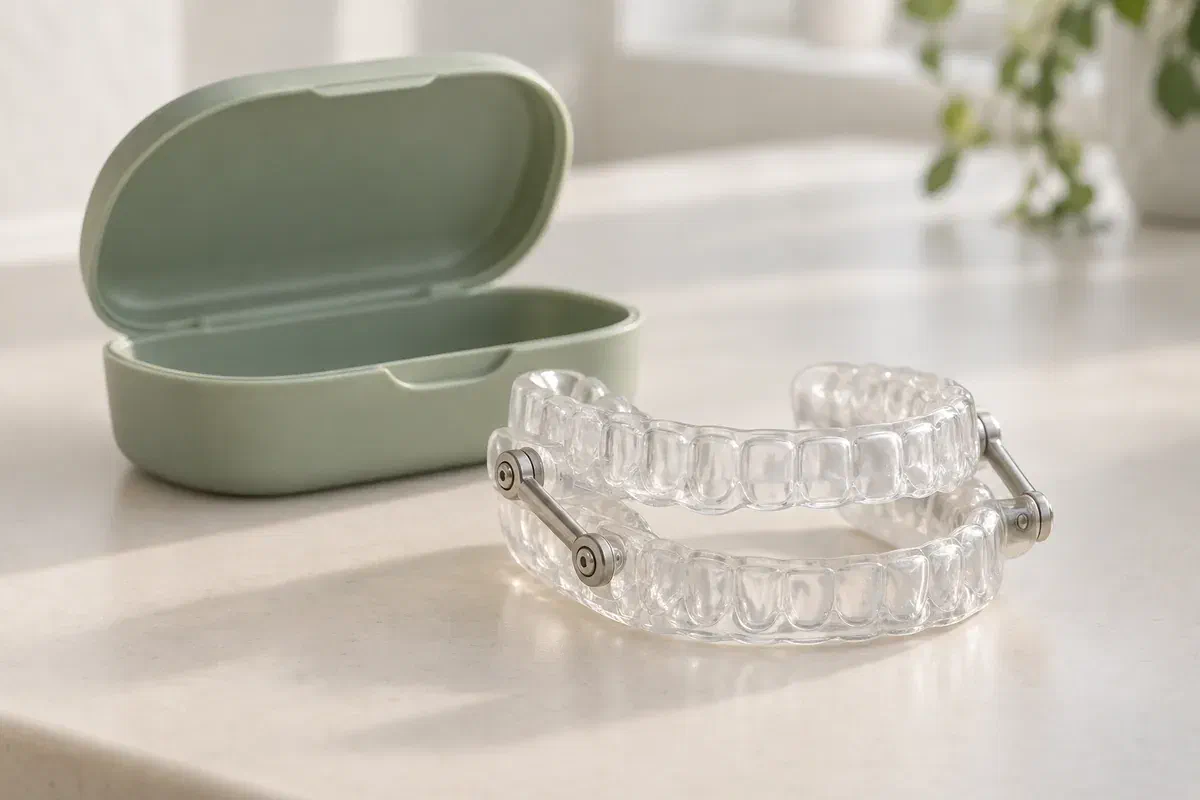
The appliance itself is a prescribed treatment for some adults diagnosed with obstructive sleep apnea. The common design attaches to both arches and holds the lower jaw slightly forward overnight, helping the airway stay open. It is not a snoring product, and comfort alone cannot tell anyone whether it is working. That answer comes from medical follow-up.

For a rural household in Puslinch, a clear picture of who to call saves time and trips. Bring your sleep report and treatment recommendations, plus the names of the clinicians involved so far. We will talk through dental suitability, records and how we pass information along, while you keep using your prescribed treatment.

See how coordination works
Illustrative connected upper and lower oral-appliance trays beside a pale sage storage case
Find your starting point

Not sure who to see first? Start here.

Tell us whether a physician has assessed your sleep and what they suggested. Dentists support appliance care, but sleep apnea is diagnosed medically.

You snore, and no one has tested your sleep

Your family doctor is the first call if someone has noticed pauses in your breathing, you wake unrefreshed or you fight drowsiness during the day. Snoring is sometimes linked to sleep apnea, and only an assessment can tell. Do not treat a quieter night as an answer.

You were prescribed treatment and it isn't working out

Take the problem back to whoever prescribed it, and let us know too. The sleep-care team can troubleshoot and decide whether an oral appliance is a sensible alternative or companion. Keep using the current treatment unless they tell you otherwise.

You are unsure your teeth are up to it

Describe loose teeth, gum care, dentures, implants, recent or planned dental work, and any jaw pain. These shape suitability and design. Ask whether dental treatment should come first and how your teeth and bite would be monitored.

The Canadian Dental Association's stated position is that a medical assessment of snoring or suspected sleep apnea, and cooperation between dentist and attending physician, should come before any oral appliance therapy.

The payoff of clear roles

No gaps between offices, and no one guessing

When each clinician knows their part, the decision gets better. Your physician can explain what makes an appliance worth considering in your case and how it compares with the treatment you have; the dental team can explain what your mouth allows and what the device will not do. Ease of use counts, but control of the condition is the real test.

The practical benefit is knowing whom to phone. Fit, adjustment and dental effects come to us. Returning symptoms, testing and the overall plan go to your sleep-care provider. Writing that down before fabrication avoids calls to the wrong office.

Patient information: AASM and AADSM — custom appliances, dental oversight, and follow-up sleep testing

A medical decision, with your physician at the table

Your sleep report and recommendations guide the choice; ask what further details may help. An appliance should be chosen because the medical findings support it, not merely because it is smaller, and your physician should stay involved.

A dental check with no surprises

Ask what the appliance would grip and whether your gums and jaw are likely to tolerate it. Mention other dentists you see and work they have planned. Findings can affect timing or design, or mean another provider joins.

A named plan for testing

Ask who will assess your response, when and how. Feeling better is worth reporting, but it does not confirm control. The plan should state who decides the next step if results fall short.

The hand-offs, in order

Who leads at each stage

The sequence follows your physician's recommendations and our findings. Before you commit, ask for a list of the stages and what each costs: the assessment, making the device, adjustment visits, dental reviews and the sleep follow-up billed separately.

  1. Medical lead: diagnosis and recommendation

    We receive or review your sleep results, health information and the treatment your physician recommends, and you tell us what has been difficult. We confirm the contact person on the medical side and what you continue using.

  2. Dental lead: suitability and records

    The clinician examines your teeth, gums, restorations and jaw function. If an appliance is appropriate, design choices and the impressions or scans needed are explained. Ask whether the dentist has suitable training in this area or whether referral is advised.

  3. Dental lead: fitting and adjustment

    At delivery the clinician confirms fit and comfort and teaches insertion, removal, cleaning and storage. Adjustments follow the clinician's plan only. Moving the appliance forward yourself to hurry results along is not safe.

  4. Shared lead: testing and long-term review

    Your sleep-care provider decides whether and how to retest, which may include a sleep study. We continue dental reviews of the device, teeth and bite. Confirm how findings are exchanged and who changes the plan if control is inadequate.

Knowing whom to call

Comfort questions to us; sleep questions to your physician

Instructions depend on the appliance and plan. Keep both teams' numbers somewhere easy to find, and use the right one for the problem in front of you.

Care of the appliance: our team

Follow your instructions on wear, adjustment, cleaning and storage, and keep the appliance in its case. Bring it to every dental review. If it breaks or stops fitting, phone us for interim advice before trying any repair yourself.

Mouth and jaw effects: our team

Report tender teeth, irritated gums, persistent jaw discomfort or a bite that feels altered. Ask at fitting which signs mean stopping and booking a prompt review. Never force the device in or keep adjusting it when it feels wrong.

Sleep symptoms and testing: your physician

Returning symptoms, trouble wearing the appliance and health changes go to your sleep-care team. Keep testing appointments even when comfortable. If you cannot keep using it, ask straight away what interim treatment to use.

Patient information: American Academy of Dental Sleep Medicine — appliance discomfort and dental effects · NHLBI — sleep deficiency and its effects on driving and daily function

Puslinch treatment options

Options are chosen medically, then shaped dentally.

Your physician considers the type and severity of sleep apnea, your health, your response to treatment and our dental findings. A custom appliance is one possibility on that list.

When your physician recommends it

Positive airway pressure, with support

If you are struggling, your sleep-care team can look at mask, setting or support changes, and at alternatives. Speak to them before stopping. A dentist should not override that medical recommendation alone.

When both assessments point that way

A custom appliance, managed by both teams

Discuss which design is proposed, what it cannot do, who adjusts it and who confirms its effect. Ask how dental changes will be monitored over the long term. A careful fit cannot guarantee control of sleep apnea for every person.

When another or added approach is needed

Other measures or a specialist referral

Depending on findings and progress, your physician may discuss other measures or refer you to a specialist. Ask how they fit with current therapy and when reassessment is due. Lifestyle and position strategies are not replacements for effective treatment without review.

Patient information: NHLBI — sleep-apnea treatment options and individualized medical care

Questions about coordination

Sorting out referrals, records and responsibilities

Bring your sleep-care paperwork and a list of the clinicians you see. We will help you understand how the dental side links with the rest.

(905) 876-4488
Does my family doctor or a sleep specialist decide whether I can have an appliance?
The physician managing your sleep apnea makes the medical recommendation, which may be your family doctor or a sleep specialist. The dental team then decides whether your mouth is suitable. Both views are needed.
Will you send updates to my sleep physician?
Coordination is part of appliance care. Ask at the consultation how information will be shared and what consent is needed, so your physician knows when the appliance is fitted and adjusted.
Can my usual dentist keep doing my cleanings if you make the appliance?
Often, yes. Let both offices know, bring the appliance to your regular visits, and tell us about any new dental work, since it can affect fit.
Who do I call if my sleep symptoms come back?
Start with your physician or sleep-care provider, since returning symptoms may mean the treatment needs review or retesting. Contact us as well if the fit seems to have changed, the appliance is damaged, or your bite feels different, and do not adjust it yourself to compensate.
What records do you need from me before the first visit?
Your sleep study report, your physician’s recommendations, a list of medications and health conditions, and any recent dental X-rays are helpful. Ask us how to send them securely, and note anything you are missing so we can request it with your consent.
If the appliance needs replacing years from now, where do I start?
Contact the dental team for an assessment of your teeth and the old appliance, and let your physician know. They may want to review your sleep apnea before a new device is made.
For adults coming from Puslinch

Bring the names, the reports and your questions.

Phone or email our Bronte Street practice and let us know who diagnosed you and what they advised. We will review dental suitability, explain the records involved and set out how we work alongside your physician or arrange referral.

Diagnosis, oral health, the clinicians involved, retesting and fees are assessed individually. An appliance cannot guarantee sleep apnea control, and it should not replace prescribed treatment unless both teams agree.

Visit Milton Dental Clinic
Unit 1, 342 Bronte St. S, Milton, ON L9T 5B7
Get directions Clinic hours
Monday–Thursday
11am–7pm
Friday–Sunday
By appointment only

Areas we serve

  • Milton
  • Oakville
  • Mississauga
  • Georgetown
  • Halton Hills
  • Acton
  • Campbellville
  • Brampton
  • Burlington
  • Puslinch
  • Rockwood
  • Erin
  • Caledon
  • Etobicoke
  • Old Milton
  • Bronte Meadows
  • Timberlea
  • Dorset Park
  • Dempsey
  • Clarke
  • Beaty
  • Coates
  • Harrison
  • Scott
  • Willmott
  • Ford
  • Bowes
  • Cobden
  • Walker
  • Mountain View
  • Milton Heights
  • Hawthorne Village
  • Valley View
  • Fallingbrook
  • Nassagaweya
  • Trafalgar
  • Esquesing
  • Nelson
  • Brookville
  • Moffat
  • Glen Williams
  • Norval
  • Limehouse
  • Stewarttown
  • Ashgrove
  • Hornby
  • Silver Creek
  • Speyside
  • Scotch Block
  • North Oakville
  • River Oaks
  • Glen Abbey
  • West Oak Trails
  • Palermo
  • Bronte Creek
  • College Park
  • Joshua Creek
  • Uptown Core
  • Preserve
  • Iroquois Ridge
  • Lisgar
  • Meadowvale
  • Meadowvale Village
  • Churchill Meadows
  • Erin Mills
  • Central Erin Mills
  • Streetsville
  • East Credit
  • Creditview
  • Heartland
  • Sheridan
  • Mount Pleasant
  • Credit Valley
  • Huttonville
  • Churchville
  • Springbrook
  • Northwest Brampton
  • Bram West
  • Fletcher's Meadow
  • Fletcher's Creek South
  • Alton Village
  • Orchard
  • Millcroft
  • Headon Forest
  • Tansley
  • Brant Hills
  • Tyandaga
  • Kilbride
  • Lowville
  • Aberfoyle
  • Morriston
  • Arkell
  • Hillsburgh
  • Freelton
  • Carlisle
  • Waterdown
  • Flamborough
  • Mountsberg

How can we help?

Milton Dental Clinic

Have a question about your smile? Choose the option that works best for you.

For urgent dental concerns, please call.
Messages are reviewed during clinic hours.