

Illustrative clinician explaining a tooth-and-gum model to a patient before a cleaning appointment
Specialized Care

Deep Dental Cleaning in Acton

Professional treatment below the gumline is only half of gum care; the brush, floss and picks in your bathroom do the rest. For adults in Acton, we explain why periodontal cleaning may be advised and help you set up a routine that keeps the results.

Acton, and the tools by the sink

What can a toothbrush reach, and what can it not?

A good brush handles the outside of the teeth and a little way under the gum edge. Floss and interdental brushes cover the sides. Once gum disease has created deeper pockets, though, hardened deposits can sit on the roots out of reach of all of them, and that is when professional treatment comes in.

Deep cleaning is the plain-language term for nonsurgical periodontal therapy, often listed as scaling and root planing. The clinician removes plaque and calculus from those hidden root surfaces so the gum can heal. It is a treatment for a diagnosed problem, distinct from the polish at a routine visit.

Bring your questions, and if it helps, bring your toothbrush and the interdental tools you use. Ask what the exam found, how comfort will be managed, how many visits are planned and what the estimate includes. Mention any cleaning that hurt in the past, too.

Ask about treatment and home care
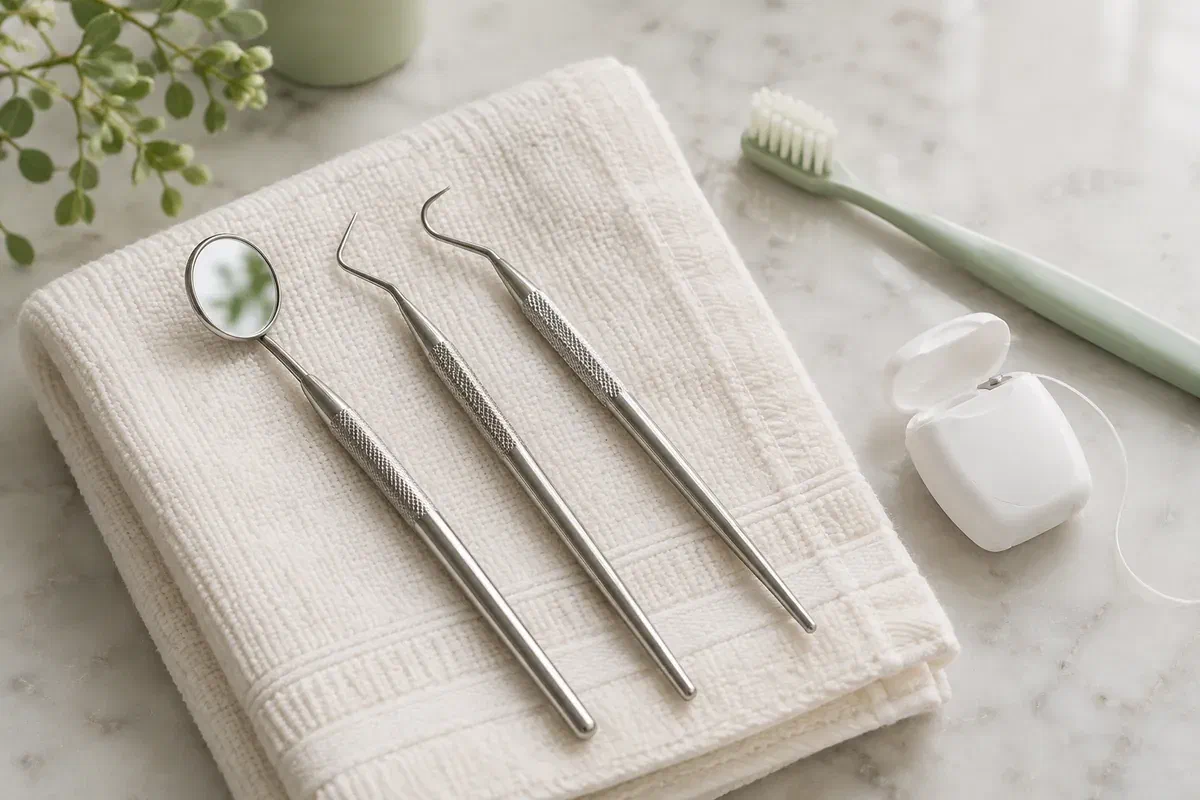
Illustrative periodontal cleaning instruments and a dental mirror beside everyday oral-care tools
Reasons it may be suggested

Clues from the exam, and from your routine

The plan should say which teeth are involved and why. Your own observations count, though a mouth that feels fine can still show signs of gum disease on examination.

Pockets that a brush cannot clean

Probe readings show where the gum has separated from the tooth. Your clinician considers them with bleeding, inflammation, bone support on images and your history. Ask which of your sites are beyond the reach of home tools and why.

Spots that bleed or trap food

Tell us where gums bleed, feel tender or swell, and where food keeps getting stuck. Show or describe the tools you use there and what goes wrong. That information shapes the treatment and the routine you will rely on afterward.

Gum treatment you have had

If you have had periodontal care before, share what you know about it. Ask whether this plan covers new sites, areas that did not settle or maintenance. Earlier treatment informs the plan without meaning every future visit repeats it.

Gum readings, tooth findings, health history and any indicated images are reviewed together. Treatment below the gumline is recommended when the findings warrant it, not on the assumption that a more thorough cleaning is automatically the better choice.

Two parts, one goal

Professional treatment clears the way. Your routine holds the ground.

With deposits removed from the roots, inflamed gum tissue has a chance to settle and fit more closely around the tooth. How well that happens is checked at a later review using measurements and a look at the tissue. Ask what improvement is reasonable for the areas involved.

From then on, daily cleaning decides a great deal. You should know which spaces to focus on, which size of interdental brush fits each one and how long to spend. If floss frustrates you, say so; there are alternatives, and the best tool is the one you will actually use.

Patient information: American Academy of Periodontology — scaling, root planing, and continuing maintenance

Treatment for the sites that need it

The plan may include a few teeth or larger sections. The extent explains how long appointments run and whether they are split. It should follow your exam findings rather than a standard package.

Comfort sorted out first

Let us know about sensitivity, anxiety or a painful cleaning in your past. Ask whether local anaesthetic is recommended and how you can request a pause. Settling this early usually makes the visit feel more manageable.

A review to see what worked

Ask when you will be reassessed and what might lead to further care. Some sites respond more slowly than others. The follow-up shows whether maintenance, extra cleaning or a specialist opinion is the right next step.

The course of treatment

Four appointments' worth of work, give or take

The actual number and length of visits depend on how much treatment is needed and your comfort. Ask about the whole sequence, including the review, before you book.

  1. Explain the findings

    Your clinician goes through the gum chart, any images, medical history and previous care. Ask which sites need treatment beneath the gum and why. Check the estimate and whether the reassessment is included.

  2. Prepare for comfort

    Raise sensitivity or worries and agree on a signal to pause. Local anaesthetic may be offered for the treated areas. Mention your medicines and health conditions, and keep taking prescribed treatment unless your physician says otherwise.

  3. Treat, then coach

    Deposits are removed from the identified roots with suitable instruments, with method and staging set by access and findings. Then comes a hands-on lesson: which tool goes where, at what angle and how often.

  4. Review the result

    After the healing interval, symptoms and measurements are rechecked. You discuss which areas improved and which still need help, and your routine is fine-tuned. One completed course does not on its own guarantee lasting stability.

Daily care while you heal

Gentle cleaning is part of the treatment

Your instructions depend on what was done and whether you were frozen. Ask what discomfort to expect and which signs would justify phoning the clinic before your review.

The first few hours

If freezing was used, wait until feeling returns before eating and be careful with hot drinks so you do not burn or bite a numb area. Tell us about sensitivity that is strong, lasting or unexpected. A sore tooth later may have a different cause.

Tools that fit the new spaces

Use the brushing and interdental technique you were shown. As the gums tighten, a brush size that once fit may feel loose or tight; ask us to recheck sizing. Avoid aggressive scrubbing and do not skip tender spots; get advice on cleaning them gently.

Back for the review

Describe how comfort, bleeding and cleaning have changed. Gums can look different once swelling goes down, so mention any worry about gaps or recession. The reassessment checks tissue health, beyond what you see at home.

Patient information: University Dental Hospital of Manchester — periodontal treatment, sensitivity, and gum changes

Which approach suits your gums

Prevention, periodontal treatment and specialist care

Ask which one fits your findings and how the decision was reached. Each type of appointment plays its own part in looking after your gums.

When the exam finds no periodontal need

Routine cleaning and coaching

A regular cleaning plus advice on technique may be enough. Ask what you are maintaining and which habits to sharpen. A missed appointment or two does not, by itself, determine that deeper cleaning is required.

When some sites need care below the gum

Scaling and root planing

Go over the areas, comfort measures, staging and review. The treatment aims to manage gum disease with your daily routine doing its part. It should not be described as regrowing bone or ending the need for maintenance.

When certain areas need a different plan

More care or a periodontist

Sites that stay inflamed or more complex disease may need added treatment or referral. Ask which concerns remain and what the next exam will check. Needing more care does not mean every site requires surgery.

Home-care questions from Acton

Brushes, floss and everything in between

The right tools and technique make a real difference after treatment. Ask about those, plus comfort, fees and how this differs from previous cleanings.

(905) 876-4488
Is an electric toothbrush better after gum treatment?
Either type can work well when used properly. Some people find a powered brush easier, especially with limited dexterity. Ask your clinician which suits you, and bring your brush along so technique can be checked.
Can a water flosser replace interdental brushes?
It may help some people, but it does not suit every situation or remove plaque the same way. Ask whether it fits your treated areas, or whether interdental brushes or floss would be more effective for you.
How do I know which interdental brush size to use?
Sizes vary from space to space, and you may need more than one. Your clinician can measure and show you. The brush should fit snugly without forcing; sizes may change as the gums heal, so recheck at the review.
Can deep cleaning be needed if my mouth feels completely comfortable?
Yes. Gum disease can be active without obvious discomfort. Measurements, images and the exam show what is going on beneath the gum. Ask the clinician to explain the findings in plain terms.
Does needing treatment mean my brushing has been poor?
Not necessarily. Some areas are hard to reach for anyone, and other factors such as health, genetics and smoking play a role. The aim is to improve access and technique from here, not to assign blame.
How often will I need cleanings once treatment is finished?
Your maintenance interval is based on the reassessment findings and may be shorter than a standard schedule for a while. Ask what interval is suggested and what would allow it to change.
From Acton

Treatment and a routine that works together

Contact our Bronte Street practice to talk over a deep-cleaning recommendation or concerns about your gums. We can explain the findings, how treatment might be staged and which home-care tools fit your mouth.

Diagnosis, treatment scope, comfort measures, visit count, maintenance interval and fees depend on assessment. One round of cleaning cannot guarantee permanent gum stability.

Visit Milton Dental Clinic
Unit 1, 342 Bronte St. S, Milton, ON L9T 5B7
Get directions Clinic hours
Monday–Thursday
11am–7pm
Friday–Sunday
By appointment only

Areas we serve

  • Milton
  • Oakville
  • Mississauga
  • Georgetown
  • Halton Hills
  • Acton
  • Campbellville
  • Brampton
  • Burlington
  • Puslinch
  • Rockwood
  • Erin
  • Caledon
  • Etobicoke
  • Old Milton
  • Bronte Meadows
  • Timberlea
  • Dorset Park
  • Dempsey
  • Clarke
  • Beaty
  • Coates
  • Harrison
  • Scott
  • Willmott
  • Ford
  • Bowes
  • Cobden
  • Walker
  • Mountain View
  • Milton Heights
  • Hawthorne Village
  • Valley View
  • Fallingbrook
  • Nassagaweya
  • Trafalgar
  • Esquesing
  • Nelson
  • Brookville
  • Moffat
  • Glen Williams
  • Norval
  • Limehouse
  • Stewarttown
  • Ashgrove
  • Hornby
  • Silver Creek
  • Speyside
  • Scotch Block
  • North Oakville
  • River Oaks
  • Glen Abbey
  • West Oak Trails
  • Palermo
  • Bronte Creek
  • College Park
  • Joshua Creek
  • Uptown Core
  • Preserve
  • Iroquois Ridge
  • Lisgar
  • Meadowvale
  • Meadowvale Village
  • Churchill Meadows
  • Erin Mills
  • Central Erin Mills
  • Streetsville
  • East Credit
  • Creditview
  • Heartland
  • Sheridan
  • Mount Pleasant
  • Credit Valley
  • Huttonville
  • Churchville
  • Springbrook
  • Northwest Brampton
  • Bram West
  • Fletcher's Meadow
  • Fletcher's Creek South
  • Alton Village
  • Orchard
  • Millcroft
  • Headon Forest
  • Tansley
  • Brant Hills
  • Tyandaga
  • Kilbride
  • Lowville
  • Aberfoyle
  • Morriston
  • Arkell
  • Hillsburgh
  • Freelton
  • Carlisle
  • Waterdown
  • Flamborough
  • Mountsberg

How can we help?

Milton Dental Clinic

Have a question about your smile? Choose the option that works best for you.

For urgent dental concerns, please call.
Messages are reviewed during clinic hours.