

Illustrative clinician explaining a tooth-and-gum model to a patient before a cleaning appointment
Specialized Care

Deep Dental Cleaning in Puslinch

Gums that never hurt can still be quietly losing ground. If you are coming from Puslinch and were told you need treatment below the gumline, let us show you the evidence, explain how the sessions work and set a date to check the results.

A Puslinch question we hear often

Nothing hurts. Why would I need treatment?

Pain is a poor guide to gum health. Gum disease often develops slowly, with little more than some bleeding or mild puffiness that is easy to overlook. By the time teeth feel sore or loose, the condition may have been active for a long time. That is why the exam relies on measurements and images, not only on how you feel.

When those findings show disease below the gumline, the usual first treatment is nonsurgical periodontal therapy, commonly called deep cleaning or scaling and root planing. It removes plaque and calculus from root surfaces the toothbrush cannot reach, so the tissue has a chance to heal.

You are entitled to see the evidence. Ask which teeth are affected, what the readings and X-rays show and how they compare with healthy sites. Then talk about comfort, the number of sessions and the estimate. Tell us if past cleanings were painful or certain teeth are sensitive.

See the findings behind my plan
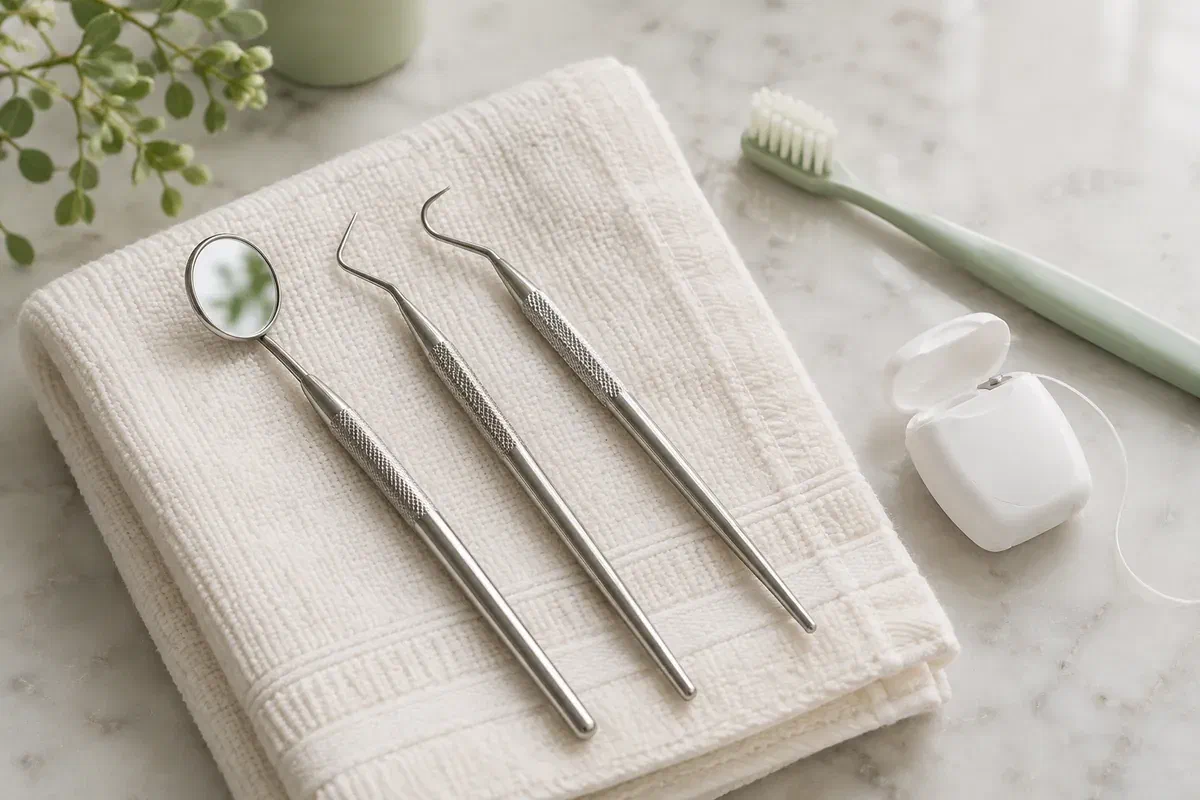
Illustrative periodontal cleaning instruments and a dental mirror beside everyday oral-care tools
Signs beyond pain

What the exam picks up that you might not feel

The recommendation should identify the sites and explain why each one is included. Having no pain is relevant history, though it cannot settle the question of gum health alone.

Readings beyond the healthy range

Probe measurements reveal where the gum has detached from the tooth, often without any discomfort. Your clinician reads them alongside bleeding, inflammation, bone levels on images and history. Ask to see where your deeper sites are and what they suggest.

Quiet symptoms worth mentioning

A little blood on the brush, gums that look redder than before, a sense that teeth have shifted or food that lodges between them: these are easy to dismiss. Mention them, and describe how you clean, so treatment and home care can be planned.

A history of gum treatment

Previous periodontal care, even long ago, is worth sharing. Ask whether this plan covers new areas, ones that never fully settled or maintenance. Earlier treatment adds context without locking you into the same procedure at every appointment.

A periodontal assessment combines gum measurements, tooth findings, health history and any warranted images. Treatment below the gums should be explained by those findings, rather than recommended simply because more intensive care sounds safer.

Why act before it hurts

Managing gum disease while it is still quiet

Hardened deposits on root surfaces sustain inflammation in the gum, whether or not you feel it. Professional cleaning removes them so the tissue can settle. The effect is judged at a later review, with fresh measurements and an examination, so ask what kind of improvement is realistic for the sites involved.

Because the disease is silent, home care has to be steady rather than driven by symptoms. You should know which areas need attention every day and which tools fit them. If a routine seems hard to keep without a reminder like pain, say so; we can help make it simpler.

Patient information: American Academy of Periodontology — scaling, root planing, and continuing maintenance

Focused on the affected sites

Treatment may involve a few teeth or broader areas. The scope explains how long visits take and whether they are divided. It should be based on your own measurements, not on a package applied to everyone.

Comfort settled beforehand

Even painless gums can be tender to treat. Mention sensitivity, nerves or a previous cleaning that hurt. Ask whether freezing is suggested and agree on a signal to pause, so the appointment holds no unwelcome surprises.

Proof through the review

Ask when the reassessment is planned and what would lead to further care. Some sites respond faster than others. The review shows whether you move to maintenance, need more cleaning or would benefit from a periodontist.

What the course looks like

Evidence, preparation, treatment and a second measurement

Appointment numbers and lengths depend on how much treatment is needed and your comfort. Ask about the complete plan, including the review, before scheduling, particularly if you group trips with other errands.

  1. Show the evidence

    You are shown the deeper readings next to the healthy ones, plus any X-rays, and your health history and past care are reviewed. Ask why each site made the list. Confirm the estimate and how the reassessment fits into it.

  2. Plan for comfort

    Raise any sensitivity or anxiety and agree on a pause signal. Local anaesthetic may be recommended for the areas treated. Share your medicines and health conditions, and continue anything prescribed unless your physician advises otherwise.

  3. Carry out the cleaning

    Suitable instruments remove deposits from the identified roots, with technique and staging set by access and findings. Before you go, the clinician demonstrates home care for the treated teeth, and you can ask about anything that seems unclear.

  4. Measure again

    After the healing period, the clinician repeats measurements and asks about symptoms. You compare the results with your starting point, which helps decide on maintenance or further care. Finishing treatment does not by itself ensure long-term stability.

Looking after the treated areas

Some tenderness is common. Persistent trouble is not.

Advice depends on the treatment and whether freezing was used. Ask which sensations are normal and what should prompt a call before your review.

While the area is numb

Avoid chewing until feeling returns, and take care with hot drinks to prevent burns or bites to a numb lip or cheek. Report sensitivity that is severe, lasting or unlike what you were told to expect. A sore tooth later may have another cause.

Consistent, gentle cleaning

Keep up the routine from your appointment even though no symptom is nudging you. A space that suddenly feels roomier, or a pick that no longer fits, is worth a quick call. Avoid hard scrubbing and do not neglect tender areas; we can suggest how to clean them.

The reassessment

Share any changes in comfort, bleeding and ease of cleaning. Gums often look different as inflammation fades, so raise concerns about gaps or recession. The review assesses the tissue's health, which you cannot judge by feel alone.

Patient information: University Dental Hospital of Manchester — periodontal treatment, sensitivity, and gum changes

Matching care to what is found

Painless gums can need any of three approaches

Ask which option fits your findings and how it was chosen. Understanding each appointment's purpose matters even more when symptoms are not guiding you.

When the readings are healthy

Routine preventive cleaning

If periodontal treatment is not indicated, a regular cleaning and advice may be enough. Ask what is being protected and which habits matter. Time since your last visit does not, on its own, decide the depth of cleaning.

When silent disease affects certain sites

Treatment under the gumline

Discuss the sites, comfort measures, staging and review. This care aims to control gum disease, supported by your daily routine. It should not be described as rebuilding bone or eliminating the need for regular maintenance.

When some sites do not respond

Specialist care or further treatment

Areas that stay inflamed or more advanced disease may call for additional care or referral to a periodontist. Ask which concerns remain open and what the next exam will show. It does not mean surgery everywhere.

No-pain questions

How can gums be unhealthy if they feel fine?

It is a reasonable question, and the answer lies in the findings. Ask about those first; questions on comfort, cost and earlier cleanings are just as welcome.

(905) 876-4488
Why does gum disease often cause so little pain?
It tends to develop gradually, and the tissues adapt as it progresses. Bleeding or mild swelling may be the only early signs. That is why your clinician relies on measurements and images rather than waiting for discomfort to appear.
Could my teeth become loose if gum disease is not treated?
Untreated gum disease can lead to loss of the supporting tissues around teeth over time. Your clinician can explain what your findings show about support and how treatment and maintenance aim to manage it. Report any tooth that feels loose.
Can I see what the clinician sees during the exam?
Yes. Ask to have the readings explained and, where images were taken, to look at them together. Seeing the deeper sites and bone levels can make the recommendation easier to understand and weigh.
Is there a reason to wait and see if symptoms appear?
Waiting is your decision, but it is worth discussing what the findings suggest could happen. Ask the clinician to explain the risks of delay and what monitoring would involve if you choose not to proceed now.
How does this treatment differ from my usual hygiene visit?
A routine cleaning focuses on surfaces above and just below the gum. Scaling and root planing treats affected root surfaces deeper beneath the gum, based on your measurements. Ask which sites are involved and why.
Will I know if treatment has worked if I never felt anything?
The reassessment answers that. Your clinician repeats measurements and checks for bleeding and inflammation at treated sites, then compares them with the starting point. Those results guide your next steps.
Puslinch to Milton

See the evidence, then decide

Contact our Bronte Street practice to look over a deep-cleaning recommendation, even if your gums feel fine. We will show you the findings, talk about comfort and staging, and explain how the review measures your response.

The diagnosis, extent of treatment, comfort options, visit count, maintenance timing and fees are set after assessment. One course of cleaning cannot guarantee gums stay stable permanently.

Visit Milton Dental Clinic
Unit 1, 342 Bronte St. S, Milton, ON L9T 5B7
Get directions Clinic hours
Monday–Thursday
11am–7pm
Friday–Sunday
By appointment only

Areas we serve

  • Milton
  • Oakville
  • Mississauga
  • Georgetown
  • Halton Hills
  • Acton
  • Campbellville
  • Brampton
  • Burlington
  • Puslinch
  • Rockwood
  • Erin
  • Caledon
  • Etobicoke
  • Old Milton
  • Bronte Meadows
  • Timberlea
  • Dorset Park
  • Dempsey
  • Clarke
  • Beaty
  • Coates
  • Harrison
  • Scott
  • Willmott
  • Ford
  • Bowes
  • Cobden
  • Walker
  • Mountain View
  • Milton Heights
  • Hawthorne Village
  • Valley View
  • Fallingbrook
  • Nassagaweya
  • Trafalgar
  • Esquesing
  • Nelson
  • Brookville
  • Moffat
  • Glen Williams
  • Norval
  • Limehouse
  • Stewarttown
  • Ashgrove
  • Hornby
  • Silver Creek
  • Speyside
  • Scotch Block
  • North Oakville
  • River Oaks
  • Glen Abbey
  • West Oak Trails
  • Palermo
  • Bronte Creek
  • College Park
  • Joshua Creek
  • Uptown Core
  • Preserve
  • Iroquois Ridge
  • Lisgar
  • Meadowvale
  • Meadowvale Village
  • Churchill Meadows
  • Erin Mills
  • Central Erin Mills
  • Streetsville
  • East Credit
  • Creditview
  • Heartland
  • Sheridan
  • Mount Pleasant
  • Credit Valley
  • Huttonville
  • Churchville
  • Springbrook
  • Northwest Brampton
  • Bram West
  • Fletcher's Meadow
  • Fletcher's Creek South
  • Alton Village
  • Orchard
  • Millcroft
  • Headon Forest
  • Tansley
  • Brant Hills
  • Tyandaga
  • Kilbride
  • Lowville
  • Aberfoyle
  • Morriston
  • Arkell
  • Hillsburgh
  • Freelton
  • Carlisle
  • Waterdown
  • Flamborough
  • Mountsberg

How can we help?

Milton Dental Clinic

Have a question about your smile? Choose the option that works best for you.

For urgent dental concerns, please call.
Messages are reviewed during clinic hours.