

Illustrative patient discussing an urgent dental concern with a clinician
Specialized Care

Dental Abscess Treatment in Burlington

Antibiotics can calm an infected tooth for a while, but the cause usually needs dental treatment. If you are in Burlington, call to describe your symptoms and any medicine already taken, and we can discuss an assessment.

Burlington · treating the source

The prescription helped. The tooth still needs attention.

It is a common story. A tooth flares up, a walk-in clinic or after-hours provider prescribes an antibiotic, and within days the throbbing fades. Then the question arrives: is it over? A dental abscess is pus collected around an infection in a tooth or its supporting tissues, and medicine alone rarely removes the source. A dental examination is still needed to find the cause and to separate it from conditions that feel similar.

Sorting out the next step means answering two things. How soon should you be seen, and where? And what treatment will deal with the underlying problem? Depending on the findings, the plan may include drainage, care inside the tooth, removing a tooth that cannot be dependably kept, or treating the gum and nearby tissue.

When you phone from Burlington, have the medicine name, start date and dose handy, and say how the symptoms have shifted. If things are getting worse, do not wait for an email reply. If we cannot be reached, contact another emergency dental provider who is available.

Arrange a follow-up assessment
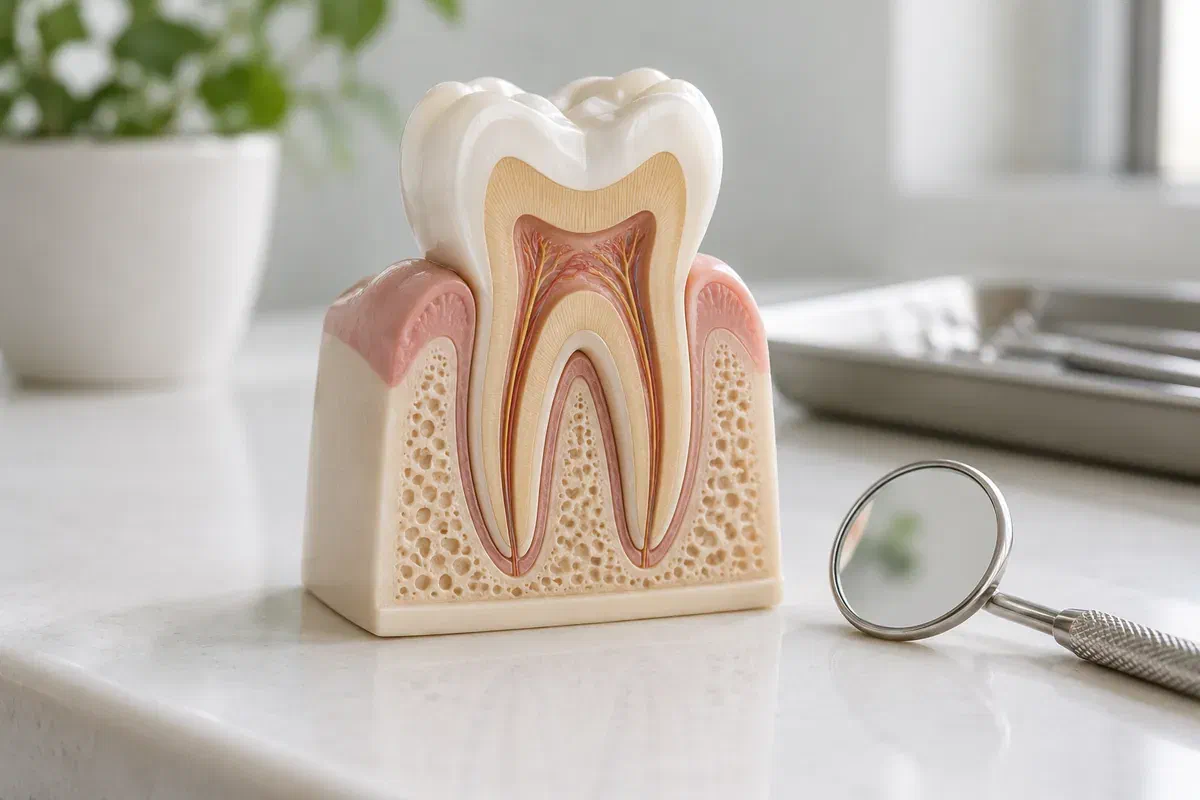
Illustrative physical model showing the inside of a tooth beside a dental mirror
Getting ready for the call

Medicine, timeline and symptoms, in that order

There is no need to know whether it is definitely an abscess. A brief, factual account helps the team decide how soon to see you and what to plan for.

What the tooth is doing now

Describe where the trouble is, whether pain or swelling has eased, held steady or returned, and anything new such as a gum bump or an unpleasant taste. Mention pain on biting. Please avoid pressing the area again and again to see how it responds.

How your body is coping

Fever, feeling unwell, stomach upset from medicine or swelling beyond the gum are all worth reporting. Tell us about health conditions, other medicines and recent treatment. These details can change the urgency and the right setting for care.

Every medicine and where it came from

Name any antibiotic or pain reliever, who prescribed or recommended it, when you started and whether you finished. List allergies. If symptoms improved on the medicine and then came back, that sequence is very useful, so do not assume the first course solved it.

Call 911 or go to hospital emergency care for difficulty breathing or swallowing, swelling around an eye or changes in vision, or substantial or quickly spreading swelling in the face or mouth, whether or not you are taking an antibiotic.

Where medicine fits

Antibiotics have a role. Dental treatment has the central one.

A good assessment explains what was found and what will actually resolve the problem. If you have already taken medicine, ask how that changes the picture and whether today’s treatment addresses the source or is the first stage of something longer. Feeling calmer should come with clarity about what is left.

Your tooth’s condition and your overall health both shape the advice. Ask why keeping or removing the tooth is suggested, the limits of each choice, and the expected sequence. Being told the reasons behind a recommendation makes it easier to follow through.

Patient information: American Dental Association — antibiotics and definitive dental treatment

A diagnosis, not just a prescription

Your account of the flare-up, a hands-on examination and X-rays where they are justified all feed the diagnosis. Ask which of those findings identify the source. Pain can be hard to place, and the tooth that seems responsible is not always the whole answer.

A clear purpose for any medicine

Antibiotics do not replace necessary dental treatment. Whether one is appropriate depends on the diagnosis, signs of spread or body-wide illness, your medical circumstances and how soon definitive care can happen. Ask what a prescription is meant to achieve and what still needs booking.

A plan beyond the pharmacy

Confirm the next visit, who will provide it and what to do if symptoms return in between. Request an estimate and referral details where relevant. Writing the steps down helps when you are tired or anxious.

Assessment in practice

How we move from symptoms to a treatment decision

The first appointment depends on what the dentist finds and what care is available that day. Ask which parts can happen during the visit and which need a return or a referral.

  1. Review your history and medicines

    We go over how it began, how it has changed, earlier dental work and every medicine taken so far. Allergies and conditions that could affect care are noted. If symptoms worsen before your appointment, contact us again or another suitable provider without delay.

  2. Examine and share what is found

    The dentist checks the teeth and tissues involved and decides whether imaging or tests are indicated. Ask what is clear and what is uncertain. Your symptoms should be tied to a working diagnosis before a treatment choice is made.

  3. Weigh the options and consent

    Talk through the proposed procedure, comfort measures, alternatives, limits and fees. Depending on the cause, care may involve drainage and treatment of the responsible tooth or tissue. Ask whether it is the complete treatment or the start of a plan.

  4. Settle the next steps

    Before you go, confirm what to expect and which signs call for more help. Find out how any unfinished treatment will be done. If you are referred, ask what information goes with you and who books the appointment.

Once treatment has started

Recovery advice for the procedure you actually had

Drainage, root canal care, an extraction and gum treatment each come with different aftercare. Ask for instructions that fit your treatment rather than relying on guidance from an unrelated past visit.

Finish the dental plan, not only the pills

Write down the next appointment and book it before you leave. If it becomes hard to attend, call to change it. Completing a course of medicine does not tell you that the dental treatment is complete.

Medicine as directed, and only yours

Take each dose the way the label and prescriber describe, and ask a pharmacist or clinician about interactions, side effects or any doubt. Do not take another person’s antibiotics or leftovers from an old prescription. If a medicine disagrees with you, let whoever prescribed it know so an alternative can be weighed.

Tell us when the pattern changes

Call if discomfort, swelling or feeling unwell is increasing or differs from what you were told. Mention the treatment date and the change. Do not attempt to pierce, squeeze or drain a swelling at home.

Definitive care

Which treatment will actually address the cause?

Ask what each option should achieve, what follows it and what could happen if it is postponed. No single procedure is right for every suspected abscess.

If the tooth can be restored

Root canal treatment

Where infection starts in the pulp of a restorable tooth, root canal care may be discussed. Ask about the stages and the restoration that follows. Sound structure and bone support count for as much as the infection when the decision is made.

When keeping it is not advised

Extraction, with replacement as a later decision

Removing the tooth may be recommended if it cannot be predictably treated or restored. Ask why and what the appointment involves. Replacement options, timing and fees can then be planned as their own step.

If the cause lies in the gums or is complex

Gum treatment or referral

Infection related to the gums, or a more complicated presentation, may need different care or a specialist. Ask what the referral should clarify. The goal is the right path to treatment for your situation.

Medicine and abscess questions

What Burlington callers ask about antibiotics

Call us for anything urgent. These answers address common questions, but the examination decides your diagnosis and treatment.

(905) 876-4488
Why does my tooth still hurt after finishing an antibiotic?
Medicine may calm an infection without removing the cause inside the tooth or surrounding tissue. Ongoing or returning pain is a reason to book an assessment so the source can be found and treated.
Can I stop an antibiotic once I feel better?
Check with the prescriber or a pharmacist before stopping early, since the right length of a course depends on the reason it was given. Feeling better is not the same as the dental problem being treated, so keep your dental appointment either way.
Why might a dentist decide not to prescribe an antibiotic?
Antibiotics are not needed in every case. Often, treating the tooth or tissue is what deals with the source. The decision depends on the findings, signs of spread and your health, and you can ask for the reasoning.
I have a penicillin allergy. Does that affect my abscess care?
Please tell the team when you call and again at the visit, with details of the reaction if you know them. Allergies are considered when any medicine is chosen, and they are part of planning safe treatment.
Is it alright to use leftover antibiotics from an earlier illness?
No. Leftover or borrowed medicine may be the wrong drug or dose and can mask symptoms. They can also make it harder to judge what the infection is doing. Contact a dentist or prescriber so the problem can be properly assessed and treated.
Can the dentist treat the tooth while I am still on medicine?
Often, yes, depending on the findings and your health. Bring the medicine details to the appointment. Ask whether treatment can go ahead that day or whether another stage will be needed.
Burlington to Bronte Street

Bring your medicine list, and we will take it from there

Call our Bronte Street practice to discuss a possible tooth infection and appointment availability. Tell us about any antibiotic already taken and how symptoms have changed. If you need immediate care and cannot reach us, contact another available emergency dental provider.

Online requests are for non-urgent questions. Diagnosis, treatment, prescriptions, referrals and fees depend on assessment, and same-day or urgent openings are not guaranteed.

Visit Milton Dental Clinic
Unit 1, 342 Bronte St. S, Milton, ON L9T 5B7
Get directions Clinic hours
Monday–Thursday
11am–7pm
Friday–Sunday
By appointment only

Areas we serve

  • Milton
  • Oakville
  • Mississauga
  • Georgetown
  • Halton Hills
  • Acton
  • Campbellville
  • Brampton
  • Burlington
  • Puslinch
  • Rockwood
  • Erin
  • Caledon
  • Etobicoke
  • Old Milton
  • Bronte Meadows
  • Timberlea
  • Dorset Park
  • Dempsey
  • Clarke
  • Beaty
  • Coates
  • Harrison
  • Scott
  • Willmott
  • Ford
  • Bowes
  • Cobden
  • Walker
  • Mountain View
  • Milton Heights
  • Hawthorne Village
  • Valley View
  • Fallingbrook
  • Nassagaweya
  • Trafalgar
  • Esquesing
  • Nelson
  • Brookville
  • Moffat
  • Glen Williams
  • Norval
  • Limehouse
  • Stewarttown
  • Ashgrove
  • Hornby
  • Silver Creek
  • Speyside
  • Scotch Block
  • North Oakville
  • River Oaks
  • Glen Abbey
  • West Oak Trails
  • Palermo
  • Bronte Creek
  • College Park
  • Joshua Creek
  • Uptown Core
  • Preserve
  • Iroquois Ridge
  • Lisgar
  • Meadowvale
  • Meadowvale Village
  • Churchill Meadows
  • Erin Mills
  • Central Erin Mills
  • Streetsville
  • East Credit
  • Creditview
  • Heartland
  • Sheridan
  • Mount Pleasant
  • Credit Valley
  • Huttonville
  • Churchville
  • Springbrook
  • Northwest Brampton
  • Bram West
  • Fletcher's Meadow
  • Fletcher's Creek South
  • Alton Village
  • Orchard
  • Millcroft
  • Headon Forest
  • Tansley
  • Brant Hills
  • Tyandaga
  • Kilbride
  • Lowville
  • Aberfoyle
  • Morriston
  • Arkell
  • Hillsburgh
  • Freelton
  • Carlisle
  • Waterdown
  • Flamborough
  • Mountsberg

How can we help?

Milton Dental Clinic

Have a question about your smile? Choose the option that works best for you.

For urgent dental concerns, please call.
Messages are reviewed during clinic hours.