

Illustrative patient discussing an urgent dental concern with a clinician
Specialized Care

Dental Abscess Treatment in Halton Hills

An infected tooth often leads to a hard choice: try to save it, or take it out. From Halton Hills, call us to describe your symptoms and arrange an assessment that explains the options before anything is decided.

Halton Hills · keep or remove?

Saving an infected tooth starts with an honest look at it

Ask most people with a sore, swollen tooth what worries them and the answer is simple: am I going to lose it? A dental abscess is a pocket of pus formed by infection in a tooth or the structures around it, and it does need treating. Whether the tooth can stay depends on things only an examination can reveal, including whether the problem is truly an abscess and not something with similar symptoms.

Before that conversation, though, comes timing. How quickly should you be seen, and is a dental office the right setting, or do your symptoms point to hospital care? Once the cause is known, options range from drainage and root canal treatment to removing a tooth that cannot be dependably kept, or treating the gum and supporting tissues.

From Georgetown, Acton, Glen Williams or the smaller hamlets of Halton Hills, a call is the right first step. Explain what has changed, when it started and whether you feel unwell. For urgent symptoms, do not wait for an emailed reply, and if our line is unanswered, contact another emergency dental provider who is available.

Book an assessment of the tooth
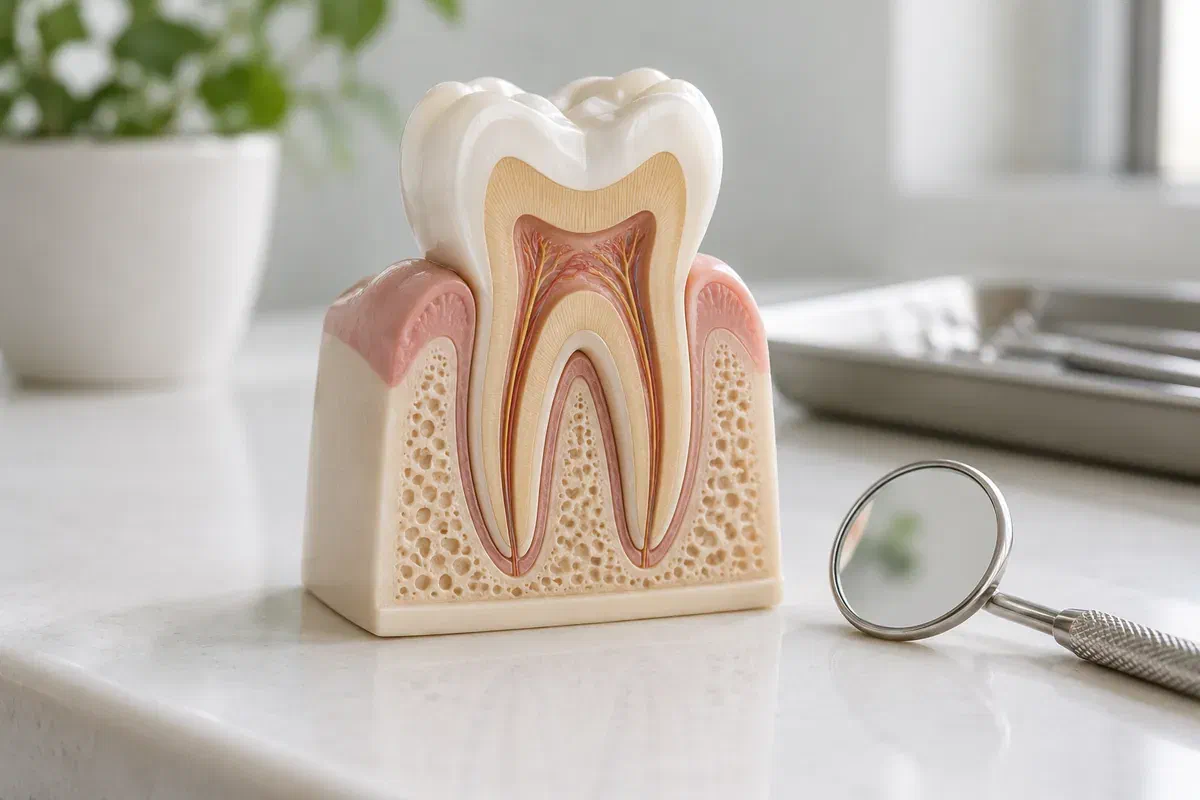
Illustrative physical model showing the inside of a tooth beside a dental mirror
What shapes the decision

Details about the tooth, its past and your health

It is not your job to decide whether the tooth can be saved. Sharing a few facts early helps the team set the right urgency and prepare a fuller discussion for your visit.

Signs around the tooth itself

Point out where it hurts and whether swelling, a bump on the gum or a sour taste has appeared. Mention if biting is painful, if the tooth feels loose, or if it has a large filling or crown. Try not to press it repeatedly to see what happens.

Wider health and medicines

Fever, feeling under the weather and swelling beyond the gum line are important. So are conditions such as diabetes or heart problems, regular medicines and recent treatment. All of these can shape urgency and setting, and they can also affect which option suits you.

Past treatment of this tooth

Tell us about earlier fillings, crowns or root canal work, plus any recent advice or prescriptions and when they began. List allergies. If this tooth has flared before, share that history, as repeated episodes tell the dentist more than assuming the last one cleared.

Some symptoms need emergency medical care first: trouble breathing or swallowing, eye swelling or vision changes, or swelling of the face or mouth that is substantial or growing fast. Call 911 or go to a hospital emergency department.

Understanding your options

A recommendation you can question, not just accept

The best outcome of an urgent visit is a decision you understand. You should know what was found, whether the treatment you received addresses the cause, and whether more is planned. Relief from pain is important; knowing why a tooth is being kept or removed matters just as much for the months ahead.

The dentist will weigh the tooth’s structure and support against your general health and preferences. You can ask for the reasons behind keeping or removing it, the limits each choice carries and the likely order of treatment. A rushed day is no reason to skip those questions.

Patient information: American Dental Association — antibiotics and definitive dental treatment

Findings that explain the source

History, examination and any X-rays or tests the case calls for are considered together. Ask which results show where the infection began. Discomfort can be misleading, and a neighbouring tooth or the gum may be part of the problem.

Medicine in its proper place

An antibiotic does not replace necessary dental treatment. Its use depends on the diagnosis, whether infection seems to be spreading or making you ill, your health background and how soon proper treatment is possible. Ask what any medicine is meant to do.

Next steps for either path

Kept or removed, the tooth still needs a clear follow-up. Confirm the next appointment, who provides it and what to do if things change. Ask for an estimate and any referral information. Having it written down helps you compare options calmly.

How the choice gets made

Urgency, diagnosis, options, then a plan

The first appointment depends on what the dentist finds and what is possible that day. Ask which parts can be completed and which will need another visit or a specialist.

  1. Gather the background

    We cover the start of symptoms, how they have changed, the tooth’s dental history and any medicine taken so far, along with allergies and health conditions. If symptoms worsen before you are seen, call us back or turn to another suitable provider.

  2. Assess the tooth and its support

    The dentist examines the tooth, gum and surrounding tissue and decides whether X-rays or other checks would add useful information. Ask what is settled and what is still unclear. Your symptoms are connected to a working diagnosis before options are compared.

  3. Compare keeping and removing

    You discuss the proposed procedure, comfort measures, alternatives, limitations and fees. Depending on the source, care may combine drainage with treating the responsible tooth or tissue. Ask whether this is the complete treatment or a first stage.

  4. Confirm the follow-up

    Before leaving, check which changes are expected and which signs need attention. Make sure you know how any remaining work will be done. For a referral, ask what information will be passed on and who will book it.

After the decision is made

Aftercare depends on which path you took

Recovery after drainage or a root canal differs from recovery after an extraction or gum treatment. Ask for instructions specific to your procedure instead of borrowing advice from an unrelated earlier visit.

Schedule the next step now

Whether that is a restoration after root canal care or a review after an extraction, book it before you go. If the date stops suiting you, call to change it. Improvement alone does not mean the plan is finished.

Medicines exactly as prescribed

Follow the instructions and check with a pharmacist about interactions or side effects you are unsure of. Never take another person’s antibiotics or old supplies. If you are unable to take a prescribed medicine, tell the prescribing clinician promptly.

Report anything unexpected

Call if pain, swelling or general illness is increasing or is not what you were told to expect. Mention when treatment happened and what is different now. Avoid squeezing, poking or draining any swelling at home.

The three main routes

What each option involves, and what follows

For each choice, ask what it aims to achieve, what further care it needs and what delay could mean. No one procedure fits every suspected abscess.

When enough of the tooth remains

Root canal care to keep the tooth

If the source is inside a tooth that can still be restored, root canal treatment may be recommended. Ask about the number of stages and the crown or filling needed later. Remaining structure and support weigh heavily in the decision.

When saving it is unlikely to succeed

Extraction and a later replacement plan

Removal may be advised if the tooth cannot be predictably treated or rebuilt. Ask why keeping it is not recommended and what the appointment will involve. Replacement options, timing and cost can be weighed afterward as a separate choice.

When the cause sits outside the tooth

Gum-focused treatment or referral

An infection coming from the gum, or a more complex situation, may need different treatment or a specialist opinion. Ask what that referral is expected to settle. The aim is the right route for your case.

Keep-or-remove questions

What Halton Hills callers want to know about saving a tooth

Call us for anything urgent. These answers help with planning, but the examination decides the diagnosis and the care you need.

(905) 876-4488
Is root canal treatment or extraction the better choice for an abscessed tooth?
Neither is better in every case. The dentist considers the source, how much of the tooth remains, its support and whether it can be restored. Ask for the reasons behind the recommendation for your tooth.
What happens to the gap if the tooth has to come out?
Replacement options can be discussed once the urgent problem is dealt with. Ask about the choices, their timing and costs as a separate conversation after the extraction plan is settled.
Does a loose tooth with swelling mean it cannot be saved?
Not necessarily, but looseness can be one factor. The dentist checks the tooth’s support and structure and explains whether keeping it is realistic. Mention the looseness when you call.
Can I take time to think before agreeing to treatment?
Often, yes, once immediate concerns are managed. Ask how long it is reasonable to wait and what to do if symptoms change while you decide. Some situations need prompter action than others.
Will a tooth that had root canal treatment need a crown afterward?
Many do, depending on the tooth and how much structure remains. Ask about the restoration needed to complete treatment and how it fits into the overall plan.
If my symptoms disappear, can I put off the decision indefinitely?
That is not advisable. Pain can fade while the source remains. Keep the follow-up so the tooth can be reassessed and a plan agreed before it flares again.
From Halton Hills

Talk to us before you decide anything

Call our Bronte Street practice about a tooth that may be infected and when we can examine it. Let us know how swelling or your general health is changing. If you need help right away and cannot get through to us, contact another emergency dental provider.

Online requests are for non-urgent topics. What we diagnose, recommend, prescribe or refer, and what it costs, depends on the examination; urgent or same-day appointments are not guaranteed.

Visit Milton Dental Clinic
Unit 1, 342 Bronte St. S, Milton, ON L9T 5B7
Get directions Clinic hours
Monday–Thursday
11am–7pm
Friday–Sunday
By appointment only

Areas we serve

  • Milton
  • Oakville
  • Mississauga
  • Georgetown
  • Halton Hills
  • Acton
  • Campbellville
  • Brampton
  • Burlington
  • Puslinch
  • Rockwood
  • Erin
  • Caledon
  • Etobicoke
  • Old Milton
  • Bronte Meadows
  • Timberlea
  • Dorset Park
  • Dempsey
  • Clarke
  • Beaty
  • Coates
  • Harrison
  • Scott
  • Willmott
  • Ford
  • Bowes
  • Cobden
  • Walker
  • Mountain View
  • Milton Heights
  • Hawthorne Village
  • Valley View
  • Fallingbrook
  • Nassagaweya
  • Trafalgar
  • Esquesing
  • Nelson
  • Brookville
  • Moffat
  • Glen Williams
  • Norval
  • Limehouse
  • Stewarttown
  • Ashgrove
  • Hornby
  • Silver Creek
  • Speyside
  • Scotch Block
  • North Oakville
  • River Oaks
  • Glen Abbey
  • West Oak Trails
  • Palermo
  • Bronte Creek
  • College Park
  • Joshua Creek
  • Uptown Core
  • Preserve
  • Iroquois Ridge
  • Lisgar
  • Meadowvale
  • Meadowvale Village
  • Churchill Meadows
  • Erin Mills
  • Central Erin Mills
  • Streetsville
  • East Credit
  • Creditview
  • Heartland
  • Sheridan
  • Mount Pleasant
  • Credit Valley
  • Huttonville
  • Churchville
  • Springbrook
  • Northwest Brampton
  • Bram West
  • Fletcher's Meadow
  • Fletcher's Creek South
  • Alton Village
  • Orchard
  • Millcroft
  • Headon Forest
  • Tansley
  • Brant Hills
  • Tyandaga
  • Kilbride
  • Lowville
  • Aberfoyle
  • Morriston
  • Arkell
  • Hillsburgh
  • Freelton
  • Carlisle
  • Waterdown
  • Flamborough
  • Mountsberg

How can we help?

Milton Dental Clinic

Have a question about your smile? Choose the option that works best for you.

For urgent dental concerns, please call.
Messages are reviewed during clinic hours.