

Illustrative patient discussing an urgent dental concern with a clinician
Specialized Care

Dental Abscess Treatment in Mississauga

The pain eased just as your week got busy, so the appointment feels optional. It usually is not. From Mississauga, call to describe what happened and when, and we can talk through the timing of an abscess assessment.

When the ache quiets down

It stopped hurting. Here is why that is not the end.

Tooth infections have an annoying habit of settling down right when life speeds up. The throbbing fades, a gum bump pops on its own, and a dental visit slides down the to-do list. Yet a dental abscess, which is a build-up of pus from infection in a tooth or the tissue around it, generally needs treatment even after it goes quiet. An examination is also how it gets told apart from other problems that can feel alike.

So the planning has two layers. In the short term: how quickly should you be seen, and is a dental office the right setting? In the longer term: what is driving the infection and how should it be treated? Based on the findings, care can involve drainage, treatment inside the tooth, removal of a tooth that cannot be kept with confidence, or attention to the gums and surrounding tissue.

For people in Mississauga, especially the western neighbourhoods, a single well-timed phone call saves a lot of guesswork. Describe what changed and when, and mention if you feel unwell. If symptoms are worsening and we are unavailable, reach another emergency dental provider instead of sending a message and waiting.

Schedule your assessment
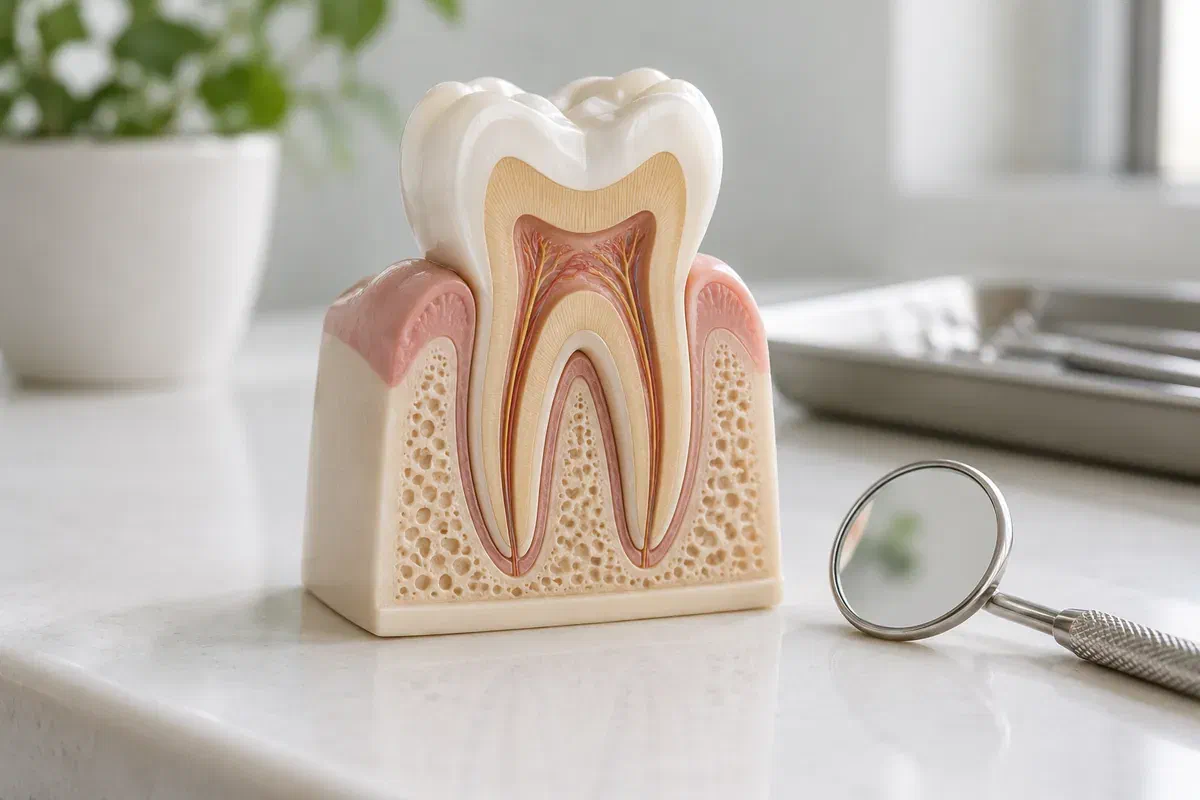
Illustrative physical model showing the inside of a tooth beside a dental mirror
Telling us what happened

Include the part where it got better

You are not expected to know whether it is an abscess. What helps most is an honest timeline, including the moment symptoms changed, so the team can judge timing and prepare.

Where it was sore and what shifted

Name the side and area of the mouth, then explain how things changed: the pain faded, a bump drained, chewing became easier or harder. Mention any lingering taste or tenderness. There is no need to keep tapping the tooth to see whether it still reacts.

How you have felt day to day

Tell us if you had a fever, felt drained or noticed swelling reaching past the gum, even if it has passed. Share health conditions, routine medicines and recent treatment. These details shape how urgently and where you should be seen.

Anything that may have masked it

Pain relievers, an antibiotic from another provider or advice from a pharmacist can all change how symptoms look. Say what you used and when. Have allergy information ready, and if the problem has come and gone more than once, describe each round.

If you have trouble breathing or swallowing, swelling near the eye or blurred vision, or facial or mouth swelling that is large or quickly spreading, call 911 or go to hospital emergency care. A dental request form is not the place for these symptoms.

Why the visit is still worth it

Feeling fine and being finished are two different things

The value of an assessment after symptoms settle is certainty. You learn what was actually going on, whether the source is still there and what, if anything, needs doing. If treatment begins that day, ask whether it is the whole job or a first stage that requires completing.

Advice will also reflect the state of the tooth and your overall health. Ask why the dentist leans toward keeping or removing it, what each path cannot promise, and how the appointments would be ordered. Understanding the reasoning makes it easier to fit the rest of the plan into a busy calendar.

Patient information: American Dental Association — antibiotics and definitive dental treatment

Evidence for the diagnosis

What you report, what the dentist sees and any X-rays that are justified all feed into the diagnosis. Ask which of them identify the probable cause. Pain is often poorly localised, so the tooth you blamed may not explain all of what you felt.

Honest talk about medicine

An antibiotic cannot take the place of dental treatment that is needed. Its use depends on the diagnosis, signs of spreading infection or wider illness, your health history and how soon treatment can be done. Ask what any medicine is meant to accomplish.

A sequence you can schedule

Get the date of the next visit, who will see you and what to do if symptoms return first. Ask for the estimate and any referral details. A written list is easier to slot into work and family plans than a remembered conversation.

What the appointment covers

History first, then findings, choices and follow-up

How far things go at the first visit depends on what the dentist sees and what is possible that day. Ask early which steps happen now and which need another appointment or referral.

  1. Walk through the timeline

    Explain when it began, when it eased, any earlier work on the tooth and which medicines you took. Allergies and medical conditions are recorded. If symptoms flare again while you wait for the appointment, call back or seek another appropriate provider.

  2. Find and explain the source

    Teeth, gums and surrounding tissue are checked, and X-rays or other checks are added only if they would help. Ask what is confirmed and what is still uncertain. A working diagnosis that fits your history should be in place before treatment is chosen.

  3. Choose treatment with full information

    Review the suggested procedure, comfort options, alternatives, limitations and fees. Depending on the cause, treatment may involve drainage and care of the tooth or tissue responsible. Ask whether it completes treatment or opens a longer plan.

  4. Book what comes next

    Before leaving, check which changes are expected and which mean you should get help. Confirm how unfinished work will be scheduled. For a referral, ask what will be sent and whom to call.

Keeping momentum after the visit

Don’t let the follow-up slip

Aftercare depends on whether you had drainage, root canal treatment, an extraction or gum care. Ask for instructions that fit your procedure instead of reusing advice from an earlier, unrelated appointment.

Put the next stage on the calendar

Book it before you leave, and set a reminder. If work or family commitments clash, phone to move it rather than letting it lapse. A comfortable tooth does not show that the dental plan is complete.

Treat medicine instructions as non-negotiable

Take medicine as directed and ask a pharmacist or clinician about side effects, interactions or uncertainty. Do not reach for a relative’s antibiotics or an old prescription. If you cannot take what was prescribed, get in touch with the person who prescribed it.

Notice and report a relapse

Contact the team if pain, swelling or feeling unwell is returning or worsening, or does not match what was explained. Give the treatment date and what is different. Do not try to puncture, squeeze or drain anything at home.

Options once the cause is known

Save the tooth, replace it, or treat the gums

For each, ask what it is meant to achieve, what care follows and what postponing could mean. No procedure suits every suspected abscess.

When the tooth is worth rebuilding

Root canal care and a restoration

If the infection starts inside a restorable tooth, root canal treatment may be proposed. Ask about the number of visits and the restoration needed afterward. The whole tooth is considered, including remaining structure and support.

When keeping it is unlikely to last

Removal now, replacement planned separately

Extraction may be advised if the tooth cannot be predictably treated or rebuilt. Ask why retention is not recommended and what the visit involves. Replacement, its timing and cost can be worked out as a separate decision.

When the source is not inside the tooth

Gum treatment or a specialist

A gum-related infection or a complicated case may need another approach or a specialist. Ask what the referral will help decide. The aim is the appropriate route to care, not one answer for every swelling.

Mississauga questions

Busy schedules, settled symptoms and what to do next

Phone for anything urgent. These answers help with planning, but your examination determines the diagnosis and treatment.

(905) 876-4488
The pain is gone. Can I wait until a less hectic week?
It is better not to. Pain can fade while the cause remains. Call to describe what happened so the team can advise how soon you should be seen, and book the earliest suitable time.
What could happen if a tooth infection is left untreated?
An untreated source can flare again, and infection can sometimes spread to other areas. That is why assessment is recommended even when symptoms settle. Spreading swelling or trouble breathing or swallowing needs emergency care.
Can I go to work with a suspected dental abscess?
Many people do while arranging care, but that depends on how you feel. Fever, spreading swelling or feeling very unwell are reasons to seek care promptly rather than pushing through the day.
My gum bump popped and tasted bad. What does that mean?
A draining bump is often linked to infection, and the taste comes from the drainage. It may ease pressure but does not mean the source is treated. Tell the team when it happened and keep the assessment.
Do I need X-rays for a tooth that no longer hurts?
The dentist decides whether imaging is indicated based on your history and examination. Images can help locate a source that is not obvious from symptoms alone. Ask what any image is meant to show.
Could I need more than one appointment to finish treatment?
Yes, depending on the findings. Some treatment is staged or involves a referral. Ask at the end of each visit what is done, what remains and when to book next.
Planning from Mississauga

One call now saves a rushed visit later

Ring our Bronte Street practice, tell us what the tooth has been doing and we will look for a time that suits. Mention any change in swelling or general health. When help is needed right now and our line is busy or closed, an emergency dental provider elsewhere is the better option.

Online requests are for non-urgent messages. Diagnosis, treatment, medicines, referrals and fees depend on assessment, and same-day or urgent care cannot be guaranteed.

Visit Milton Dental Clinic
Unit 1, 342 Bronte St. S, Milton, ON L9T 5B7
Get directions Clinic hours
Monday–Thursday
11am–7pm
Friday–Sunday
By appointment only

Areas we serve

  • Milton
  • Oakville
  • Mississauga
  • Georgetown
  • Halton Hills
  • Acton
  • Campbellville
  • Brampton
  • Burlington
  • Puslinch
  • Rockwood
  • Erin
  • Caledon
  • Etobicoke
  • Old Milton
  • Bronte Meadows
  • Timberlea
  • Dorset Park
  • Dempsey
  • Clarke
  • Beaty
  • Coates
  • Harrison
  • Scott
  • Willmott
  • Ford
  • Bowes
  • Cobden
  • Walker
  • Mountain View
  • Milton Heights
  • Hawthorne Village
  • Valley View
  • Fallingbrook
  • Nassagaweya
  • Trafalgar
  • Esquesing
  • Nelson
  • Brookville
  • Moffat
  • Glen Williams
  • Norval
  • Limehouse
  • Stewarttown
  • Ashgrove
  • Hornby
  • Silver Creek
  • Speyside
  • Scotch Block
  • North Oakville
  • River Oaks
  • Glen Abbey
  • West Oak Trails
  • Palermo
  • Bronte Creek
  • College Park
  • Joshua Creek
  • Uptown Core
  • Preserve
  • Iroquois Ridge
  • Lisgar
  • Meadowvale
  • Meadowvale Village
  • Churchill Meadows
  • Erin Mills
  • Central Erin Mills
  • Streetsville
  • East Credit
  • Creditview
  • Heartland
  • Sheridan
  • Mount Pleasant
  • Credit Valley
  • Huttonville
  • Churchville
  • Springbrook
  • Northwest Brampton
  • Bram West
  • Fletcher's Meadow
  • Fletcher's Creek South
  • Alton Village
  • Orchard
  • Millcroft
  • Headon Forest
  • Tansley
  • Brant Hills
  • Tyandaga
  • Kilbride
  • Lowville
  • Aberfoyle
  • Morriston
  • Arkell
  • Hillsburgh
  • Freelton
  • Carlisle
  • Waterdown
  • Flamborough
  • Mountsberg

How can we help?

Milton Dental Clinic

Have a question about your smile? Choose the option that works best for you.

For urgent dental concerns, please call.
Messages are reviewed during clinic hours.