

Illustrative patient discussing an urgent dental concern with a clinician
Specialized Care

Dental Abscess Treatment in Oakville

Noticed your cheek looks puffy, or a sore tooth now has swelling around it? From Oakville, phone us first so we can hear what is happening, check availability and help you decide where care should begin.

Swelling and tooth infection

Dentist or emergency room? Start by reading the signs.

Catching sight of a swollen cheek in the mirror tends to raise one question before any other: where do I go? Swelling near a painful tooth can come from a dental abscess, which is pus gathered around an infection in the tooth or the tissues that hold it. That needs dental treatment, though only an examination can confirm the cause and rule out look-alike problems.

Where you go depends on the warning signs listed below. Trouble breathing, swallowing or seeing, or swelling that is large or moving fast, belongs in hospital emergency care. Swelling that is limited to the gum and tooth area is a reason to call a dentist promptly. After that, the treatment might be drainage, work inside the tooth, an extraction, or care for the gum and surrounding tissue.

If you are calling from Oakville, tell us how the swelling has changed, when it started and whether you have a fever or feel ill. A form or email is too slow when things are moving quickly. If you cannot reach us, contact another emergency dental provider who is open.

Arrange an urgent assessment
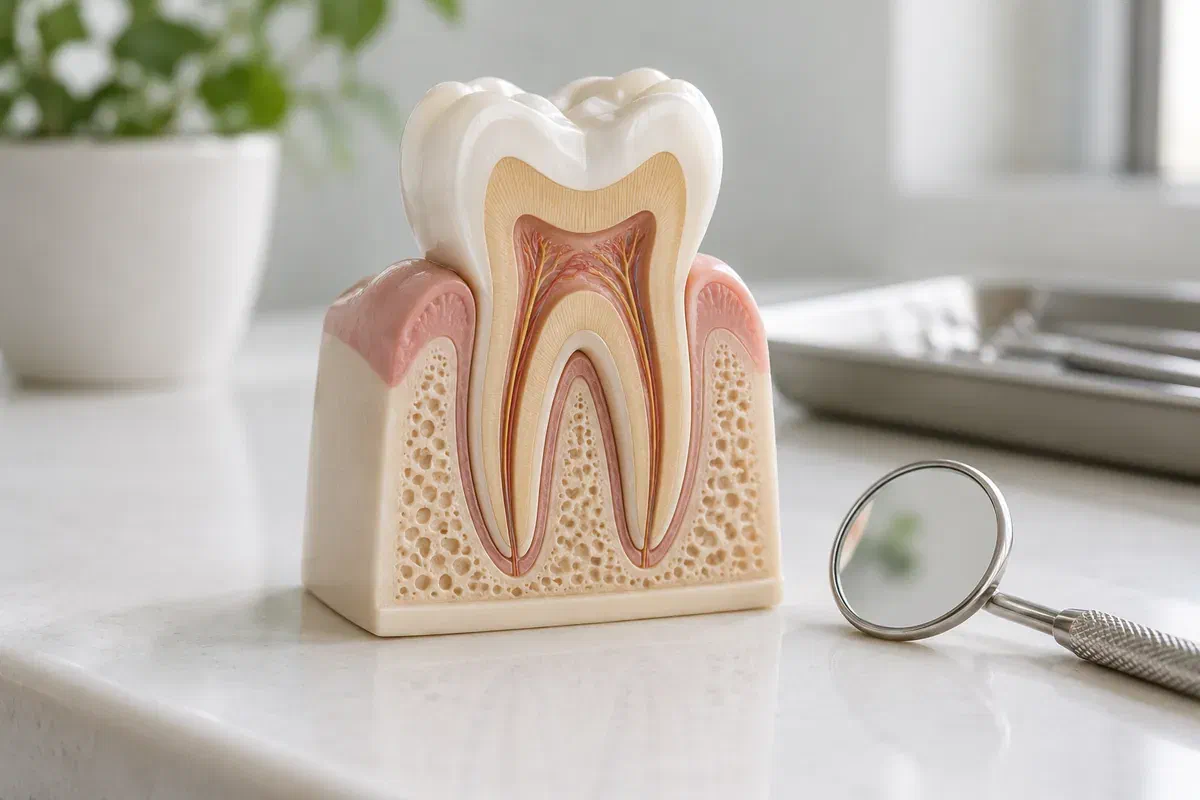
Illustrative physical model showing the inside of a tooth beside a dental mirror
What helps us triage

How big, how fast, and how you feel

You do not have to work out whether it is truly an abscess. Describing the swelling and your overall condition gives the team what it needs to advise on timing and setting.

The size and spread of the swelling

Say where the swelling is, whether it has grown since you first saw it, and if it has moved toward your jaw, cheek or under your tongue. Mention a bad taste, a gum bump or pain on biting. A photo taken at the same angle over time can be helpful.

Fever and other body-wide signs

Let us know about fever, chills or feeling unwell overall. Share health conditions, regular medicines and recent treatment of any kind. Signs beyond the mouth can change how urgently you need care, and sometimes where, so include them even if they seem minor.

Medicines and advice so far

Tell us if a dentist, pharmacist or doctor has already advised you or prescribed something, and when you started it. Keep the names and your allergy list nearby. If the swelling eased and then returned, that detail matters more than assuming it went away.

Go to a hospital emergency department or call 911 for difficulty breathing or swallowing, swelling around an eye or a change in vision, or swelling of the face or mouth that is substantial or spreading rapidly. These are not situations for a dental booking form.

After the swelling is assessed

Relief, plus a reason for every recommendation

Once the immediate concern is handled, you should understand what was found and where things stand. Ask whether today’s care tackles the source or is a first step that still needs finishing. Swelling going down is good news, but it should come with a clear sense of what remains.

Treatment advice also has to suit the tooth’s condition and your overall health. You can ask why a tooth should be kept or removed, what each option cannot do, and what the order of appointments looks like. A tense visit is still a visit where explanations count.

Patient information: American Dental Association — antibiotics and definitive dental treatment

The likely source, explained

Your history, examination and any images or tests that are needed are considered together. Ask which findings point to the cause. Swelling and pain can feel as though they come from one tooth when another, or the gum, is involved.

Why medicine is or is not prescribed

An antibiotic is not a replacement for the dental treatment that is needed. Whether it is suitable depends on the diagnosis, any sign of spreading infection or illness through your body, your medical history and how soon treatment can happen.

A written route forward

Note the next appointment, the provider and what to do if the swelling changes before then. Ask for the estimate and any referral information. Having it on paper helps when stress makes the details blur together.

Your urgent visit

Four stages, from triage to the follow-up plan

What can be done at the first appointment depends on the findings and on what is available. Ask which pieces happen that day and which require another visit or a referral elsewhere.

  1. Describe the swelling and your health

    We ask about when it started, how it has changed, previous work on that tooth and medicine you have taken. Allergies and health conditions are part of the picture. If the swelling worsens before your appointment, call back or seek another suitable provider straight away.

  2. Examine and identify the source

    The dentist looks at the affected teeth and soft tissue and decides whether imaging or tests are needed. Ask what is certain and what is not. A working diagnosis that fits your symptoms should come before any treatment is chosen.

  3. Agree on a treatment you understand

    You go over the proposed procedure, comfort options, alternatives, limits and fees. Depending on what is found, this may include drainage and treating the responsible tooth or tissue. Ask whether this is the full treatment or the start of a longer plan.

  4. Leave with warning signs and a plan

    Before you head home, confirm what changes are normal and which mean you need help again. Clarify how remaining treatment will be finished. If a referral is suggested, ask what will be sent and who arranges the booking.

Watching the swelling settle

Use advice that matches what was done today

Healing after drainage is not the same as healing after a root canal, a tooth removal or gum treatment. Ask for instructions that fit your procedure rather than reusing guidance from a different visit.

Confirm the completion appointment

Write down the next step and book it before you leave. If that time stops working, phone to rearrange. Swelling that has gone down does not mean every part of the dental plan is finished.

Take only what was prescribed for you

Follow the directions you were given and ask a pharmacist or clinician about side effects, interactions or doubts. Never use someone else’s antibiotics or old leftover pills. If you cannot take a prescribed medicine, tell the prescriber so the plan can be adjusted.

Report swelling that comes back

Call if pain, swelling or feeling unwell is increasing, returning or different from what you were told to expect. Mention the date of treatment and what has changed. Do not try to lance, squeeze or drain a swollen spot yourself.

Dealing with the source

Treatment follows the diagnosis

For any option, ask what it aims to do, what comes after it and what could happen if it is delayed. No one procedure suits every abscess.

For a tooth that can be rebuilt

Saving the tooth with root canal care

When infection starts inside a restorable tooth, root canal treatment may be recommended. Ask how many visits it takes and what restoration follows. The choice considers the whole tooth, including its remaining structure and support, not only the infection.

When predictable retention is unlikely

Taking the tooth out

Extraction may be suggested if treatment or restoration is unlikely to succeed. Ask why keeping the tooth is not advised and what the removal appointment involves. Replacement options, timing and costs can be discussed as a separate step.

For other sources or complex cases

Gum care or a specialist’s opinion

Infection rooted in the gums, or a more complicated case, may need different treatment or a specialist. Ask what the referral should clarify. The aim is a fitting path to care, not one label for every swelling.

Oakville questions about swelling

Practical answers when your face or gum is swollen

If swelling is spreading, call or seek emergency care now. These answers help with planning, but the examination determines your diagnosis and treatment.

(905) 876-4488
Should I put ice or heat on a swollen jaw while I wait?
Ask the team or a pharmacist when you call, and avoid anything that hides worsening symptoms. Comfort measures do not treat the cause. If swelling is spreading or you have trouble breathing or swallowing, seek emergency care instead.
How can I tell if swelling from a tooth is spreading?
Watch for swelling that grows quickly, moves toward the eye, neck or under the tongue, or comes with fever and feeling very unwell. Any of these is a reason for urgent hospital care rather than waiting for a dental slot.
Will I be able to drive myself home after an urgent visit?
It depends on the treatment and the comfort measures used. Ask when you book. If sedation is involved, you will be told whether someone needs to bring you and take you home.
Can an infected tooth make the rest of my body feel unwell?
It can. Fever, chills or feeling generally ill alongside dental pain or swelling should be mentioned straight away. These signs can change how quickly and where you need to be seen.
If swelling goes down after antibiotics, can I skip the dental work?
Usually not. Medicine may reduce symptoms while the source remains in the tooth or tissue. Ask what the prescription was for and keep the appointment for treatment that deals with the cause.
Is the first urgent appointment the only visit I will need?
Sometimes, but not always. Some care happens in stages or through a referral. Before leaving, ask what is complete, what is left and when you should return.
Calling from Oakville

Swelling near a tooth? Ring before it changes.

Phone our Bronte Street practice to talk about the swelling and when we can see you. Tell us if it is growing or you feel unwell. If you need care right away and we cannot be reached, contact another emergency dental provider or hospital as appropriate.

Online requests are for non-urgent matters. Diagnosis, treatment, prescriptions, referrals and fees depend on assessment, and urgent or same-day availability cannot be guaranteed.

Visit Milton Dental Clinic
Unit 1, 342 Bronte St. S, Milton, ON L9T 5B7
Get directions Clinic hours
Monday–Thursday
11am–7pm
Friday–Sunday
By appointment only

Areas we serve

  • Milton
  • Oakville
  • Mississauga
  • Georgetown
  • Halton Hills
  • Acton
  • Campbellville
  • Brampton
  • Burlington
  • Puslinch
  • Rockwood
  • Erin
  • Caledon
  • Etobicoke
  • Old Milton
  • Bronte Meadows
  • Timberlea
  • Dorset Park
  • Dempsey
  • Clarke
  • Beaty
  • Coates
  • Harrison
  • Scott
  • Willmott
  • Ford
  • Bowes
  • Cobden
  • Walker
  • Mountain View
  • Milton Heights
  • Hawthorne Village
  • Valley View
  • Fallingbrook
  • Nassagaweya
  • Trafalgar
  • Esquesing
  • Nelson
  • Brookville
  • Moffat
  • Glen Williams
  • Norval
  • Limehouse
  • Stewarttown
  • Ashgrove
  • Hornby
  • Silver Creek
  • Speyside
  • Scotch Block
  • North Oakville
  • River Oaks
  • Glen Abbey
  • West Oak Trails
  • Palermo
  • Bronte Creek
  • College Park
  • Joshua Creek
  • Uptown Core
  • Preserve
  • Iroquois Ridge
  • Lisgar
  • Meadowvale
  • Meadowvale Village
  • Churchill Meadows
  • Erin Mills
  • Central Erin Mills
  • Streetsville
  • East Credit
  • Creditview
  • Heartland
  • Sheridan
  • Mount Pleasant
  • Credit Valley
  • Huttonville
  • Churchville
  • Springbrook
  • Northwest Brampton
  • Bram West
  • Fletcher's Meadow
  • Fletcher's Creek South
  • Alton Village
  • Orchard
  • Millcroft
  • Headon Forest
  • Tansley
  • Brant Hills
  • Tyandaga
  • Kilbride
  • Lowville
  • Aberfoyle
  • Morriston
  • Arkell
  • Hillsburgh
  • Freelton
  • Carlisle
  • Waterdown
  • Flamborough
  • Mountsberg

How can we help?

Milton Dental Clinic

Have a question about your smile? Choose the option that works best for you.

For urgent dental concerns, please call.
Messages are reviewed during clinic hours.