

Illustrative patient discussing an implant concern with a clinician and dental model
Specialized Care

Dental Implant Emergencies in Campbellville

It is tempting to wait and see when an implant tooth feels a little loose or the gum looks slightly puffy, especially when a trip into town has to fit around everything else. From Campbellville, a short call helps you decide whether this can wait, or whether it shouldn’t.

Wait and see, or call now?

Slow changes are still changes.

Not every implant problem arrives with a bang. Sometimes a crown develops the faintest wiggle over a few weeks, or food starts catching beside it, or the gum bleeds a little more each time you floss. It is easy to put off. Yet those slow signs can come from a loosening crown or screw, wear in a connecting part, gum inflammation, or the aftermath of an earlier knock. Each calls for its own care, and only an examination can show which it is.

A phone call goes faster if you can say what you have: a single implant crown, a bridge on implants, or a denture that clips onto them. Describe how the change has developed over time. Has the movement grown? Is the soreness steady or coming and going? Has the bite shifted? You won’t be asked for the brand, though an old record from the placement would be welcome.

Call us once you notice the change, rather than waiting until it gets worse, and ask about the next available assessment. For rural households in Campbellville, we can try to fit the visit alongside other appointments in your family. If another office placed or restored the implant, tell us and bring what records you can. We will handle the immediate concern and discuss whether the original provider or a specialist should join in.

Find out if it can wait
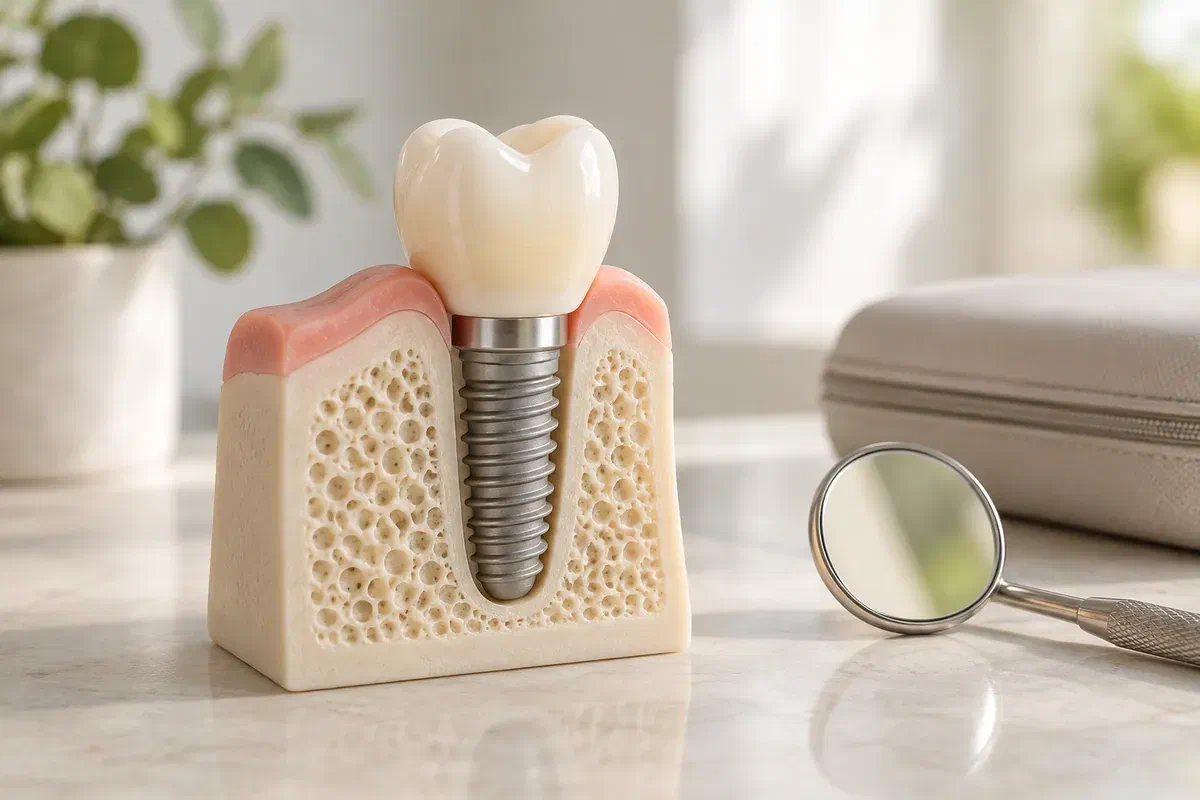
Illustrative model of a dental implant and attached crown within a bone-and-gum cross-section
Changes that creep up

Notice the trend, and stop testing it.

Whether a symptom is steady, improving or getting worse matters as much as what it is. Photos taken a few days apart can help show a trend, but they cannot reveal the post or the bone around it.

A crown that loosens bit by bit

Tell us when you first noticed it and whether it is increasing. Avoid wiggling it to keep track, as that can make things worse. Gradual movement can involve the restoration, its connection or the implant, and only an examination can show which.

Gum that bleeds more often or looks puffy

Describe how long it has been going on, how often it happens, and whether there is pus or a sour taste. Inflammation around an implant can creep forward quietly and affect its support. We judge that by examining the gum and, where needed, taking X-rays.

A small part lost, or a long-ago knock

If a cap, screw or crown has come out, keep it in a clean container. Mention any earlier impact, even one that seemed minor, and any recent dental work. Avoid pushing parts back, tightening them yourself, or using household glue.

Implants do not decay, but slow changes in the surrounding gum and bone, or gradual loosening of the parts on top, can still develop. Reporting a symptom early often leaves more options available.

The case for not waiting

Earlier is usually simpler.

Coming in before a slow problem becomes a sudden one lets the clinician separate what needs care now from what can be planned. You can ask whether the restoration can be steadied or the gum treated at the visit, and whether a lasting repair relies on records, specific parts, lab work or a referral. Each of those steps should be explained on its own.

Once the cause is identified, there may be several sensible approaches. A good plan considers the implant, the restoration, the gum and nearby teeth. A quick adjustment that is never explained can leave you unsure what caused the change and what to keep watching.

Knowing which part is wearing

Ask the clinician to describe the crown, the abutment and the implant, and which one is affected. That makes the suggested treatment easier to understand and prevents a loose crown from being seen as a lost implant.

Records that show change over time

Earlier X-rays, placement dates and system details can reveal how things have shifted. Ask how to request them with your consent. If you have none, say so, and do not let that delay a call about an urgent change.

Help arranging further care

Some problems need specific components, manufacturer information or a specialist opinion. Ask who will organise the next step and how to look after the area until then. A clear handover is better than a referral you have to chase.

What a visit looks like

A clear route from first symptom to follow-up

What can be done at the first appointment depends on the findings and on access to suitable parts and expertise. Gradual problems sometimes take a few visits to correct.

  1. Tell us how it has developed

    Explain the symptoms, how they have changed, and any knock or recent treatment. If you know which office provided the implant, mention it, along with any part that came off. Tell us about your health and medicines so we can plan the appointment.

  2. Check the crown, the gum and the bite

    The clinician examines the area and decides whether X-rays or earlier images would help. Ask what the findings explain and what is still unknown. The tissue around the implant is assessed as closely as the restoration.

  3. Discuss what to do now and later

    Go over what can reasonably be done at this appointment and what will need another. Ask about the proposed repair, other approaches and estimated fees. If a component has to be sourced, agree how to manage until it arrives.

  4. Leave with the next step booked

    Confirm who is responsible for follow-up and how to reach them, and book it if you can so it fits your schedule. Ask what would justify calling before then. Keep copies of records for future visits.

Keeping things stable

Simple habits until the repair is complete

Care is different for a loose crown, inflamed gum, a healing part, or an implant-supported denture. Ask for advice that matches your situation.

Hands off the restoration

Do not use tools, glue or pressure to hold the restoration in place. Follow any advice about chewing and about removable appliances. If it loosens again after treatment, ring us and describe what is happening rather than trying a fix.

Hold on to parts and records

Keep any detached piece in a clean container rather than in your mouth. Bring it and any paperwork to the appointment. A note of when it came off can help explain events, even if the part is not reused.

Keep up the cleaning you were shown

Ask how to clean around the affected implant or a temporary restoration. Let us know if discomfort makes that difficult. Once the immediate concern is handled, agree on a review schedule and who will keep watch over the implant.

Patient information: Guy's and St Thomas' — swallowed or inhaled dental objects

Options once the cause is known

Tighten, treat, or take a wider view

The assessment should explain what can be kept, what may need repair or replacing, and what is uncertain. Understand the implications before agreeing to a definitive plan.

When the restoration or connection is loosening

Restoring the crown or a connecting part

A worn or loose restoration may need professional repair, a replacement part, or a new crown. The best option depends on its construction and how it has aged. Ask what has been causing the gradual loosening and whether further visits or lab time are needed.

When inflammation or bone loss is found

Treating the gum and bone

Ask what the examination and X-rays show, what treatment is recommended, and how the response will be reviewed. It may involve more than cleaning the crown. The plan should be clear about the extent of the issue and not promise that every implant can be retained.

When the cause is complex or the outlook unclear

Further assessment or a broader plan

More information may be needed before choosing a repair. Find out what a specialist visit would add and how to care for the area while you wait. If removal is raised, replacement choices and timing deserve an individual discussion rather than assumptions.

Campbellville implant FAQs

Is it urgent, or can it be booked?

Slow changes around an implant can be hard to judge. These answers help you decide when to call without predicting the outcome of an examination.

(905) 876-4488
How long is too long to wait with a slightly loose implant crown?
There is no safe rule of thumb, so call when you first notice it. A crown that is loosening can come off unexpectedly or wear the parts beneath it. The team can help you decide how soon to be seen.
Food keeps getting stuck beside my implant. Should I mention it?
Yes. A new food trap can mean the crown has shifted or the gum has changed. Clean the area gently, and arrange an assessment so the cause can be found.
Can I combine an implant check with my regular cleaning?
If the problem is not urgent, that may be possible. Ask when you call. If there is swelling, significant pain or a part has come out, a prompt separate visit is usually more appropriate.
What signs mean I should stop waiting and call right away?
Swelling, increasing pain, a bad taste, pus, a crown that has come off, or movement that is getting worse are all reasons to call promptly. Call 911 for any breathing difficulty.
Can an implant loosen years after it was placed?
The crown or its parts can loosen at any time, and the gum and bone around the implant can change. Report a new symptom however long the implant has been comfortable.
If I wait, will the repair be more complicated?
It can be, though every case is different. Addressing a change early gives the clinician more information and, often, more options. Ask what the findings mean for timing.
Implant care for Campbellville

Not sure if it can wait? Ask us.

Call our Bronte Street practice about an implant that is slowly loosening, a gum that keeps bleeding, or a part that has come away. We can help judge timing and tell you what to bring. If you need care now and cannot reach us, contact another available emergency provider.

Online requests are for non-urgent concerns. Availability, parts, referral, fees and the future of the implant depend on what the examination finds.

Visit Milton Dental Clinic
Unit 1, 342 Bronte St. S, Milton, ON L9T 5B7
Get directions Clinic hours
Monday–Thursday
11am–7pm
Friday–Sunday
By appointment only

Areas we serve

  • Milton
  • Oakville
  • Mississauga
  • Georgetown
  • Halton Hills
  • Acton
  • Campbellville
  • Brampton
  • Burlington
  • Puslinch
  • Rockwood
  • Erin
  • Caledon
  • Etobicoke
  • Old Milton
  • Bronte Meadows
  • Timberlea
  • Dorset Park
  • Dempsey
  • Clarke
  • Beaty
  • Coates
  • Harrison
  • Scott
  • Willmott
  • Ford
  • Bowes
  • Cobden
  • Walker
  • Mountain View
  • Milton Heights
  • Hawthorne Village
  • Valley View
  • Fallingbrook
  • Nassagaweya
  • Trafalgar
  • Esquesing
  • Nelson
  • Brookville
  • Moffat
  • Glen Williams
  • Norval
  • Limehouse
  • Stewarttown
  • Ashgrove
  • Hornby
  • Silver Creek
  • Speyside
  • Scotch Block
  • North Oakville
  • River Oaks
  • Glen Abbey
  • West Oak Trails
  • Palermo
  • Bronte Creek
  • College Park
  • Joshua Creek
  • Uptown Core
  • Preserve
  • Iroquois Ridge
  • Lisgar
  • Meadowvale
  • Meadowvale Village
  • Churchill Meadows
  • Erin Mills
  • Central Erin Mills
  • Streetsville
  • East Credit
  • Creditview
  • Heartland
  • Sheridan
  • Mount Pleasant
  • Credit Valley
  • Huttonville
  • Churchville
  • Springbrook
  • Northwest Brampton
  • Bram West
  • Fletcher's Meadow
  • Fletcher's Creek South
  • Alton Village
  • Orchard
  • Millcroft
  • Headon Forest
  • Tansley
  • Brant Hills
  • Tyandaga
  • Kilbride
  • Lowville
  • Aberfoyle
  • Morriston
  • Arkell
  • Hillsburgh
  • Freelton
  • Carlisle
  • Waterdown
  • Flamborough
  • Mountsberg

How can we help?

Milton Dental Clinic

Have a question about your smile? Choose the option that works best for you.

For urgent dental concerns, please call.
Messages are reviewed during clinic hours.