

Illustrative patient discussing an implant concern with a clinician and dental model
Specialized Care

Dental Implant Emergencies in Etobicoke

When an implant tooth loosens, aches or swells and you are coming from Etobicoke, the first decision is where to go. A call helps you judge whether to book with us, how to make one well-planned trip count, or whether nearer urgent care makes more sense today.

Choosing where to be seen

Here, or somewhere nearer? Start by naming the problem.

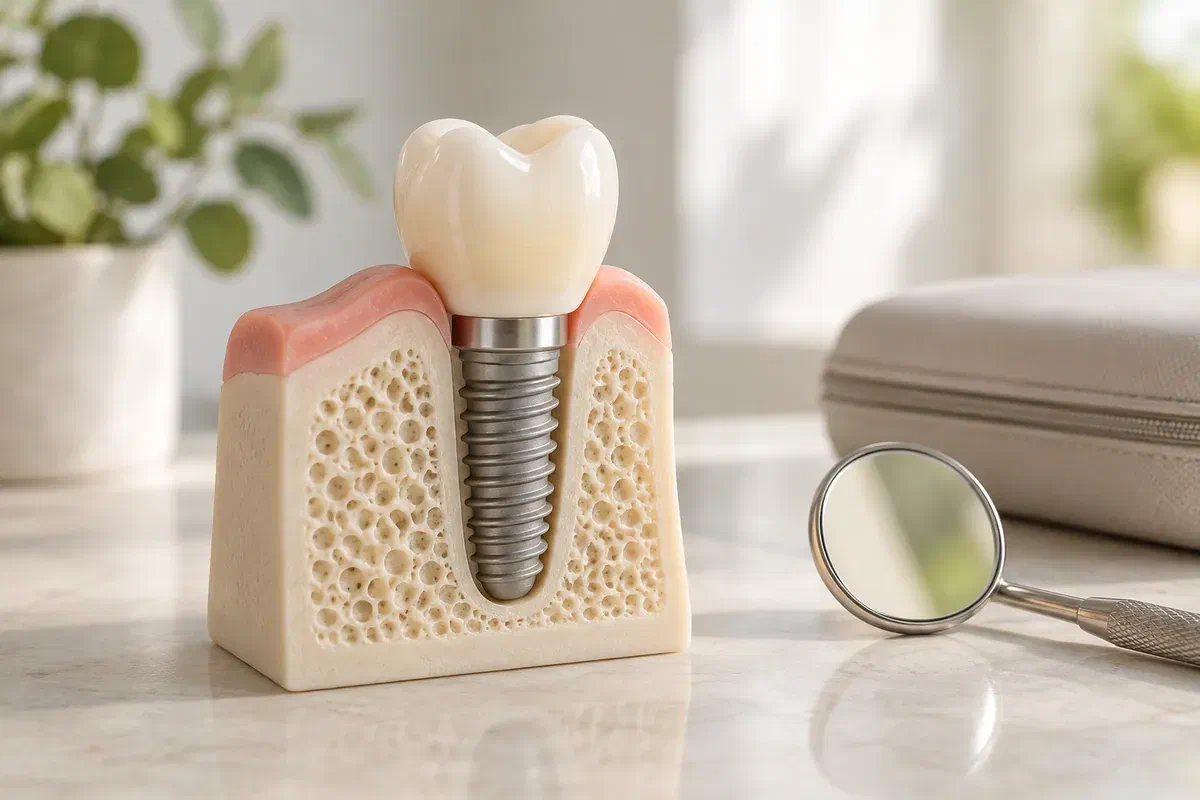
The answer depends partly on what has gone wrong. An implant tooth is assembled from a crown, a connecting abutment, and a post that sits in the jawbone, and trouble can start in any of them. A crown that has come loose is a different matter from a fractured component, an inflamed gum, or damage from a blow to the face. An examination is the only reliable way to separate them, but a good description on the phone helps decide how quickly and where.

Have a few facts ready when you ring. Do you have one implant crown, a bridge on implants, or a denture that clips onto them? Is the tooth moving, sore, swollen, or making your bite feel wrong? No one expects you to recall the implant manufacturer. If a treatment record or receipt is on file at home, though, bring it.

Phone us promptly and ask what availability looks like. Because the trip is a longer one, we can talk about grouping the assessment and any likely follow-up into as few visits as is sensible. If another clinic placed or restored the implant, mention it and bring records. Where swelling is spreading or pain cannot wait, a closer emergency provider may be the wiser first stop.

Plan an implant assessment
Illustrative model of a dental implant and attached crown within a bone-and-gum cross-section
Help us help you decide

A clear description can save you an unnecessary drive.

Location, onset and the kind of change tell us a lot about urgency. Pictures can add to that story, but they cannot reveal the condition of the post or the supporting bone and gum.

The tooth has started to move

Say whether the movement began in a moment, after a hard bite, or slowly. Avoid nudging it to check and do not chew on that side. Whether the restoration, the abutment connection, or the implant is moving can only be settled in the chair.

Gum that is red, sore or puffy

Tell us when this started and whether you have noticed discharge or a foul taste. The tissue around an implant can become inflamed, which may compromise its support. Spreading swelling is a reason to seek care promptly, wherever is nearest.

A detached piece or a recent injury

Put any part that came out in a clean container and keep it with you. Describe any fall, impact or recent dental work. Do not jam it back in, try to tighten it, or reach for a household adhesive.

Implants cannot decay, but the gum and bone around them can become diseased, and the crown and connecting parts can wear or loosen. Neither problem respects how long an implant has been in place.

Making the trip worthwhile

One well-organised visit is better than three rushed ones.

A considered first appointment draws a line between the urgent and the planned. You can ask whether the area can be stabilised or made comfortable during that visit, and whether the definitive repair depends on records, matching parts, lab time or a specialist. If we know in advance what may be needed, it is easier to keep return trips to a minimum.

There may be more than one reasonable option once the cause is clear. A sound plan accounts for the implant, the restoration, the gum and your neighbouring teeth. An unexplained quick fix can leave you uncertain about what happened, and that is harder to sort out from a distance.

Knowing which component is involved

Ask the clinician to point out the difference between the crown, the abutment and the implant, and which is at fault. That clarity makes it easier to weigh the treatment, and it prevents a simple loosening from being read as implant failure.

Records sent ahead of time

Implant system details, placement dates, old X-rays and lab notes can help planning. Ask whether they can be requested before your visit, with your consent, so parts can be considered in advance. Missing papers should never delay a call about an urgent symptom.

Coordinated care closer to home if needed

Some problems need specific components, technical support or a specialist. Ask who will make the arrangements and whether any part of the follow-up could be handled nearer to you. What matters is a clear plan, not just a referral slip.

Planning a single trip

Phone first, travel once, leave with a plan.

What can be done at the first appointment depends on the findings and on access to suitable parts and expertise. Telling us as much as possible before you set off helps make that visit count.

  1. A detailed call before you travel

    Share the symptoms, timing and any knock or recent treatment. Tell us who placed the implant if you know, and whether a piece has come off. Mention health conditions and medicines so the visit can be prepared safely.

  2. A thorough examination on arrival

    The clinician assesses the tooth, gum and bite, and decides whether images or earlier records are needed. Ask what the findings explain and what remains uncertain. The gum is checked as carefully as the crown.

  3. A frank talk about today and later

    Find out what can reasonably be done during the visit and what cannot. Ask about the proposed repair, alternatives and estimated fees. If a part has to be identified or ordered, agree on how to protect the area until it is ready.

  4. Follow-up arranged before you leave

    Confirm who handles the next stage and how to reach them, and try to book it then and there. Ask which symptoms should prompt an earlier call, and where to go if they arise outside our hours. Keep copies of records for future visits.

Back home after the visit

Look after the area and know who to call.

Instructions for a loose crown, inflamed gum, a healing part, or an implant-retained denture are not the same. Ask for advice that fits what was found in your case.

Avoid home fixes

Tools, adhesives and repeated biting can do more harm than good. Use the area and any removable denture as advised. If the restoration loosens again, phone and describe it rather than attempting a repair yourself.

Keep parts and paperwork in one place

A part that has come away goes into a clean container and stays out of your mouth. Bring it, with any records, to your next appointment. The timing of when it separated may help explain things, even if it cannot be reused.

Keep cleaning and keep the review date

Ask how to brush and floss around the treated site or a temporary piece. Let us know if soreness makes this hard. Once the urgent concern is resolved, confirm a maintenance plan, and ask whether routine checks could be shared with a dentist closer to home.

Patient information: Guy's and St Thomas' — swallowed or inhaled dental objects

What the findings point to

Three possible directions after the assessment

You should come away knowing what can stay, what might be repaired or replaced, and what is still uncertain. Consider the implications, including the number of trips, before agreeing to a definitive plan.

If the crown or abutment is the problem

A restorative repair or new part

A loose or damaged restoration may be repaired, receive a replacement component, or be remade. Which approach suits you will depend on how it was built and the shape it is in. It is worth asking what caused the loosening and how many visits the repair is likely to need.

If inflammation or bone loss is present

Treatment for the tissue around the post

Ask what the gum assessment and images reveal, what treatment is recommended, and how progress will be checked. It may involve more than cleaning around the crown. The plan should be honest about the extent of the problem, with no promise that every implant can be retained.

If the case is complex or uncertain

A specialist view or a broader plan

Further assessment may be needed before repair is chosen. Ask what the referral will clarify, where it could take place, and what to do in the meantime. If removal is discussed, replacement options and timing should be worked out individually.

Questions about travel and timing

Planning implant care from further away

Dealing with a sudden implant problem is harder when the clinic is not around the corner. These answers help you plan without predicting the outcome of the examination.

(905) 876-4488
When should I go to a closer emergency provider instead of travelling?
If swelling is spreading, pain is severe and cannot wait, or you feel unwell, seek the nearest available care. Call 911 for breathing difficulty or a part that may have been inhaled. You can follow up with us once the urgent issue is under control.
Can my records be sent before my appointment to save a trip?
Often, yes, with your consent. Ask us how to request them from the original provider. Having system details in advance can help with planning, though an examination is still needed before treatment is decided.
Could the follow-up after an implant repair be done nearer to Etobicoke?
It depends on the treatment. Ask during your visit which steps need to happen with us and whether routine monitoring could be shared with a dentist closer to home.
My implant crown is loose but not painful. How quickly should I be seen?
Promptly, though it may not need same-day care. Avoid chewing on it and call to describe the change. Waiting too long can allow parts to wear further or the crown to come off unexpectedly.
Can a loose implant crown be swallowed?
It is possible, which is one reason to avoid chewing on a loose restoration. If a piece may have been inhaled, or you have trouble breathing, call 911. If you think it was swallowed, seek medical advice.
Is it worth travelling if the repair cannot be finished in one visit?
The first visit can still identify the cause, make the area more secure or comfortable, and plan the next steps. Ask what can be done that day and how the remaining work could be scheduled to limit extra trips.
Implant concerns from Etobicoke

Call before you set off.

Talk to our Bronte Street practice about implant pain, movement, swelling or a lost piece, and we will help you weigh timing, records and whether the trip makes sense today. If immediate care is needed and we cannot be reached, go to an emergency provider near you.

Online requests are for non-urgent questions. Appointment times, part availability, referrals, fees and the outlook for your implant are confirmed only after assessment.

Visit Milton Dental Clinic
Unit 1, 342 Bronte St. S, Milton, ON L9T 5B7
Get directions Clinic hours
Monday–Thursday
11am–7pm
Friday–Sunday
By appointment only

Areas we serve

  • Milton
  • Oakville
  • Mississauga
  • Georgetown
  • Halton Hills
  • Acton
  • Campbellville
  • Brampton
  • Burlington
  • Puslinch
  • Rockwood
  • Erin
  • Caledon
  • Etobicoke
  • Old Milton
  • Bronte Meadows
  • Timberlea
  • Dorset Park
  • Dempsey
  • Clarke
  • Beaty
  • Coates
  • Harrison
  • Scott
  • Willmott
  • Ford
  • Bowes
  • Cobden
  • Walker
  • Mountain View
  • Milton Heights
  • Hawthorne Village
  • Valley View
  • Fallingbrook
  • Nassagaweya
  • Trafalgar
  • Esquesing
  • Nelson
  • Brookville
  • Moffat
  • Glen Williams
  • Norval
  • Limehouse
  • Stewarttown
  • Ashgrove
  • Hornby
  • Silver Creek
  • Speyside
  • Scotch Block
  • North Oakville
  • River Oaks
  • Glen Abbey
  • West Oak Trails
  • Palermo
  • Bronte Creek
  • College Park
  • Joshua Creek
  • Uptown Core
  • Preserve
  • Iroquois Ridge
  • Lisgar
  • Meadowvale
  • Meadowvale Village
  • Churchill Meadows
  • Erin Mills
  • Central Erin Mills
  • Streetsville
  • East Credit
  • Creditview
  • Heartland
  • Sheridan
  • Mount Pleasant
  • Credit Valley
  • Huttonville
  • Churchville
  • Springbrook
  • Northwest Brampton
  • Bram West
  • Fletcher's Meadow
  • Fletcher's Creek South
  • Alton Village
  • Orchard
  • Millcroft
  • Headon Forest
  • Tansley
  • Brant Hills
  • Tyandaga
  • Kilbride
  • Lowville
  • Aberfoyle
  • Morriston
  • Arkell
  • Hillsburgh
  • Freelton
  • Carlisle
  • Waterdown
  • Flamborough
  • Mountsberg

How can we help?

Milton Dental Clinic

Have a question about your smile? Choose the option that works best for you.

For urgent dental concerns, please call.
Messages are reviewed during clinic hours.