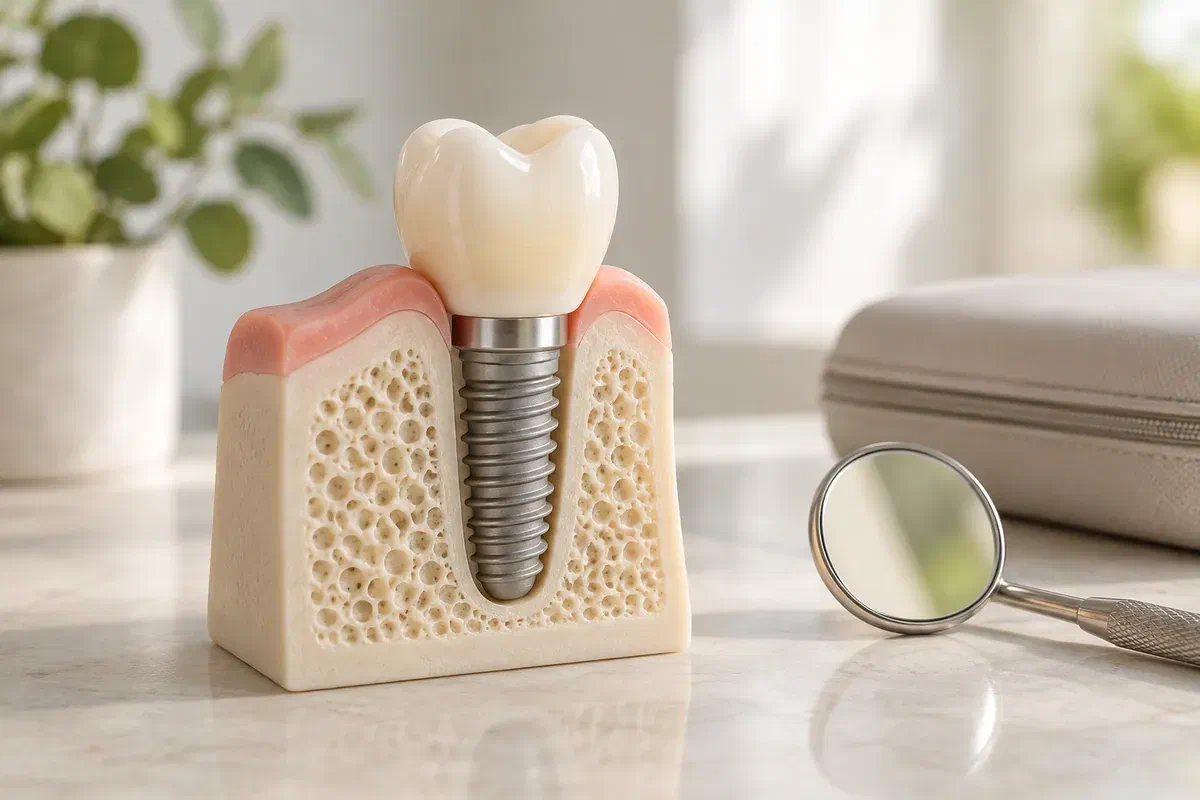
Illustrative patient discussing an implant concern with a clinician and dental model
Specialized Care

Dental Implant Emergencies in Puslinch

You bit down on a nut shell or a popcorn kernel and felt your implant crown give. Before setting out from Puslinch, call us. A few minutes on the phone tells us how urgent it is, and tells you exactly what to pack so one visit can do as much as possible.

After a hard bite

Pack the right things and the first visit goes further.

A sudden crunch on something hard can crack porcelain, loosen the screw beneath a crown, or strain the abutment that links the tooth to the implant. Less often, the gum or bone around the post is affected too. From the outside these feel alike, which is why it is worth resisting conclusions. Each has its own repair route, and an examination is how the affected part is found.

On the phone, describe your restoration: one implant crown, a bridge on several implants, or a denture that snaps onto implants. Tell us what happened and what you notice now, whether that is movement, a sharp edge, pain, swelling, or a bite that has changed. The implant brand is not required. Treatment cards, invoices or a summary from the original office go straight into your bag, though.

Ring us promptly after the bite and ask how soon you can be seen. For rural households in Puslinch, a single well-prepared visit is far more useful than an extra trip for missing information. If another clinic placed or restored the implant, mention it and gather what you can. We will deal with the urgent concern and discuss whether the original provider or a specialist should take part.

Plan a prepared implant visit
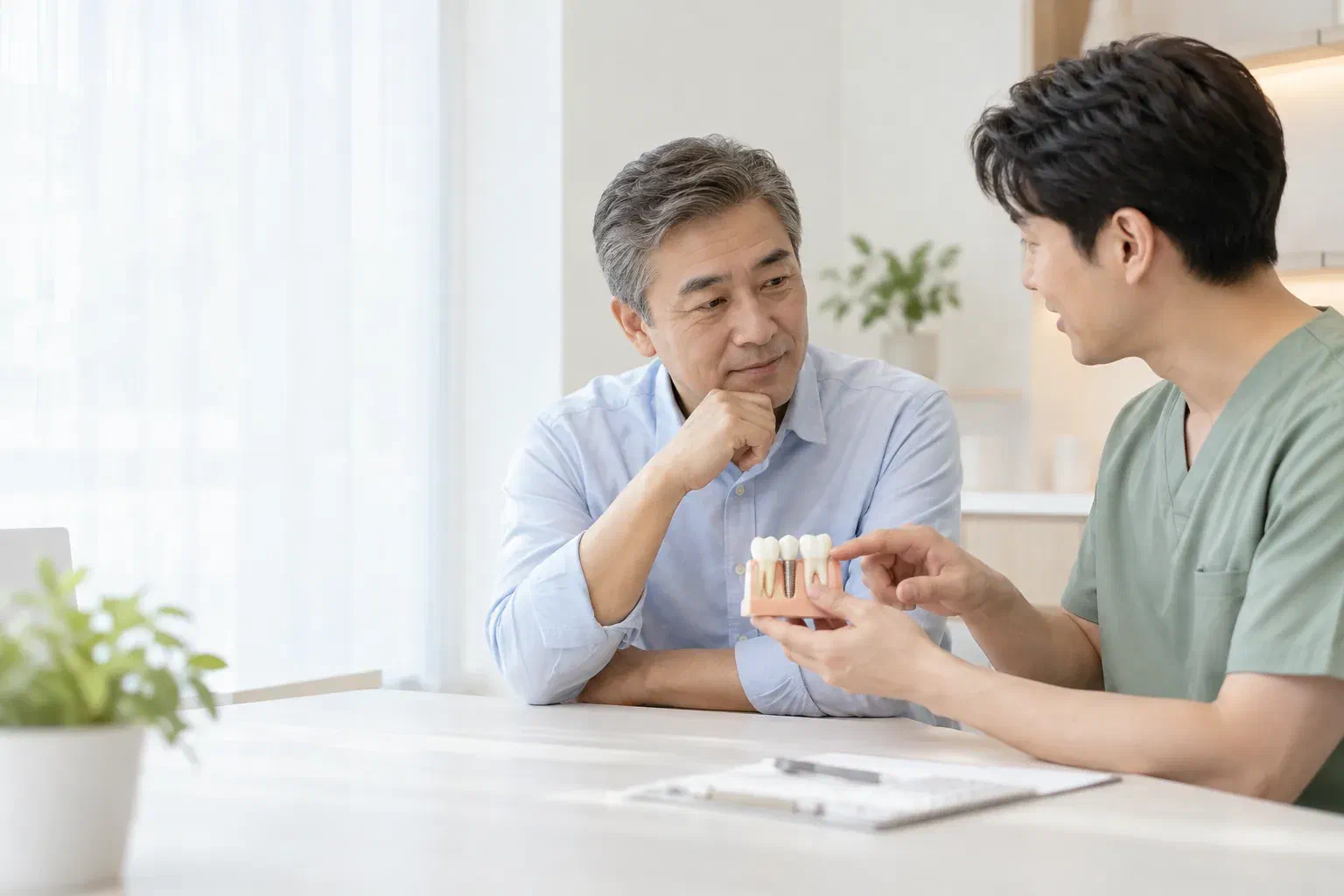
Illustrative model of a dental implant and attached crown within a bone-and-gum cross-section
What to note right after

Three questions to answer before you call

Which tooth, what happened, and how it has changed since are the essentials. A picture of a crack or chip is a handy extra, but the implant and the bone around it remain out of sight.

Does the tooth move now?

Say whether it shifted at the moment of the bite or has loosened since. Avoid rocking it or chewing on that side to check. Movement can sit in the crown, the screw and abutment, or the implant, and an examination has to settle which.

Is the gum sore, bleeding or swelling?

Tell us whether the gum changed after the bite or was already tender, and whether you notice discharge or a bad taste. Inflammation around an implant can affect its support. The clinician checks the tissue directly and with images where useful.

Did anything break off or fall out?

Collect any fragment, screw or crown and keep it in a clean container. Mention any other recent injury or treatment. Please avoid pressing pieces back, tightening anything with a tool, or patching it with household glue.

An implant tooth cannot get a cavity, but its porcelain can chip, its parts can loosen, and the tissue around it can become inflamed. A hard bite that leaves the tooth feeling different is worth reporting.

What the visit can settle

Make it safe first, then plan the permanent repair.

An early assessment works out what can be addressed on the day and what depends on details not yet available. Ask whether a sharp edge can be smoothed or the crown steadied at the visit, and whether the lasting repair relies on records, specific components, a dental lab or a referral. When those stages are explained apart, planning your trips is easier.

With the cause identified, there may be more than one fair choice. The plan should consider the implant, the restoration, the gum and your bite on both sides. A quick fix with no explanation can leave you unsure whether the same food could cause trouble again.

Knowing what the bite actually damaged

Ask for a plain explanation of whether the crown, the screw and abutment, or the implant took the force. With that understood, treatment is easier to judge, and a cracked crown is not mistaken for a failed implant.

Paperwork that speeds up the repair

System information, placement dates, older X-rays and lab details can help identify compatible parts. Ask how records can be requested in advance with your consent. If you cannot find any, mention it, and still call promptly about an urgent symptom.

A next step you can actually act on

Some repairs need particular parts, manufacturer data or specialist input. Ask who will make the arrangements and how to protect the tooth meanwhile. Clear directions save an extra drive spent chasing details.

Your visit, in order

Bring the pieces, get the answers, book the repair

What can be done at the first appointment depends on the damage found and on whether suitable parts and expertise are available. Some repairs simply cannot be completed in one sitting.

  1. Arrive with the details

    Bring any broken pieces, your records, and a list of medicines and health conditions. Be ready to describe the bite, when it happened and what has changed. Name the original provider if you can.

  2. Examination and images

    The clinician checks the crown, gum and bite, and decides whether X-rays or earlier images would help. Ask which findings explain what you are feeling and what is still uncertain. The tissue around the implant is examined, not just the porcelain.

  3. Immediate care and repair choices

    Talk through what is realistic on the day and where the limits are. Ask about the proposed repair, alternatives and an estimate of fees. If a part must be ordered, agree on how to look after the tooth until it comes in.

  4. Booking the next stage

    Before leaving, know who handles the next step and the best way to reach them, and book it if you can. Ask what would warrant calling sooner. Keep copies of the records you brought for next time.

Until the repair is finished

Chew carefully and let us do the fixing.

A cracked crown, a loosened screw, an irritated gum and an implant denture each need different instructions. Ask for advice that matches what was found.

No home repairs

Skip tools, glue and test bites. Follow the advice you were given about chewing and about any removable appliance. If the crown loosens again after treatment, call and describe it rather than trying to manage it yourself.

Keep fragments safe

Put any detached piece in a clean container and keep it out of your mouth. Bring it, along with your paperwork, to the next visit. Noting when it came off can help explain what happened, even if it cannot be reused.

Keep the area clean

Ask how to brush and floss around the cracked or repaired tooth without catching an edge. Tell us if soreness makes it hard. Once the urgent issue is resolved, agree on a maintenance schedule and who will look after the implant.

Patient information: Guy's and St Thomas' — swallowed or inhaled dental objects

Possible repairs

Porcelain, hardware, or the tissue underneath?

By the end, you should know which parts are fine as they are, which need mending or swapping, and what nobody can tell yet. Understand what each option means, including extra visits, before agreeing.

If porcelain, a screw or the abutment is damaged

Repairing or remaking the crown

A chipped or loose restoration may be repaired, have a component replaced, or be remade. The route depends on how the crown was made and how much damage the bite did. Ask whether the underlying parts are sound and whether lab work or extra visits are needed.

If inflammation or reduced support is found

Caring for the gum and bone

Ask what the examination and images show, what treatment is advised, and how progress will be reviewed. It may go beyond the visible crown. The plan should be honest about the extent of the problem, without promising that every implant can be kept.

If the damage is complex or the outlook unclear

A specialist opinion or broader plan

More assessment may be needed first. Find out what the specialist will look at and how to manage in the meantime. If removal comes up, replacement choices and their timing should be discussed with you individually.

Puslinch implant FAQs

After biting something hard

That unexpected crunch can leave you uncertain what to do. These answers help you prepare for an assessment without guessing at the outcome.

(905) 876-4488
What should I bring to an implant emergency appointment?
Bring any piece that came off, in a clean container, along with implant records, a list of your medicines, and the name of the clinic that placed or restored the implant.
My implant crown has a sharp chipped edge. Can I file it myself?
No. Filing or sanding at home can damage the restoration further. Cover the edge with dental wax if you have some, avoid chewing on it, and call to arrange an assessment.
Which foods are hardest on implant crowns?
Very hard items such as nut shells, popcorn kernels, ice and hard candy can damage crowns on implants as well as natural teeth. Ask the clinician whether your restoration needs any extra care.
If my crown cracked, has the implant underneath been damaged too?
Not necessarily. Often only the crown or a connecting part is affected, but this needs to be checked. Avoid chewing on it and arrange an assessment.
Can I eat normally while I wait for a replacement crown?
Favour the other side and choose softer foods. Follow any specific advice from the clinician about your temporary arrangement.
Can a cracked implant crown be repaired in one visit?
It depends on the damage, the type of restoration and whether parts are available. Some issues can be smoothed or stabilised on the day, while a new crown usually needs lab work. Ask what each stage involves.
Implant concerns from Puslinch

Call, pack, then drive in.

Phone our Bronte Street practice about an implant crown that cracked, loosened or came off, or gum that has become sore or swollen. We can talk through timing and the exact items to bring. If you need care immediately and we cannot be reached, contact another available emergency provider.

Online requests are handled as non-urgent. Appointment timing, compatible parts, referrals, fees and the outlook for the implant depend on the examination.

Visit Milton Dental Clinic
Unit 1, 342 Bronte St. S, Milton, ON L9T 5B7
Get directions Clinic hours
Monday–Thursday
11am–7pm
Friday–Sunday
By appointment only

Areas we serve

  • Milton
  • Oakville
  • Mississauga
  • Georgetown
  • Halton Hills
  • Acton
  • Campbellville
  • Brampton
  • Burlington
  • Puslinch
  • Rockwood
  • Erin
  • Caledon
  • Etobicoke
  • Old Milton
  • Bronte Meadows
  • Timberlea
  • Dorset Park
  • Dempsey
  • Clarke
  • Beaty
  • Coates
  • Harrison
  • Scott
  • Willmott
  • Ford
  • Bowes
  • Cobden
  • Walker
  • Mountain View
  • Milton Heights
  • Hawthorne Village
  • Valley View
  • Fallingbrook
  • Nassagaweya
  • Trafalgar
  • Esquesing
  • Nelson
  • Brookville
  • Moffat
  • Glen Williams
  • Norval
  • Limehouse
  • Stewarttown
  • Ashgrove
  • Hornby
  • Silver Creek
  • Speyside
  • Scotch Block
  • North Oakville
  • River Oaks
  • Glen Abbey
  • West Oak Trails
  • Palermo
  • Bronte Creek
  • College Park
  • Joshua Creek
  • Uptown Core
  • Preserve
  • Iroquois Ridge
  • Lisgar
  • Meadowvale
  • Meadowvale Village
  • Churchill Meadows
  • Erin Mills
  • Central Erin Mills
  • Streetsville
  • East Credit
  • Creditview
  • Heartland
  • Sheridan
  • Mount Pleasant
  • Credit Valley
  • Huttonville
  • Churchville
  • Springbrook
  • Northwest Brampton
  • Bram West
  • Fletcher's Meadow
  • Fletcher's Creek South
  • Alton Village
  • Orchard
  • Millcroft
  • Headon Forest
  • Tansley
  • Brant Hills
  • Tyandaga
  • Kilbride
  • Lowville
  • Aberfoyle
  • Morriston
  • Arkell
  • Hillsburgh
  • Freelton
  • Carlisle
  • Waterdown
  • Flamborough
  • Mountsberg

How can we help?

Milton Dental Clinic

Have a question about your smile? Choose the option that works best for you.

For urgent dental concerns, please call.
Messages are reviewed during clinic hours.