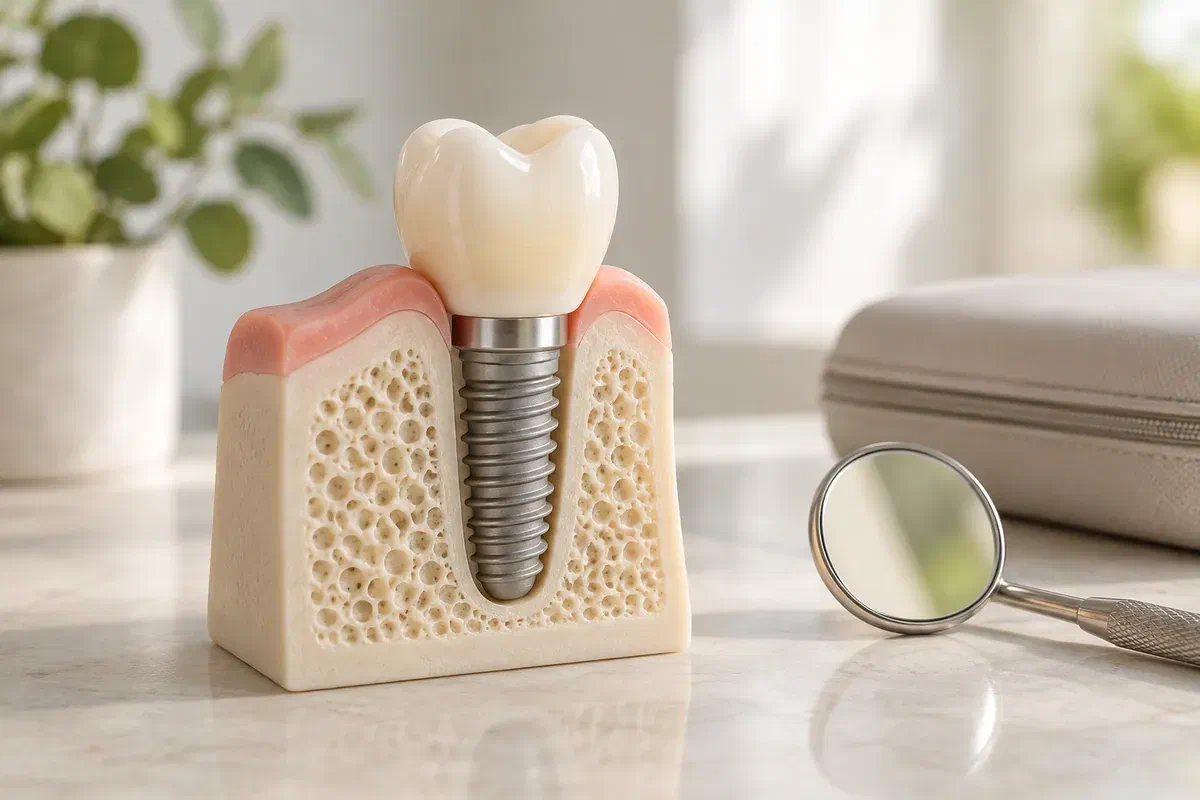
Family members are often the first to notice. A parent stops eating on one side, a partner mentions their implant denture keeps lifting, or you spot swelling near a tooth. An implant restoration is made of separate parts: what you can see, a connector below it, and the post in the jaw. A loose crown, a worn attachment, inflamed gum and an injury from a fall all need different care, and the person needs to be examined to find out which.
Before calling, try to establish what kind of implant work they have: one crown, a bridge on implants, or a removable denture that clips onto implants. Ask them, gently, what feels different, whether that is movement, pain, swelling, or difficulty biting. Nobody expects you to know the implant brand. Any treatment summary in a drawer or file is worth bringing.
Phone promptly and ask about assessment times. Please share any health conditions, medicines such as blood thinners, and mobility or communication needs, so the visit can be planned around them. If another clinic placed or restored the implant, let us know and bring records. With the person’s consent, we can discuss the immediate concern and whether another provider should be involved.