

Illustrative patient describing a dental injury during a consultation
Specialized Care

Dental Trauma Treatment in Acton

You’re holding a tooth that was in someone’s mouth a minute ago. What now? From Acton, handle it by the crown, keep it moist, and phone us to explain what happened and when. A knocked-out permanent tooth needs emergency dental care without waiting.

A tooth in your hand

Crown up, root untouched, kept moist.

A tooth knocked fully out is the most time-sensitive dental injury, but it isn’t the only kind. Teeth also chip, loosen, shift position or fracture below the gum, and cuts to the lips and gums are common alongside them. Even when the damage looks limited, more may be going on than the eye can see.

Pick up the phone as soon as first aid is under way. We’ll want to know how and when the injury happened, and whether this is a baby tooth or an adult one if you can say. Report any other injuries. Someone with a serious head, face or jaw injury may need the hospital before dental care is planned.

The call is where we decide together what to do next and check when you can be seen. Online forms are too slow for this. If you can’t get through, or we can’t help right away, take the tooth to another emergency dental provider, especially when it is a permanent one.

Phone about a knocked-out tooth
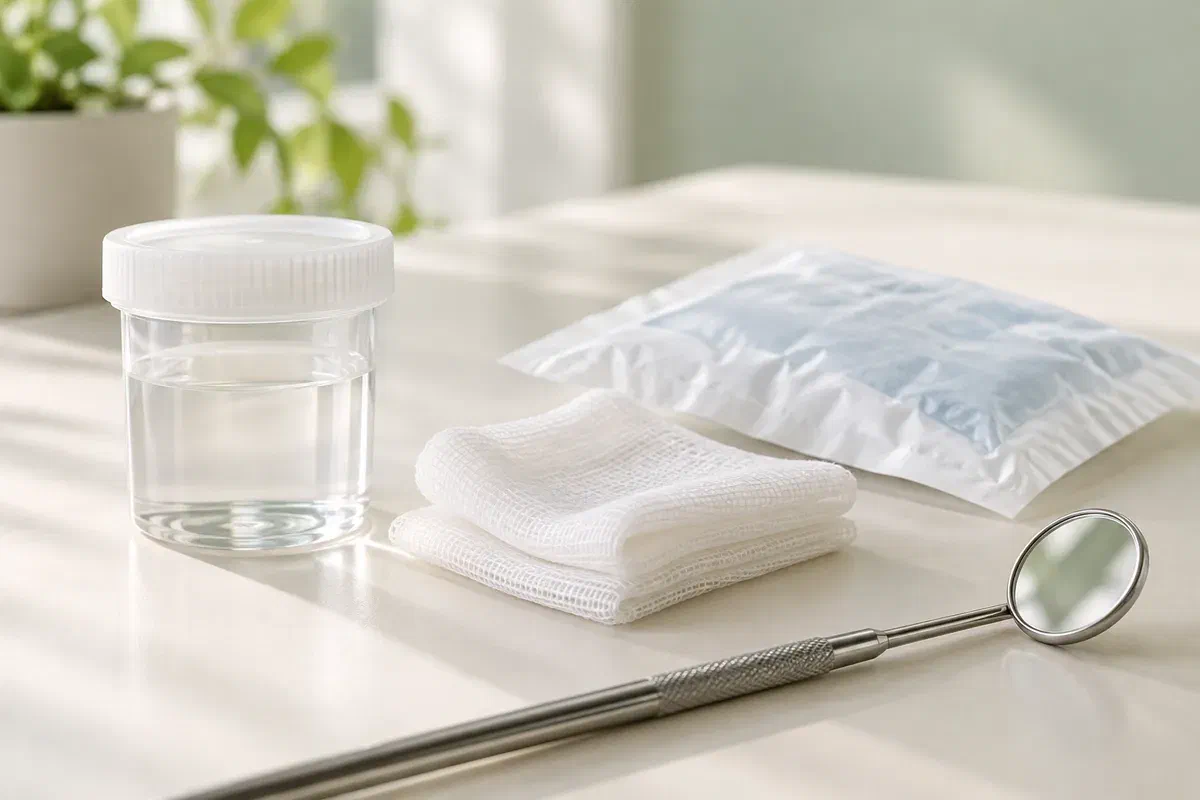
Illustrative dental first-aid supplies with a closed container, gauze, and cold compress
Handling and storage

What you do with the tooth depends on what kind it is.

Make sure the injured person is all right first. Then note the time and what you’ve done. If a tooth or piece is unaccounted for, say so rather than assuming it is lying on the floor.

Permanent tooth: replant if you safely can

Go for emergency dental care immediately. Touch only the crown. Dirt can be rinsed away briefly with milk or saline; never scrub, and don’t use soap. If you’re sure it is permanent and it’s safe, guide it gently into the socket without force and bite on clean gauze. If you can’t, keep it covered in milk and bring it straight away.

Baby tooth, or not sure: store it, don’t replant

Knocked-out baby teeth are not put back. If you can’t tell the type, keep the tooth in a small container of milk and get professional advice right away. A child mustn’t hold the tooth in their mouth, since they could swallow or inhale it.

Still in place but broken, loose or shifted

Phone soon and describe any change in position, how the teeth meet and how it feels. Don’t keep testing it, and don’t force it straight. Store broken pieces in milk to bring along. Ask where the injury should be seen and mention other symptoms.

Call 911 or go to hospital emergency care for any difficulty breathing, heavy bleeding that won’t settle, a serious jaw or facial injury, or head-injury signs such as losing consciousness, vomiting or double vision.

After the tooth reaches the dentist

First, what can be done today. Then, what time will tell.

At the first visit, the dentist works out as much as the findings permit about the injury and handles care that shouldn’t be delayed. Ask which teeth and soft tissues are affected and how they’re being protected. A shallow chip is a very different job from a tooth that was knocked out and put back.

The plan should also be clear about its limits. Some effects of an injury surface only at later checks, so a tooth that feels comfortable after day one may still have changes to come. You should know why each follow-up is booked and who to contact if anything changes.

Patient information: American Association of Endodontists — updated trauma guidance and ongoing monitoring

How the tooth was handled matters

Tell the dentist how long it was out, what it was stored in, and whether anyone tried to replant it. The time, cause and first aid all inform decisions. Say what you know and leave gaps unfilled. If you were seen elsewhere first, bring any notes.

Care that depends on tooth type and stage

Baby teeth, children’s permanent teeth still developing and fully grown adult teeth can need distinct approaches. Ask how this shapes your plan. An injury that looks the same as someone else’s won’t necessarily be treated the same way.

Follow-up that has a point

Find out what later appointments will check and whether the plan may change. Reviews assess healing and can uncover complications that weren’t clear at the start. Discuss them early, not only once appearance is the topic.

When you bring the tooth in

Four parts to the first visit.

Depending on the injury, this appointment may involve assessment, stabilizing the tooth, treatment or a referral. Ask which steps are urgent and which can be decided once more is known.

  1. Describe the injury and the first aid

    Explain when and how it happened, how the tooth was stored, and any treatment since. Mention other missing teeth or pieces, health conditions, medications and allergies. If there was a medical assessment for other injuries, share it.

  2. Examine the socket, tooth and surroundings

    The dentist checks the injured area and considers which images and tests are indicated. Ask which teeth need watching, including neighbours that look unaffected. If another setting or specialist is advised, the reason should be explained.

  3. Choose immediate care, with its limits in view

    Go through the proposed treatment, comfort, alternatives and fees. Care may involve replanting or repositioning and splinting a tooth, protecting a fracture, or planning further treatment. Ask whether the result is temporary and what might follow.

  4. Leave with instructions and review dates

    Confirm home cleaning, diet, activity and follow-up advice for your injury. Ask how to contact the team if something comes up. Keep appointment details handy, especially if more than one provider is involved.

Looking after a replanted or injured tooth

Protect the area, notice changes, keep every check.

Home care depends on the injury, the tooth type and what treatment was done. A replanted and splinted tooth, a restored chip and an injured baby tooth may each have different routines and review timelines.

Use the cleaning and eating plan you were given

Ask how to keep the area around the tooth or splint clean and which foods or activities to avoid. Don’t test the tooth by biting firm food or pushing on it. Call if the advice is hard to follow or something feels loose.

Speak up about new symptoms

Call about increasing pain, swelling, drainage, a change in your bite, or any new concern. Mention the injury date and what was done. The team can advise whether your next review still suits or an earlier visit is needed.

Keep records, and reviews after comfort returns

Save details of the first treatment and share them if another clinician is involved later. Ask about any forms required for school, sport, a job or an insurer. Forms keep care connected; the reviews remain about healing.

Treatment after the assessment

Repaired, steadied, or treated further?

Ask what the proposed care is intended to protect or restore. It should fit the injury and the tooth’s condition, and be honest about what can’t yet be foreseen.

When a fracture can be repaired

Restoring a broken surface

Depending on its depth and the tooth left, a fracture may be covered or rebuilt. Ask whether a saved fragment is usable and whether the repair is temporary or long term. Appearance matters, though the nerve and root need equal attention.

When a tooth has come out or moved

Replanting, repositioning and splinting

A replanted or displaced tooth may need professional positioning and a splint, followed by scheduled reviews. Ask what the splint does and how long it should stay. Never adjust or remove it yourself; call if it’s uncomfortable.

When more care becomes necessary

Nerve treatment, referral or replacement

Depending on diagnosis and healing, further treatment may be raised, including care of the nerve. Sometimes a tooth can’t be retained. Ask what supports the recommendation and how alternatives suit your age, dental development and future plans.

Acton questions about knocked-out teeth

Handling, storing and replanting, answered.

Phone us about a recent injury, and use emergency services if they’re needed. These answers are for preparation and can’t stand in for an examination.

(905) 876-4488
What can I store a knocked-out tooth in if there’s no milk?
Saline is another option. Keep the tooth moist rather than letting it dry, and avoid plain tap water for storage. Ask when you call, and get to emergency dental care as soon as you can.
Is it all right to rinse the tooth under the tap?
Rinse briefly with milk or saline if possible. Don’t scrub it, use soap or try to clean off attached tissue. Hold it only by the crown, and get emergency dental care right away.
Should I try to replant the tooth if the person is upset or in pain?
Only if it’s a permanent tooth and it’s safe to try. If replanting isn’t possible or the person can’t cooperate, store it in milk and go straight to emergency dental care.
A permanent tooth was out for a long time. Should we still bring it?
Yes. Seek immediate assessment and bring it along, kept moist. Tell the dentist how long it was out and what it was stored in. Don’t throw it away because time has passed.
Can we put a knocked-out baby tooth back in to save it?
No. Baby teeth should not be replanted. Call a dentist promptly so the injury can be assessed and follow-up explained. If you’re unsure of the type, keep it in milk and ask for immediate advice.
We’re driving in from Acton with the tooth. Is there anything to do on the way?
Keep the tooth in milk or saline in a closed container, and don’t let it dry out. A replanted tooth should be held gently in place with the person biting on gauze. Have someone else drive if possible, and call if anything changes.
Knocked-out tooth care, Acton

Keep it moist. Keep moving. Call us.

Phone our Bronte Street clinic about a knocked-out or injured tooth and ask what assessment is available. Tell us the time of injury and how the tooth was stored. If immediate help is needed and we can’t be reached, go to another emergency dental provider.

Online forms are for non-urgent enquiries only. Treatment, referral, follow-up, fees, and whether a tooth can be saved all depend on assessment; we can’t promise an outcome or an immediate appointment.

Visit Milton Dental Clinic
Unit 1, 342 Bronte St. S, Milton, ON L9T 5B7
Get directions Clinic hours
Monday–Thursday
11am–7pm
Friday–Sunday
By appointment only

Areas we serve

  • Milton
  • Oakville
  • Mississauga
  • Georgetown
  • Halton Hills
  • Acton
  • Campbellville
  • Brampton
  • Burlington
  • Puslinch
  • Rockwood
  • Erin
  • Caledon
  • Etobicoke
  • Old Milton
  • Bronte Meadows
  • Timberlea
  • Dorset Park
  • Dempsey
  • Clarke
  • Beaty
  • Coates
  • Harrison
  • Scott
  • Willmott
  • Ford
  • Bowes
  • Cobden
  • Walker
  • Mountain View
  • Milton Heights
  • Hawthorne Village
  • Valley View
  • Fallingbrook
  • Nassagaweya
  • Trafalgar
  • Esquesing
  • Nelson
  • Brookville
  • Moffat
  • Glen Williams
  • Norval
  • Limehouse
  • Stewarttown
  • Ashgrove
  • Hornby
  • Silver Creek
  • Speyside
  • Scotch Block
  • North Oakville
  • River Oaks
  • Glen Abbey
  • West Oak Trails
  • Palermo
  • Bronte Creek
  • College Park
  • Joshua Creek
  • Uptown Core
  • Preserve
  • Iroquois Ridge
  • Lisgar
  • Meadowvale
  • Meadowvale Village
  • Churchill Meadows
  • Erin Mills
  • Central Erin Mills
  • Streetsville
  • East Credit
  • Creditview
  • Heartland
  • Sheridan
  • Mount Pleasant
  • Credit Valley
  • Huttonville
  • Churchville
  • Springbrook
  • Northwest Brampton
  • Bram West
  • Fletcher's Meadow
  • Fletcher's Creek South
  • Alton Village
  • Orchard
  • Millcroft
  • Headon Forest
  • Tansley
  • Brant Hills
  • Tyandaga
  • Kilbride
  • Lowville
  • Aberfoyle
  • Morriston
  • Arkell
  • Hillsburgh
  • Freelton
  • Carlisle
  • Waterdown
  • Flamborough
  • Mountsberg

How can we help?

Milton Dental Clinic

Have a question about your smile? Choose the option that works best for you.

For urgent dental concerns, please call.
Messages are reviewed during clinic hours.