
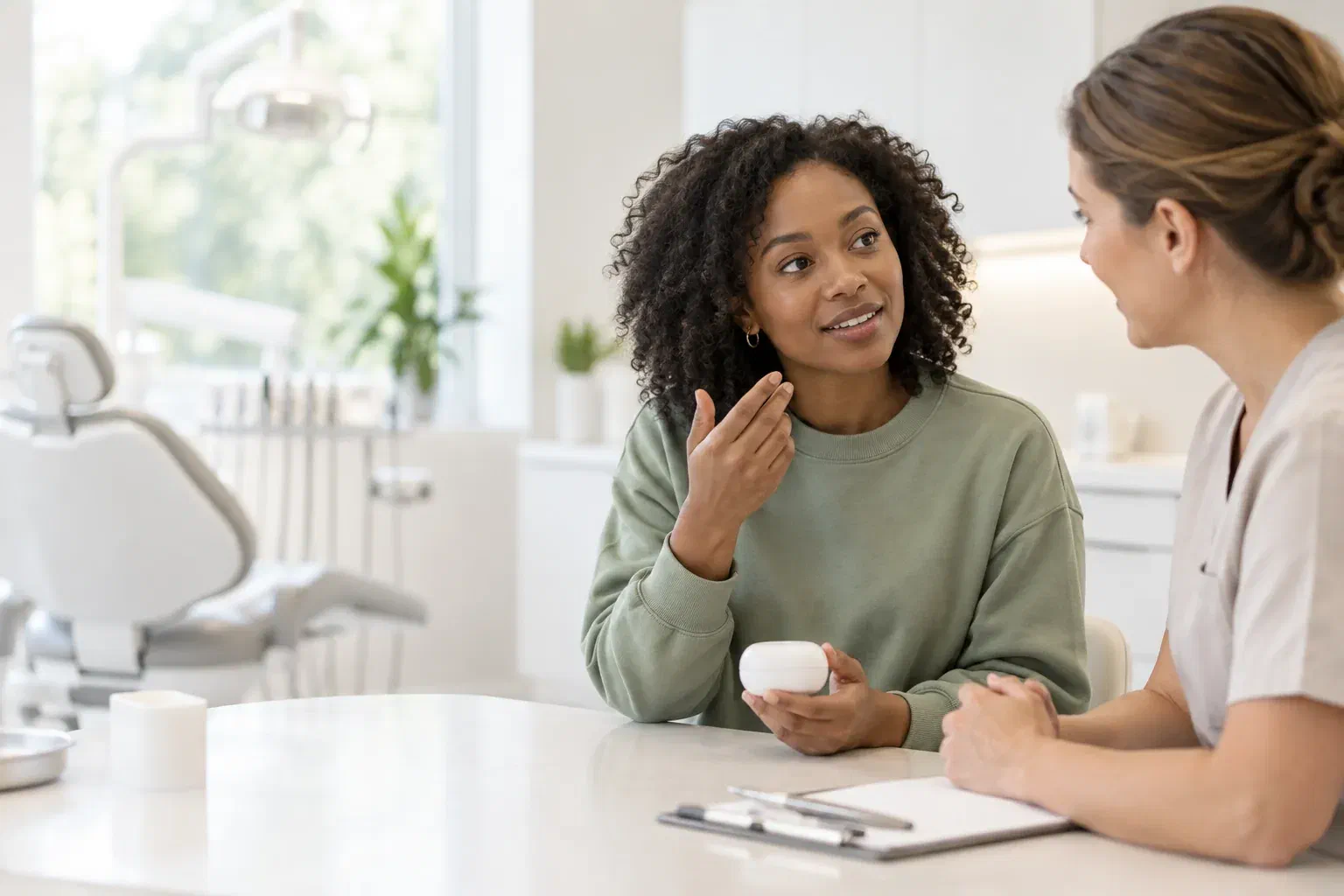
Illustrative patient describing a dental injury during a consultation
Specialized Care

Dental Trauma Treatment in Burlington

A stick, a ball or a collision on the field can crack, loosen or dislodge a tooth in a second. From Burlington, call us right after the injury, tell us how and when it happened, and ask about assessment. A knocked-out adult tooth needs emergency dental care without delay.

Sports, play and sudden impacts

One hit on the field, several decisions off it.

Sport is one of the most common settings for dental injuries, though a slip at home or a fall from a bike can do the same damage. Teeth may chip, shift, crack below the gumline or come out completely. Lips, cheeks and gums can be cut, and some of what has happened won’t be visible from the sideline.

Call promptly once the player is safe. Tell us what happened, the time, and whether the tooth is a baby or permanent tooth if you know. Coaches and parents should also mention any blow to the head. A suspected concussion, a serious face or jaw injury, or heavy bleeding means hospital assessment comes before dental care.

The phone call decides what happens next and whether an appointment is available. An online message is too slow when a tooth has just been injured. When we can’t answer or can’t see the player right away, turn to another emergency dental provider, and treat a knocked-out permanent tooth as the most urgent case.

Phone about a sports injury
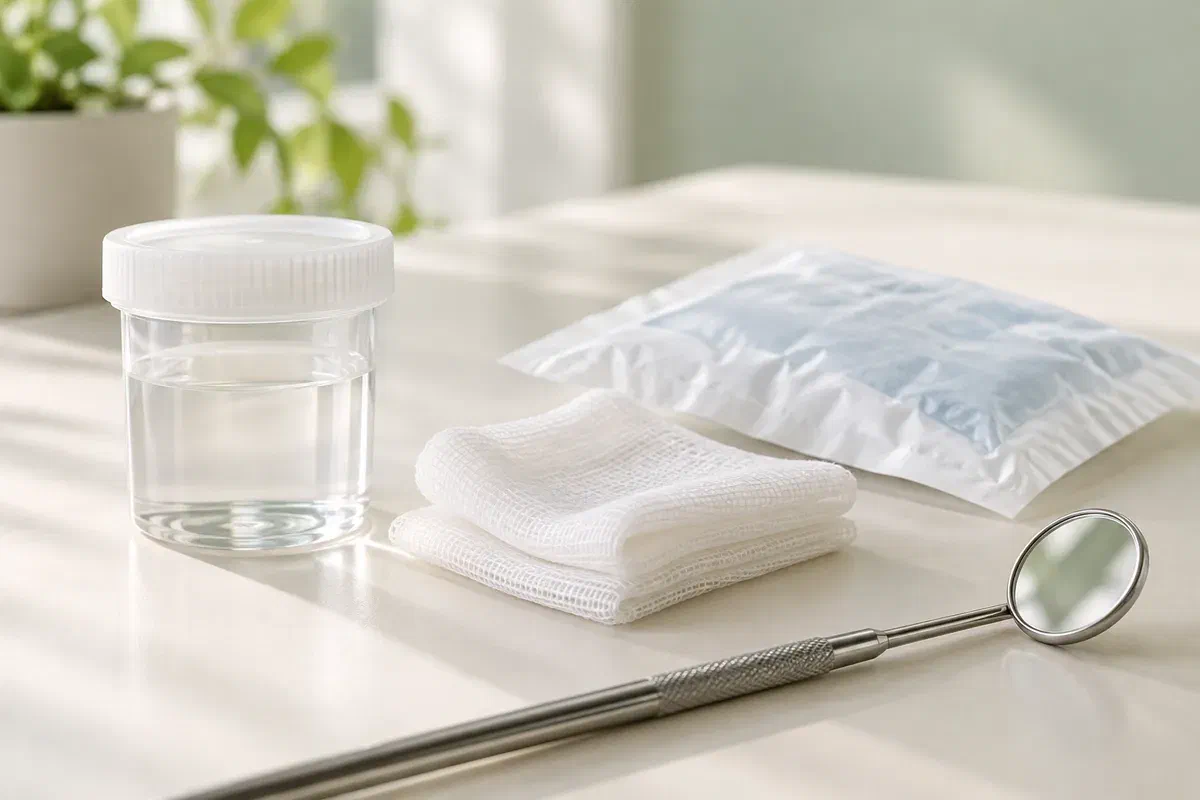
Illustrative dental first-aid supplies with a closed container, gauze, and cold compress
Sideline first aid, from a Burlington rink to a backyard

Player first. Tooth second.

Note the time of the hit and what was done on the spot. If a tooth or fragment is missing, say so; it isn’t safe to assume it fell onto the turf or ice.

A knocked-out permanent tooth

Get to emergency dental care now. Hold it by the crown, the white chewing part, and avoid the root. If it’s dirty, rinse it briefly with milk or saline; no scrubbing or wiping. If you’re sure it is permanent and the player is able, gently set it back and have them bite on clean gauze. Otherwise, carry it in milk.

A younger player’s tooth that could be a baby tooth

Don’t replant a baby tooth. When you can’t tell which kind it is, keep it in a container of milk and get immediate professional advice. Never have a child hold the tooth in their mouth on the way, because it could be swallowed or inhaled.

A chipped, wobbly or pushed-back tooth

Phone soon and describe how the tooth has moved, how the teeth now meet and how it feels. Ask the player not to keep testing it, and don’t force it into line. Gather any broken pieces into milk. Ask where the injury should be seen and mention other symptoms.

Dial 911 or get to a hospital emergency department if the player struggles to breathe, bleeds heavily without letting up, has a serious facial or jaw injury, or shows head-injury signs such as being knocked out, vomiting or seeing double.

Getting answers at the first visit

What was hurt, what was done, what to watch.

The first appointment should explain the injury as clearly as the findings allow and deal with anything that shouldn’t wait. Ask which teeth and soft tissues were involved and how they’re being protected. A small fracture is managed very differently from a tooth that was displaced or put back in its socket.

It should also be upfront about the unknowns. Some consequences of a dental injury only show up at later checks, so a tooth that feels normal after the first visit hasn’t finished its recovery. You should know the reason for each review and the number to ring if anything shifts before then.

Patient information: American Association of Endodontists — updated trauma guidance and ongoing monitoring

A record that travels with the player

When and how the injury happened, the tooth’s position and the first aid used can all guide decisions. Share what you saw and leave out guesses. If a team trainer, walk-in clinic or hospital saw the player first, bring any notes or tell us who was involved.

Treatment suited to the tooth’s stage

A baby tooth, a young permanent tooth still forming its root, and a fully developed adult tooth can need different care. Ask how this changes the recommendation. Two players with similar chips may not be offered the same treatment.

Reviews with a clear job

Ask what later appointments will check and whether the plan might shift. Reviews follow healing and can reveal complications that weren’t evident on the day. They deserve attention before the conversation becomes only about appearance.

Inside the injury appointment

Hear the story, examine, act on the urgent part, plan reviews.

Based on the injury, the first visit may include assessment, stabilization, treatment or referral. Ask what needs doing today and which decisions are better made once more is known.

  1. Describe the play and what followed

    Tell the dentist when the injury happened, how, and any first aid or earlier treatment. Add anything still missing, plus health conditions, current medicines and allergies. If the player was checked for concussion or other injuries, share what was found.

  2. Examine the teeth and nearby structures

    Expect a close look at the injury and, where indicated, X-rays or other tests. Ask which teeth will be monitored, including ones beside the injury that look fine. If a specialist or a different setting is recommended, ask for the reason.

  3. Choose immediate treatment, and understand its limits

    Go through the proposed care, pain control, other options and fees. Depending on what’s found, treatment may protect a fracture, reposition or splint a tooth, or set up further care. Ask whether the first result is temporary and what could be needed later.

  4. Get home-care advice and a return schedule

    Confirm the cleaning, eating, activity and review instructions for the injury and treatment. Note who to call if a problem comes up. Keep the review dates where everyone can see them, particularly when a parent, coach and more than one clinician are all involved.

Between the visit and the next game

Rest the tooth before you test it.

There’s no single recovery routine. What happens at home is shaped by the kind of injury, whose tooth it is and what was done in the chair, so a splint, a bonded chip and a hurt baby tooth may all run on different timelines.

Keep to the food and cleaning instructions

Get specific guidance on brushing near the injury or splint, and on foods and training to pause. Biting into something firm or wiggling the tooth to see how it’s doing isn’t a useful test. Phone the team if any step proves awkward or a part feels loose.

Flag new symptoms early

Pain that builds rather than fades, swelling, pus, or teeth that no longer meet the way they did are all worth a call. Have the injury date and treatment details ready. You’ll hear whether to wait for the booked review or come in earlier.

Keep notes and reviews even once it feels normal

Hold on to a copy of what was done on day one in case another clinician gets involved later. If the league, school, employer or insurer needs a form, ask for it. Those papers help with continuity; the reviews themselves are about whether the tooth is healing.

Possible next steps

Repair the break, steady the tooth, or plan more care.

A good recommendation names what it protects or restores. It reflects this specific injury and the state of the tooth, and admits what can’t be forecast yet.

When the fracture can be repaired

Restoring a fractured tooth

A broken area may be protected or rebuilt, depending on its depth and the tooth that remains. Ask if the saved piece is any use, and whether today’s repair is a stopgap or meant to last. Appearance matters, but the nerve and supporting tissues need assessing too.

When the tooth has moved or its anchoring is hurt

Repositioning, splinting and follow-up

Some injuries need the tooth professionally moved back into place or splinted, followed by planned reviews. Ask what the splint does and how long the plan should last. Don’t loosen or take off a splint at home if it bothers you; phone instead.

When the injury needs another stage

Nerve treatment, specialist care or replacement

If the diagnosis or healing points that way, more treatment may be discussed, including care inside the tooth. Some teeth can’t be kept. Ask which results lead to that advice and how each alternative suits the player’s age, dental development and long-term needs.

Questions from players and parents

Getting back in the game without guessing.

For a new injury, pick up the phone, and use emergency services when the situation calls for it. The answers below help with planning; only an examination of the player and their teeth can guide treatment.

(905) 876-4488
When can my child go back to contact sport after a tooth injury?
Ask the treating clinician, who can consider the injury, any splint or repair, and the sport’s level of contact. Feeling well enough to play doesn’t mean the area can take another hit. Follow the advice given rather than a fixed number of days.
Can a mouthguard be worn over a splint or new repair?
Ask before trying. A guard that fitted before the injury may not fit now, and pressure could disturb the treatment. The dentist can advise whether a guard should be adjusted, replaced or avoided for a while.
What should a team first aid kit include for dental injuries?
A small closed container, clean gauze, a cold pack and access to milk or saline are helpful. Keep the clinic’s number and urgent contact options handy too. A kit supports first aid but doesn’t replace prompt professional care.
A permanent tooth was knocked out during a tournament hours ago. Is it worth seeing a dentist now?
Yes. Get immediate dental assessment and bring the tooth, kept moist. Say roughly how long it spent outside the mouth and what it was kept in. Don’t throw it away or decide it’s too late on your own.
The tooth only chipped slightly. Does it still need a check?
It’s worth calling. A small visible chip can come with injury to the root or supporting tissues that isn’t obvious. Ask how soon it should be checked and whether the fragment is worth bringing.
We’re coming from Burlington after a weekend game. What if the clinic is closed?
Fridays to Sundays are by appointment only, so phone first. If we can’t be reached or can’t see the player promptly, contact another available emergency dental provider, particularly for a knocked-out permanent tooth.
Sports and accident dental care, Burlington

From the sideline to a follow-up plan.

Call our Bronte Street office as soon as a tooth is injured and ask about assessment availability. Give the time of the hit and anything that’s different since. If urgent care is needed and you can’t reach us, go to another available emergency dental provider.

Online forms are for non-urgent enquiries only. How the injury is managed, any referral or follow-up, costs, and whether the tooth can be saved are decided at assessment; no treatment result or immediate appointment is guaranteed.

Visit Milton Dental Clinic
Unit 1, 342 Bronte St. S, Milton, ON L9T 5B7
Get directions Clinic hours
Monday–Thursday
11am–7pm
Friday–Sunday
By appointment only

Areas we serve

  • Milton
  • Oakville
  • Mississauga
  • Georgetown
  • Halton Hills
  • Acton
  • Campbellville
  • Brampton
  • Burlington
  • Puslinch
  • Rockwood
  • Erin
  • Caledon
  • Etobicoke
  • Old Milton
  • Bronte Meadows
  • Timberlea
  • Dorset Park
  • Dempsey
  • Clarke
  • Beaty
  • Coates
  • Harrison
  • Scott
  • Willmott
  • Ford
  • Bowes
  • Cobden
  • Walker
  • Mountain View
  • Milton Heights
  • Hawthorne Village
  • Valley View
  • Fallingbrook
  • Nassagaweya
  • Trafalgar
  • Esquesing
  • Nelson
  • Brookville
  • Moffat
  • Glen Williams
  • Norval
  • Limehouse
  • Stewarttown
  • Ashgrove
  • Hornby
  • Silver Creek
  • Speyside
  • Scotch Block
  • North Oakville
  • River Oaks
  • Glen Abbey
  • West Oak Trails
  • Palermo
  • Bronte Creek
  • College Park
  • Joshua Creek
  • Uptown Core
  • Preserve
  • Iroquois Ridge
  • Lisgar
  • Meadowvale
  • Meadowvale Village
  • Churchill Meadows
  • Erin Mills
  • Central Erin Mills
  • Streetsville
  • East Credit
  • Creditview
  • Heartland
  • Sheridan
  • Mount Pleasant
  • Credit Valley
  • Huttonville
  • Churchville
  • Springbrook
  • Northwest Brampton
  • Bram West
  • Fletcher's Meadow
  • Fletcher's Creek South
  • Alton Village
  • Orchard
  • Millcroft
  • Headon Forest
  • Tansley
  • Brant Hills
  • Tyandaga
  • Kilbride
  • Lowville
  • Aberfoyle
  • Morriston
  • Arkell
  • Hillsburgh
  • Freelton
  • Carlisle
  • Waterdown
  • Flamborough
  • Mountsberg

How can we help?

Milton Dental Clinic

Have a question about your smile? Choose the option that works best for you.

For urgent dental concerns, please call.
Messages are reviewed during clinic hours.