

Illustrative patient describing a dental injury during a consultation
Specialized Care

Dental Trauma Treatment in Milton

A fall at the park or a stray elbow at practice can leave a tooth chipped, loose or missing. Phone our Milton practice first, describe the injury and its timing, and ask what assessment is available. A knocked-out adult tooth calls for emergency dental care straight away.

When a tooth takes a hit close to home

The first ten minutes matter, and so do the months after.

It might be a chipped corner after a scooter tumble, a front tooth pushed out of line, root damage you cannot see, or a tooth that has come right out. Lips and gums often absorb part of the impact too, and a mirror can miss what an examination finds.

Phone as soon as you can. Tell us how the injury happened, roughly what time, and whether it is a baby tooth or an adult one if you know. Mention any knock to the head, face or jaw as well. A serious injury of that kind may need a hospital before anyone plans dental work.

Being in Milton helps with speed, but the call still comes first: it tells you what to do next and whether we can see you. A web form is too slow for a fresh injury. If our line is unavailable or we can’t offer immediate care, go to another emergency dental provider, above all when a permanent tooth is out.

Ask about an injury assessment
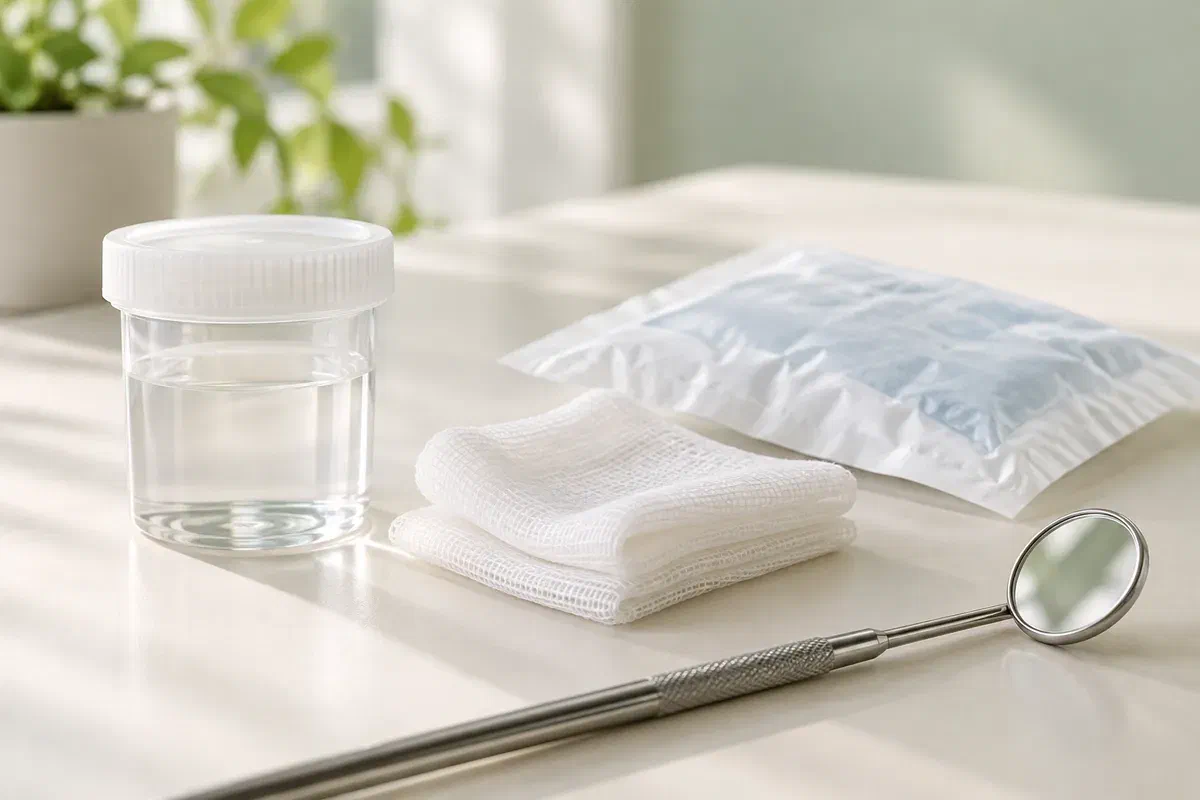
Illustrative dental first-aid supplies with a closed container, gauze, and cold compress
Sorting out what kind of injury it is

Look after the person, then describe the tooth.

Let us know when it happened and what first aid has already been done. If a tooth or a piece of one can’t be found, tell us that too, rather than assuming it simply landed on the floor somewhere.

An adult tooth that has come fully out

This needs emergency dental care right away. Pick it up by the crown and keep fingers off the root. If dirty, rinse it gently in milk or saline; don’t scrub. If you are sure it is permanent and it is safe, ease it back without force and bite on clean gauze. Otherwise, store it in milk and come straight in.

A baby tooth, or you’re not sure which it is

Never put a knocked-out baby tooth back. If you can’t tell whether it is a baby or adult tooth, keep it in milk and get professional advice immediately. Don’t let a child hold a tooth in their mouth, where it could be swallowed or breathed in.

A tooth that is chipped, wobbly or out of position

Call soon and explain whether the tooth has shifted, whether your bite feels different, and how it feels. Try not to keep wiggling it, and never push a displaced tooth back by force. Bring any broken piece, kept moist in milk, and mention anything else you’ve noticed.

Call 911 or go to a hospital emergency department for trouble breathing, heavy bleeding that won’t stop, a serious face or jaw injury, or signs of a head injury such as fainting, vomiting or double vision.

What you should know after the first visit

A clear picture of today’s injury, and of what still needs watching.

By the end of the first appointment, you should know as much about the injury as the findings allow, and which care can’t wait. Ask which teeth and tissues were affected and what is being done to protect them. A small chip and a tooth that has shifted or been put back in can call for quite different responses.

Good planning is honest about what is not yet known. Some changes only show at later reviews, so a tooth that feels fine after the first visit hasn’t necessarily finished healing. You should leave knowing why follow-up is booked and who to call if something changes before then.

Patient information: American Association of Endodontists — updated trauma guidance and ongoing monitoring

Your account of the injury, carried forward

When it happened, how, where the tooth sits now and what first aid was given can all shape decisions. Share what you remember and leave gaps as gaps rather than guessing. If someone else has already looked at the injury, bring those records or tell us where you were seen.

Care chosen for this tooth at this stage

Baby teeth, a child’s permanent tooth that is still developing, and a mature adult tooth may each be handled differently. Ask how the type of tooth affects the advice. Two chips that look alike don’t automatically mean identical treatment.

Follow-up visits that each have a reason

Ask what will be checked at each later appointment and whether the plan might change as healing goes on. Reviews track recovery and can catch problems that weren’t visible at first. Talk about them early, before attention moves entirely to how the repair looks.

How an injury appointment unfolds

History, examination, immediate care, then a review date.

Depending on what is found, the first visit may include assessment, stabilizing the tooth, treatment or a referral. Ask which parts are urgent and which choices can sensibly wait until more is known.

  1. Tell us what happened and what’s been done

    Describe when the injury occurred, what caused it, and any first aid or treatment given since. Mention missing teeth or pieces, health conditions, medicines and allergies. If a doctor or hospital has already assessed other injuries, let the dentist know what they found.

  2. Check the teeth and the tissues around them

    The dentist examines the injured area and decides which images and tests are needed. Ask which teeth should be watched, including neighbours that look undamaged. If the injury needs a different setting or a specialist, you should hear the reason clearly.

  3. Decide on immediate care and its limits

    Talk through the proposed treatment, comfort measures, alternatives and fees. Depending on findings, care might mean covering a fracture, easing a tooth back into place and stabilizing it, or arranging more treatment. Ask whether today’s result is temporary and what further work could follow.

  4. Go home with clear steps and a review date

    Confirm what to do about cleaning, eating, activity and follow-up for your injury and the treatment you had. Ask how to reach the treating team if something needs attention. Keep appointment details where you can find them, especially if more than one provider is involved.

After you leave our Bronte Street practice

Shield the injured tooth and keep each check-up.

What you’re asked to do at home depends on the injury, the type of tooth and the treatment given. A splinted tooth, a repaired chip and an injured baby tooth may each need their own routine and review schedule.

Eat and clean the way you were shown

Ask how to clean around the tooth or splint and which foods or activities to skip for now. Don’t test it by biting something hard or rocking it. Call if the instructions are hard to follow or something starts to feel loose.

Mention new symptoms instead of waiting

Tell us about pain that is getting worse, swelling, discharge, a bite that feels different or any other new concern. Give the injury date and the treatment you had. The team can say whether the next review still fits or the tooth should be seen sooner.

Keep paperwork, and go to reviews even when it feels fine

Hold on to the details of the first treatment and bring them if another clinician sees you later. Ask about any forms you need for school, sport, work or insurance. Paperwork keeps care connected, while the reviews themselves stay focused on how the tooth is healing.

Treatment paths once the tooth is examined

Repair, stabilize, or plan further care?

Every recommended step should have a purpose: something it protects or restores. The plan should fit the injury and the tooth’s condition, and be candid about what can’t be predicted yet.

When a fracture can be restored

Covering or rebuilding a broken surface

A broken area may need protecting or rebuilding, depending on how deep it goes and how much tooth remains. Ask whether a recovered piece can help and whether the repair is temporary or longer term. Looks matter, but the dentist also has to consider the tissues inside and around the tooth.

When the tooth or its support is injured

Guiding the tooth back, splinting and watching

Some injuries need a tooth guided back into position or held with a splint, then reviewed on a schedule. Ask what the splint is meant to do and how long this plan is likely to last. If it feels uncomfortable, call rather than adjusting or removing it yourself.

When another stage of care is needed

Pulp treatment, specialist input or replacement

Depending on diagnosis and healing, more treatment may come up, including care inside the tooth. Not every tooth can be kept. Ask which findings support the next step and how the alternatives suit your age, dental development and longer-term plans.

Questions we hear after injuries

Straight answers for the hours and weeks after a knock.

Phone us about a recent injury, and use emergency services when they are needed. These answers help with planning but can’t replace an examination of the injured person and their teeth.

(905) 876-4488
Is it too late to get help if an adult tooth was out for an hour or more?
No. Get a dental assessment straight away and bring the tooth, kept moist so it doesn’t dry. Tell the clinician how long it was out and how you stored it. Don’t throw it away or decide there is no point because time has passed.
What should I do about a cut lip or bleeding gum after a fall?
Press gently with clean gauze or a cloth, and a cold compress on the outside of the lip may help with comfort. Mention any cuts to the lips, cheeks or gums when you call. Heavy bleeding that won’t stop is a reason to call 911 or go to hospital emergency care.
Can I take something for pain before the appointment?
Ask when you phone. If you use an over-the-counter pain reliever, follow the label and make sure it suits your health and other medicines. Tell the dentist what you took and when. Don’t hold a tablet against the injured gum or tooth.
My child’s tooth looks normal, but the knock was hard. Should it be checked?
Yes, call and describe the injury. Damage to the root or supporting tissues isn’t always visible, and an injured baby tooth can sometimes affect the adult tooth developing beneath it. The team can advise how soon the child should be seen.
If the soreness is gone by morning, can we cancel the review?
Please keep it. Comfort tells you something, but not how the tooth and the tissues holding it are healing. Mention that it feels better at the appointment; just don’t treat that as the only reason to skip planned follow-up.
We live a few minutes away in Milton. Should we just come straight over?
Phone first, even from close by. The call lets the team give first aid advice, check whether someone can assess the injury, and tell you if another provider or a hospital is the better place to go. It also means we know you’re coming and what to expect.
Dental injuries, Milton

Call, describe the injury, and keep the plan in one place.

Phone our Bronte Street practice about a recent dental injury and ask what assessment is available today. Tell us when it happened and what has changed since. If you need help immediately and can’t reach us, contact another emergency dental provider.

Online forms are for questions that can wait. How an injury is managed, whether referral or follow-up is needed, fees, and whether a tooth can be kept all depend on assessment; no outcome or same-day appointment is guaranteed.

Visit Milton Dental Clinic
Unit 1, 342 Bronte St. S, Milton, ON L9T 5B7
Get directions Clinic hours
Monday–Thursday
11am–7pm
Friday–Sunday
By appointment only

Areas we serve

  • Milton
  • Oakville
  • Mississauga
  • Georgetown
  • Halton Hills
  • Acton
  • Campbellville
  • Brampton
  • Burlington
  • Puslinch
  • Rockwood
  • Erin
  • Caledon
  • Etobicoke
  • Old Milton
  • Bronte Meadows
  • Timberlea
  • Dorset Park
  • Dempsey
  • Clarke
  • Beaty
  • Coates
  • Harrison
  • Scott
  • Willmott
  • Ford
  • Bowes
  • Cobden
  • Walker
  • Mountain View
  • Milton Heights
  • Hawthorne Village
  • Valley View
  • Fallingbrook
  • Nassagaweya
  • Trafalgar
  • Esquesing
  • Nelson
  • Brookville
  • Moffat
  • Glen Williams
  • Norval
  • Limehouse
  • Stewarttown
  • Ashgrove
  • Hornby
  • Silver Creek
  • Speyside
  • Scotch Block
  • North Oakville
  • River Oaks
  • Glen Abbey
  • West Oak Trails
  • Palermo
  • Bronte Creek
  • College Park
  • Joshua Creek
  • Uptown Core
  • Preserve
  • Iroquois Ridge
  • Lisgar
  • Meadowvale
  • Meadowvale Village
  • Churchill Meadows
  • Erin Mills
  • Central Erin Mills
  • Streetsville
  • East Credit
  • Creditview
  • Heartland
  • Sheridan
  • Mount Pleasant
  • Credit Valley
  • Huttonville
  • Churchville
  • Springbrook
  • Northwest Brampton
  • Bram West
  • Fletcher's Meadow
  • Fletcher's Creek South
  • Alton Village
  • Orchard
  • Millcroft
  • Headon Forest
  • Tansley
  • Brant Hills
  • Tyandaga
  • Kilbride
  • Lowville
  • Aberfoyle
  • Morriston
  • Arkell
  • Hillsburgh
  • Freelton
  • Carlisle
  • Waterdown
  • Flamborough
  • Mountsberg

How can we help?

Milton Dental Clinic

Have a question about your smile? Choose the option that works best for you.

For urgent dental concerns, please call.
Messages are reviewed during clinic hours.