

Illustrative patient describing a dental injury during a consultation
Specialized Care

Dental Trauma Treatment in Mississauga

A tooth that looks only slightly chipped after a bump may have more going on beneath the surface. From Mississauga, phone our team, explain what happened and when, and ask about an assessment. If an adult tooth has been knocked right out, get emergency dental care immediately.

When an injury looks smaller than it is

A small chip can hide a bigger story.

It’s natural to judge an injured tooth by what shows. Yet a knock hard enough to chip enamel can also bruise the nerve, crack the root or stretch the fibres holding the tooth in its socket. Other injuries are obvious from the start: a tooth sitting at a new angle, or one that has come out. Lips and gums are frequently hurt as well.

Ring us promptly with the basics: how it happened, roughly when, and whether it’s a baby or adult tooth if you can tell. Include anything else that was hurt. A heavy blow to the head, face or jaw may need hospital assessment before a dentist can plan treatment.

That first conversation shapes the next step and tells you what availability looks like. A time-sensitive injury shouldn’t wait in an inbox. If the clinic can’t be reached or can’t see you promptly, look for another emergency dental provider, and move fastest of all for a knocked-out permanent tooth.

Talk to us about an injury
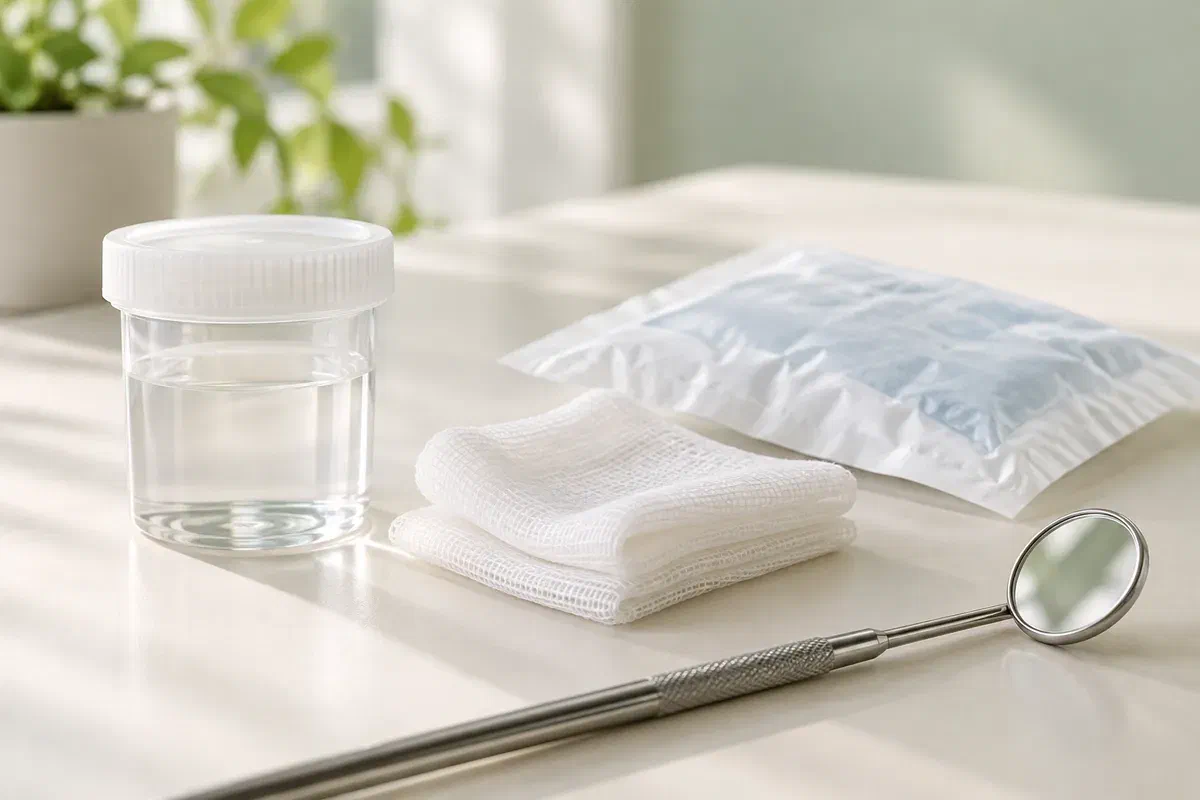
Illustrative dental first-aid supplies with a closed container, gauze, and cold compress
Sorting the injury at home

Three situations that call for different first aid.

Start with the person’s safety. Then note the time, and what you’ve done so far. Mention any tooth or piece you can’t find, since it isn’t always lying on the floor.

An adult tooth has come out

Treat it as an emergency. Pick it up by the crown and leave the root alone. Swish it briefly in milk or saline if it’s dirty, without rubbing. If you’re certain it’s permanent and it’s safe, guide it back into the socket gently and bite down on clean gauze. If that isn’t possible, put it in milk and come for emergency care.

It might be a baby tooth

Baby teeth that come out are never replanted. If you’re unsure of the type, keep the tooth in a small cup of milk and get professional advice right away. A child shouldn’t keep a loose tooth inside their mouth, where it could be swallowed or breathed in.

A tooth is chipped, loose or sitting at a new angle

Phone soon and explain any change in position, how your teeth come together and how it feels. Avoid poking at it, and don’t try to push it straight. Put any recovered fragment in milk to bring along. Ask where the tooth should be assessed, and mention other symptoms.

Call 911 or go to a hospital emergency department for breathing trouble, bleeding that is heavy and constant, a serious jaw or facial injury, or head-injury signs including unconsciousness, vomiting or double vision.

Looking past the visible damage

Name the injury, then the questions still open.

An assessment should go beyond what you can see in a mirror, defining the injury as far as findings allow and identifying anything that needs care now. Ask which teeth and surrounding tissues are affected and how they’ll be protected. A shallow chip and a tooth that has moved or been replanted rarely get the same response.

Some answers simply aren’t available on day one. Certain effects of trauma become clear only at later appointments, so a comfortable tooth after the first visit is a good sign rather than a final verdict. Make sure you understand why reviews are planned and who to contact if things change.

Patient information: American Association of Endodontists — updated trauma guidance and ongoing monitoring

Details that shape the decisions

The time, the cause, where the tooth sits and the first aid used all matter. Tell us what you know and say plainly what you don’t. If another clinic or a hospital saw you first, bring their paperwork or tell us where you went.

Advice tuned to the type of tooth

A baby tooth, a permanent tooth that is still developing in a child, and a mature adult tooth can be treated differently. Ask how that affects your plan. Two injuries that look the same won’t necessarily be treated the same way.

Reviews that explain themselves

Ask what each later visit will examine and whether the plan could change. Reviews check healing and may reveal problems not visible at first. Bring them up before the discussion narrows to how the repair looks.

What the visit looks like

We start with your account and finish with a schedule.

Depending on what’s found, the first appointment could involve assessment, stabilization, treatment or a referral. Ask which pieces are urgent and which choices can wait for more information.

  1. Walk us through the injury

    Explain the time and cause, plus any first aid or treatment you’ve already had. Tell us about absent teeth or fragments, medical conditions, medications and allergies. Mention any medical assessment for other injuries, and what it found.

  2. Check beyond the obvious damage

    The dentist examines the injured area and considers the images and tests that are indicated. Ask which teeth will be followed, including neighbours that look intact. If you’re referred elsewhere, the reason should be explained.

  3. Decide what happens today

    Go over the recommended care, pain control, alternatives and cost. Depending on findings, this might be protecting a fracture, repositioning and stabilizing a tooth, or arranging more care. Ask whether the result is interim and what might be added later.

  4. Take away clear instructions and review dates

    Confirm cleaning, diet, activity and review advice for the injury and the treatment. Ask how to get in touch if something needs attention. Keep appointment details easy to find, especially when more than one clinic shares your care.

Looking after the tooth at home

Be gentle, stay alert, keep reviews.

What you do after the visit depends on the injury, the tooth type and the treatment. A splinted tooth, a chip that has been repaired and a child’s hurt baby tooth may each follow a separate routine.

Follow your own instructions, not a general list

Ask how to keep the injured tooth or splint clean, and which foods or activities to avoid for now. Don’t bite on hard things to see if it’s stronger, and don’t rock it. If you can’t follow the advice comfortably, or something loosens, get in touch.

Tell us what changes

Call about pain that worsens, swelling, drainage, a shift in your bite or any fresh concern. Mention the injury date and treatment. The team will advise whether to keep the next scheduled review or come in sooner.

Keep records, and keep going to reviews

Save the initial treatment summary and share it if another clinician gets involved. Ask about forms for school, sport, work or insurance. Forms help keep care joined up, while reviews remain focused on healing.

Treatment that fits the findings

Repair, stabilize or go further: the injury decides.

Ask what the recommended treatment is protecting or restoring. The plan should follow the injury and the tooth’s condition, and be open about what can’t yet be predicted.

When restoration is enough for now

Repairing a chipped or fractured surface

A fracture may be covered or rebuilt, depending on how deep it is and how much tooth remains. Ask whether your saved fragment is usable and whether the repair is short term or final. Appearance counts, but so does the health of the nerve and the bone that supports the tooth.

When the tooth’s position or support is affected

Stabilizing a moved or loosened tooth

Some injuries require a tooth to be repositioned or splinted by a professional, with planned reviews afterward. Ask what the splint is for and how long the plan should run. Call rather than removing or adjusting it yourself.

When a further stage is needed

Root care, specialist referral or replacement

Based on diagnosis and healing, more treatment may come up, including care inside the tooth. Some teeth can’t be retained. Ask what supports the recommendation and how alternatives fit your age, dental development and future needs.

Mississauga dental injury questions

Small injuries, big questions.

Phone us about a new injury, and call emergency services if the situation needs them. These answers help you prepare but don’t take the place of an examination.

(905) 876-4488
My tooth only chipped a little. Why would it need an assessment?
Hidden injury to the root, nerve or supporting tissues can come with even a minor chip. The dentist checks for signs that aren’t visible to you and decides whether follow-up is needed. Call to ask how soon the tooth should be seen.
The chipped tooth is now sensitive to cold. Is that something to mention?
Yes. Sensitivity after an injury is worth reporting when you call, along with how long it lasts. It doesn’t tell you the cause on its own, but it helps the team decide how soon you should be examined.
One of my teeth looks a little darker weeks after a fall. Should I call?
Yes. A colour change after trauma is worth assessing, even without pain. Tell the team when the injury happened and what treatment you had. The dentist can check the tooth and explain whether monitoring or further care is appropriate.
If a tooth has been out of the mouth for a long time, should I still bring it?
Yes, and seek immediate dental assessment. Keep the tooth moist, not dry. Let the clinician know how long it was out and how it was stored. Don’t discard it or assume there’s no point because time has passed.
Can a chipped fragment always be bonded back on?
Not always. Bring it moist in milk, and the dentist will decide whether it can help based on the fracture and the tooth. Saving the piece is worthwhile, but it doesn’t guarantee reattachment.
How can we keep visits manageable when coming from Mississauga?
Ask at the first appointment how many reviews are planned and roughly when, so you can arrange time off or school pickups ahead. Call before travelling if symptoms change, and keep any records from other providers together.
Tooth injury assessment for Mississauga

Don’t judge it by the mirror. Call us.

Phone our Bronte Street team as soon as a tooth is injured and ask what assessment is available. Share when it happened and any change since. If you need immediate care and we can’t be reached, contact another emergency dental provider.

Please use online forms only for non-urgent questions. Injury care, referral, follow-up, fees and whether a tooth can be kept are all determined after assessment; no outcome or immediate appointment is promised.

Visit Milton Dental Clinic
Unit 1, 342 Bronte St. S, Milton, ON L9T 5B7
Get directions Clinic hours
Monday–Thursday
11am–7pm
Friday–Sunday
By appointment only

Areas we serve

  • Milton
  • Oakville
  • Mississauga
  • Georgetown
  • Halton Hills
  • Acton
  • Campbellville
  • Brampton
  • Burlington
  • Puslinch
  • Rockwood
  • Erin
  • Caledon
  • Etobicoke
  • Old Milton
  • Bronte Meadows
  • Timberlea
  • Dorset Park
  • Dempsey
  • Clarke
  • Beaty
  • Coates
  • Harrison
  • Scott
  • Willmott
  • Ford
  • Bowes
  • Cobden
  • Walker
  • Mountain View
  • Milton Heights
  • Hawthorne Village
  • Valley View
  • Fallingbrook
  • Nassagaweya
  • Trafalgar
  • Esquesing
  • Nelson
  • Brookville
  • Moffat
  • Glen Williams
  • Norval
  • Limehouse
  • Stewarttown
  • Ashgrove
  • Hornby
  • Silver Creek
  • Speyside
  • Scotch Block
  • North Oakville
  • River Oaks
  • Glen Abbey
  • West Oak Trails
  • Palermo
  • Bronte Creek
  • College Park
  • Joshua Creek
  • Uptown Core
  • Preserve
  • Iroquois Ridge
  • Lisgar
  • Meadowvale
  • Meadowvale Village
  • Churchill Meadows
  • Erin Mills
  • Central Erin Mills
  • Streetsville
  • East Credit
  • Creditview
  • Heartland
  • Sheridan
  • Mount Pleasant
  • Credit Valley
  • Huttonville
  • Churchville
  • Springbrook
  • Northwest Brampton
  • Bram West
  • Fletcher's Meadow
  • Fletcher's Creek South
  • Alton Village
  • Orchard
  • Millcroft
  • Headon Forest
  • Tansley
  • Brant Hills
  • Tyandaga
  • Kilbride
  • Lowville
  • Aberfoyle
  • Morriston
  • Arkell
  • Hillsburgh
  • Freelton
  • Carlisle
  • Waterdown
  • Flamborough
  • Mountsberg

How can we help?

Milton Dental Clinic

Have a question about your smile? Choose the option that works best for you.

For urgent dental concerns, please call.
Messages are reviewed during clinic hours.