

Illustrative patient discussing recovery after a dental extraction with a clinician
Specialized Care

Dry Socket Treatment in Campbellville

Out in Campbellville, a quick phone call can save a wasted trip. If an extraction site is aching more as the days go by, describe the change to us first, and we can arrange an examination, consider other causes, and plan relief and follow-up.

The call before the drive

Start with the phone, not the car keys.

Rural households tend to plan trips into town around several errands, so it makes sense to know what you are coming in for. With a sore extraction site, a short conversation goes a long way. Dry socket is a painful setback that can follow a tooth removal when the blood clot in the socket does not form properly, comes away, or breaks down sooner than it should. It often makes itself known a few days after the extraction, and it has to be confirmed by examination.

On the phone, what we most want to hear is the direction things are heading. Gradually easing soreness is ordinary. Pain that is growing, harder to control with the plan you were given, or unlike what your instructions described is a reason to book a look. Other healing issues and nearby teeth can produce similar pain, so the dentist examines the wider area too.

Calling our Bronte Street practice from Campbellville, have a few facts ready: the day of the extraction, which tooth, and how the pain has changed day by day. If the tooth was removed at another clinic, tell us and bring their paperwork. We can then talk about appointment times and, if anything sounds more urgent, where to go.

Call to describe your symptoms
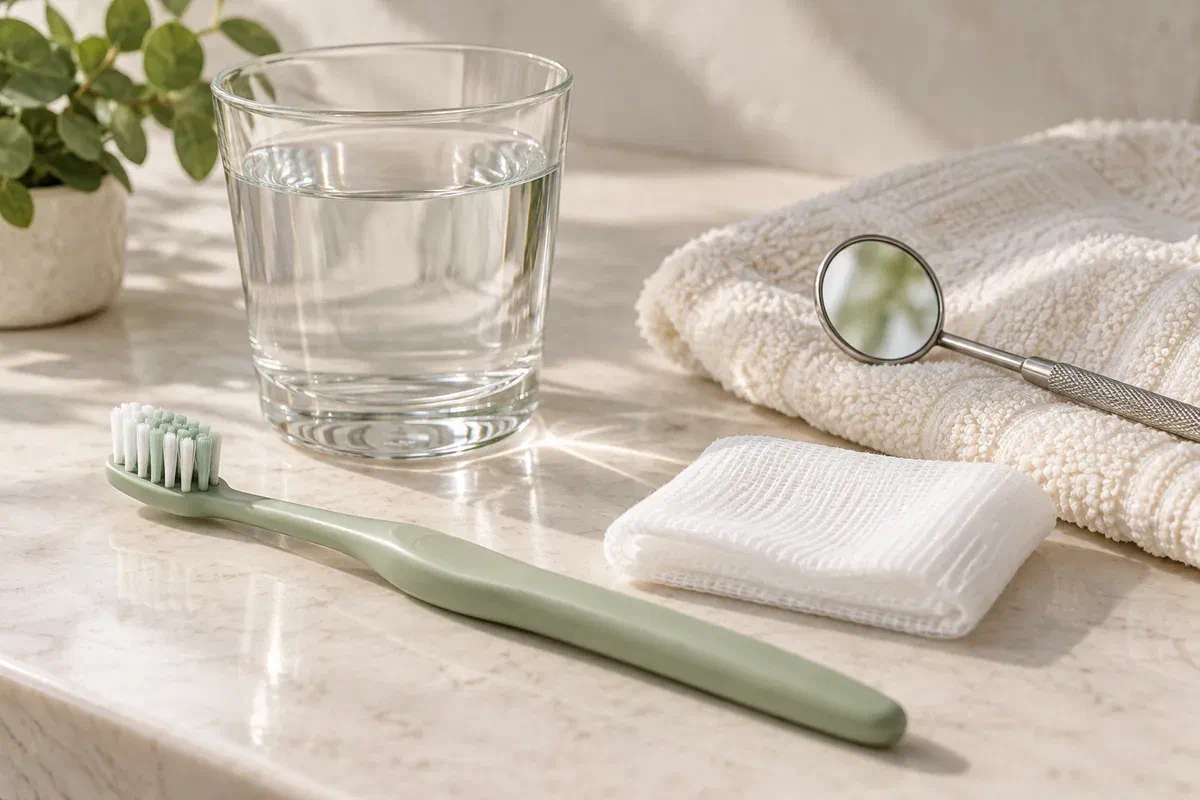
Illustrative gentle oral-care supplies with a toothbrush, water glass, gauze, and dental mirror
A short phone checklist

Have these ready when you ring.

Jot down how the first day after the extraction felt, when things changed, the instructions you were sent home with, and each medicine you have taken. A few notes make the call quick and useful.

When the pain started building

Give your best guess at the day the ache got worse and whether it is now affecting sleep, meals, or chores. Point to the spot without poking into it. A recovery that has backtracked is reason to be seen, whatever the socket looks like.

Any odd taste or smell

Mention these with the pain and the extraction details. They can help shape the assessment but do not settle the cause by themselves. Please do not clear the socket out with a finger or cotton swab to have a look.

Signs that change the plan

Swelling in the face that keeps increasing, a fever, feeling unwell, or bleeding that will not settle should be mentioned right away, since they may need faster care. Do not write them off as dry socket. Tell us about health conditions and current prescriptions too.

Dry socket is a healing problem and is not, by definition, an infection. It is the dentist's examination that shows whether the findings point that way or toward something else.

Worth the trip in

An examination that answers the question you cannot answer at home

In person, the dentist can look directly at what you have been describing on the phone. When the diagnosis is dry socket, treatment is about getting the pain under control while healing carries on underneath. Ask how long relief usually takes, when you should call if it has not come, and whether another trip in is likely so you can plan.

You also head home with advice that fits where you are now. Home care depends on the number of days since the extraction and on anything done during the visit. It is better than juggling old handouts, a neighbour's suggestions, and what turns up online.

Patient information: Guy's and St Thomas' — dry socket care after dental surgery

A clear explanation

Find out whether this is dry socket, another healing problem, or pain from a different tooth. The explanation makes sense of the treatment that follows. If doubt remains, ask what extra information or a later check might clear it up.

Treatment in the chair

For dry socket, the dentist might gently flush the socket and settle a dressing into it. Ask what the dressing is and whether it needs a return visit to check or take out. It soothes the area; the socket still needs time to heal.

A pain plan for home

Go over relief that suits your health, other medicines, and allergies. Know who to call if it stops being enough, including on days the clinic runs by appointment. Do not increase doses or mix products without checking labels and getting professional advice.

Once you arrive

Four steps from history to home plan

What is done depends on the findings. If you still have the aftercare sheet from the extraction, bring it, and point out the instructions that have been awkward to follow.

  1. Recap what you told us on the phone

    Confirm the date and place of the extraction and whether it involved surgery, if you know. Run through when the pain changed, what has been taken, and whether another clinician has checked the site.

  2. Careful examination

    The dentist looks over the socket and the tissue around it and may suggest further investigation if it seems needed. Ask what the findings are. A phone photo can show what concerned you, yet an examination is still required.

  3. Treatment and comfort, if dry socket is found

    With a confirmed dry socket, you will hear what local care is proposed and how to keep pain in check. Ask about any dressing and how to look after it once home. Antibiotics are not standard for every case; medicine depends on the findings.

  4. A plan that avoids unnecessary trips

    Before leaving, confirm whether a return visit is needed and what symptoms would mean phoning first. Ask how to brush and eat near the site. Keep our number on the fridge or in your phone in case things change.

Back home

Easy on the socket, strict with the new instructions

Get the dentist's specific advice on rinsing, brushing, food, and any dressing before you go. It should match your healing stage and the care given today.

Leave it alone

Do not prod the site or rig up your own packing. If a dressing was placed, ask what normal looks like and what to do if it drops out. Ring us rather than filling the socket with anything from home.

Clean around it with care

Brush the rest of your teeth as demonstrated and ask how to tackle the ones closest to the site. Any rinse should follow the method and timing given. Hold off on forceful swishing or improvised tools near the area.

Talk about smoking and practical limits

Smoking can make dry socket more likely and recovery slower. If cutting it out is hard, say so and ask about support. Mention any difficulty eating, drinking, or sticking to the plan, so the advice works on a real day.

After the dentist has looked

Three ways the visit can go

Ask the reasoning behind the recommendation and how you will tell whether it is working. A sore socket needs judging on today's findings, not on a previous extraction.

When recovery is on course

Confirmation of normal healing

If things look as they should, the dentist may explain why it still hurts and suggest small changes to your aftercare or pain relief. Ask which feelings to expect and which would be a reason to call. That way the trip in still pays off.

When local comfort care is called for

Dry socket treatment

Gentle cleaning of the socket and a soothing dressing are common. Ask whether further visits are likely, so you can plan them around other errands, and what each would do. The point is comfort as healing goes on, not an instant close.

When the findings do not match dry socket

A different path for a different problem

Other findings may mean more tests, another kind of treatment, or contact with whoever performed the extraction. Ask what is still open and who will arrange the next step. Medicine is prescribed for a diagnosis, not just because a tooth was removed.

Campbellville questions

Before you make the trip

Phone us about a tough recovery instead of trying to decide from a mirror whether the clot is there. Your description and an examination shape the plan.

(905) 876-4488
What should I have in front of me when I call about extraction pain?
The extraction date, the tooth involved, a list of medicines you have taken and when, and your aftercare sheet. Notes about when the pain changed are especially helpful.
Can you tell over the phone whether it is dry socket?
No. A phone call helps judge urgency and plan the visit, but dry socket can only be confirmed by examining the socket. We will suggest coming in when the pattern warrants it.
Which symptoms mean I should not wait for an appointment?
Rapidly worsening swelling, fever, bleeding that will not stop, or feeling very unwell need prompt care. Trouble breathing or swallowing is an emergency, so call 911.
Can I combine a dry socket review with other dental care the same day?
Ask when you call. The priority is the painful socket, and other treatment may need to wait until it settles, but we can discuss what is sensible for your visit.
Is more pain on day four always dry socket?
No. It is one possibility, but other healing problems or a nearby tooth can cause it. Mention swelling, fever, or bleeding as well, because those details guide the examination.
Will I need to come back after the first treatment?
Sometimes. Depending on the dressing and how you respond, the dentist may want to recheck the socket. Ask at the visit so you can plan the next trip in advance.
Dry socket care for Campbellville

Ring first, then come in for a proper look.

Phone our Bronte Street practice when extraction pain is building instead of fading and ask what times are available. Keep the extraction date and your instructions close by. If you need urgent help and cannot get through to us, contact another urgent dental provider.

Online booking requests are not for urgent problems. Diagnosis, treatment, medicine, any return visits, and fees are confirmed after the examination. Dry socket care does not guarantee that healing is immediate.

Visit Milton Dental Clinic
Unit 1, 342 Bronte St. S, Milton, ON L9T 5B7
Get directions Clinic hours
Monday–Thursday
11am–7pm
Friday–Sunday
By appointment only

Areas we serve

  • Milton
  • Oakville
  • Mississauga
  • Georgetown
  • Halton Hills
  • Acton
  • Campbellville
  • Brampton
  • Burlington
  • Puslinch
  • Rockwood
  • Erin
  • Caledon
  • Etobicoke
  • Old Milton
  • Bronte Meadows
  • Timberlea
  • Dorset Park
  • Dempsey
  • Clarke
  • Beaty
  • Coates
  • Harrison
  • Scott
  • Willmott
  • Ford
  • Bowes
  • Cobden
  • Walker
  • Mountain View
  • Milton Heights
  • Hawthorne Village
  • Valley View
  • Fallingbrook
  • Nassagaweya
  • Trafalgar
  • Esquesing
  • Nelson
  • Brookville
  • Moffat
  • Glen Williams
  • Norval
  • Limehouse
  • Stewarttown
  • Ashgrove
  • Hornby
  • Silver Creek
  • Speyside
  • Scotch Block
  • North Oakville
  • River Oaks
  • Glen Abbey
  • West Oak Trails
  • Palermo
  • Bronte Creek
  • College Park
  • Joshua Creek
  • Uptown Core
  • Preserve
  • Iroquois Ridge
  • Lisgar
  • Meadowvale
  • Meadowvale Village
  • Churchill Meadows
  • Erin Mills
  • Central Erin Mills
  • Streetsville
  • East Credit
  • Creditview
  • Heartland
  • Sheridan
  • Mount Pleasant
  • Credit Valley
  • Huttonville
  • Churchville
  • Springbrook
  • Northwest Brampton
  • Bram West
  • Fletcher's Meadow
  • Fletcher's Creek South
  • Alton Village
  • Orchard
  • Millcroft
  • Headon Forest
  • Tansley
  • Brant Hills
  • Tyandaga
  • Kilbride
  • Lowville
  • Aberfoyle
  • Morriston
  • Arkell
  • Hillsburgh
  • Freelton
  • Carlisle
  • Waterdown
  • Flamborough
  • Mountsberg

How can we help?

Milton Dental Clinic

Have a question about your smile? Choose the option that works best for you.

For urgent dental concerns, please call.
Messages are reviewed during clinic hours.