

Illustrative patient discussing recovery after a dental extraction with a clinician
Specialized Care

Dry Socket Treatment in Georgetown

Most people have never heard of a socket dressing until a dentist mentions one. If extraction pain is building and you are coming from Georgetown, we can examine the site, explain what treatment involves, and plan comfort and follow-up with you.

What treatment actually involves

What goes into a dry socket, and why?

People often call because they are worried about what will be done, not only about the pain itself. Here is the short version. After a tooth is removed, a blood clot normally fills the space and protects the bone while new tissue grows. In dry socket, that clot does not form well, is dislodged, or breaks down too soon, and the area can become very sore, often a few days after the extraction. A dentist has to examine it to confirm what is going on.

If dry socket is found, treatment usually means gently washing out the socket and, in many cases, placing a soft medicated dressing to calm the exposed area while healing continues. Not every painful extraction ends up there, though. Soreness that eases gradually is normal, and the examination also looks at the gum and neighbouring teeth, which can cause similar pain.

Before you head down from Georgetown, phone our Bronte Street practice with the date of the extraction, the tooth involved, and how the pain has developed. If another office removed it, tell us and bring their instructions. That gives us what we need to talk about availability and what the visit may involve.

Find out whether a review is needed
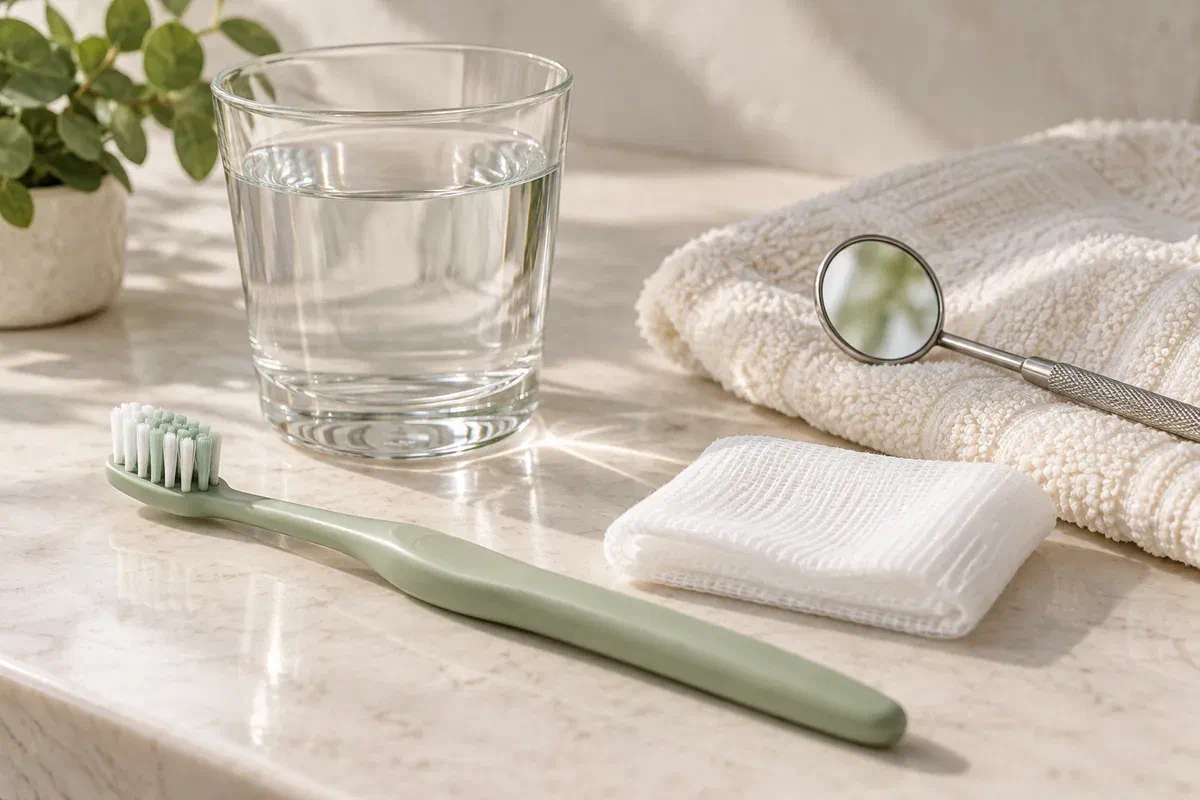
Illustrative gentle oral-care supplies with a toothbrush, water glass, gauze, and dental mirror
Before the dressing conversation

First, help us understand the recovery so far.

Explain the first day or two, then what changed and when. Add the advice you were given at the extraction and a list of every medicine you have used, so the dentist sees the whole sequence.

Pain that has turned upward

Describe the day the discomfort started to grow and whether it keeps you up, makes eating difficult, or disrupts work. Show where it hurts without touching the socket. A reversal in your recovery is worth reporting even if nothing looks wrong to you.

Taste or breath that has changed

Let us know about an unpleasant taste or breath along with the pain and the extraction history. It is part of the picture, not the answer. Avoid fishing debris out with a finger, swab, or toothpick.

Problems a dressing will not fix

Facial swelling that grows, a fever, feeling generally ill, or ongoing bleeding should be reported quickly. They are not simply dry socket, and a dressing is not the treatment for them. Mention medical conditions and medicines that might change the assessment.

Dry socket is a healing problem rather than an automatic infection. The dentist decides whether the examination supports that diagnosis or whether another complication needs different care.

Why it is worth coming in

Comfort while you heal, and fewer surprises

At the review you can describe exactly what feels wrong and have the area looked at by a dentist. If it is dry socket, care focuses on easing the pain while your body finishes the healing work. Good questions to ask: how quickly relief usually follows, when you should ring if it does not, and whether the dressing means another visit.

You also find out how to look after the area from today. Advice changes with the number of days since the extraction and with whether a dressing went in. That saves you from mixing an old handout with advice from friends, or wondering which rule still counts.

Patient information: Guy's and St Thomas' — dry socket care after dental surgery

Knowing what the dentist found

Ask whether the findings match dry socket, a different healing issue, or pain from a nearby tooth. The explanation shapes the treatment. If it is not clear yet, ask what further information or a later review would help.

A dressing explained, not just placed

If a dressing is used, ask what it is made of, how long it is meant to stay, and whether it dissolves, falls out, or needs removing. It is there to soothe the socket while it heals, not to seal it closed.

Pain relief that fits your situation

Talk through pain management in light of your health, medicines, and allergies. Know who to call if it is not working. Do not take extra or combine products without checking the label and getting professional advice.

From the first question to the dressing

A typical review, in order

Whether a dressing is placed depends on what is found. Bring the original aftercare instructions if you have them and mention anything that has been hard to keep up with.

  1. Talk through what happened

    Give the extraction date and location and say whether surgery was involved, if you know. Describe when things got worse, what you have taken, and whether a clinician has already looked at the site since.

  2. Examine and consider other causes

    The dentist checks the socket and the area around it and may recommend further investigation if warranted. Ask what they can see. A picture from home can help explain your concern, yet it does not replace an examination.

  3. Clean the socket and place a dressing, if indicated

    For a confirmed dry socket, the dentist may gently rinse the area and place a dressing, explaining each step. Ask how to protect it. Antibiotics are not part of routine dry socket care; any medicine depends on the findings.

  4. Plan what happens to the dressing

    Ask whether it needs a check or removal, when to return, and what would be a reason to call sooner. Ask how to brush and eat around it. Keep our number somewhere easy to find in case the dressing comes out early.

Living with a dressing for a few days

Protect it, work around it, and call with questions.

Ask for specific advice on rinsing, brushing, food, and the dressing itself. It should reflect today's treatment and your stage of healing, rather than a general rule for all extractions.

Leave the dressing where it is

Resist the urge to check it with your tongue or a finger. If it loosens or falls out, do not push it back or swap in cotton or gauze from home. Phone the team and describe what happened.

Brush carefully around it

Clean the rest of your mouth as demonstrated, taking care near the dressed socket. Rinse only if advised, following the timing and method given. Hard swishing and improvised tools can dislodge the dressing or irritate the area.

Be upfront about smoking and meals

Smoking can raise the risk of dry socket and slow healing. Let the dentist know if staying off it is hard so support can be discussed. Mention any trouble eating or drinking around the dressing, so the advice reflects what you are actually managing.

Not every sore socket needs a dressing

What the examination might lead to

Ask what the recommendation is based on and how you will know it is working. A painful extraction site should be judged on what is found, not on what happened last time.

When no dressing is needed

Advice when healing is normal

If the site is healing as expected, the dentist can explain the findings and fine-tune your aftercare or pain relief. Ask which sensations are part of normal recovery. Reassurance helps most when you understand why and know how to get back in if needed.

When the socket needs local care

A dressing for dry socket

Gentle cleaning followed by a medicated dressing is a common approach. Ask whether the dressing will be changed, how many visits that might take, and what each one does. The aim is comfort during healing, not instant closure.

When it is not uncomplicated dry socket

Other treatment for a different finding

Some findings call for further investigation, a different treatment, or coordination with the original surgeon. Ask what is still unknown and how the next step will be organised. Medicines are prescribed for a diagnosis, not just because a tooth was taken out.

Questions about dressings and recovery

What Georgetown callers often ask us

Phone us about a painful recovery instead of trying to inspect the socket. Your history and the examination determine the plan, including whether a dressing is used.

(905) 876-4488
What is a dry socket dressing made of?
Dressings vary, but they are generally soft materials designed to soothe the exposed socket. Ask the dentist what was used in your case and whether it contains anything you could be sensitive to.
Does placing the dressing hurt?
The socket is already sensitive, so the dentist works gently and explains each step. Tell them if you are uncomfortable during the visit. Experiences vary, and the purpose is to make the area more comfortable afterwards.
What should I do if my dressing falls out at home?
Do not try to put it back or replace it with cotton or gauze. Call the clinic and describe when it came out and how the pain is. The dentist will advise whether you need to return.
Can I eat normally with a dressing in place?
Ask before you leave. Softer foods and chewing on the other side are often suggested for a while, but follow the specific instructions you are given for your dressing and extraction.
Is a dressing always needed for dry socket?
Not always. The dentist decides based on the findings and your comfort. Some people are managed with cleaning and advice, while others benefit from a dressing. Ask why the recommended approach suits you.
Is it a problem if the pain comes back once the dressing is out?
Contact the treating team and explain when relief started and when the pain returned. Another review or further local care may be needed. Do not disturb the area or repeat medicine without advice.
Dry socket treatment for Georgetown

Ask us what treatment would involve, and we will check the site.

Phone our Bronte Street practice about extraction pain that is getting worse and to find out what appointments are free. Have the date of the extraction and your instructions to hand. When you need help urgently and we cannot be reached, contact another urgent dental provider.

We do not monitor online requests for urgent issues. What is diagnosed, whether a dressing or medicine is used, how often you return, and what it costs are all confirmed after examination. Treatment cannot guarantee immediate healing.

Visit Milton Dental Clinic
Unit 1, 342 Bronte St. S, Milton, ON L9T 5B7
Get directions Clinic hours
Monday–Thursday
11am–7pm
Friday–Sunday
By appointment only

Areas we serve

  • Milton
  • Oakville
  • Mississauga
  • Georgetown
  • Halton Hills
  • Acton
  • Campbellville
  • Brampton
  • Burlington
  • Puslinch
  • Rockwood
  • Erin
  • Caledon
  • Etobicoke
  • Old Milton
  • Bronte Meadows
  • Timberlea
  • Dorset Park
  • Dempsey
  • Clarke
  • Beaty
  • Coates
  • Harrison
  • Scott
  • Willmott
  • Ford
  • Bowes
  • Cobden
  • Walker
  • Mountain View
  • Milton Heights
  • Hawthorne Village
  • Valley View
  • Fallingbrook
  • Nassagaweya
  • Trafalgar
  • Esquesing
  • Nelson
  • Brookville
  • Moffat
  • Glen Williams
  • Norval
  • Limehouse
  • Stewarttown
  • Ashgrove
  • Hornby
  • Silver Creek
  • Speyside
  • Scotch Block
  • North Oakville
  • River Oaks
  • Glen Abbey
  • West Oak Trails
  • Palermo
  • Bronte Creek
  • College Park
  • Joshua Creek
  • Uptown Core
  • Preserve
  • Iroquois Ridge
  • Lisgar
  • Meadowvale
  • Meadowvale Village
  • Churchill Meadows
  • Erin Mills
  • Central Erin Mills
  • Streetsville
  • East Credit
  • Creditview
  • Heartland
  • Sheridan
  • Mount Pleasant
  • Credit Valley
  • Huttonville
  • Churchville
  • Springbrook
  • Northwest Brampton
  • Bram West
  • Fletcher's Meadow
  • Fletcher's Creek South
  • Alton Village
  • Orchard
  • Millcroft
  • Headon Forest
  • Tansley
  • Brant Hills
  • Tyandaga
  • Kilbride
  • Lowville
  • Aberfoyle
  • Morriston
  • Arkell
  • Hillsburgh
  • Freelton
  • Carlisle
  • Waterdown
  • Flamborough
  • Mountsberg

How can we help?

Milton Dental Clinic

Have a question about your smile? Choose the option that works best for you.

For urgent dental concerns, please call.
Messages are reviewed during clinic hours.