

Illustrative patient explaining a dental concern before an examination
Specialized Care

Emergency Dental Examination in Old Milton

An old filling gives way at dinner, a crown feels loose, or a familiar tooth suddenly aches. If you are in Old Milton, call us first to describe the change and discuss urgency, availability and an examination that explains the cause before any repair.

Old Milton urgent dental visits

When long-standing dental work suddenly lets you down

Fillings and crowns placed years ago can serve well for a long time, then fail without much warning. A corner snaps on a crust of bread, or a tooth that has been quiet for a decade starts to throb. An emergency dental examination looks at why it happened now, using your account, your history and a careful clinical check, so the repair that follows suits the real problem.

Not every urgent visit is about old dental work. Some begin with swelling, a fall on the front step, a sore spot after recent treatment or a dull ache with no clear trigger. Whatever brings you in, expect questions about your general health and current medicines. They matter even when only one tooth seems involved, and the sore tooth is not automatically the one that needs treatment.

From Milton's historic downtown, our Bronte Street practice is close by, yet the right first step is still a phone call rather than a walk over. Explain what has happened so the team can talk about availability and the best route to care. If help is needed immediately and you cannot reach us, contact another emergency dental provider; an email or callback request is not the place to wait.

Arrange an urgent dental check
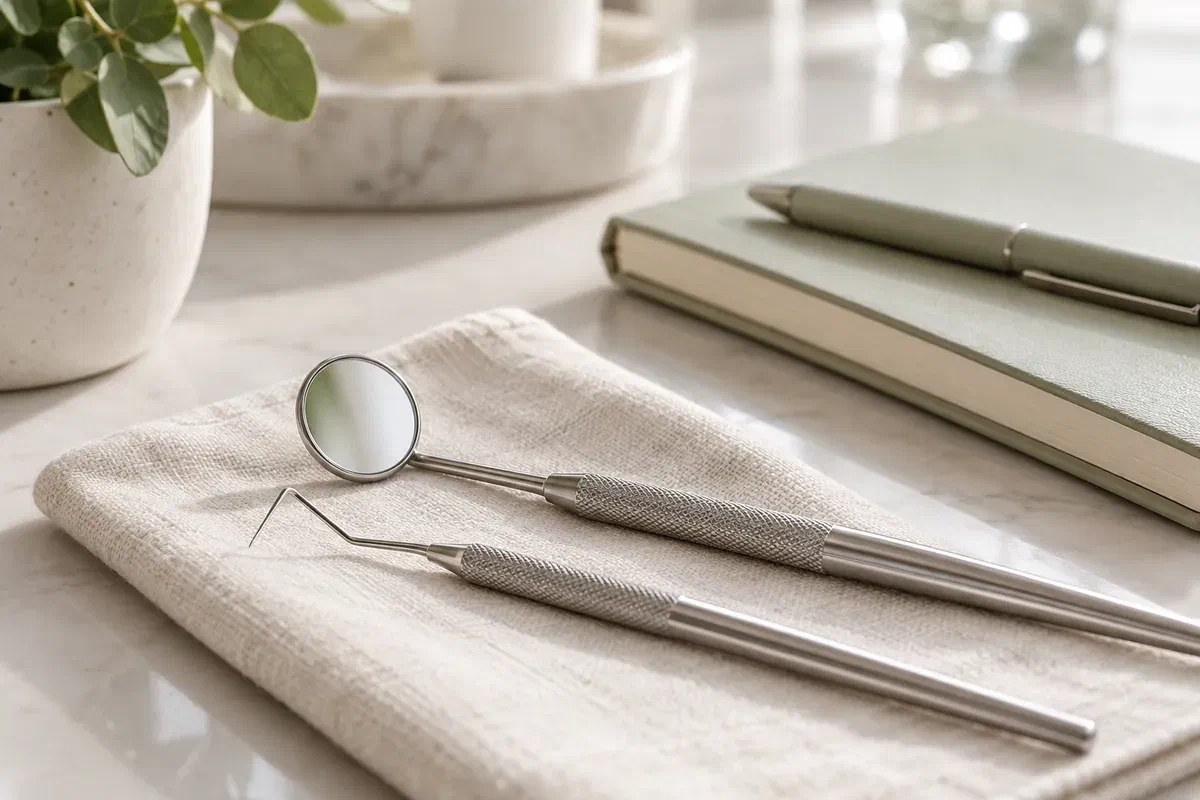
Illustrative dental examination instruments beside a notebook on a clean cloth
What to mention on the phone

Three kinds of change worth describing clearly

Everyday words are all you need. A short, honest description of what you feel, and anything that happened beforehand, helps the team decide whether to see you or point you somewhere better suited.

An ache or sharp pain that is new or shifting

Say which side it seems to be on, when it started and whether it flares with chewing, cold drinks or nothing at all. Tell us if it is affecting your sleep and what pain relief you have tried. Please don't keep prodding the tooth to test it; what you tell us is enough to start.

A broken piece, a bump to the mouth or puffiness

Describe what looks different, and if there was a slip or knock, how it happened. Let us know whether your bite still feels normal and whether a fragment of tooth or filling has come away; keep it if you can. Mention when the event occurred, even if things feel calmer now.

Discomfort that doesn't match your recovery instructions

Share what was done and when, and what feels different from the healing you were told to expect. If you kept the aftercare sheet, bring it along. That background helps the dentist tell an ordinary follow-up question apart from a separate issue that needs its own examination.

Call 911 or go to a hospital emergency department for trouble breathing or swallowing, swelling that spreads fast or is severe, heavy bleeding that won't stop, or a serious injury to the face or head. These need medical attention before any dental appointment.

The point of being examined first

Understanding comes before the repair.

With a broken filling, the obvious answer seems to be replacing it. Sometimes that is right. Sometimes the break reveals decay underneath, a crack running deeper, or a nerve that is already irritated. The examination gives the dentist room to check, and gives you the chance to ask how the findings support the suggested treatment and what is still uncertain.

You should also come away knowing the practical shape of things: can something be done today, is a further appointment needed, or would another provider be better placed? When the plan has several steps, ask which one should happen first and how the rest will be booked.

Patient information: American Dental Association — individualized selection of dental imaging

Plain explanations of what was found

Ask what the dentist saw and what the tests showed, and how that affects the tooth or the tissue around it. Request ordinary language before treatment names are discussed. A diagnosis you understand is much easier to weigh against the options in front of you.

X-rays that serve a purpose

Imaging can help when it gives information needed to diagnose or plan care. It should follow the history and examination, with recent images taken into account where they exist. Asking what a particular X-ray is meant to reveal is always reasonable.

Knowing whether care is finished or temporary

Check if the next step is definitive treatment, a short-term fix, more investigation or a review. They do different jobs. Being clear about this means a temporary covering over a broken filling isn't mistaken for the end of the matter.

How the visit unfolds

Listen, look, explain, then agree

The tests used will depend on your symptoms and what the dentist finds. You can ask for any step to be explained, or for a short break, if something makes you uncomfortable.

  1. Your account and your medical background

    Explain how the problem began, what it does, past work on that tooth and any medicine you have taken. List allergies, health conditions and prescriptions. If you are pregnant, anxious about dental care or have other relevant circumstances, mention them so the visit can be planned around you.

  2. A careful look at the tooth and what surrounds it

    The dentist examines the teeth and soft tissues and may carry out suitable clinical tests. If the source is unclear, neighbouring teeth and gums may be checked too. You can ask what each test is looking for, especially when attention moves beyond the tooth you suspected.

  3. Records, imaging if needed and a working diagnosis

    Earlier records may be reviewed, and new images considered only if they would help. You then hear what the dentist found and what they believe is going on. If the cause hasn't been pinned down, ask what is still uncertain and what would help clarify it.

  4. Choosing treatment, referral or a review

    Talk through the suggested care, alternatives, limits, timing and fees before you decide. Confirm what belongs to the examination and what is separate treatment. Leave knowing when the next appointment is and which changes should prompt an earlier call.

In the days after

Hold on to the plan, especially if the repair comes later.

Some problems are handled at the examination; others are booked for another day. Before you go, be sure which applies, and what to do in the meantime.

Write down the tooth and the next step

Ask for the key findings in a form you can look back at. Note the tooth or area involved and what the next visit is meant to achieve. If a different clinician will treat it, confirm which records or images should be shared, with your consent.

Follow the advice given for this problem

You may be told about temporary measures until treatment is arranged, such as chewing on the other side. Ask how any medicine fits with your health. Don't rely on a leftover prescription or on what a past dental problem needed.

Phone again if anything shifts

New swelling, worsening pain or other changes after the examination should be reported. The advice you received was based on what was seen that day. A different picture may need a different response, so don't assume the original plan still holds.

After the diagnosis

Repair, investigate or watch: which fits?

The findings decide the path. Ask why one option is preferred and what choosing another would mean for your comfort, the tooth and how soon care happens.

If a dental cause is confirmed

Treating the problem that was identified

This might be a new filling or crown, treatment inside the tooth, an extraction or another suitable procedure. Ask what it is expected to achieve and whether more care will follow. The diagnosis should guide the choice, rather than the sense of urgency alone.

If more detail or another clinician is required

Additional tests or a referral

Certain findings call for further investigation or a specialist before definitive treatment is chosen. Ask what the next assessment should answer, who is arranging it and which records go with you. Check what to do if symptoms worsen before then.

If waiting is clinically reasonable

A review rather than immediate treatment

Sometimes the right call is to watch an area for now. Ask what will be monitored, how long until the review and what should bring you back sooner. A review should come with reasons and a timeframe, not an open-ended wait.

Questions from Old Milton

What people ask when something breaks or hurts

These cover how the assessment works, not your particular tooth. For that, ring us and describe what is happening; a message left online won't be treated as urgent.

(905) 876-4488
A piece of my old filling came out. Is that an emergency?
It depends on how you feel. If there is pain, swelling or a sharp edge cutting your tongue, call to discuss how soon you should be seen. If it is comfortable, it still needs an examination, but the timing may be less pressing. Keep the piece if you found it.
Can a crown that fell off be put back on?
Sometimes, but only after the tooth and crown have been examined. The dentist checks whether the tooth underneath is sound and whether the crown still fits. Keep it somewhere safe, avoid chewing on that side and bring it with you.
Why would the dentist examine teeth I'm not complaining about?
Pain doesn’t always come from where it seems to. A neighbouring tooth, the gum or nearby tissues can be the real source. Checking around the area helps avoid treating the wrong tooth. Ask how the findings support the diagnosis.
Is the urgent examination separate from treatment and its fees?
Usually it is. The examination works out what is wrong; treatment may follow at the same visit, at another appointment or through a referral. Ask what is planned and which fees apply to the assessment and which to any procedure.
Does this visit count as my regular check-up?
No. It deals with the urgent problem and anything closely connected to it. Your broader dental care may still need its own appointment. Ask what was covered and whether a separate visit is recommended once the immediate issue is managed.
Should I bring records from a dentist I saw years ago?
If you have recent reports, images or treatment details, bring them, along with a list of medicines. Older records can sometimes help too. With your permission, the team may request records from another office if they would assist the assessment.
Book from Old Milton

One call to explain. One examination to make sense of it.

Phone our Bronte Street practice when a filling breaks, a crown loosens, a tooth suddenly hurts or swelling appears, and ask about current availability. Tell us what you are noticing so we can discuss the next step. If you need help right away and can't reach us, contact another available provider.

Online messages are for non-urgent requests. What the examination includes, imaging, treatment, referral, availability and fees all depend on your situation. Being assessed does not guarantee treatment at the same visit.

Visit Milton Dental Clinic
Unit 1, 342 Bronte St. S, Milton, ON L9T 5B7
Get directions Clinic hours
Monday–Thursday
11am–7pm
Friday–Sunday
By appointment only

Areas we serve

  • Milton
  • Oakville
  • Mississauga
  • Georgetown
  • Halton Hills
  • Acton
  • Campbellville
  • Brampton
  • Burlington
  • Puslinch
  • Rockwood
  • Erin
  • Caledon
  • Etobicoke
  • Old Milton
  • Bronte Meadows
  • Timberlea
  • Dorset Park
  • Dempsey
  • Clarke
  • Beaty
  • Coates
  • Harrison
  • Scott
  • Willmott
  • Ford
  • Bowes
  • Cobden
  • Walker
  • Mountain View
  • Milton Heights
  • Hawthorne Village
  • Valley View
  • Fallingbrook
  • Nassagaweya
  • Trafalgar
  • Esquesing
  • Nelson
  • Brookville
  • Moffat
  • Glen Williams
  • Norval
  • Limehouse
  • Stewarttown
  • Ashgrove
  • Hornby
  • Silver Creek
  • Speyside
  • Scotch Block
  • North Oakville
  • River Oaks
  • Glen Abbey
  • West Oak Trails
  • Palermo
  • Bronte Creek
  • College Park
  • Joshua Creek
  • Uptown Core
  • Preserve
  • Iroquois Ridge
  • Lisgar
  • Meadowvale
  • Meadowvale Village
  • Churchill Meadows
  • Erin Mills
  • Central Erin Mills
  • Streetsville
  • East Credit
  • Creditview
  • Heartland
  • Sheridan
  • Mount Pleasant
  • Credit Valley
  • Huttonville
  • Churchville
  • Springbrook
  • Northwest Brampton
  • Bram West
  • Fletcher's Meadow
  • Fletcher's Creek South
  • Alton Village
  • Orchard
  • Millcroft
  • Headon Forest
  • Tansley
  • Brant Hills
  • Tyandaga
  • Kilbride
  • Lowville
  • Aberfoyle
  • Morriston
  • Arkell
  • Hillsburgh
  • Freelton
  • Carlisle
  • Waterdown
  • Flamborough
  • Mountsberg

How can we help?

Milton Dental Clinic

Have a question about your smile? Choose the option that works best for you.

For urgent dental concerns, please call.
Messages are reviewed during clinic hours.