

Illustrative patient listening as a clinician explains a dental treatment plan
Specialized Care

Emergency Dental Treatment in Acton

Pain relievers got you through the night, but the tooth still is not right. From Acton, call to describe what has happened, and we can talk about availability, the assessment, and the treatment that may be needed beyond what the medicine cabinet can offer.

Beyond managing the pain

The ache stopped. The problem may not have.

Over-the-counter pain relief can make a bad tooth bearable for a while, which is exactly why it is easy to put off care. Emergency dental treatment is the care selected when pain, swelling, a break, or an injury needs timely attention, and it covers several approaches. The examination shows whether repair, treatment of the tooth or nearby tissues, extraction, stabilization, or a referral is the right next step.

One appointment may not finish the job. The first visit often deals with the urgent cause, while a permanent restoration, a recheck, or specialist care follows. Knowing which part has been done, and which has not, keeps a quieter tooth from being mistaken for a treated one.

When calling from Acton, explain what happened, what you have taken, and whether it has helped. People who have not been here before can ask about availability, as can returning patients. If we cannot be reached and you need care immediately, contact another emergency dental provider. A website request will not get a fast enough answer for symptoms that are getting worse.

Talk to us about urgent pain
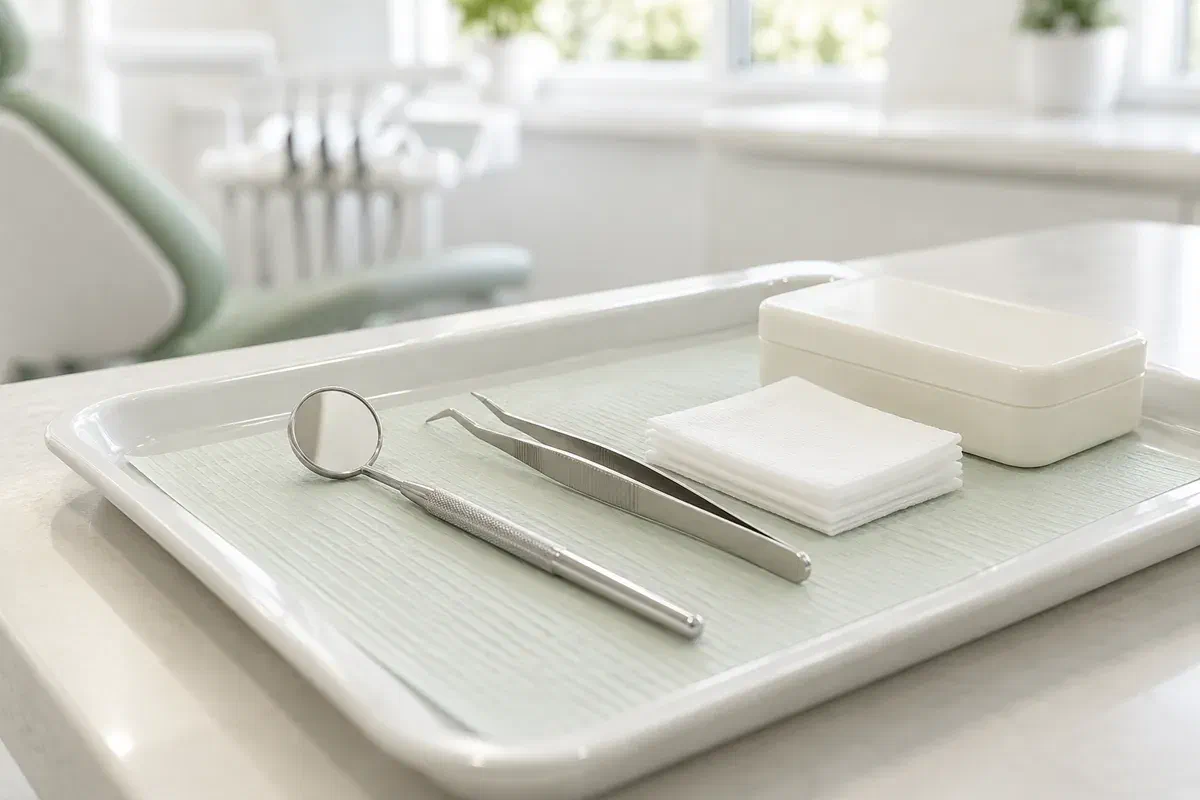
Illustrative prepared dental tray with a mirror, tweezers, and clean gauze
What medicine might be hiding

Three situations worth a call even if tablets are helping

How you feel after a dose is only part of the picture. Tell us how the problem began, where it is, what it interferes with, what you can see, and any recent dental work.

Pain that returns as each dose wears off

If the pain is held back only by regular doses, or still interrupts meals and sleep, tell us what you are taking and how often. Mention whether it throbs, hurts with biting, or reacts to temperature. Medicine eases the feeling but leaves the cause in place.

Swelling, with or without much pain

Swelling can grow even while pain is controlled. Note where it began, whether it is spreading, and any fever, feeling unwell, or difficulty opening your mouth. These details decide where you should be seen and should be shared before a routine booking.

A broken tooth or missing restoration

Tell us if part of a tooth has broken, a filling or crown has fallen out, or an impact has moved a tooth. Keep any piece safely and bring it. A knocked-out permanent tooth needs emergency dental care right away, regardless of pain.

Medicine is not the answer for trouble breathing or swallowing, swelling that is spreading fast, bleeding that will not stop, or a serious injury to the face or head. Call 911 or go to a hospital emergency department instead of waiting for a reply.

Putting medicine in its place

Relief, then treatment, then a plan to finish

When pain has been partly managed at home, the important question becomes what is actually causing it. Ask the dentist what was found, what the recommended treatment is designed to change, and how you will both tell whether it worked. The reasoning should match your diagnosis rather than a general promise.

Look at the wider choices as well. Can the tooth sensibly be kept? What does a temporary step achieve, and what is beyond it? Should another provider handle part of the care? Costs, the stages involved, and any uncertainty are part of a good conversation, even after a rushed morning.

Patient information: American Dental Association — medicines as temporary support for acute dental pain · American Dental Association — appropriate antibiotic use for dental pain and swelling

Treating the cause behind the pain

A cracked tooth, an inflamed nerve, an infection, and damaged gum or bone can all hurt in similar ways. Ask which you have and how it will be treated. Managing pain without that plan risks leaving important work undone.

Pain relief and antibiotics, used properly

Pain medicine supports comfort while dental care is arranged, not instead of it. Antibiotics are suitable only in selected circumstances and are not a general cure for toothache. Ask what any prescription should do and how it fits with treatment.

A follow-up you can keep

If care must continue, ask when, roughly how much it will cost, and who will provide it. Explain travel, scheduling, or budget concerns so alternatives can be compared. A plan that fits your life is far more likely to be finished.

From the phone to the chair

What happens once you decide not to wait it out

The amount of treatment possible in one appointment depends on the diagnosis, complexity, time, and any referral. You should hear about those limits before agreeing to a procedure.

  1. Tell us what you have taken

    Describe when the problem started and how it has changed, along with recent treatment or injuries. List any medicines, including over-the-counter pain relief and doses, plus allergies and health conditions. Mention anxiety or communication needs.

  2. Find the source

    The dentist reviews your history, examines the area, and uses tests or X-rays where needed. Ask how the results connect to the proposed care. If another setting or a specialist would be more appropriate, ask why and what the first step should be.

  3. Weigh the options and agree on comfort

    Go through benefits, limits, alternatives, and fees. Agree on a way to pause. Make sure you know whether today’s procedure completes the treatment, starts it, or is temporary.

  4. Plan medicine, aftercare, and the next visit

    Before you leave, ask what was done and what remains, how to manage pain from here, and which symptoms mean you should call. Book the follow-up or confirm the referral rather than relying on medicine to keep things quiet.

In the days that follow

Manage comfort without losing sight of the plan

Aftercare depends on the procedure. A temporary filling, an extraction, and root canal treatment each come with different instructions, so check which ones apply.

Look after the treated tooth

Ask when you can return to normal eating and cleaning, and when it is safe to chew on that side. While numb, take care with hot drinks and avoid biting your lip. Skip hard foods even if the tooth feels better.

Use pain relief and prescriptions safely

Follow the label and your clinician’s instructions, and do not double up on similar medicines without advice. A pharmacist can check interactions. Aspirin should never be placed on a sore tooth or gum. Call the prescriber if a medicine causes problems.

Keep the appointments that complete care

The next visit may finish a restoration or check healing. If the date stops working, call to rearrange. Being comfortable on pain relief is not the same as being finished, so do not cancel just because things feel calmer.

Patient information: ADA MouthHealthy — avoiding harmful home remedies during dental emergencies

Treatment choices

The treatment itself depends on what is found

Ask why the recommended approach suits your diagnosis and what an alternative would involve. Immediate comfort and the tooth’s long-term health both deserve weight.

When keeping the tooth is realistic

Restoring or root-treating the tooth

Depending on what the examination shows, the tooth may be repaired or treated internally. Ask about the remaining structure, the number of visits, and the final protection needed. Keeping it should be considered with its prospects and limits made clear.

When retaining it is not advisable

Extracting the tooth or treating the surrounding gum

Sometimes taking the tooth out, or treating the tissues around it, is the recommendation. Ask why and what healing will involve. Replacement can be discussed on its own timeline rather than assumed as part of the urgent visit.

When definitive care needs more time or another provider

A temporary measure while care is arranged

Temporary management helps when its limits are understood. Ask what it covers, how long it should be relied on, and whom to contact if it fails. Any referral should include a practical way to reach the treatment still needed.

Acton questions about pain and medicine

Answers for when painkillers are doing the heavy lifting

Call to talk through the problem and the options available. These answers cover common decisions, while the examination decides the treatment and its urgency.

(905) 876-4488
Can I keep taking painkillers until a regular checkup?
Short-term pain relief used as directed may help while care is arranged, but relying on it for days or weeks can hide a problem that needs treatment. Call to describe the symptoms so the right timing can be discussed.
Is it safe to combine different pain medicines for a toothache?
Some combinations are used, but whether they suit you depends on your health and other medicines. Ask a pharmacist or your clinician before combining products, and check labels for the same ingredient appearing twice.
Why won’t the dentist just prescribe antibiotics for my toothache?
Antibiotics treat certain infections, especially with spreading signs, but they do not relieve most toothaches or fix the cause. Using them when they are not needed carries risks. The dentist will explain whether they suit your situation.
The pain is under control now. Is my treatment done?
Not necessarily. Pain can fade while the cause still needs attention. Ask what part of the plan remains, and keep the next stage unless the dentist advises otherwise.
Can new patients phone about a dental emergency?
Yes. Call, describe the problem, and ask about availability. If an appointment is arranged, bring your medication list and health information. Same-day treatment cannot be confirmed until the concern and schedule are reviewed.
What if the temporary filling from my urgent visit falls out?
Call the team who placed it and describe what happened. Follow their advice on protecting the tooth and when to return. Avoid glue or home repairs, and do not assume a painless tooth can be left indefinitely.
Urgent dental treatment for Acton

Call now, while there is time to plan the next step.

Reach our Bronte Street office by phone about pain, swelling, a damaged tooth, or an injury, and tell us what medicine you have used. From Acton, we can discuss current availability, the assessment, and whether another provider should handle part of the care.

Online requests are not suitable for urgent symptoms. Treatment, timing, fees, completion visits, and referrals are all decided after assessment and cannot be promised in advance.

Visit Milton Dental Clinic
Unit 1, 342 Bronte St. S, Milton, ON L9T 5B7
Get directions Clinic hours
Monday–Thursday
11am–7pm
Friday–Sunday
By appointment only

Areas we serve

  • Milton
  • Oakville
  • Mississauga
  • Georgetown
  • Halton Hills
  • Acton
  • Campbellville
  • Brampton
  • Burlington
  • Puslinch
  • Rockwood
  • Erin
  • Caledon
  • Etobicoke
  • Old Milton
  • Bronte Meadows
  • Timberlea
  • Dorset Park
  • Dempsey
  • Clarke
  • Beaty
  • Coates
  • Harrison
  • Scott
  • Willmott
  • Ford
  • Bowes
  • Cobden
  • Walker
  • Mountain View
  • Milton Heights
  • Hawthorne Village
  • Valley View
  • Fallingbrook
  • Nassagaweya
  • Trafalgar
  • Esquesing
  • Nelson
  • Brookville
  • Moffat
  • Glen Williams
  • Norval
  • Limehouse
  • Stewarttown
  • Ashgrove
  • Hornby
  • Silver Creek
  • Speyside
  • Scotch Block
  • North Oakville
  • River Oaks
  • Glen Abbey
  • West Oak Trails
  • Palermo
  • Bronte Creek
  • College Park
  • Joshua Creek
  • Uptown Core
  • Preserve
  • Iroquois Ridge
  • Lisgar
  • Meadowvale
  • Meadowvale Village
  • Churchill Meadows
  • Erin Mills
  • Central Erin Mills
  • Streetsville
  • East Credit
  • Creditview
  • Heartland
  • Sheridan
  • Mount Pleasant
  • Credit Valley
  • Huttonville
  • Churchville
  • Springbrook
  • Northwest Brampton
  • Bram West
  • Fletcher's Meadow
  • Fletcher's Creek South
  • Alton Village
  • Orchard
  • Millcroft
  • Headon Forest
  • Tansley
  • Brant Hills
  • Tyandaga
  • Kilbride
  • Lowville
  • Aberfoyle
  • Morriston
  • Arkell
  • Hillsburgh
  • Freelton
  • Carlisle
  • Waterdown
  • Flamborough
  • Mountsberg

How can we help?

Milton Dental Clinic

Have a question about your smile? Choose the option that works best for you.

For urgent dental concerns, please call.
Messages are reviewed during clinic hours.