

Illustrative patient listening as a clinician explains a dental treatment plan
Specialized Care

Emergency Dental Treatment in Brampton

When a child wakes up with a swollen cheek or a parent cracks a tooth, the whole household’s plans shift. Call from Brampton to describe the problem, and we can talk about availability, the assessment, and which care may happen at the first visit.

When someone at home is in pain

One sore tooth can reshuffle a family’s whole day.

Emergency dental treatment is the care chosen when a tooth or the tissues around it need attention soon, for example because of strong pain, swelling, a break, or a fall. It is not one particular procedure. The examination guides whether the next step is repairing the tooth, treating it or the gums, taking it out, stabilizing it, or arranging care elsewhere.

For busy households, it helps to know in advance that the first appointment may not be the last. It often handles what is most pressing and leaves a restoration, recheck, or specialist step to be scheduled. Knowing that lets you plan childcare, school runs, and work around the visits still to come.

From Brampton, call before anyone sets off and tell us who is affected and what happened. New and returning patients of any age can ask about availability. If you cannot get through and someone needs dental care immediately, contact another emergency dental provider, since an online request is not suited to symptoms that are getting worse.

Call about a family member’s urgent problem
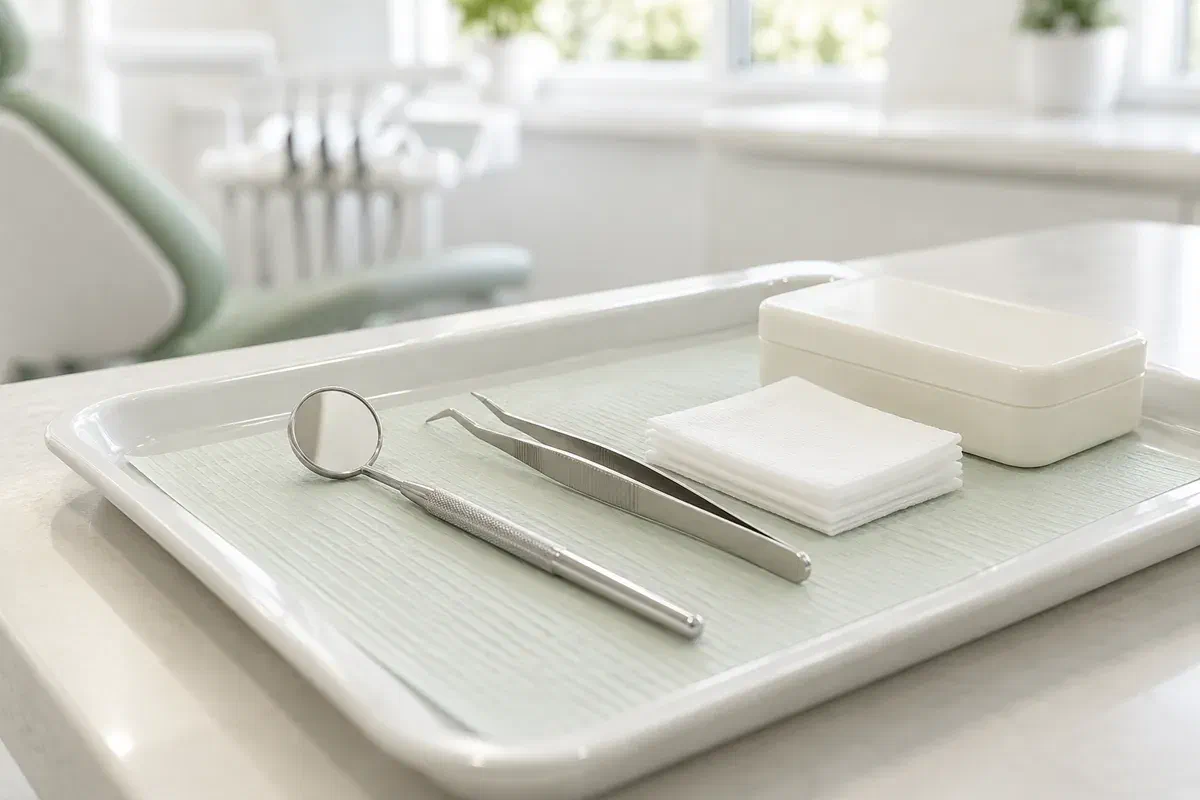
Illustrative prepared dental tray with a mirror, tweezers, and clean gauze
What to watch for at home

Noticing the signs, whoever is in the chair

Children and adults describe pain differently, so share what you have seen as well as what they tell you: when it began, where it is, how it affects eating or sleep, and any recent treatment.

Pain that disrupts eating, sleep, or school

Tell us if the person in pain is refusing food, waking at night, or unable to concentrate, and which remedies you have tried. Note whether it is constant, comes with biting, or follows cold or hot food. Extra medicine alone will not address the cause.

Swelling, fever, or seeming unwell

Describe where the swelling started and whether it is getting bigger, and mention a temperature, unusual tiredness, or trouble opening the mouth. These signs help decide the right place for care and should be raised before any ordinary appointment is booked.

A broken, loosened, or knocked-out tooth

Let us know whether a tooth has chipped, a filling has dropped out, or a fall has moved a tooth. Keep any piece and bring it. A permanent tooth that has been knocked out is time-critical and needs emergency dental care straight away.

Call 911 or go to a hospital emergency department for difficulty breathing or swallowing, swelling that spreads rapidly, bleeding you cannot control, or a serious head or face injury, at any age. Do not wait for an email or a callback.

Understanding the plan as a family

Clear reasons make urgent decisions easier for everyone.

As the patient or the parent, you can ask what the proposed care is meant to change and how its success will be measured. A clear explanation ties the procedure to what the dentist found, rather than offering the same promise for every emergency.

Look at the alternatives together too. Can the tooth reasonably be kept? What will a temporary measure manage, and where does it fall short? Is another provider, such as a specialist, better suited? Costs, the number of visits, and any uncertainty belong in the conversation, even on an unexpected day.

Patient information: American Dental Association — medicines as temporary support for acute dental pain · American Dental Association — appropriate antibiotic use for dental pain and swelling

Care matched to what was found

Cracked enamel, an irritated pulp, infection, and sore gum tissue are separate problems with separate fixes. Ask which one is being treated. Easing pain without a plan for the cause can leave the job half done.

A clear purpose for any medicine

Pain relief can help someone stay comfortable until care is arranged, but it does not replace dental treatment. Antibiotics are appropriate only in certain situations. Ask what a prescription is for, how to give it, and what dental step still follows.

Follow-up that suits the household

If treatment continues, ask when, what it may cost, and who provides it. Mention school hours, shift work, or more than one family member needing care so options can be compared. A plan works better when it fits real routines.

What to expect

Calling, checking, deciding, and planning ahead

A single visit can only cover so much. The diagnosis, its complexity, the appointment length, and any need for referral all set that limit, and you should hear about it before treatment begins.

  1. Describe the problem on the phone

    Share when it started, how it has changed, and any recent dental work or injury. Be ready with medicines, allergies, and health conditions for the person affected. If a child is anxious or someone needs communication support, tell us.

  2. Examination of the affected area

    The dentist reviews the history, examines the mouth, and uses indicated tests or images. Ask how the findings support the recommendation. If a specialist or another setting would suit better, ask why and what the first step should be.

  3. Consent and comfort

    Discuss the benefits, limits, alternatives, and fees. For a child, a parent or guardian is involved in consent. Agree on how to signal a pause, and confirm whether the procedure is complete, a first stage, or temporary.

  4. Instructions and the next booking

    Before you leave, go over what was done and what remains, plus guidance on eating, cleaning, medicine, and warning signs. Schedule the follow-up or referral then, rather than hoping the problem will stay calm.

Caring at home afterward

Helping the treated tooth settle

Instructions depend on the procedure. Care after a temporary filling, an extraction, or treatment inside a tooth is different each time, so ask if anything is unclear.

Follow the advice for that area

Ask when normal eating, brushing, and use of the tooth can resume. After freezing, keep an eye on children so they do not chew their lip or cheek, and avoid hot drinks until feeling returns. Hard foods can wait, even if the pain has gone.

Give medicines safely

Use the label and clinician’s instructions, including children’s doses where relevant, and ask a pharmacist about anything uncertain. Never rest aspirin on a sore tooth or gum. If a medicine causes a reaction, contact the prescriber rather than trying another on your own.

Keep the next visits

The appointment that completes a restoration or checks healing is part of the treatment. If family schedules change, call to move it. A tooth that no longer hurts is encouraging, but it is not proof the work is finished.

Patient information: ADA MouthHealthy — avoiding harmful home remedies during dental emergencies

Possible treatment paths

The diagnosis decides the treatment, not the label

Ask why the suggested approach fits and what another option would involve. Today’s problem and how the tooth will do over time both matter.

When keeping it is a reasonable goal

Restoring or treating the tooth so it can stay

A restoration or root canal treatment may be discussed depending on the findings. Ask how much tooth remains, how many visits it will take, and what final protection it will need. The choice to keep it should be weighed honestly.

When keeping the tooth is not appropriate

Removal or treatment of the surrounding tissues

Extraction or care of nearby tissues is sometimes the better plan. Ask why it is advised and what recovery involves. Replacement, if needed, can be discussed separately later instead of being assumed during the urgent visit.

When completing care needs another visit or provider

Short-term measures and referral

Temporary care has a real place when everyone knows what it can and cannot do. Find out what it is shielding, when it should be replaced, and whom to phone. Any referral needs a practical route to the remaining treatment.

Family questions from Brampton

When the patient is your child, your parent, or you

Call to talk through the problem and appointment options. These answers cover common situations, but the examination decides the treatment and how urgent it is.

(905) 876-4488
My child knocked out a baby tooth. Should I put it back in?
No. Baby teeth are generally not put back, because doing so can harm the adult tooth developing underneath. Keep your child calm, press gently with clean gauze if it bleeds, and call so the area can be checked.
What should I do right away if an adult tooth is knocked out?
Hold it by the crown, not the root. If it is dirty, rinse it briefly without scrubbing. If possible, place it back in the socket, or keep it in milk, and seek emergency dental care immediately.
Can I stay with my child during emergency treatment?
Ask when you call. Parents can often stay nearby, and that can help a nervous child. Let us know about your child’s needs, past experiences, or worries so the visit can be planned with those in mind.
Do new patients get seen for dental emergencies?
New patients are welcome to call, describe the problem, and ask what is available. Bring health and dental information to any visit arranged. Immediate treatment cannot be promised until the concern and schedule have been reviewed.
Can a loose temporary filling just be left alone?
It is best to call the team who placed it. They can advise how to protect the tooth and when to come in. Avoid household glue, and do not assume the tooth can wait indefinitely because it feels fine.
Does stopping the pain with medicine mean we can skip the next visit?
No. Medicine may ease the pain while the cause still needs treatment. Keep the planned appointment and ask what remains. A quieter tooth is not the same as a treated one.
Brampton emergency dental care

Phone first, and we will help you decide who needs to be seen and when.

Describe the pain, swelling, broken tooth, or injury when you call our Bronte Street office, along with any recent dental work. For a Brampton household juggling several schedules, we can discuss current availability, assessment, and whether another provider should handle part of the care.

Online requests are meant for non-urgent matters. Treatment choices, appointment times, fees, follow-up, and referrals depend on assessment and cannot be promised beforehand.

Visit Milton Dental Clinic
Unit 1, 342 Bronte St. S, Milton, ON L9T 5B7
Get directions Clinic hours
Monday–Thursday
11am–7pm
Friday–Sunday
By appointment only

Areas we serve

  • Milton
  • Oakville
  • Mississauga
  • Georgetown
  • Halton Hills
  • Acton
  • Campbellville
  • Brampton
  • Burlington
  • Puslinch
  • Rockwood
  • Erin
  • Caledon
  • Etobicoke
  • Old Milton
  • Bronte Meadows
  • Timberlea
  • Dorset Park
  • Dempsey
  • Clarke
  • Beaty
  • Coates
  • Harrison
  • Scott
  • Willmott
  • Ford
  • Bowes
  • Cobden
  • Walker
  • Mountain View
  • Milton Heights
  • Hawthorne Village
  • Valley View
  • Fallingbrook
  • Nassagaweya
  • Trafalgar
  • Esquesing
  • Nelson
  • Brookville
  • Moffat
  • Glen Williams
  • Norval
  • Limehouse
  • Stewarttown
  • Ashgrove
  • Hornby
  • Silver Creek
  • Speyside
  • Scotch Block
  • North Oakville
  • River Oaks
  • Glen Abbey
  • West Oak Trails
  • Palermo
  • Bronte Creek
  • College Park
  • Joshua Creek
  • Uptown Core
  • Preserve
  • Iroquois Ridge
  • Lisgar
  • Meadowvale
  • Meadowvale Village
  • Churchill Meadows
  • Erin Mills
  • Central Erin Mills
  • Streetsville
  • East Credit
  • Creditview
  • Heartland
  • Sheridan
  • Mount Pleasant
  • Credit Valley
  • Huttonville
  • Churchville
  • Springbrook
  • Northwest Brampton
  • Bram West
  • Fletcher's Meadow
  • Fletcher's Creek South
  • Alton Village
  • Orchard
  • Millcroft
  • Headon Forest
  • Tansley
  • Brant Hills
  • Tyandaga
  • Kilbride
  • Lowville
  • Aberfoyle
  • Morriston
  • Arkell
  • Hillsburgh
  • Freelton
  • Carlisle
  • Waterdown
  • Flamborough
  • Mountsberg

How can we help?

Milton Dental Clinic

Have a question about your smile? Choose the option that works best for you.

For urgent dental concerns, please call.
Messages are reviewed during clinic hours.