

Illustrative patient listening as a clinician explains a dental treatment plan
Specialized Care

Emergency Dental Treatment in Mississauga

A molar that started aching on your commute, a crown that came off over lunch: from Mississauga, call before rearranging your day. Explain what is happening, and we can discuss openings, the assessment, and what may be needed now versus later.

Dental trouble in the middle of a workday

Pain on a Tuesday afternoon

Teeth tend to fail at inconvenient moments, often in the middle of a busy week. Emergency dental treatment refers to care selected because something needs prompt attention, whether that is severe pain, swelling, a fracture, or an injury. No single procedure fits all of these. After examining the area, the dentist may recommend repairing, treating, removing, or stabilizing the tooth, or sending you elsewhere.

Before you book time off, it helps to know that an urgent visit and a finished treatment plan can differ. The first appointment might address the most pressing concern, leaving a permanent restoration, check, or specialist step for another day. Understanding that split lets you plan your schedule and decide calmly.

From Mississauga, phone first so we can hear what is happening and talk about timing before you set out. Anyone, new or returning, can ask about current availability. If you cannot reach us and care cannot wait, go to another emergency dental provider, because a web message will not be answered fast enough for escalating symptoms.

Ask about urgent appointment times
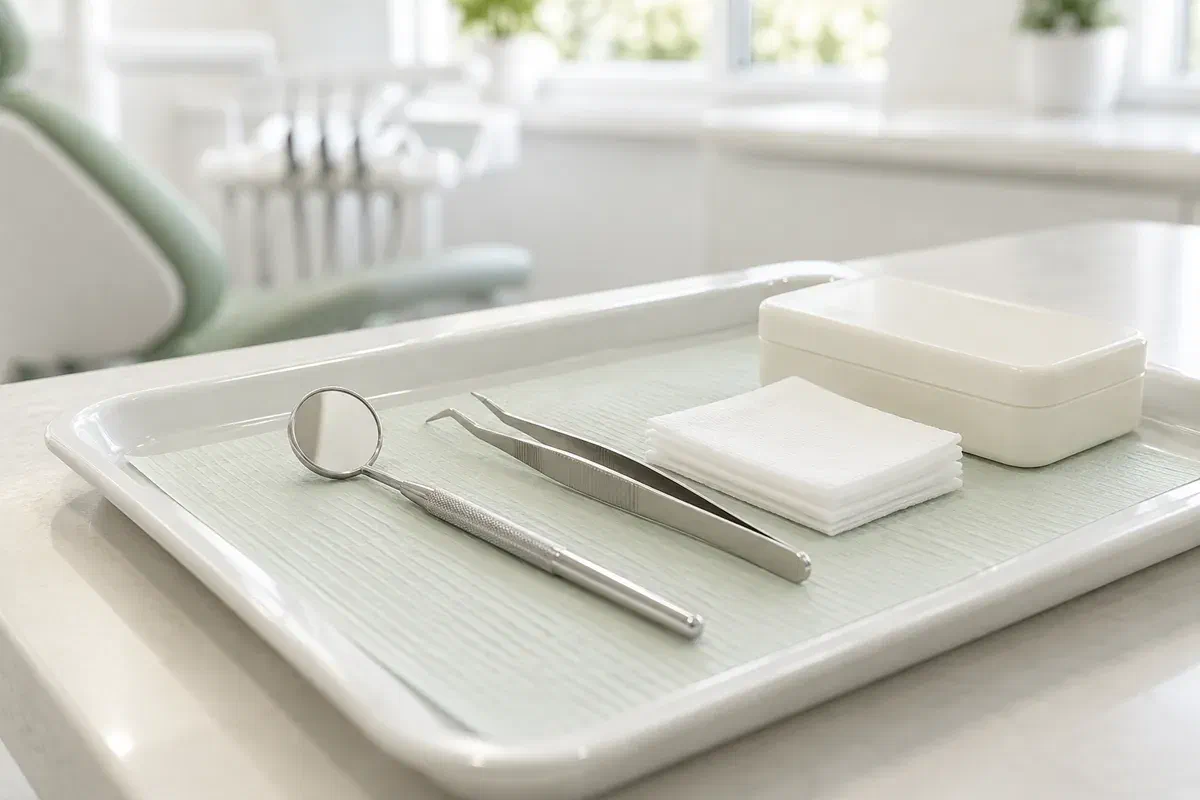
Illustrative prepared dental tray with a mirror, tweezers, and clean gauze
Before you leave work

Is it throbbing, swelling, or broken?

We need more than a rating out of ten. Tell us when the problem started, where you feel it, how it is affecting you, what has changed visibly, and whether you have had dental work recently.

Pain that keeps pulling your attention away

If you cannot focus, eat, or sleep, say so, and list what you have taken. Describe whether the pain is steady, triggered by chewing, or set off by hot coffee or iced drinks. Adding more medicine will not, on its own, deal with the cause.

Swelling that grows over hours

Tell us where it started, how fast it is changing, and whether you have a fever, feel unwell, or find it hard to open your mouth. That information affects where you should be seen and needs to be shared before any routine visit is arranged.

A cracked molar, loose crown, or knocked tooth

Explain whether something has broken off, a restoration has come away, or a knock has moved a tooth. Wrap any fragment and bring it. A fully knocked-out adult tooth is time-sensitive and needs emergency dental attention at once.

Some symptoms need 911 or a hospital emergency department: trouble breathing or swallowing, fast-spreading swelling, bleeding that cannot be controlled, or a significant head or facial injury. Do not wait for a message back.

What to ask, even when you are in a hurry

A fast appointment can still be a well-explained one.

Time pressure makes it tempting to agree to whatever stops the pain. Pause long enough to ask what the treatment is meant to achieve and how the dentist will tell if it worked. A recommendation should be grounded in what was found, not in a general promise about emergencies.

It is equally worth hearing the alternatives. Is the tooth a reasonable candidate to keep? How long will a temporary measure hold up, and what can it not do? Should someone else handle part of the care? Costs, the number of visits, and any uncertainty deserve a mention too.

Patient information: American Dental Association — medicines as temporary support for acute dental pain · American Dental Association — appropriate antibiotic use for dental pain and swelling

Focused on the underlying problem

A broken cusp, an inflamed nerve, an infection, and injured gum or bone all need different responses. Ask which you have. Settling the pain without a plan for its source can leave necessary treatment unfinished.

Medicines used for the right reasons

Pain relievers can make the wait for dental care more bearable, yet they are not treatment in themselves. Antibiotics are useful only in specific cases. Ask what each prescription is for and what still needs to be done.

Next visits that fit around work

If care needs to continue, ask when, approximately how much, and with which provider. Mention shift patterns, travel, or budget so realistic options can be compared. Booking the next stage before you leave makes it easier to protect the time.

Four stages of urgent care

How your urgent visit is organized

How much happens in one appointment depends on the findings, the complexity, the time available, and any referral needed. These limits should be clear before you agree to treatment.

  1. Start with a phone conversation

    Let us know when the problem began, how it has progressed, and any recent dental work or accident. Be prepared to describe medicines, allergies, and health conditions. If you are nervous or need communication support, mention it.

  2. Examination and testing

    The dentist reviews your history, examines your mouth, and uses tests or radiographs where indicated. Ask how the findings link to the recommendation. If a specialist or a different setting is better suited, ask why and what should happen first.

  3. Decide together on the treatment

    Go over the benefits, limitations, alternatives, and costs. Agree on a hand signal for a break. Ask whether the work planned for today is the whole treatment, an opening stage, or a temporary measure.

  4. Leave with instructions and a booking

    Review what was done and what remains. Ask how to eat, clean, and take medicine, and which symptoms mean you should call. Set the next appointment or referral before heading back to your day.

Back to your routine

Easing back into normal life after urgent care

Aftercare depends on the procedure. Looking after a temporary filling, an extraction site, or a tooth after root canal treatment involves different steps, so ask which ones apply.

Give the area what it needs

Check when you can resume eating, brushing, and using the tooth or any appliance. While still numb, skip hot drinks and lunch until feeling returns, so you do not bite or burn yourself. Do not try the repair out on hard food.

Handle medication thoughtfully

Follow the label and your clinician’s instructions, and ask a pharmacist about interactions with other medicines. Placing aspirin on a sore tooth or gum can injure the tissue, so avoid it. If a medicine causes problems, call the prescriber rather than changing course alone.

Show up for the remaining appointments

The visit that completes the restoration or checks healing matters as much as the first. If work commitments clash, call to rearrange. Feeling comfortable can make follow-up seem less urgent, but it does not mean the work is complete.

Patient information: ADA MouthHealthy — avoiding harmful home remedies during dental emergencies

Which approach fits

Several treatments, one diagnosis to guide them

Ask why the recommended approach suits the findings and what the alternatives would involve. The urgent issue and the tooth’s longer outlook both count.

When a restoration or root canal is a realistic option

Keeping the tooth through restorative or endodontic care

If the findings support it, a restoration or root canal treatment may be discussed. Ask how much of the tooth is left, how many appointments are needed, and what final protection it requires. Keeping it deserves careful thought with its outlook explained.

When the tooth is not a good candidate to keep

Taking the tooth out or treating nearby tissue

Extraction or treatment of the surrounding tissue may be advised in some situations. Ask for the reasoning and what healing involves. Any replacement can be planned separately once the urgent problem is resolved.

When finishing the care needs another visit or another provider

A temporary solution or a referral

Short-term management is useful when you know its limits and the next steps. Ask what it protects, how long it is meant to last, and who to call. A referral should leave you with a clear way forward.

Mississauga questions about urgent care

Practical answers for a busy week

Phone to explain the problem and hear about appointment options. These answers address frequent decisions; the examination sets the treatment and urgency.

(905) 876-4488
Can I go back to work right after an emergency dental visit?
Many people can, depending on what was done. After a longer procedure or an extraction you may need some rest, and numbness can make talking or eating awkward for a while. Ask the dentist what to expect in your situation.
How long does an urgent appointment usually take?
It varies with the problem. A straightforward assessment and temporary measure may be relatively short, while more involved treatment takes longer. When you call, ask how much time to set aside so you can plan the rest of your day.
Can I take ibuprofen or acetaminophen while I wait to be seen?
Over-the-counter pain relief may help some people while care is arranged, if it is safe for you. Follow the label, check with a pharmacist about other medicines or conditions, and remember it eases symptoms rather than treating the cause.
Will the dentist tell me the cost before starting?
Yes, you can ask before anything begins. Request an estimate for the examination, the proposed treatment, and any later stages. If cost affects your choice, mention it so reasonable alternatives can be explained.
Is extraction always the answer for a badly hurting tooth?
No. Some painful teeth can be repaired or treated and kept. The diagnosis and the tooth’s condition decide what is reasonable. Ask why each option is being suggested and what it would mean later.
Can I come in from Mississauga without calling first?
Please call before setting out. It lets us understand the problem and tell you whether there is an opening, so you do not make the trip only to learn that a wait or a referral is the better answer.
Urgent dental visits from Mississauga

Make the call, then plan the rest of your day.

Get in touch with our Bronte Street practice about pain, swelling, a broken tooth, or a mouth injury. Explain the symptoms and any recent dental work. We can discuss current availability and the assessment, including whether another provider is better suited for part of the care.

Online messages suit non-urgent topics only. Treatment, appointment times, fees, follow-up visits, and referrals depend on assessment and cannot be confirmed in advance.

Visit Milton Dental Clinic
Unit 1, 342 Bronte St. S, Milton, ON L9T 5B7
Get directions Clinic hours
Monday–Thursday
11am–7pm
Friday–Sunday
By appointment only

Areas we serve

  • Milton
  • Oakville
  • Mississauga
  • Georgetown
  • Halton Hills
  • Acton
  • Campbellville
  • Brampton
  • Burlington
  • Puslinch
  • Rockwood
  • Erin
  • Caledon
  • Etobicoke
  • Old Milton
  • Bronte Meadows
  • Timberlea
  • Dorset Park
  • Dempsey
  • Clarke
  • Beaty
  • Coates
  • Harrison
  • Scott
  • Willmott
  • Ford
  • Bowes
  • Cobden
  • Walker
  • Mountain View
  • Milton Heights
  • Hawthorne Village
  • Valley View
  • Fallingbrook
  • Nassagaweya
  • Trafalgar
  • Esquesing
  • Nelson
  • Brookville
  • Moffat
  • Glen Williams
  • Norval
  • Limehouse
  • Stewarttown
  • Ashgrove
  • Hornby
  • Silver Creek
  • Speyside
  • Scotch Block
  • North Oakville
  • River Oaks
  • Glen Abbey
  • West Oak Trails
  • Palermo
  • Bronte Creek
  • College Park
  • Joshua Creek
  • Uptown Core
  • Preserve
  • Iroquois Ridge
  • Lisgar
  • Meadowvale
  • Meadowvale Village
  • Churchill Meadows
  • Erin Mills
  • Central Erin Mills
  • Streetsville
  • East Credit
  • Creditview
  • Heartland
  • Sheridan
  • Mount Pleasant
  • Credit Valley
  • Huttonville
  • Churchville
  • Springbrook
  • Northwest Brampton
  • Bram West
  • Fletcher's Meadow
  • Fletcher's Creek South
  • Alton Village
  • Orchard
  • Millcroft
  • Headon Forest
  • Tansley
  • Brant Hills
  • Tyandaga
  • Kilbride
  • Lowville
  • Aberfoyle
  • Morriston
  • Arkell
  • Hillsburgh
  • Freelton
  • Carlisle
  • Waterdown
  • Flamborough
  • Mountsberg

How can we help?

Milton Dental Clinic

Have a question about your smile? Choose the option that works best for you.

For urgent dental concerns, please call.
Messages are reviewed during clinic hours.