

Illustrative patient listening as a clinician explains a dental treatment plan
Specialized Care

Emergency Dental Treatment in Oakville

Not sure whether a sore tooth can wait for a regular checkup? From Oakville, a short call helps sort that out. Describe the pain, swelling, or damage, and we can discuss availability, the assessment, and which care belongs today versus later.

Urgent or not quite urgent?

Deciding whether it can wait

Plenty of dental problems sit in a grey zone. A tooth twinges for a few days, a chip feels sharp against the tongue, a gum looks puffy. Emergency dental treatment is the care chosen when something needs prompt attention, and it can mean many things: a repair, treatment of the tooth or nearby tissue, removal, stabilization, or referral to another provider.

Sorting out urgency usually happens in two stages. The phone call helps decide how soon you should be seen. The examination then separates the part that must be dealt with now from the restoration, check-up, or specialist care that can follow. Seeing those as distinct steps helps you choose with confidence.

When you are coming from Oakville, ring before you set out and describe the problem in your own words. New and returning patients can ask about current openings. If you cannot reach us and need help right away, contact another emergency dental provider. Symptoms that are getting worse need a call, not a web form.

Start with a quick call
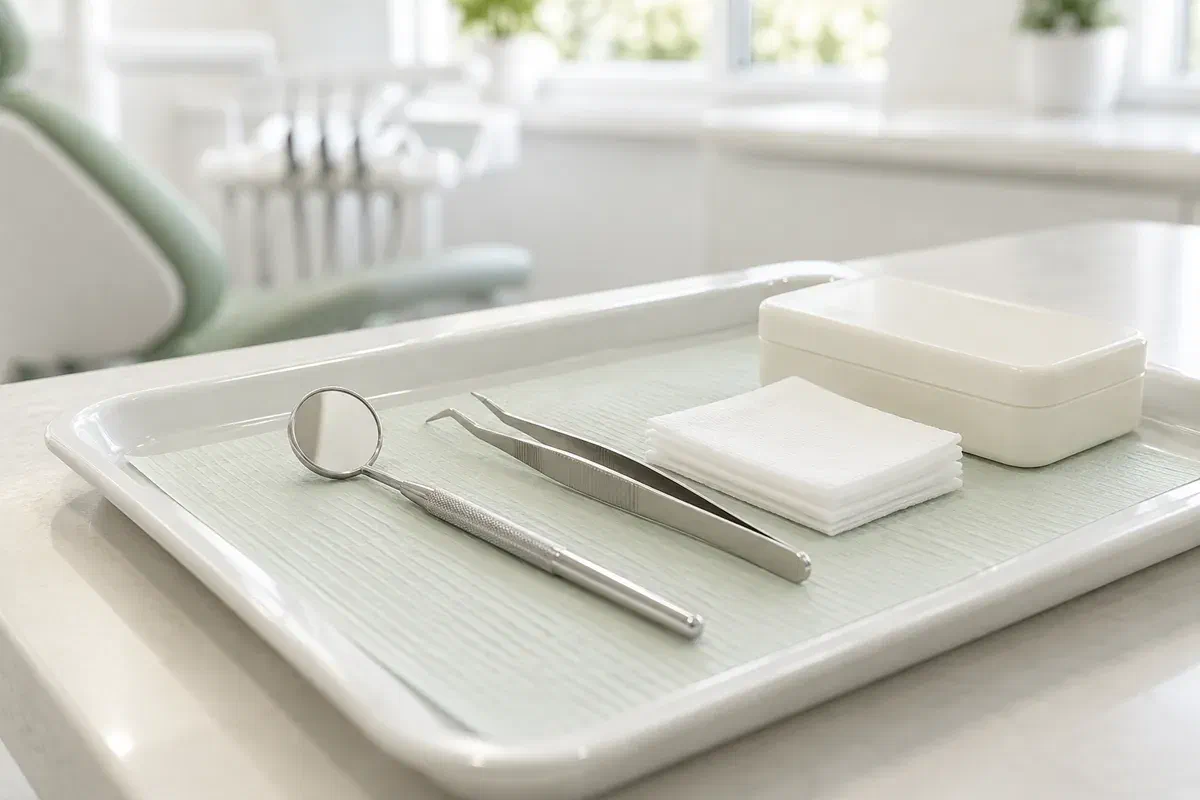
Illustrative prepared dental tray with a mirror, tweezers, and clean gauze
Clues that point to urgency

Three kinds of problems that call for a prompt conversation

How much it hurts is only one clue. The way the problem has developed, what it affects, what you can see, and any treatment in the past few weeks all shape the answer.

Pain you cannot work or sleep through

If the ache is keeping you up or making meals hard, tell us, along with anything you have tried. Notice whether it throbs on its own, flares when you chew, or lingers after cold water. Bigger doses of painkiller will not resolve whatever is behind it.

Swelling that seems to be moving

A swollen area that is getting larger, a temperature, feeling generally unwell, or trouble opening your jaw all change the picture. Mention each one you notice. They help determine whether a dental chair or a hospital is the right first stop.

A tooth that has been chipped, loosened, or lost

Let us know if a piece has broken away, a filling or crown has dropped out, or an impact has pushed a tooth out of place. Save any fragment and bring it. An adult tooth knocked out of its socket is an emergency and needs dental care immediately.

Some signs are beyond a dental office: difficulty breathing or swallowing, quickly spreading swelling, bleeding that will not slow down, or a serious injury to the head or face. Call 911 or go to hospital emergency care rather than waiting for a callback.

Getting a clear explanation

Good emergency care comes with reasons you can follow.

Ask the dentist to connect the finding with the proposal. What is the treatment expected to change, and how will you both know if it has worked? The answer should be about your tooth, not a promise that every urgent visit ends the same way.

Alternatives deserve equal attention. Could the tooth be kept, and with what outlook? What will a temporary measure manage, and what will it not? Is another provider better placed for part of it? Even an unplanned visit should leave time for costs, stages, and any honest uncertainty.

Patient information: American Dental Association — medicines as temporary support for acute dental pain · American Dental Association — appropriate antibiotic use for dental pain and swelling

Treatment that matches the diagnosis

A cracked cusp, an inflamed nerve, an abscess, and bruised gum tissue are different problems with different fixes. Ask which one you have. Calming the pain without a plan for the underlying cause may leave the real work undone.

Clear expectations for medicine

Pain medicine can make the wait for treatment easier, yet it does not replace that treatment. Antibiotics are reserved for particular circumstances. Find out what any prescription is for and what dental step still needs to happen.

Next steps that work with your week

If more care is needed, ask when, at what likely cost, and with whom. Mention work schedules, children’s activities, or budget so the realistic options can be laid out. A plan you can keep is worth more than an ideal one you cannot.

How the visit unfolds

What happens between your call and the follow-up?

What fits into a single appointment depends on the diagnosis, its complexity, the time available, and any referral. Expect to hear those limits before agreeing to a procedure.

  1. Describe the problem by phone

    Explain when it began, whether it is getting better or worse, and any recent dental work or knock. Be ready to share medicines, allergies, and health conditions. Let us know about dental anxiety or communication needs so they can be planned for.

  2. Have the area examined

    The dentist takes your history, examines the mouth, and uses tests or X-rays when indicated. Ask how the findings support what is being proposed. If a specialist or a hospital setting is more appropriate, ask why and what should happen first.

  3. Agree on the plan and how you will be kept comfortable

    Weigh the benefits, limits, alternatives, and fees together. Decide how you will signal a need to stop. Confirm whether today’s work finishes the job, begins it, or is a stopgap, so the aim of the visit is clear.

  4. Wrap up with aftercare and bookings

    Before leaving, run through what was done and what is still pending, and ask about food, hygiene, medicine, and warning signs. Set the next appointment or referral now instead of waiting to see whether the tooth stays settled.

Looking after the treated tooth

Recovery advice that fits the procedure you had

Care after a temporary filling is not the same as care after an extraction or root canal treatment. If you are unsure which instructions apply, ask before you head home.

Follow the specific instructions you were given

Confirm when you can chew, brush, and use the tooth or appliance as usual. If you were frozen, steer clear of hot drinks and avoid nibbling your lip until sensation returns. Resist the urge to test the repair on something hard.

Use pain relief and prescriptions carefully

Stick to the label and the clinician’s directions, and check with a pharmacist about anything you are unsure of. Do not rest aspirin on a sore tooth or gum. If a medicine does not suit you, contact the prescriber instead of switching on your own.

Return for the finishing visits

Completing a restoration or checking healing is part of the treatment, not an extra. If the booked time stops working, call to change it. Feeling fine is encouraging, though it does not confirm the work is finished.

Patient information: ADA MouthHealthy — avoiding harmful home remedies during dental emergencies

Different routes for different findings

Urgency tells you when, not which treatment.

Ask why a given approach suits your diagnosis and what choosing differently would involve. Short-term relief and the tooth’s long-term health both count.

When it can sensibly be retained

Restoring or treating the tooth to keep it

Depending on what the examination shows, a restoration or root canal treatment may be suggested. Ask how much sound tooth remains, how many visits to expect, and what final protection it needs. Keeping the tooth deserves a frank look at its outlook.

When retaining the tooth is not advisable

Extraction or care of the surrounding tissue

In some situations, removing the tooth or treating the tissue around it is recommended. Ask for the reasons and what recovery looks like. Replacing a removed tooth is a separate conversation, not an automatic part of the urgent procedure.

When final care needs another appointment or provider

Stabilizing now, completing later

A temporary step can be valuable when everyone understands its limits. Ask what it is guarding against, how long it should last, and whom to call. Any referral should come with a practical way to reach the care still needed.

Oakville callers often ask

Quick answers before you pick up the phone

Call to describe the problem and hear what openings exist. The answers here explain common decisions, while the examination determines the treatment and its urgency.

(905) 876-4488
How do I know if a toothache is an emergency or can wait?
Pain that stops you sleeping or eating, swelling, fever, a broken or knocked tooth, or symptoms that keep worsening are reasons to call promptly. Mild, steady sensitivity may suit a regular visit. If you are unsure, phone and describe it.
Can I go to a hospital emergency department for a toothache?
Hospitals are the right place for the serious warning signs listed above, such as trouble breathing or swallowing or rapidly spreading swelling. For dental pain without those signs, a dental provider is usually better placed to diagnose and treat the tooth itself.
Is it safe to wait over a weekend with a chipped tooth?
It depends on the chip. A small, painless chip may wait a short while if you avoid chewing on it, while pain, a large break, or exposed inner tooth calls for sooner care. Call and describe it so the timing can be discussed.
Do I have to be a current patient to call about urgent care?
No. New patients can phone, describe the symptoms, and ask about availability. If a visit is arranged, bring your health history and any dental information. Same-day treatment cannot be promised until the concern and schedule are reviewed.
Will I hear the fees before anything is done?
You can and should ask. Request the expected cost of the examination, any treatment proposed today, and later stages. If cost is a factor, say so, and clinically reasonable alternatives can be explained before you decide.
Can I plan the trip in from Oakville around my appointment?
Yes. Call first so you know whether and when you can be seen, then plan the trip. Ask how long the visit may take and whether a follow-up is likely, so you can arrange time off or a ride home if you may be numb or uncomfortable.
Urgent dental care for Oakville

One phone call can settle whether to come in today.

Contact our Bronte Street practice about pain, swelling, a damaged tooth, or an injury. Tell us the symptoms and any recent treatment. We can discuss current availability and the assessment, as well as whether part of the care belongs with another provider.

Please keep online requests for non-urgent matters. Treatment, timing, fees, follow-up visits, and referrals depend on assessment and cannot be promised in advance.

Visit Milton Dental Clinic
Unit 1, 342 Bronte St. S, Milton, ON L9T 5B7
Get directions Clinic hours
Monday–Thursday
11am–7pm
Friday–Sunday
By appointment only

Areas we serve

  • Milton
  • Oakville
  • Mississauga
  • Georgetown
  • Halton Hills
  • Acton
  • Campbellville
  • Brampton
  • Burlington
  • Puslinch
  • Rockwood
  • Erin
  • Caledon
  • Etobicoke
  • Old Milton
  • Bronte Meadows
  • Timberlea
  • Dorset Park
  • Dempsey
  • Clarke
  • Beaty
  • Coates
  • Harrison
  • Scott
  • Willmott
  • Ford
  • Bowes
  • Cobden
  • Walker
  • Mountain View
  • Milton Heights
  • Hawthorne Village
  • Valley View
  • Fallingbrook
  • Nassagaweya
  • Trafalgar
  • Esquesing
  • Nelson
  • Brookville
  • Moffat
  • Glen Williams
  • Norval
  • Limehouse
  • Stewarttown
  • Ashgrove
  • Hornby
  • Silver Creek
  • Speyside
  • Scotch Block
  • North Oakville
  • River Oaks
  • Glen Abbey
  • West Oak Trails
  • Palermo
  • Bronte Creek
  • College Park
  • Joshua Creek
  • Uptown Core
  • Preserve
  • Iroquois Ridge
  • Lisgar
  • Meadowvale
  • Meadowvale Village
  • Churchill Meadows
  • Erin Mills
  • Central Erin Mills
  • Streetsville
  • East Credit
  • Creditview
  • Heartland
  • Sheridan
  • Mount Pleasant
  • Credit Valley
  • Huttonville
  • Churchville
  • Springbrook
  • Northwest Brampton
  • Bram West
  • Fletcher's Meadow
  • Fletcher's Creek South
  • Alton Village
  • Orchard
  • Millcroft
  • Headon Forest
  • Tansley
  • Brant Hills
  • Tyandaga
  • Kilbride
  • Lowville
  • Aberfoyle
  • Morriston
  • Arkell
  • Hillsburgh
  • Freelton
  • Carlisle
  • Waterdown
  • Flamborough
  • Mountsberg

How can we help?

Milton Dental Clinic

Have a question about your smile? Choose the option that works best for you.

For urgent dental concerns, please call.
Messages are reviewed during clinic hours.