

Illustrative patient and clinician discussing a tooth model before endodontic care
Specialized Care

Emergency Root Canal Treatment in Acton

Dreading the chair can feel almost as bad as the toothache itself. For anyone in Acton weighing an urgent visit, we start by listening, then diagnose the tooth, explain whether root canal care makes sense, and agree on how to keep you comfortable at each stage.

For the nervous patient

Worried about the treatment as much as the tooth?

Plenty of people put off calling about a sore tooth because the words root canal sound frightening. It may help to know that nothing is decided before the dentist understands the problem. Root canal care is suggested only when the pulp, the delicate tissue inside the tooth, turns out to be affected and keeping the tooth is a reasonable option.

First comes an examination, along with the tests and images that suit your symptoms and a look at whether the tooth could be rebuilt. If you go ahead, the tooth is numbed, the affected tissue is managed, and the canals are cleaned, shaped and sealed. An urgent visit might only begin that work, and a restoration on top is planned to protect the tooth afterward.

When you phone from Acton, tell us how you feel about dental treatment as well as what the tooth is doing. Mention fillings, crowns, injuries or earlier root canal work. We can then suggest a next step, explain whether care here or a referral fits better, and plan around your comfort.

Talk to us about a painful tooth
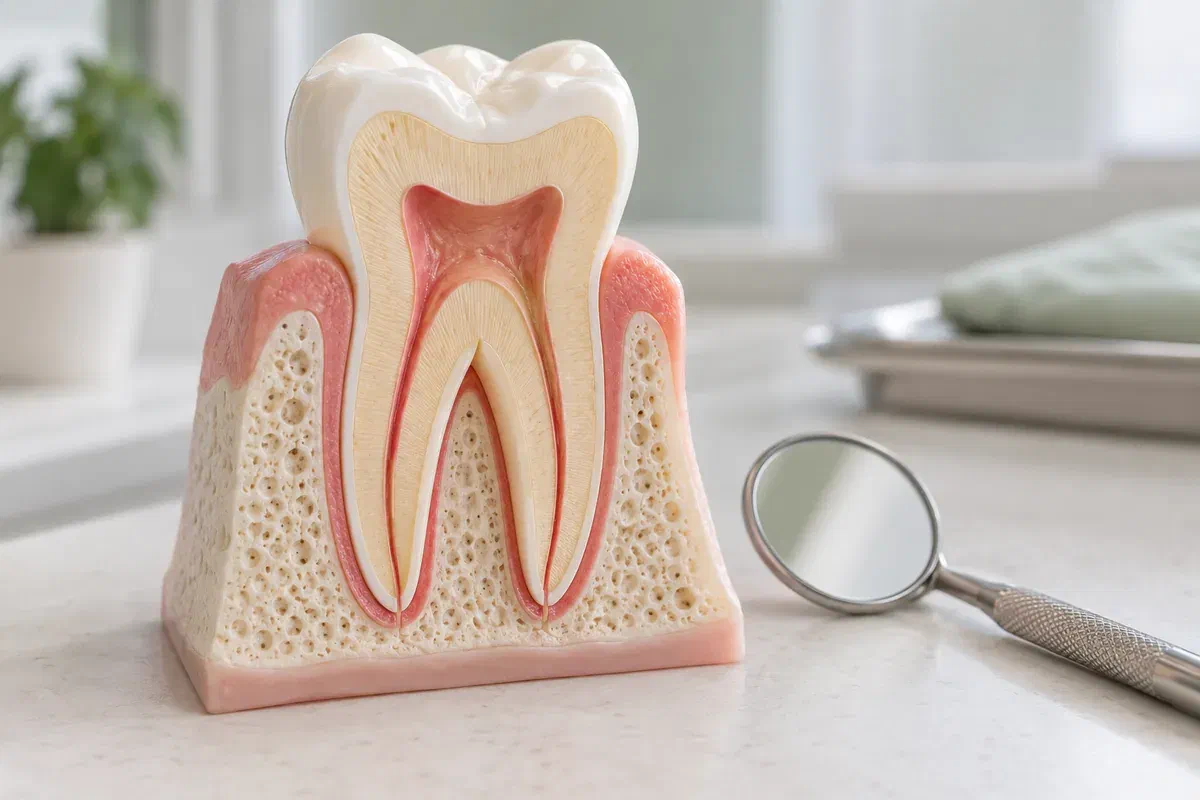
Illustrative physical molar cross-section showing the pulp chamber and root canals
What we'll ask, gently

There are no wrong answers about how the tooth feels.

You don't need to test the tooth again to be sure. Simply share what you've noticed. The dentist combines your account with the examination, so you aren't expected to work out the diagnosis yourself.

Aching that continues or starts by itself

Let us know if pain carries on after hot or cold food, wakes you up, or begins out of the blue. Say when it changed and whether pain relief has helped. This helps the clinician choose suitable tests and decide how soon you should come in.

Soreness on biting, swelling or a gum spot

Mention a tooth that hurts when you close, swelling in the gum or face, or a spot that drains. Fever or feeling unwell is worth sharing too. The dentist checks the tooth and nearby tissue together rather than focusing on one symptom.

Past dental work and past experiences

Describe fillings, crowns and any recent break, even a painless one. If root canal care was started or finished elsewhere, bring the details. It also helps to say if a previous appointment was difficult, so we can plan differently.

Please call promptly about pain or swelling. If you struggle to breathe or swallow, notice substantial spreading swelling, or have swelling near the eye, go to hospital emergency care immediately; call 911 if you need emergency help.

Feeling in control of the plan

Understanding each step makes the whole thing easier.

Anxiety often comes from not knowing what will happen. A good plan responds to the diagnosis and is honest about the chances of keeping your tooth. Ask the dentist how the findings lead to root canal care, and whether a crack, the remaining structure or the support around the root could change that.

Knowing the order of care helps as well. Ask what will happen at the urgent visit, who will finish the canals and restore the tooth, when you'll return and what the estimate includes. You can leave the first appointment feeling better and still know exactly what's ahead.

Patient information: American Association of Endodontists — management of endodontic emergencies

A clear reason to keep the tooth

Ask what makes the tooth suitable and what might limit how long it lasts. If more assessment would help before a firm recommendation, the dentist can explain. Saving a tooth is a decision you make together; it can't be guaranteed.

Comfort you've agreed to

Tell the team if freezing hasn't worked well before, if you feel anxious, or if you have health concerns. Ask how numbing will be done, what else can help you relax and how to signal a pause, such as raising a hand. You set the pace for breaks.

No surprises about today

Urgent treatment may cover some or all of the pulp space, depending on the findings. Ask what is planned now and what will be left. A first stage should come with a clear plan for completion or review.

Acton · what to expect in the chair

Each step is explained before it starts.

Visit length and number depend on the tooth, the findings and whether a specialist is involved. Ask for the whole sequence so nothing comes as a surprise.

  1. Talking and examining

    We go over your history, examine the tooth and use appropriate tests and images. Ask whether the diagnosis is established and whether the tooth can take a final restoration. Uncertain points are discussed before any decision.

  2. Agreeing and getting comfortable

    The procedure, alternatives, limits and estimate are explained in plain terms. The tooth is numbed as appropriate, and a dental dam, a soft sheet around the tooth, keeps it isolated. Mention any worries so you know how the setup will feel.

  3. Treating inside the tooth

    The clinician reaches the pulp space and treats it as indicated. The rest of the canal work may be done now or at another visit. You can ask at the end what was completed and whether a temporary seal is in place.

  4. Planning the finish

    Find out who will complete any outstanding canal work and the restoration, and when. Ask how to protect the tooth meanwhile. If an endodontist is part of your care, ask how records are shared and what comes next.

Afterward

Simple steps while the tooth waits for its final restoration

Your instructions match the stage you had. Ask what's normal to feel, and which changes mean picking up the phone instead of waiting for the next visit.

Take it easy on that side

Don't eat until the numbness is gone, and avoid heavy biting on the unfinished tooth. Ask how to clean around it comfortably. Even if it feels fine, hard or sticky foods can damage the temporary filling.

Call if something feels wrong

Phone the clinician who treated you if the temporary comes out, the bite feels uneven, swelling appears, or strong pain stays or returns. Say what stage was done and when. Getting it checked early is better than worrying.

Keep the next appointments

Confirm when to come back and book the visits to finish the plan. Ask whether the final restoration is part of the estimate. The inside treatment and the restoration work together, so both need to be completed.

Patient information: American Association of Endodontists — care after treatment and reasons to call · American Dental Association — antibiotic decisions for pulpal and periapical pain

Your options, explained calmly

You'll hear every reasonable choice before deciding.

Ask what each option would mean for the tooth, the number of visits and the final restoration. Pain deserves a prompt explanation, never pressure to agree.

When the tooth is worth saving

Endodontic treatment followed by restoration

This can include an urgent stage, completing the canals, and a crown or another restoration chosen for the tooth. Ask why that order is advised and what might affect the outcome. You can take time to ask questions at each step.

If things are more complex

Specialist assessment or another way to keep the tooth

Previous treatment, an unclear diagnosis or unusual anatomy can justify referral. Ask what the specialist will look at and how to manage until then. A referral is about clearer options, not a sign the outcome is decided.

Should keeping it be unreasonable

Removal, with replacement discussed separately

If the tooth can't be restored or keeping it would be unwise, extraction may come up. You can ask for the reasoning and the alternatives. Replacement can be planned later, taking healing, your mouth as a whole and your wishes into account.

Questions from Acton

Honest answers for anxious patients

Ask why treatment is recommended and which stages it involves. The visit should explain the diagnosis and the steps from urgent care to a finished tooth.

(905) 876-4488
Will I feel the root canal while it's happening?
The tooth is numbed with local anaesthetic before treatment. You may feel pressure or vibration. If anything feels sharp, signal and the clinician can stop and check.
What if the freezing doesn't work for me?
Let the clinician know straight away. Inflamed teeth can be harder to numb, and more anaesthetic or a different technique may help. You shouldn’t push through pain, and it’s fine to wait a few minutes while the freezing takes effect.
Can I take breaks during the appointment?
Yes. Agree on a signal beforehand, such as raising your hand, and the clinician will pause when it’s safe to do so. Short rests to stretch your jaw or take a breath are common, and they don’t mean anything has gone wrong.
Is sedation available for emergency root canal care?
Ask when you call. Whether it’s suitable depends on your health, the treatment and availability, and it may require someone to take you home. The team can talk through what options might fit before you book, so you know what to expect.
Does a sore tooth always need a root canal?
No. Gum problems, cracks and other issues can also cause strong pain. The dentist uses your history, an examination and tests to find the cause first.
If the pain stops after the first visit, do I need to come back?
Yes, unless the clinician who treated you advises otherwise. Relief doesn’t confirm that the canals are complete or the tooth is restored. Ask what’s left.
Emergency root canal care for Acton

You can start with a conversation.

Call our Bronte Street practice to talk about the tooth and how you're feeling about treatment, and ask about assessment times. We'll explain options and whether treatment or referral suits you. If you need help immediately and can't get through to us, contact another available emergency provider.

Online requests are not monitored for urgent needs. Diagnosis, tooth suitability, stages, restoration, referral, fees and availability are confirmed at assessment. We can't guarantee the tooth will be kept or that care finishes in one visit.

Visit Milton Dental Clinic
Unit 1, 342 Bronte St. S, Milton, ON L9T 5B7
Get directions Clinic hours
Monday–Thursday
11am–7pm
Friday–Sunday
By appointment only

Areas we serve

  • Milton
  • Oakville
  • Mississauga
  • Georgetown
  • Halton Hills
  • Acton
  • Campbellville
  • Brampton
  • Burlington
  • Puslinch
  • Rockwood
  • Erin
  • Caledon
  • Etobicoke
  • Old Milton
  • Bronte Meadows
  • Timberlea
  • Dorset Park
  • Dempsey
  • Clarke
  • Beaty
  • Coates
  • Harrison
  • Scott
  • Willmott
  • Ford
  • Bowes
  • Cobden
  • Walker
  • Mountain View
  • Milton Heights
  • Hawthorne Village
  • Valley View
  • Fallingbrook
  • Nassagaweya
  • Trafalgar
  • Esquesing
  • Nelson
  • Brookville
  • Moffat
  • Glen Williams
  • Norval
  • Limehouse
  • Stewarttown
  • Ashgrove
  • Hornby
  • Silver Creek
  • Speyside
  • Scotch Block
  • North Oakville
  • River Oaks
  • Glen Abbey
  • West Oak Trails
  • Palermo
  • Bronte Creek
  • College Park
  • Joshua Creek
  • Uptown Core
  • Preserve
  • Iroquois Ridge
  • Lisgar
  • Meadowvale
  • Meadowvale Village
  • Churchill Meadows
  • Erin Mills
  • Central Erin Mills
  • Streetsville
  • East Credit
  • Creditview
  • Heartland
  • Sheridan
  • Mount Pleasant
  • Credit Valley
  • Huttonville
  • Churchville
  • Springbrook
  • Northwest Brampton
  • Bram West
  • Fletcher's Meadow
  • Fletcher's Creek South
  • Alton Village
  • Orchard
  • Millcroft
  • Headon Forest
  • Tansley
  • Brant Hills
  • Tyandaga
  • Kilbride
  • Lowville
  • Aberfoyle
  • Morriston
  • Arkell
  • Hillsburgh
  • Freelton
  • Carlisle
  • Waterdown
  • Flamborough
  • Mountsberg

How can we help?

Milton Dental Clinic

Have a question about your smile? Choose the option that works best for you.

For urgent dental concerns, please call.
Messages are reviewed during clinic hours.