

Illustrative patient and clinician discussing a tooth model before endodontic care
Specialized Care

Emergency Root Canal Treatment in Erin

A sharp jolt when you bite down, then an ache that lingers, can mean a crack has reached the inner tooth. For anyone in Erin or Hillsburgh, we can find out what's happening, explain whether root canal care could keep the tooth, and lay out the stages to protect it.

The bite that suddenly hurts

One crunch, and now the tooth won't settle.

It might start with a popcorn kernel or a piece of hard bread: a quick, sharp pain on biting that fades, then returns. Over days, the tooth may become sensitive to cold or begin aching on its own. A crack can let irritation reach the pulp, the living tissue inside. Root canal treatment is one possible response, but only after the crack and the pulp have been properly assessed.

The dentist examines the tooth closely, uses tests suited to your symptoms such as biting on a special instrument, and often takes an image. A key question is how far any crack extends, because that affects whether the tooth can be kept and restored. If treatment proceeds, the affected tissue is managed and the canals are prepared and sealed, often followed by a crown to hold the tooth together.

When you call from Erin, describe exactly when the tooth hurts and mention any fillings, crowns, injuries or root canal work on it. We'll suggest a next step and explain whether care here or a referral makes more sense. Cracks behave differently from tooth to tooth, so nothing is assumed.

Request a cracked-tooth assessment
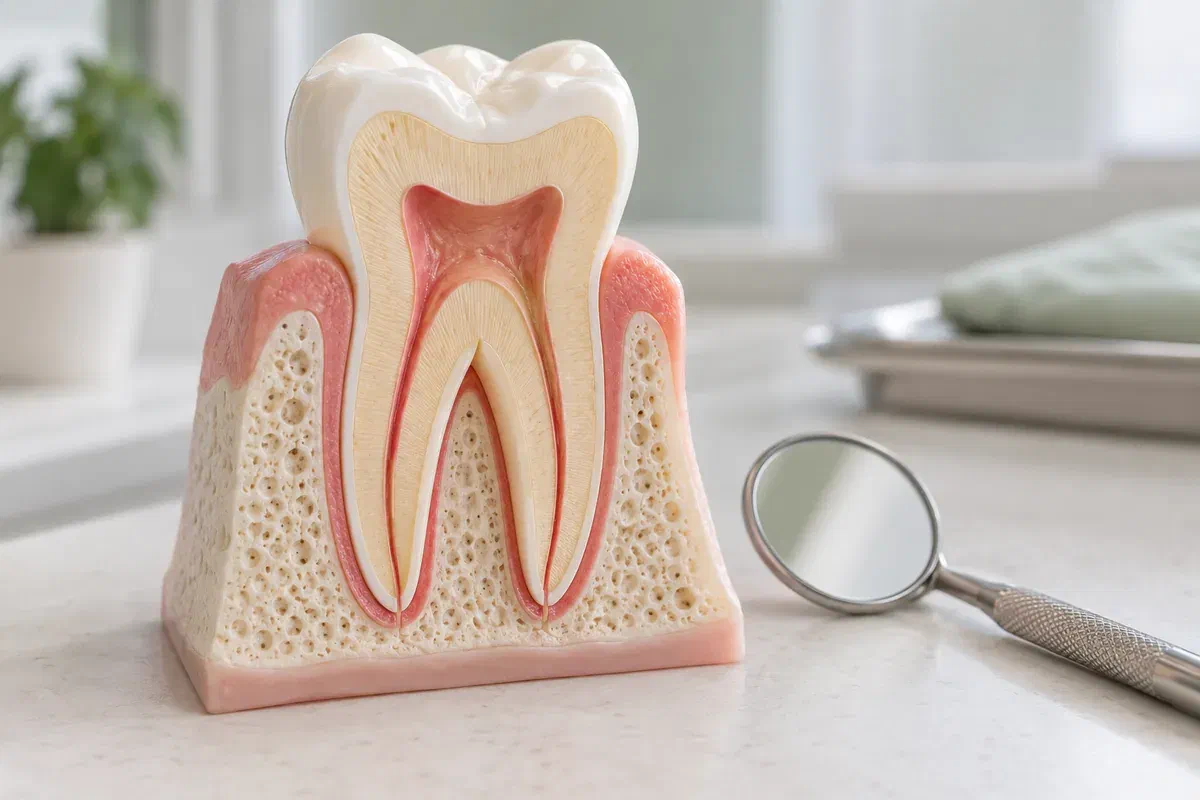
Illustrative physical molar cross-section showing the pulp chamber and root canals
What a crack can feel like

Sharp on release, sore with cold, or aching all on its own

Don't keep biting down on the tooth to find the sore spot; that can worsen a crack. Describe what you've felt instead. The dentist combines your account with the examination rather than relying on it alone.

Ache that lingers or starts without a trigger

Note whether cold or hot leaves an ache that lasts, or whether the tooth now throbs without any obvious cause, perhaps at night. Say when that change happened and whether pain medicine helps. Lingering pain can suggest the pulp is involved.

Pain when biting or letting go

A brief, sharp pain when you bite or release, a tooth that feels loose or tall, or swelling or a gum spot nearby are all worth describing. Mention fever or feeling unwell too. The tooth and its surroundings are examined together.

Large fillings, crowns or a known chip

Heavily filled teeth are more prone to cracking, so describe existing work and any recent break, even if it didn't hurt. If root canal care was started or finished elsewhere, bring the details. A previously treated tooth needs a different assessment.

Call promptly about tooth pain or swelling. If you have difficulty breathing or swallowing, swelling that spreads quickly or substantially, or swelling near the eye, seek hospital emergency care at once; call 911 for emergency help.

What matters most with a crack

Know how deep it goes before deciding.

With a cracked tooth, the extent of the crack often decides more than the pain does. Ask the dentist how the findings point to pulp involvement, how far the crack seems to run, and how the remaining structure and support affect the chance of keeping the tooth. A recommendation should consider all of these together.

It's also worth separating the urgent step from the rest. What will be done now, who completes the canals and places the crown or other restoration, and how soon? What's in the estimate? Feeling better after the first visit is welcome, but an unprotected cracked tooth can still split, so the full plan matters.

Patient information: American Association of Endodontists — management of endodontic emergencies

A frank view on whether the tooth can be saved

Some cracks can be managed; others extend too far. Ask what makes your tooth suitable and what might limit its future. The dentist may need more information before a firm recommendation. Retention can't be guaranteed in advance.

Comfort agreed beforehand

Mention any trouble with freezing in the past, nervousness or medical conditions. Ask how comfort will be managed and how to signal a pause. You're always free to speak up during the appointment.

A clear outline of today's work

Urgent care may treat some or all of the canals, and the tooth may be protected with a band or temporary restoration. Ask what will happen now and what's left. The first stage should link to a planned completion or review.

Erin · step by step

Find the crack, treat the pulp, then hold the tooth together.

Visit numbers and length depend on the tooth, the extent of the crack and whether a specialist is involved. Ask for the complete sequence, since a cracked tooth usually needs a protective restoration afterward.

  1. Locate the problem

    Your history is reviewed and the tooth is examined with bite tests, other suitable tests and images. Ask whether a crack is visible, how far it may extend, and whether the tooth can support a final restoration. Uncertainty is discussed before deciding.

  2. Agree the plan

    The procedure, alternatives, limitations and estimate are explained. The tooth is numbed as appropriate, and a dental dam isolates it during endodontic work. Ask about any concerns so you know what to expect.

  3. Treat inside the tooth

    The pulp space is opened and treated as indicated, and the crack may be examined more closely from inside. Canal work may be finished now or later. Ask what was completed and how the tooth is protected for now.

  4. Protect with a restoration

    Confirm who will finish the remaining canal work and place a crown or other restoration, and how quickly. A cracked tooth is vulnerable until it's covered. If an endodontist is involved, clarify records and visit order.

Until the crown is on

Treat a cracked tooth as fragile.

You'll get instructions for the stage completed. Ask what sensations are expected and which changes mean calling rather than waiting for your next appointment.

Chew on the other side

Wait until the numbness is gone before eating, and keep all heavy biting off the treated tooth. Ask how to clean around it. Hard foods like nuts, ice or crusty bread can extend a crack before the tooth is protected.

Report changes quickly

Contact the clinician who treated you if the temporary comes out, a piece breaks off, your bite feels uneven, swelling appears, or strong pain stays or returns. Explain what stage was done and when.

Book the protective restoration

Confirm the recommended timing and arrange the remaining visits. Ask whether the restoration is included in the estimate. For a cracked tooth, finishing the canals without protecting the tooth leaves the job incomplete.

Patient information: American Association of Endodontists — care after treatment and reasons to call · American Dental Association — antibiotic decisions for pulpal and periapical pain

Options for a cracked or painful tooth

The crack's depth often points the way.

Ask what each option means for the tooth, the visits and the final restoration. A painful crack calls for a quick explanation, not a rushed choice.

When the crack is limited and the tooth restorable

Endodontic treatment followed by restoration

This can mean urgent care, completing the canals, and a crown to hold the tooth together. Ask why that order is advised and how the crack could affect the long-term result.

When the crack's extent is unclear

Specialist assessment or another tooth-preserving approach

Hard-to-see cracks, earlier treatment or unusual anatomy may justify referral. Ask what the specialist will evaluate and how to protect the tooth meanwhile. A referral should clarify options rather than decide them.

If it runs too deep to keep the tooth

Extraction with a separate replacement discussion

Some cracks extend below the gum or split the root, making the tooth unsuitable to keep. Ask for the reasons and alternatives. Replacement can then be planned around healing, your other teeth and your preferences.

Questions from Erin

Cracks, biting pain and root canals

Ask why a treatment is recommended and what each stage covers. The visit should establish the diagnosis and explain the route from urgent care to a protected tooth.

(905) 876-4488
Why does my tooth hurt when I stop biting rather than when I bite?
Pain on release is a classic sign of a cracked tooth, though it isn’t proof on its own. The dentist uses bite tests, an examination and sometimes images to look for a crack and check the pulp.
Can a crack show up on an X-ray?
Often not. Many cracks are too fine to see on an image. The dentist may use magnification, dyes, bite tests or examine the tooth from inside during treatment.
Will a root canal fix a cracked tooth?
A root canal treats the inflamed or infected pulp, not the crack itself. A crown or other restoration usually helps hold the tooth together. Whether the tooth can be kept depends on how far the crack extends.
Should I wear a night guard if I grind my teeth?
If you clench or grind, ask the dentist whether a guard is appropriate once the tooth is treated. Grinding can stress teeth, and a guard may be recommended in some cases.
Is planning visits from Erin easier if I book everything at once?
Booking the completion and restoration visits early helps you plan around travel and work. Urgent symptoms still come first, so call if anything changes between appointments.
My cracked tooth feels better. Do I still need the crown?
Usually, yes. A cracked tooth can split further without protection, even if it doesn’t hurt. Ask what the dentist recommends for your tooth and when.
Emergency root canal care for Erin

Call before the crack gets worse.

Phone our Bronte Street practice to describe the tooth and ask when an assessment could be arranged. We'll go over your symptoms, explain options and talk through whether treatment here or referral suits you. For care that can't wait when our phones go unanswered, please use another available emergency provider.

Online requests are for non-urgent concerns. Diagnosis, whether the tooth can be kept, treatment stages, restoration, referral, fees and availability depend on assessment. We can't guarantee saving the tooth or finishing in one visit.

Visit Milton Dental Clinic
Unit 1, 342 Bronte St. S, Milton, ON L9T 5B7
Get directions Clinic hours
Monday–Thursday
11am–7pm
Friday–Sunday
By appointment only

Areas we serve

  • Milton
  • Oakville
  • Mississauga
  • Georgetown
  • Halton Hills
  • Acton
  • Campbellville
  • Brampton
  • Burlington
  • Puslinch
  • Rockwood
  • Erin
  • Caledon
  • Etobicoke
  • Old Milton
  • Bronte Meadows
  • Timberlea
  • Dorset Park
  • Dempsey
  • Clarke
  • Beaty
  • Coates
  • Harrison
  • Scott
  • Willmott
  • Ford
  • Bowes
  • Cobden
  • Walker
  • Mountain View
  • Milton Heights
  • Hawthorne Village
  • Valley View
  • Fallingbrook
  • Nassagaweya
  • Trafalgar
  • Esquesing
  • Nelson
  • Brookville
  • Moffat
  • Glen Williams
  • Norval
  • Limehouse
  • Stewarttown
  • Ashgrove
  • Hornby
  • Silver Creek
  • Speyside
  • Scotch Block
  • North Oakville
  • River Oaks
  • Glen Abbey
  • West Oak Trails
  • Palermo
  • Bronte Creek
  • College Park
  • Joshua Creek
  • Uptown Core
  • Preserve
  • Iroquois Ridge
  • Lisgar
  • Meadowvale
  • Meadowvale Village
  • Churchill Meadows
  • Erin Mills
  • Central Erin Mills
  • Streetsville
  • East Credit
  • Creditview
  • Heartland
  • Sheridan
  • Mount Pleasant
  • Credit Valley
  • Huttonville
  • Churchville
  • Springbrook
  • Northwest Brampton
  • Bram West
  • Fletcher's Meadow
  • Fletcher's Creek South
  • Alton Village
  • Orchard
  • Millcroft
  • Headon Forest
  • Tansley
  • Brant Hills
  • Tyandaga
  • Kilbride
  • Lowville
  • Aberfoyle
  • Morriston
  • Arkell
  • Hillsburgh
  • Freelton
  • Carlisle
  • Waterdown
  • Flamborough
  • Mountsberg

How can we help?

Milton Dental Clinic

Have a question about your smile? Choose the option that works best for you.

For urgent dental concerns, please call.
Messages are reviewed during clinic hours.