

Illustrative patient and clinician discussing a tooth model before endodontic care
Specialized Care

Emergency Root Canal Treatment in Mississauga

A tooth that flares up halfway through a workday forces a quick decision: call now or push through? From Mississauga, a phone call is the place to start. We can assess the tooth, explain whether root canal care could keep it, and plan the visits that finish the job.

Mississauga · mid-week tooth pain

Call now, or wait for the weekend?

It usually starts as a twinge during a meeting and builds by evening. Waiting it out is tempting when the calendar is full, but a tooth that aches on its own, lingers after hot coffee or hurts to bite deserves a call. Root canal care becomes relevant when the dentist finds the pulp, the living tissue in the tooth's centre, is affected and the tooth can sensibly be kept.

That conclusion comes from an examination, the tests your symptoms call for and usually an X-ray, plus a view on whether the tooth could be rebuilt afterward. Treatment itself removes or manages the problem tissue, then the canals are cleaned, shaped, filled and sealed. The urgent visit may handle only the first portion, and a final restoration is planned from the outset.

When you ring us, from Meadowvale, Churchill Meadows or elsewhere in the city, describe the pain and any fillings, crowns, accidents or root canal work on that tooth. We'll talk through a sensible next step, including whether treating it here or referring you is the better fit. No two painful teeth are handled by formula.

Request an urgent tooth assessment
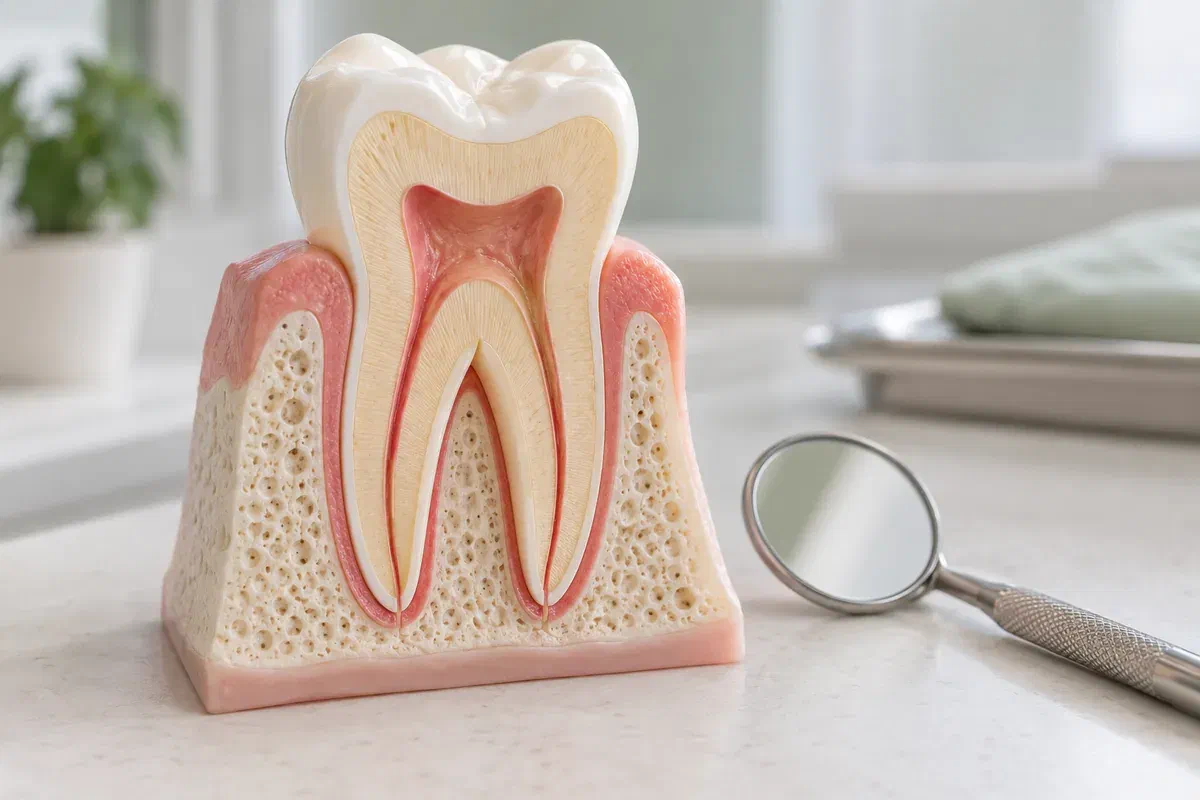
Illustrative physical molar cross-section showing the pulp chamber and root canals
What to mention on the phone

Timing, triggers and history

Skip the habit of biting down to see if it still hurts. A quick description of what you've felt helps, and the dentist pairs it with the examination; your account is useful without having to be conclusive.

When the ache begins and how long it stays

Is the pain set off by a hot drink and slow to fade, or does it arrive with no obvious cause, perhaps keeping you awake? When did that start, and does pain medicine touch it? Answers like these steer which tests make sense and how soon you should come in.

Chewing pain, swelling and gum changes

Point out a tooth that feels tall or sore under pressure, a swollen jaw or cheek, or a small gum blister that drains. Feeling feverish or unwell is relevant too. The examination covers the tooth and the tissue around it, so one symptom never decides the matter.

Restorations, breaks and past treatment

Fillings, crowns and any recent chip all count, even ones that didn't hurt. If a root canal was started or finished at another clinic, bring what you have. Retreating a tooth is a different assessment from treating one for the first time.

Call promptly about a painful or swollen tooth. Go to a hospital emergency department immediately for trouble breathing or swallowing, fast-spreading swelling, or swelling reaching the eye; call 911 when you need emergency assistance.

Why a clear plan saves time

Fewer surprises, fewer return trips you didn't expect

For busy schedules, the most useful thing an urgent appointment can provide is clarity. Treatment should answer the diagnosis, and the dentist should be candid about the chances of keeping the tooth. Ask how the findings point to root canal care and whether a crack, thin remaining walls or weakened support could change the forecast.

Next, map the stages so you can plan around them. What happens today, who completes the canal work and the restoration, roughly when, and what does the estimate cover? A pain-free evening after the first visit is a relief, but you'll want to know exactly what is still ahead.

Patient information: American Association of Endodontists — management of endodontic emergencies

A justified decision on keeping the tooth

Ask what makes the tooth suitable and what might limit how long it lasts. If extra assessment is needed before a firm recommendation, you'll hear why. Keeping a natural tooth is a decision weighed with you, not a promise made at the outset.

Comfort discussed up front

Let the team know about past numbing difficulties, nerves about dental visits, or medical conditions. Ask how freezing will be given, what other steps can help, and how you can stop things if you need to. Speaking up is welcome at any moment.

A precise description of this visit

Urgent treatment may cover some or all of the pulp space, depending on the findings and circumstances. Ask what will happen now and what is left. Any first stage should come with a booked completion or review.

What to plan your week around

Four stages, one finished tooth

How many visits you need and how long they take depends on the tooth, the findings and whether a specialist is part of the plan. Ask for the whole sequence early so you can book time off sensibly.

  1. Diagnosis

    Your history is taken, the tooth is examined, and the right tests and images are used. Ask whether the cause is confirmed and whether there is enough tooth for a final restoration. Talk about any uncertainty before choosing to keep the tooth or not.

  2. Consent and comfort

    You'll hear about the procedure, alternatives, limitations and estimate. Freezing is used as appropriate, and a dental dam, a small rubber sheet, isolates the tooth during endodontic work. Raise concerns now so you know how the appointment will run.

  3. Endodontic treatment

    The pulp space needing care is opened and treated. Cleaning, shaping and filling may be completed now or continue at a later appointment. Before you go, ask what was done and whether a temporary seal is protecting the tooth.

  4. Completion and restoration

    Find out who will finish remaining canal work and restore the tooth, and how soon both should happen. Ask how to protect it until then. Where an endodontist is involved, confirm how records move and which appointment is next.

Back at work with a temporary filling

Keep the seal intact and the next visits booked.

You'll get instructions specific to the stage you had. Ask what sensations are normal over the coming days and which changes are worth a call before your next appointment.

Mind what you chew

Let the freezing wear off before eating, and keep firm biting away from a tooth that isn't fully restored. Ask how to clean around it. Desk snacks like hard candy, nuts or chewy bars are best kept to the other side until the tooth is finished.

Flag problems early

Get in touch with the treating clinician if the temporary filling comes away, the bite feels off, swelling appears, or strong pain continues or returns. Tell them which stage was done and when. Some changes need a look before the next booked visit.

Protect your completion dates

Confirm the recommended timing and book the remaining appointments before your calendar fills. Ask whether the final restoration is in the estimate or priced separately. The canal work and the restoration above it rely on each other, so don't let either slip.

Patient information: American Association of Endodontists — care after treatment and reasons to call · American Dental Association — antibiotic decisions for pulpal and periapical pain

Comparing the options

The diagnosis comes first; the treatment choice follows.

Ask how each realistic option would affect the tooth, the visits involved and the eventual restoration. Pain warrants a prompt explanation, not a rushed decision you haven't had time to understand.

Where keeping the tooth is realistic

Endodontic treatment followed by restoration

This path can involve urgent relief, completing the canals, and then a crown or another suitable restoration. Ask why that sequence is advised and what might affect the outcome. The final restoration depends on the tooth's condition, not a standard rule.

Where the findings need a second look

Specialist assessment or another tooth-saving approach

Previous treatment, an unclear diagnosis or unusual root anatomy can justify referral. Ask what the specialist is being asked to assess and what to do until then. A referral is meant to clarify options rather than signal the result in advance.

Where retaining the tooth isn't sensible

Extraction, with replacement planned separately

If the tooth can't be restored or there is another good reason not to keep it, removal may be raised. Ask for the reasons and alternatives. Replacement, if appropriate, can then be planned around healing, your other teeth, timing and preference.

Questions we hear from Mississauga

Practical answers for a busy week

Ask why a particular treatment is recommended and what each stage includes. The assessment should confirm the diagnosis and explain the path from urgent care to a finished tooth.

(905) 876-4488
Is it safe to wait a few days if the pain comes and goes?
Pain that comes and goes can still signal a problem inside the tooth, and swelling or fever change the urgency. Call to describe the pattern so the team can advise how soon you should be seen, rather than deciding on your own.
Can I drive myself home after urgent root canal treatment?
Local anaesthetic alone usually doesn’t prevent driving, but other medicines or sedation might. Ask the team beforehand what is planned and whether you should arrange a ride.
How long does an emergency root canal appointment take?
It varies with the tooth, the diagnosis and how much is done at that visit. Ask for an estimate when you book, and allow some extra time for the assessment and explanation.
Why can't everything be finished in one urgent visit?
Sometimes it can, but the diagnosis, the tooth’s anatomy, swelling or available time may mean treating part of the pulp space first. Ask which stage was completed and what is still outstanding.
Do I still need the follow-up if the tooth feels completely fine?
Yes, unless the treating clinician changes the plan. Feeling fine doesn’t show that the canal treatment or final restoration is complete. Ask what is left before you consider the tooth done.
My previous root canal tooth has started aching. Is that an emergency?
New pain or swelling around a treated tooth should be assessed promptly. The causes and options can differ from a first root canal. Bring past records if you can and ask whether a specialist review would help.
Urgent root canal assessment for Mississauga

Make the call before the pain makes the decision for you.

Phone our Bronte Street practice to describe the tooth and ask what assessment times are available. We'll go over the concern, explain suitable options, and discuss whether treatment or referral is best. If you need immediate care and can't reach us, contact another available emergency provider.

Online requests are non-urgent. Diagnosis, tooth suitability, treatment stages, restoration, referral, fees and appointment availability depend on assessment. We cannot guarantee that the tooth will be kept or that care will finish in one visit.

Visit Milton Dental Clinic
Unit 1, 342 Bronte St. S, Milton, ON L9T 5B7
Get directions Clinic hours
Monday–Thursday
11am–7pm
Friday–Sunday
By appointment only

Areas we serve

  • Milton
  • Oakville
  • Mississauga
  • Georgetown
  • Halton Hills
  • Acton
  • Campbellville
  • Brampton
  • Burlington
  • Puslinch
  • Rockwood
  • Erin
  • Caledon
  • Etobicoke
  • Old Milton
  • Bronte Meadows
  • Timberlea
  • Dorset Park
  • Dempsey
  • Clarke
  • Beaty
  • Coates
  • Harrison
  • Scott
  • Willmott
  • Ford
  • Bowes
  • Cobden
  • Walker
  • Mountain View
  • Milton Heights
  • Hawthorne Village
  • Valley View
  • Fallingbrook
  • Nassagaweya
  • Trafalgar
  • Esquesing
  • Nelson
  • Brookville
  • Moffat
  • Glen Williams
  • Norval
  • Limehouse
  • Stewarttown
  • Ashgrove
  • Hornby
  • Silver Creek
  • Speyside
  • Scotch Block
  • North Oakville
  • River Oaks
  • Glen Abbey
  • West Oak Trails
  • Palermo
  • Bronte Creek
  • College Park
  • Joshua Creek
  • Uptown Core
  • Preserve
  • Iroquois Ridge
  • Lisgar
  • Meadowvale
  • Meadowvale Village
  • Churchill Meadows
  • Erin Mills
  • Central Erin Mills
  • Streetsville
  • East Credit
  • Creditview
  • Heartland
  • Sheridan
  • Mount Pleasant
  • Credit Valley
  • Huttonville
  • Churchville
  • Springbrook
  • Northwest Brampton
  • Bram West
  • Fletcher's Meadow
  • Fletcher's Creek South
  • Alton Village
  • Orchard
  • Millcroft
  • Headon Forest
  • Tansley
  • Brant Hills
  • Tyandaga
  • Kilbride
  • Lowville
  • Aberfoyle
  • Morriston
  • Arkell
  • Hillsburgh
  • Freelton
  • Carlisle
  • Waterdown
  • Flamborough
  • Mountsberg

How can we help?

Milton Dental Clinic

Have a question about your smile? Choose the option that works best for you.

For urgent dental concerns, please call.
Messages are reviewed during clinic hours.