

Illustrative patient discussing urgent treatment choices with a dental clinician
Specialized Care

Emergency Tooth Extractions in Georgetown

Sometimes the person calling isn't the one in pain. When you're arranging urgent care from Georgetown for a parent, partner, or teenager, we explain how the tooth will be assessed, whether removal is needed, and how to help afterwards.

Calling for someone you care for

You're organising the visit. Here's what helps.

Plenty of urgent calls come from a daughter booking for her father, or a parent whose teenager woke up with a swollen jaw. As the organiser, you may hear them say just take it out. That is an understandable reaction to pain, but pain doesn't decide whether a tooth should be removed. The tooth's condition and support, its chances of being restored, and the real cause of the symptoms do.

An emergency extraction is the removal of a tooth when the examination supports it as appropriate urgent treatment. The dentist should explain why it is recommended and whether a fair alternative exists for keeping the tooth. If removal is chosen, its difficulty, the patient's health, and the right setting are considered, and some cases go to a surgical referral.

Calling from Georgetown on someone else's behalf, have their symptoms, medicines, and any earlier dental advice to hand, and bring their records if possible. Booking an urgent visit arranges an assessment. It does not mean the tooth will be removed at that appointment.

Book an assessment for a family member
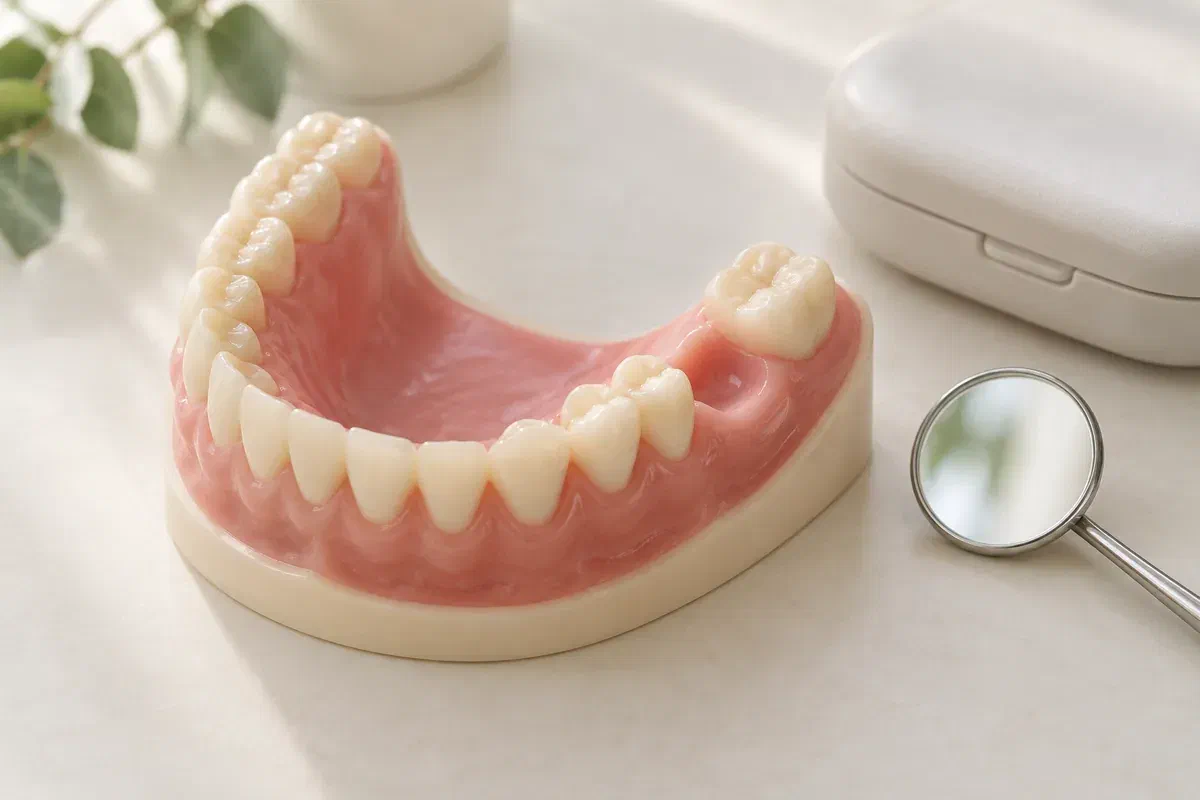
Illustrative dental arch model with a missing back tooth beside a dental mirror
Gather this before the appointment

Their dental history, their health, and what has changed

The plan depends on more than which tooth hurts. Collect what you can about the timeline, previous treatment, medicines, and anything that has made dental care difficult for them before.

A tooth that has broken or been fixed repeatedly

Note any fractures, lost fillings, or warnings from past dentists about the tooth. That background is helpful, yet the current examination decides whether it can still be kept. The recommendation will rest on what the tooth looks like now.

Pain, swelling, or signs they're unwell

Pay attention to whether the symptoms are spreading or settling and whether the person seems feverish or generally unwell. Possible infection needs prompt care, although it does not alone determine whether the tooth is removed. List any medicines already prescribed.

Medical conditions and prescriptions

Bring their full medicine list and allergies, and mention blood thinners or past bleeding problems. Older relatives may take several prescriptions, so a printed list from the pharmacy helps. They shouldn't stop or change anything themselves; we will advise and contact the prescriber if needed.

Difficulty breathing or swallowing, rapidly spreading facial swelling, or bleeding that can't be controlled needs emergency medical help. Phone 911 or take them to the emergency room instead of waiting for a dental appointment.

What the consultation sorts out

Everyone leaves knowing the plan

If a tooth cannot reasonably be kept, removing it may resolve the problem that has been diagnosed. Ask what should improve and what other care might follow. The explanation should centre on that tooth, so neither of you feels extraction was simply the default.

As a supporter, you'll also want to understand the procedure and recovery. Discuss the risks for this person, comfort arrangements, fees, and any referral. If a replacement may come up later, ask how removal affects it, and remember there is no need to choose one during the emergency.

Patient information: Royal Cornwall Hospitals — dental extraction risks and recovery

Alternatives laid out plainly

Ask whether a filling, crown, root canal care, or another approach makes clinical sense, and why it is or isn't recommended. The answer should reflect the outlook for the tooth and what further treatment it needs. Both patient and companion should understand the reasoning.

Risks that apply to this person

Bleeding, healing problems, and issues tied to the tooth's position, such as nerves or the sinus, vary. Health conditions can add more. Ask which matter here and whether they affect where or how the tooth is removed.

A recovery plan you can help with

Ask about food, cleaning, school or work, and when to call. If you'll be helping at home, find out what to watch for in the first evening and the days after. Instructions matched to the procedure and anaesthetic are easier to follow than broad reassurance.

What to expect in the room

From the first question to the take-home instructions

Depending on the tooth and the person's needs, the visit may be for assessment, removal, or arranging a referral. Ask which when you book, so you can plan transport and time.

  1. The dentist examines and explains

    Symptoms are reviewed, the tooth is examined, and X-rays and health details are considered where needed. Alternatives and the consequences of delay are discussed. Make sure everyone agrees on which tooth it is.

  2. Consent and comfort are agreed

    Consent, fees, anaesthetic, and any need for a different setting are covered. Local anaesthetic usually numbs the area. If the person has had trouble getting numb or feels anxious, say so, and agree on a signal for a break.

  3. The tooth is removed

    Technique depends on the tooth and its position, and some removals need surgical steps or stitches. Beforehand, ask what is expected and how the clinician would respond if things proved more difficult, including possible referral.

  4. Aftercare is explained to both of you

    The socket is checked and bleeding control and recovery are explained. A companion can listen too. Confirm any review, stitch removal, or referral, and how to reach us with a concern.

Helping at home in Georgetown

How you can support a smooth recovery

Aftercare varies with the type of extraction, any stitches, and the person's health. Keep the written instructions somewhere visible, and ask about anything that differs from advice after an earlier removal.

Bleeding control and a clean, undisturbed socket

Help them use the pressure method they were shown, and discourage poking at the site. Rinsing and brushing nearby should wait for the time given. If bleeding doesn't settle as expected, phone the treating office rather than repeatedly checking.

Soft food, medicine, and quiet time

Follow advice on numbness, food, smoking, and activity, and watch for accidental lip biting while numb. Medicines should be taken only as directed; check suitability with the team if they take other prescriptions. Regular medicines stay unchanged unless advised.

Signs it's time to call

Increasing pain, new or larger swelling, ongoing bleeding, fever, or altered feeling are reasons to phone. Note the extraction date and what has changed. A recovery that is getting worse should be assessed.

Patient information: Guy's and St Thomas' — caring for the mouth after dental surgery

Possible outcomes

Three routes the dentist may discuss

Ask what each option aims to do and where it falls short. The best choice reflects the diagnosis, the remaining tooth, its support, and the patient's informed wishes.

When restoration remains possible

Keeping the tooth

Root canal treatment or a repair may be suitable if the tooth can be rebuilt. Ask about each stage and the outlook, including how it would be protected. A tooth should be judged on its prospects, not only on today's pain.

When extraction is agreed

Removing the tooth

Go over the procedure, the relevant risks, and recovery before consent is given. Ask whether surgical steps are anticipated. The plan should cover any review and whether replacement is worth exploring later.

When complexity or health needs require it

Referring for specialist care

A difficult tooth, medical risks, or particular support needs may suit a specialist or hospital setting. Ask what will be sent and how that appointment is booked, and what to do if things worsen meanwhile.

For family members and caregivers

Questions people ask when booking for someone else

These are general answers. The examination decides whether removal is appropriate and where it should take place.

(905) 876-4488
Can I phone on behalf of my parent or partner?
Yes, you can call to describe the problem and arrange an assessment. The patient will usually need to take part in decisions about their care, and their consent is needed for treatment unless other arrangements apply.
Who gives consent if the patient is a teenager?
Consent depends on the young person’s age and ability to understand the treatment. The team will explain what is needed. It helps for a parent or guardian to attend so questions can be answered together.
Can I stay in the room during the extraction?
Ask the team when booking. A companion can often be present for parts of the visit, and it helps to hear the aftercare advice firsthand. The clinician will explain what works safely during the procedure.
What should I bring for an older relative?
A list of their medicines and allergies, any recent dental records, and details of their doctor are most useful. Mention mobility, memory, or hearing needs so the visit can be planned, and consider writing down questions in advance so nothing is forgotten in the moment.
My teenager has pain near a wisdom tooth. Is that urgent?
Pain or swelling around a partly erupted wisdom tooth should be assessed. Call to describe the symptoms. Swelling that spreads or affects swallowing or breathing needs emergency medical care.
Does the patient need to decide on a replacement right away?
No. Replacement can be discussed once healing is under way. Ask whether timing matters in their case. Having a tooth removed doesn’t commit anyone to a particular option.
Georgetown family extraction visits

Make the call. We'll guide you both through it.

Ring our Bronte Street practice to describe the problem and check availability. We can explain what the assessment involves, why removal may be considered, and whether a referral might be needed. If immediate care is needed and you can't get through to us, contact an emergency provider that is available.

Online requests aren't treated as urgent. The need for removal, the setting, anaesthetic, timing, fees, and recovery all depend on examination. A same-day extraction cannot be promised.

Visit Milton Dental Clinic
Unit 1, 342 Bronte St. S, Milton, ON L9T 5B7
Get directions Clinic hours
Monday–Thursday
11am–7pm
Friday–Sunday
By appointment only

Areas we serve

  • Milton
  • Oakville
  • Mississauga
  • Georgetown
  • Halton Hills
  • Acton
  • Campbellville
  • Brampton
  • Burlington
  • Puslinch
  • Rockwood
  • Erin
  • Caledon
  • Etobicoke
  • Old Milton
  • Bronte Meadows
  • Timberlea
  • Dorset Park
  • Dempsey
  • Clarke
  • Beaty
  • Coates
  • Harrison
  • Scott
  • Willmott
  • Ford
  • Bowes
  • Cobden
  • Walker
  • Mountain View
  • Milton Heights
  • Hawthorne Village
  • Valley View
  • Fallingbrook
  • Nassagaweya
  • Trafalgar
  • Esquesing
  • Nelson
  • Brookville
  • Moffat
  • Glen Williams
  • Norval
  • Limehouse
  • Stewarttown
  • Ashgrove
  • Hornby
  • Silver Creek
  • Speyside
  • Scotch Block
  • North Oakville
  • River Oaks
  • Glen Abbey
  • West Oak Trails
  • Palermo
  • Bronte Creek
  • College Park
  • Joshua Creek
  • Uptown Core
  • Preserve
  • Iroquois Ridge
  • Lisgar
  • Meadowvale
  • Meadowvale Village
  • Churchill Meadows
  • Erin Mills
  • Central Erin Mills
  • Streetsville
  • East Credit
  • Creditview
  • Heartland
  • Sheridan
  • Mount Pleasant
  • Credit Valley
  • Huttonville
  • Churchville
  • Springbrook
  • Northwest Brampton
  • Bram West
  • Fletcher's Meadow
  • Fletcher's Creek South
  • Alton Village
  • Orchard
  • Millcroft
  • Headon Forest
  • Tansley
  • Brant Hills
  • Tyandaga
  • Kilbride
  • Lowville
  • Aberfoyle
  • Morriston
  • Arkell
  • Hillsburgh
  • Freelton
  • Carlisle
  • Waterdown
  • Flamborough
  • Mountsberg

How can we help?

Milton Dental Clinic

Have a question about your smile? Choose the option that works best for you.

For urgent dental concerns, please call.
Messages are reviewed during clinic hours.