

Illustrative patient describing facial discomfort during a consultation
Specialized Care

Facial Muscle Pain Assessment in Erin

Most of managing facial muscle pain happens at home, between appointments. For households in Erin and Hillsburgh, an assessment can identify what is likely going on and leave you with a short, realistic routine to follow and a clear plan for review.

From Erin, with a plan for home

What you do between visits counts most

For many people with a sore jaw or aching cheeks, the real work happens in the kitchen, at the desk and at bedtime, not in the dental chair. That only helps if the routine is aimed at the right problem. Before you settle on one, it is worth confirming that the discomfort really is muscular, because facial pain does not always come from where it seems to.

So the assessment comes first. Your dentist examines the teeth and gums, observes how the jaw opens and moves, checks the chewing muscles for tenderness, and asks about your health and habits. Dental, nerve-related and other medical problems can feel similar, and part of the visit is recognizing when a physician or specialist should be involved instead.

Arrive with a sense of when the aching occurs, what eases it and what you have already tried at home. We will explain what the findings support and what they leave open. If home care makes sense, you should leave with a short, specific routine and know when it will be reviewed, even if a final diagnosis needs more time.

Start with an assessment
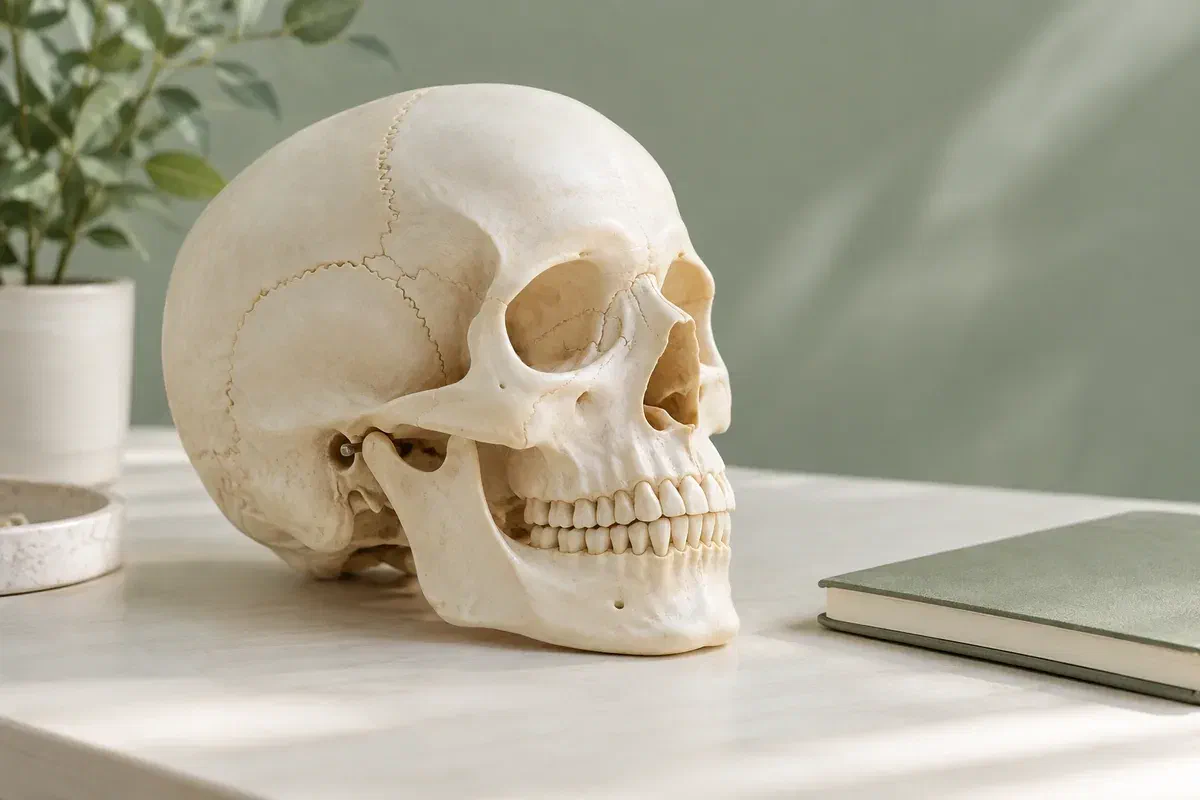
Illustrative anatomical skull teaching model with its jaw attached beside a notebook
Notice what daily life tells you

Your routine holds the clues

Skip the urge to keep poking the sore muscle. Instead, think about an ordinary day and where the discomfort fits into it: meals, work, chores, evenings and sleep. That context is often more revealing than the examination alone.

Daily timing and triggers

Note whether aching is there first thing, appears after meals or chores, or builds as the evening goes on. Mention which side and roughly how long it lasts. A recognizable rhythm guides the questions, but it cannot alone show what is causing it.

How the jaw and teeth respond

Tell us about restricted opening, catching or locking, discomfort when the jaw moves, or a tooth that hurts to bite on. A knock to the face or recent dental treatment is worth mentioning. These details help decide whether to look further than the muscles.

Home remedies and earlier care

List what you have tried, from warm compresses and soft foods to guards, exercises, medicines and physiotherapy, and how each went. Mention anything that seemed to aggravate the aching. Other pain conditions and medical history can also shape the picture.

Aching around the face or jaw is not necessarily a temporomandibular disorder. Before settling on a home routine or dental treatment, other explanations may need to be considered.

Why the assessment shapes the routine

A plan built on findings, not on guesswork

A home routine is only as good as the reasoning behind it. The assessment aims to explain your discomfort, not to hand you a remedy for every tender spot. Ask which findings support a muscle-related cause and which still need explaining. A truthful account of uncertainty gives you a better foundation than a confident diagnosis that the examination does not really back.

Choose one or two goals that matter at home. Maybe eating a full dinner without switching sides, waking without a clenched feeling, or reading to the kids without your jaw tiring. With those in mind, reviews can check practical change rather than relying only on how a muscle feels when someone presses on it.

Patient information: NIDCR — a graduated approach to temporomandibular disorder care

A combined look at teeth, jaw and muscles

The dentist can examine teeth, tissues, jaw movement and tenderness during one visit. Ask whether a particular finding accounts for the discomfort or simply coexists with it. Worn teeth or an uneven bite are not automatic proof of the cause.

A routine short enough to keep

Where a jaw-muscle problem fits, ask for a few reversible measures that suit your day, and how and when they will be reviewed. Be sure you know which steps to take, which to skip, and when to phone. A longer or more intensive plan is not automatically better.

Help from others when needed

Some patterns are better handled by a physician or an orofacial pain professional. Ask what a referral should clarify and which records to take. Sharing findings across providers keeps everyone working from the same information.

In the appointment

Understanding first, home routine second

No single finding explains every facial ache. The dentist weighs your history and the examination together, then tells you whether further assessment should come before any routine or treatment.

  1. Describe your typical day with the pain

    Where is it, what does it feel like, when does it show up and what are you doing? Note spreading or short, sharp episodes. A few notes are useful, but there is no need to wait until you have a full record before calling.

  2. Go over health and home remedies

    We talk about medicines, health conditions, injuries and earlier investigations, as well as what you have tried at home. Bring any appliance and explain its purpose. Mention any treatment that changed how your teeth come together or seemed to worsen the ache.

  3. Examine the relevant areas

    Depending on your history, the dentist may check jaw opening, movement and muscle tenderness. Please say if something is uncomfortable. X-rays or other imaging are used when they would answer a specific question, rather than taken for every ache.

  4. Set the routine and the review

    You hear what the findings support and what is uncertain, and whether a home routine, more tests or a referral fits. Agree on when to review and which changes should bring you back sooner. Each part of the plan should have a clear reason.

Your home routine

Keep it simple, keep it gentle, and keep a short record

The routine depends on your findings. Ask for written or clearly explained instructions, and know what to do if any step seems to make the aching worse.

A note at the end of the week

Jot down noticeable changes in comfort, meals, sleep or jaw use, and which parts of the routine you managed. Weekly notes are usually enough. Bring them to the review so they can be compared with the goals you set.

Gentle beats forceful

Leave out vigorous stretching, heavy repeated massage, or exercises borrowed from a friend or video for a different problem. Check that any technique suits you and ask to be shown how to do it carefully. If something you were advised makes things worse, stop and call.

Guards, medicines and practical snags

A guard that hurts, or that leaves your bite feeling off for a long stretch, should come out until you have talked with the clinician who made it. Use medicines as directed and leave regular prescriptions alone. Tell us if parts of the routine are hard to fit in.

What may follow

Care that matches the findings and fits your days

Ask how a suggested approach fits the working diagnosis and what alternatives are available. Being near the teeth or jaw does not on its own make a treatment appropriate.

When the findings point to a muscle or jaw-related problem

A tailored home-based plan

This may involve self-care, adjustments to daily activities, or therapy coordinated with another provider, with a planned check on your progress. Ask for a handful of clear steps. The routine should be realistic for your household and specific enough to evaluate.

When the source is uncertain or another cause is suspected

Further investigation

Some symptom patterns or findings mean another assessment is needed before any routine or treatment. Ask what remains unexplained. A referral makes sense when it brings in relevant expertise instead of repeating care that has not helped clarify things.

When a proposal would permanently change teeth or bite

Second thoughts on permanent treatment

Reshaping the bite for good is not a standard answer for facial muscle pain. Ask what evidence supports a proposal, what its risks are, what else could be tried, and whether another opinion would help. A home routine that has not worked is not by itself grounds for grinding, extensive restorations or surgery.

Home care questions

Living with jaw-muscle discomfort day to day

These general answers can help you prepare. Your own situation still needs to be examined before anyone can say which advice applies to you.

(905) 876-4488
Is a warm compress safe to use on aching jaw muscles?
Many people find gentle warmth comforting, and it is a common self-care suggestion for jaw-muscle soreness. Avoid anything hot enough to burn, and ask the dentist whether it suits your findings. Mention any swelling, since that changes the advice.
How long should I try a home routine before deciding it is not working?
That depends on the findings and the routine. Ask at your visit when it should be reviewed and what change to look for. Contact the clinic sooner if the pain is increasing or new symptoms appear.
Does sleeping position affect facial muscle pain?
Some people notice that certain positions, such as sleeping on one side with pressure on the jaw, seem to make aching worse. Mention your usual position and any pattern you notice. The dentist can consider it with the rest of your history.
Do I need to avoid certain foods for good?
Usually changes are temporary and depend on the findings. Choosing softer foods during a flare is common. Ask which adjustments make sense for you and when it is reasonable to return to your usual diet.
Can I tell it is a muscle problem just because the ache is in my cheek?
No. Location is a helpful clue, but several conditions cause discomfort in nearby areas. The assessment looks at the whole pattern before linking it to muscles or to dental, medical or specialist causes.
What should I do if part of my home routine makes the pain worse?
Stop that part and call for advice. Describe what you did and how the pain changed. The routine may be adjusted or the working diagnosis reconsidered. Rising pain is not something to push through.

Patient information: NIDCR — why different facial pain patterns need appropriate diagnosis

Planning a visit from Erin

Come in for the assessment, go home with a plan.

Phone our Bronte Street practice to book a facial muscle pain assessment. Bring earlier reports and a note of the home remedies and other care you have tried, so we can review the findings and agree on a routine and next steps with you.

The source of facial pain, suitable care, any imaging or referral, and fees are determined after assessment. A dental visit cannot guarantee a muscle diagnosis or relief from a home routine, appliance or treatment.

Visit Milton Dental Clinic
Unit 1, 342 Bronte St. S, Milton, ON L9T 5B7
Get directions Clinic hours
Monday–Thursday
11am–7pm
Friday–Sunday
By appointment only

Areas we serve

  • Milton
  • Oakville
  • Mississauga
  • Georgetown
  • Halton Hills
  • Acton
  • Campbellville
  • Brampton
  • Burlington
  • Puslinch
  • Rockwood
  • Erin
  • Caledon
  • Etobicoke
  • Old Milton
  • Bronte Meadows
  • Timberlea
  • Dorset Park
  • Dempsey
  • Clarke
  • Beaty
  • Coates
  • Harrison
  • Scott
  • Willmott
  • Ford
  • Bowes
  • Cobden
  • Walker
  • Mountain View
  • Milton Heights
  • Hawthorne Village
  • Valley View
  • Fallingbrook
  • Nassagaweya
  • Trafalgar
  • Esquesing
  • Nelson
  • Brookville
  • Moffat
  • Glen Williams
  • Norval
  • Limehouse
  • Stewarttown
  • Ashgrove
  • Hornby
  • Silver Creek
  • Speyside
  • Scotch Block
  • North Oakville
  • River Oaks
  • Glen Abbey
  • West Oak Trails
  • Palermo
  • Bronte Creek
  • College Park
  • Joshua Creek
  • Uptown Core
  • Preserve
  • Iroquois Ridge
  • Lisgar
  • Meadowvale
  • Meadowvale Village
  • Churchill Meadows
  • Erin Mills
  • Central Erin Mills
  • Streetsville
  • East Credit
  • Creditview
  • Heartland
  • Sheridan
  • Mount Pleasant
  • Credit Valley
  • Huttonville
  • Churchville
  • Springbrook
  • Northwest Brampton
  • Bram West
  • Fletcher's Meadow
  • Fletcher's Creek South
  • Alton Village
  • Orchard
  • Millcroft
  • Headon Forest
  • Tansley
  • Brant Hills
  • Tyandaga
  • Kilbride
  • Lowville
  • Aberfoyle
  • Morriston
  • Arkell
  • Hillsburgh
  • Freelton
  • Carlisle
  • Waterdown
  • Flamborough
  • Mountsberg

How can we help?

Milton Dental Clinic

Have a question about your smile? Choose the option that works best for you.

For urgent dental concerns, please call.
Messages are reviewed during clinic hours.