

Illustrative patient describing facial discomfort during a consultation
Specialized Care

Facial Muscle Pain Assessment in Etobicoke

Coming from Etobicoke for facial pain care works best when each visit counts. Arrange a facial muscle pain assessment with your records ready, so we can review the pattern, your teeth and jaw, and any need for further care in as few trips as practical.

Planning a visit from Etobicoke

Make the longer trip worth it

When the appointment is a fair way from home, nobody wants to arrive, describe a vague ache, and be sent away to come back with more information. A little preparation changes that. Facial muscle pain is a good example, because so much of the assessment depends on what you can tell the dentist about your own pattern.

In the chair, the dentist examines your teeth and gums, observes the jaw as it opens and closes, checks the chewing muscles and works through your history. Aching in these areas can also come from a tooth, a nerve or a broader medical issue, so the visit includes deciding whether a physician or specialist should be involved as well.

Gather what you can beforehand: earlier reports, X-rays from another office, any guard you use, and a short note of when the discomfort appears and what changes it. With those in hand, more can be covered in a single appointment. Even if one visit does not settle the cause, you should go home with a clear next step.

Plan your assessment visit
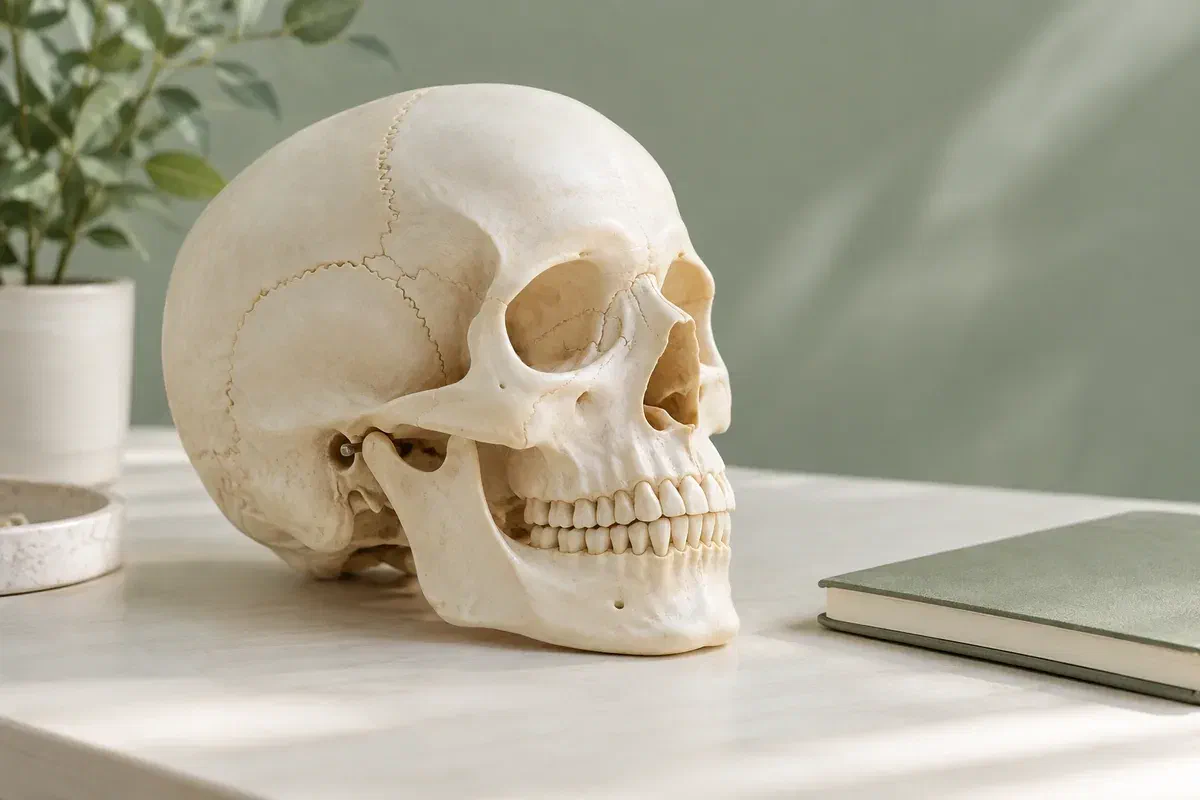
Illustrative anatomical skull teaching model with its jaw attached beside a notebook
Pack these in your notes

A short list that saves a second trip

Please do not press the sore spot over and over to check that it still hurts. Recalling how a few recent episodes unfolded gives the dentist more to work with, even if your face feels fine on the day.

When and how it shows up

Record whether it is there on waking, gathers through the day, or follows chewing or a long talk. Add how long it lasts and which side it favours. That kind of pattern focuses the questions, though it is not, by itself, evidence of what is driving the pain.

Teeth and jaw details

List any limited opening, locking or catching, pain as the jaw moves, a tooth that hurts on biting, or new sensitivity. Note injuries and recent dental work, with dates if possible. These help tell whether the examination should reach past muscle tenderness.

Records from other providers

Bring or arrange copies of notes from other dentists, doctors or physiotherapists, plus details of appliances, medicines and exercises tried. Describe the effect of each. Other pain conditions and your medical history can matter as well, even when the jaw seems to be the whole story.

Pain across the face or jaw is not automatically a temporomandibular disorder. Other explanations may need to be explored before a dental or muscle-focused plan is put in place.

What a focused visit can give you

Fewer loose ends to carry home

A well-prepared appointment aims to leave you understanding the problem better, not holding a treatment for every tender point. Ask the dentist which findings lean toward a muscle explanation and which still need explaining. A clear statement of what is uncertain is more valuable than a confident-sounding label that the evidence does not justify.

It also pays to define progress before you leave. Pick something concrete, like eating a sandwich without switching sides or getting through a morning without a sore temple. A planned review can then focus on function and symptom patterns instead of relying solely on how a muscle feels when pressed.

Patient information: NIDCR — a graduated approach to temporomandibular disorder care

One look at mouth and jaw together

Gums, teeth, jaw movement and tenderness can all be assessed in one appointment. Ask whether a finding explains your discomfort or simply happens to be there. Tooth wear or an uneven bite is not automatically the reason your face hurts.

A home-friendly, reversible plan

If a jaw-muscle problem is likely, discuss steps you can manage at home and how they will be reviewed. Know what to try, what to avoid and when to call. A more involved treatment is not necessarily a better opening move, and it may mean more trips.

Referrals that do not waste a journey

Some patterns are better looked at by a physician or an orofacial pain professional, who may be nearer to you. Ask what the referral should answer and which records to forward. Sharing findings between providers avoids repeating the same tests.

How the appointment runs

One well-organized visit, in four parts

No single test answers every facial pain question. The dentist combines your history with the examination and explains whether more assessment is wise before treatment begins.

  1. Walk through the symptoms

    Explain where it hurts, what the pain is like, when it occurs and what you are usually doing. Mention spreading or brief, sudden episodes. Prepared notes save time, yet if your symptoms are bothering you now, it is better to book than to wait for a complete record.

  2. Go through history and paperwork

    Medicines, health conditions, injuries and previous investigations are reviewed, along with any reports you brought. If you wear an appliance, bring it and explain what it was prescribed to do. Tell us about any treatment that changed your bite or made symptoms worse.

  3. Examine the relevant structures

    The history guides the checks, which may include jaw range of motion and muscle tenderness. Say if anything is uncomfortable. If you already have recent X-rays elsewhere, we can ask for copies; new imaging is only taken when it would answer a clinical question.

  4. Leave with a plan and a review method

    You hear what the findings support, what is still open, and whether home measures, more tests or a referral make the most sense. Settle on when and how to review, and which changes mean calling before then. Each step should have a reason behind it.

Between appointments

Manage at home, and know when not to wait

What you are advised to do depends on what was found. Make sure each instruction is clear, including what to do if a measure seems to increase your discomfort.

Keep a brief record for the review

Note real changes in comfort, eating, sleep or jaw use and anything you tried. Short weekly notes are plenty. Bring them to the follow-up so the dentist can compare them with your agreed goals.

Avoid strenuous self-treatment

Steer clear of hard stretching, repeated deep pressure and exercises meant for other conditions. Ask whether a technique fits your findings and how to do it safely. If a recommended measure worsens symptoms, stop and phone for advice before trying again.

Report appliance or medicine trouble

If a guard causes pain or your bite feels changed for a prolonged period, take it out and contact the clinician who made it. Use medicines only as directed and do not alter regular prescriptions yourself. Let us know about practical problems so the plan can shift.

After we explain the findings

Care that fits the diagnosis and your schedule

Find out why a proposed approach suits the working diagnosis and what alternatives exist. Discomfort close to the teeth or jaw does not on its own decide which treatment is right.

When findings point to a muscle or jaw-related issue

Conservative care you can manage

This may include self-care, changes to some activities, or therapy arranged with a provider near you, with a plan for reviewing the response. Ask for practical instructions you can follow without frequent visits. The first plan should be manageable and specific enough to evaluate.

When the cause is unclear or a different source is suspected

Further assessment elsewhere

An unusual pattern or finding may call for another assessment before treatment, possibly closer to home. Ask what question remains open. A referral is worthwhile when it reaches the right expertise, instead of repeating care that has not clarified anything.

When a proposal would permanently alter teeth or bite

Time to think before permanent work

Irreversible bite changes are not standard care for facial muscle pain. Weigh the evidence, the risks, the alternatives and the value of another opinion. A reversible measure that did not help is not, by itself, grounds for reshaping teeth, extensive restorations or surgery.

Planning questions

Getting the most from each appointment

These general answers can help you plan and prepare. They cannot pinpoint the source of your own pain without an assessment of your history and findings.

(905) 876-4488
How can I avoid needing several trips for a facial pain assessment?
Preparation helps most. Bring earlier reports, any X-rays from other offices, your appliance if you have one, and notes on when the pain occurs. Some cases still need a follow-up or referral, but arriving prepared lets more be covered in one visit.
Can my previous dentist send X-rays instead of new ones being taken?
Often, yes. With your permission, recent images can be requested from another office. Whether they are enough depends on what they show and what question needs answering. New imaging is only taken if it would add something useful.
How often will I need to come back after the first assessment?
That depends on the findings and the plan. Some people need a single review after a few weeks of home measures; others need a referral before anything else. Ask before you leave how the follow-up will work, so you can plan the trip in advance.
If my temple aches, can we assume it is a muscle problem?
No. Location narrows things down, but different conditions can produce discomfort in the same area. Share the full pattern so the dentist can consider whether a muscle-related cause is likely or whether dental, medical or specialist input is needed.
Could short, shock-like jolts in my face need a different kind of review?
Yes. Describe those episodes clearly, including what triggers them and how long they last. Some nerve-related conditions require medical or specialist assessment. That description is not a diagnosis on its own, but it should not be grouped with a dull ache.
If an exercise I was given makes the pain worse, should I keep going until my next visit?
No. Stop that exercise and call for advice rather than waiting. Explain what you did and how your symptoms changed. The approach may need adjusting, and worsening pain is a reason to check in sooner.

Patient information: NIDCR — why different facial pain patterns need appropriate diagnosis

Etobicoke appointments

Bring your notes and records. We will make the visit count.

Call our Bronte Street practice to arrange a facial muscle pain assessment. Mention that you are travelling some distance, and bring earlier reports and a list of what you have tried, so we can review as much as possible in one appointment.

The source of the pain, suitable care, imaging, referral and fees all depend on what the assessment finds. We cannot guarantee a muscle diagnosis, or that any appliance or treatment will relieve your symptoms.

Visit Milton Dental Clinic
Unit 1, 342 Bronte St. S, Milton, ON L9T 5B7
Get directions Clinic hours
Monday–Thursday
11am–7pm
Friday–Sunday
By appointment only

Areas we serve

  • Milton
  • Oakville
  • Mississauga
  • Georgetown
  • Halton Hills
  • Acton
  • Campbellville
  • Brampton
  • Burlington
  • Puslinch
  • Rockwood
  • Erin
  • Caledon
  • Etobicoke
  • Old Milton
  • Bronte Meadows
  • Timberlea
  • Dorset Park
  • Dempsey
  • Clarke
  • Beaty
  • Coates
  • Harrison
  • Scott
  • Willmott
  • Ford
  • Bowes
  • Cobden
  • Walker
  • Mountain View
  • Milton Heights
  • Hawthorne Village
  • Valley View
  • Fallingbrook
  • Nassagaweya
  • Trafalgar
  • Esquesing
  • Nelson
  • Brookville
  • Moffat
  • Glen Williams
  • Norval
  • Limehouse
  • Stewarttown
  • Ashgrove
  • Hornby
  • Silver Creek
  • Speyside
  • Scotch Block
  • North Oakville
  • River Oaks
  • Glen Abbey
  • West Oak Trails
  • Palermo
  • Bronte Creek
  • College Park
  • Joshua Creek
  • Uptown Core
  • Preserve
  • Iroquois Ridge
  • Lisgar
  • Meadowvale
  • Meadowvale Village
  • Churchill Meadows
  • Erin Mills
  • Central Erin Mills
  • Streetsville
  • East Credit
  • Creditview
  • Heartland
  • Sheridan
  • Mount Pleasant
  • Credit Valley
  • Huttonville
  • Churchville
  • Springbrook
  • Northwest Brampton
  • Bram West
  • Fletcher's Meadow
  • Fletcher's Creek South
  • Alton Village
  • Orchard
  • Millcroft
  • Headon Forest
  • Tansley
  • Brant Hills
  • Tyandaga
  • Kilbride
  • Lowville
  • Aberfoyle
  • Morriston
  • Arkell
  • Hillsburgh
  • Freelton
  • Carlisle
  • Waterdown
  • Flamborough
  • Mountsberg

How can we help?

Milton Dental Clinic

Have a question about your smile? Choose the option that works best for you.

For urgent dental concerns, please call.
Messages are reviewed during clinic hours.