

Illustrative patient describing facial discomfort during a consultation
Specialized Care

Facial Muscle Pain Assessment in Halton Hills

You wear the nightguard faithfully, yet your cheeks and temples still ache. From Halton Hills, a facial muscle pain assessment can revisit what the appliance was meant to do, re-examine your teeth and jaw, and look for a better-fitting next step.

Across Halton Hills

When the guard in the drawer has not solved it

It is a common story. Someone noticed wear or heard about clenching, a guard was made, and you have worn it most nights since. The teeth may well be better protected. But the aching in your cheeks or temples is still there, and you are left wondering whether the appliance was ever aimed at the right problem.

Reassessment is a fair response. The dentist reviews your teeth and gums, the way the jaw moves, the chewing muscles and the guard itself, then fits those findings to your history. Facial discomfort can come from dental, nerve-related or other medical causes as well as muscles, so the appointment also considers whether a different kind of assessment is overdue.

Please bring the appliance and its case, plus whatever you know about why it was made and how long you have worn it. Describe when the pain shows up and what, if anything, has changed since you started using it. We will explain what we find and what it leaves unclear, and agree on the next question to work on.

Book a guard and jaw review
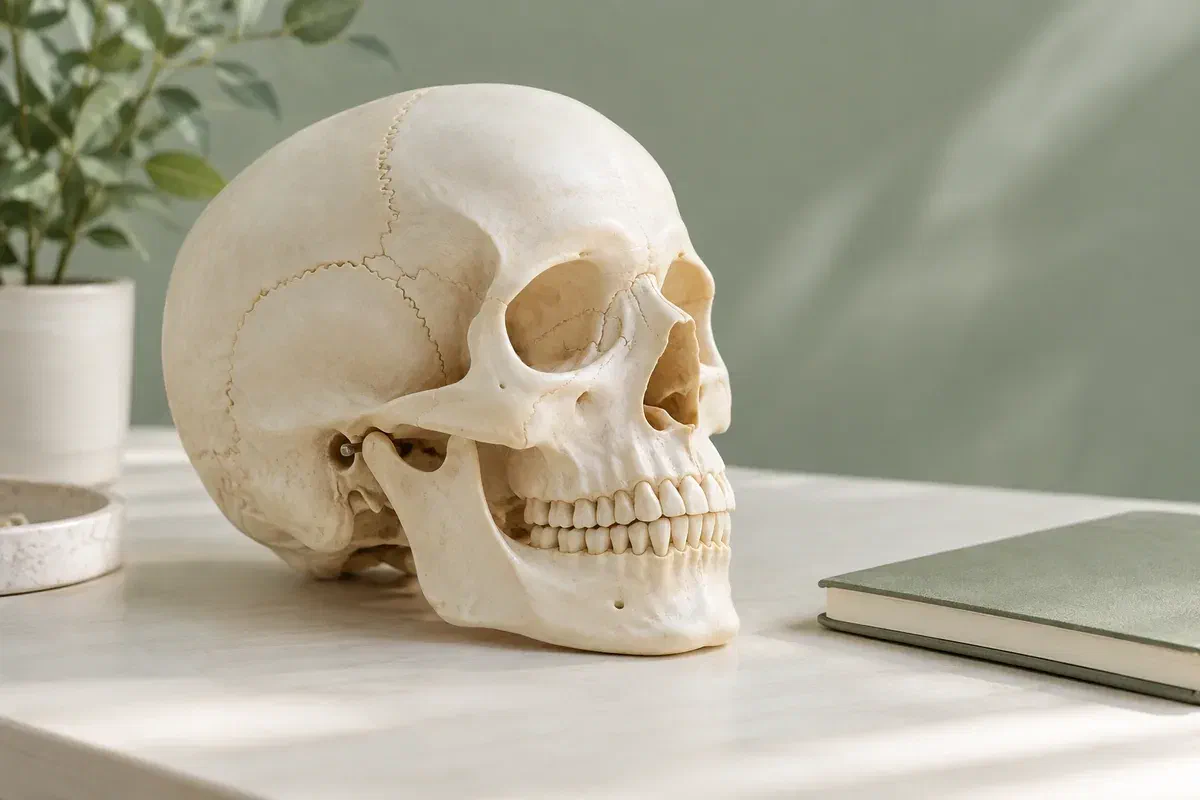
Illustrative anatomical skull teaching model with its jaw attached beside a notebook
Facts to gather first

What has changed since the guard arrived?

Resist pressing or clenching to check whether it still hurts. Instead, compare how the discomfort behaved before and after you started wearing the appliance. That comparison is often the most informative part of the history.

Before-and-after pattern

Describe whether the aching is better, worse or the same, and whether its timing has shifted between mornings, evenings and meals. Note which side is affected and how long episodes last. A changed pattern guides the questions, though it cannot alone prove the guard helped or hurt.

Bite, teeth and jaw since then

Mention a bite that feels different in the morning, jaw catching or locking, painful opening, or a tooth that has become tender. Recent fillings or crowns and any injury also count. These signs show whether the examination should look further than the muscles.

Everything else you have tried

Alongside the guard, list exercises, medicines, physiotherapy and earlier assessments, and what each did. Mention anything that seemed to aggravate symptoms. Other pain conditions and your general health can be relevant, even though the jaw feels like the obvious centre of the problem.

Wearing a guard does not mean the diagnosis is settled. Facial or jaw pain is not automatically a temporomandibular disorder, and other causes may deserve attention before further dental or muscle-directed care.

Why a second look is worthwhile

Check the reasoning, not just the plastic

An appliance is a tool with a specific job. Reassessment asks whether that job matches what is actually causing your discomfort. Ask the dentist which findings support a muscle-related explanation, which suggest something different, and what the guard can and cannot be expected to do. Clarity about the limits is worth more than another adjustment made on autopilot.

Then set a goal that does not depend on the guard. You might want to wake without a stiff jaw, chew evenly on both sides, or go a week without temple pain. With that agreed, a review can follow how you are actually managing day to day, instead of simply checking how tender a muscle is to touch.

Patient information: NIDCR — a graduated approach to temporomandibular disorder care

The appliance examined alongside your mouth

The dentist can look at the guard’s fit and wear marks together with your teeth, tissues and jaw movement. Ask whether what is seen explains the aching or simply reflects clenching that happens regardless. Wear on a guard or on teeth is not proof of why your face hurts.

Adjusting the plan without escalating it

Where a jaw-muscle problem still looks likely, discuss whether to modify, pause or continue the guard and which other reversible steps could help. Know how the change will be reviewed and when to call. Moving to bigger treatment is not automatically the logical next move.

Another opinion when the guard was not the answer

Some presentations warrant a physician or an orofacial pain professional. Ask what that referral should clarify and which records, including the appliance details, to send. When several clinicians have looked at the same symptoms, comparing notes prevents circular care.

The review visit

Retell, re-examine, rethink

Facial pain is seldom explained by one test, and a guard that has not helped is a clue rather than a verdict. The dentist brings everything together and tells you whether more assessment should come first.

  1. Start from the beginning

    Describe the original complaint, then how it feels now: location, quality, timing and what you are doing when it flares. Mention spreading or short, shooting episodes. Rough notes are fine, so do not wait to compile a full diary before booking.

  2. Review the guard’s history

    We go over why the appliance was made, how often you wear it, and any changes in your health, medicines or dental work since. Tell us if the guard ever made your bite feel off or seemed to increase discomfort, so that is weighed carefully.

  3. Examine you and the appliance

    Guided by your history, checks may include jaw opening, movement and muscle tenderness, along with the guard’s fit. Let us know if anything is sore during the examination. Imaging is considered only when it could answer a meaningful question.

  4. Decide what to change

    You hear what the findings support and what is still uncertain, and whether to adjust the current approach, investigate further or seek another opinion. Agree on when to check back and what would prompt an earlier call. Any change should have a clear purpose.

Living with the updated plan

Small, steady steps, and an eye on the bite

Instructions will reflect the reassessment. Make sure you understand whether to keep using the guard, what else to try, and what to do if a new step raises the discomfort.

Note what really changes

Jot down noticeable shifts in morning comfort, meals, sleep or jaw stiffness, and when you altered how you use the guard. A few notes a week are more helpful than constant scoring. Bring them to the review so they can be set against your goals.

Do not stack up extra remedies

Adding forceful stretches, deep repeated massage or routines meant for another condition can muddy the picture. Check with the dentist before starting anything new and ask how to do it gently. Should an advised step make pain worse, stop and phone us.

Watch the guard and your medicines

If the appliance becomes painful or your bite stays different long after removing it, stop wearing it and contact whoever made it. Take any medicine exactly as prescribed and leave regular prescriptions to your doctor. Practical concerns are worth raising so the plan can be fine-tuned.

Possible next steps

Rethink the plan around the diagnosis

Whatever is suggested next, ask how it connects with the working diagnosis and what other routes exist. An appliance or treatment is not right simply because the pain is close to the teeth.

If the findings still fit a muscle or jaw-related cause

Revised conservative care

That may mean changing how the guard is used, adding self-care or activity changes, or coordinated therapy, with a defined review. Ask for a manageable set of instructions instead of many techniques. The plan should be realistic and measurable.

If the guard has not helped and the source is uncertain

A broader investigation

A pattern that has not responded may need further dental or medical assessment before more treatment. Ask exactly what remains unanswered. A referral is useful when it brings in relevant expertise rather than another variation on the same idea.

If someone proposes permanently changing teeth or bite

Caution before irreversible steps

A guard that did not help is not a reason to reshape the bite. Permanent changes are not routine care for facial muscle pain. Ask what evidence supports them, what the risks are, and whether another opinion would help before agreeing to grinding, extensive restorations or surgery.

Nightguard and facial pain questions

When the appliance is part of the story

These answers offer general background. Your own situation can only be judged after the dentist has reviewed your history, your appliance and the examination findings.

(905) 876-4488
My nightguard protects my teeth, but my face still hurts. Is that unusual?
Not really. A guard may protect teeth from wear without changing facial discomfort that has other contributing factors. That is why the appliance and the pain need to be assessed separately. The dentist can explain what your guard is likely doing and what it may not address.
Should I stop wearing my guard before the appointment?
Unless it is causing pain or changing your bite, it is usually best to keep doing what you were advised until you are reassessed, and bring it along. If it is causing problems, stop and mention that when you book.
Can a guard bought online or from a store be reviewed too?
Yes. Bring it with you. The dentist can look at its fit and wear and discuss whether it suits your situation. Over-the-counter and custom appliances differ, and either one may or may not be appropriate depending on the findings.
Does a worn guard prove that clenching is causing my facial pain?
No. Marks on a guard suggest jaw activity during wear, but they do not prove that activity explains the aching. The findings have to be read in context, and other explanations need to be considered.
Could a sudden, electric type of facial pain need a different assessment?
Yes. Explain that sensation clearly, including triggers and how long it lasts. Some nerve-related conditions need medical or specialist evaluation. That description is not a diagnosis on its own, but it should not be assumed to be muscle soreness.
Is the pain in my cheeks enough to say it is muscular?
No. Location helps, but different problems can produce aching in neighbouring areas. The assessment looks at the full pattern before deciding whether a muscle-related cause, a dental cause, or a medical or specialist review is most likely needed.

Patient information: NIDCR — why different facial pain patterns need appropriate diagnosis

Halton Hills households welcome

Bring the guard. Bring the questions.

Call our Bronte Street practice to book a facial muscle pain assessment from anywhere in Halton Hills. Bring your appliance, any earlier reports and a note of what else you have tried, so we can go over the findings and next steps together.

The source of facial pain, suitable management, imaging, referral and fees all depend on assessment. We cannot promise a muscle diagnosis or that any appliance or treatment, including a new guard, will relieve your symptoms.

Visit Milton Dental Clinic
Unit 1, 342 Bronte St. S, Milton, ON L9T 5B7
Get directions Clinic hours
Monday–Thursday
11am–7pm
Friday–Sunday
By appointment only

Areas we serve

  • Milton
  • Oakville
  • Mississauga
  • Georgetown
  • Halton Hills
  • Acton
  • Campbellville
  • Brampton
  • Burlington
  • Puslinch
  • Rockwood
  • Erin
  • Caledon
  • Etobicoke
  • Old Milton
  • Bronte Meadows
  • Timberlea
  • Dorset Park
  • Dempsey
  • Clarke
  • Beaty
  • Coates
  • Harrison
  • Scott
  • Willmott
  • Ford
  • Bowes
  • Cobden
  • Walker
  • Mountain View
  • Milton Heights
  • Hawthorne Village
  • Valley View
  • Fallingbrook
  • Nassagaweya
  • Trafalgar
  • Esquesing
  • Nelson
  • Brookville
  • Moffat
  • Glen Williams
  • Norval
  • Limehouse
  • Stewarttown
  • Ashgrove
  • Hornby
  • Silver Creek
  • Speyside
  • Scotch Block
  • North Oakville
  • River Oaks
  • Glen Abbey
  • West Oak Trails
  • Palermo
  • Bronte Creek
  • College Park
  • Joshua Creek
  • Uptown Core
  • Preserve
  • Iroquois Ridge
  • Lisgar
  • Meadowvale
  • Meadowvale Village
  • Churchill Meadows
  • Erin Mills
  • Central Erin Mills
  • Streetsville
  • East Credit
  • Creditview
  • Heartland
  • Sheridan
  • Mount Pleasant
  • Credit Valley
  • Huttonville
  • Churchville
  • Springbrook
  • Northwest Brampton
  • Bram West
  • Fletcher's Meadow
  • Fletcher's Creek South
  • Alton Village
  • Orchard
  • Millcroft
  • Headon Forest
  • Tansley
  • Brant Hills
  • Tyandaga
  • Kilbride
  • Lowville
  • Aberfoyle
  • Morriston
  • Arkell
  • Hillsburgh
  • Freelton
  • Carlisle
  • Waterdown
  • Flamborough
  • Mountsberg

How can we help?

Milton Dental Clinic

Have a question about your smile? Choose the option that works best for you.

For urgent dental concerns, please call.
Messages are reviewed during clinic hours.