

Illustrative patient describing facial discomfort during a consultation
Specialized Care

Facial Muscle Pain Assessment in Old Milton

Some facial aches have been around so long they feel like part of the furniture. A facial muscle pain assessment near Old Milton is a chance to look at an old problem with fresh eyes, review what has and has not helped, and plan a sensible next step.

Close to Milton’s historic downtown

You have lived with it for years. It still deserves a proper look.

Long-standing facial discomfort has a way of fading into the background. You learn to chew on the other side, avoid tough bread, and rub your cheek without thinking. By the time someone asks about it, the original story may be hazy, and an old explanation from years ago may still be standing in for a current assessment.

Revisiting the problem means looking at today’s teeth, gums, jaw movement and chewing muscles, then comparing them with what you remember. Fillings, crowns, health conditions and medicines may all have changed since the ache began. Because facial pain overlaps with dental, nerve and other medical causes, the dentist also watches for signs that point somewhere other than the muscles.

Our Bronte Street practice sits a short way from the heart of Old Milton. Bring whatever you still have from earlier care: a guard, a list of exercises, a referral letter, or simply your memory of what helped and what did not. You should leave with a clearer view of the next question, even if a final answer takes longer.

Ask about a fresh assessment
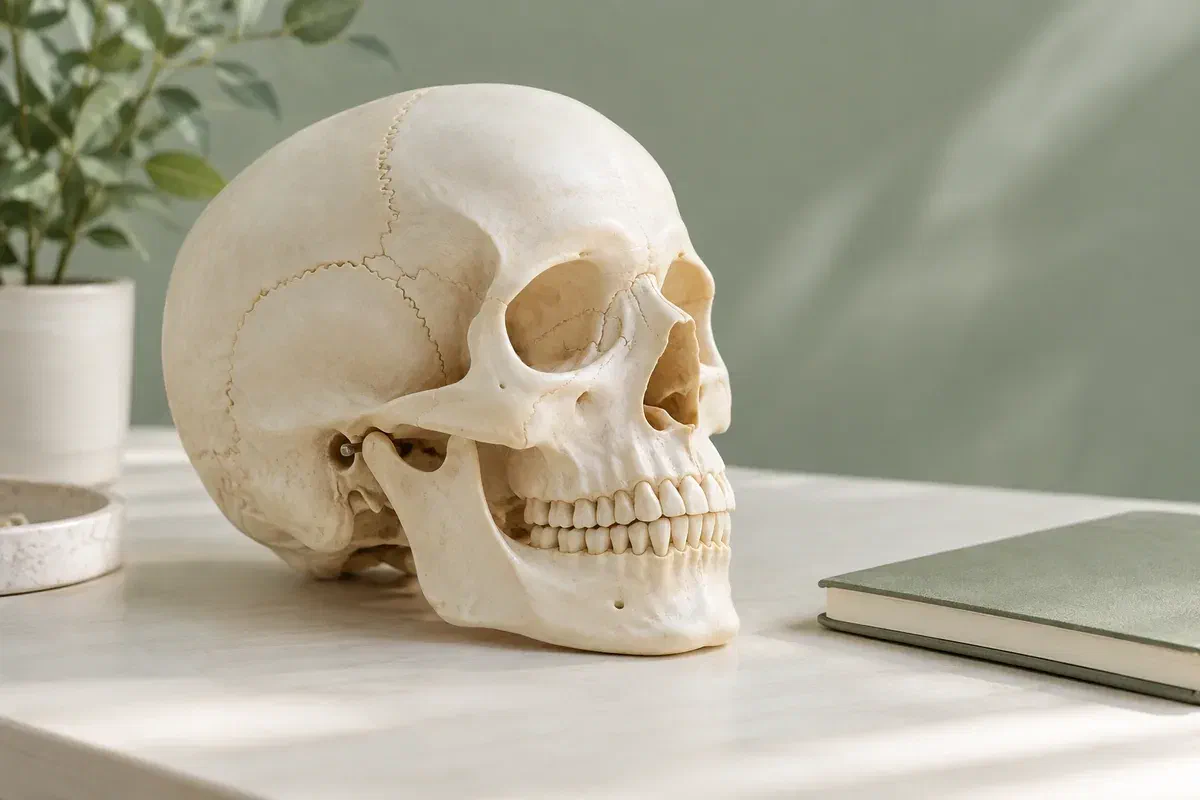
Illustrative anatomical skull teaching model with its jaw attached beside a notebook
Piecing together the long view

An old ache has a history. Let it tell you something.

Rather than pressing the sore area to prove it still hurts, think back over how the discomfort has behaved across months or years. Changes over time are often more revealing than how it feels on the day of your visit.

How the pattern has shifted

Has the aching moved from mornings to evenings, from one side to both, or from occasional to daily? Mention activities that seem tied to flare-ups, such as long meals or a lot of talking. A shift in pattern can steer the dentist’s questions, although it does not confirm what is driving it.

Dental work and jaw changes along the way

Note any crowns, extractions, orthodontics or bridges placed since the discomfort started, and whether opening, closing or biting has changed. Locking, catching or a single tender tooth matters. So does an old injury. These details help decide whether the examination should look past muscle tenderness.

Treatments from earlier years

Bring what you can about past appliances, medicines, physiotherapy or specialist visits, even if the records are incomplete. Say what made a difference, what did nothing, and what made the ache worse. Other pain conditions and your broader health can also be relevant to the current picture.

Discomfort in the face or jaw is not automatically a temporomandibular disorder, even after many years. Other explanations may still deserve attention before any muscle-focused or dental plan is chosen.

What a second look can add

Old labels, checked against new findings

When a problem has been around for a long time, it is easy to inherit someone else’s conclusion. A careful assessment lets you test that conclusion against what can be seen now. Ask which findings still fit a muscle-related explanation and which suggest the story is more complicated. Being told honestly what is uncertain is more helpful than having an old diagnosis repeated.

It is also worth naming what you would like to get back. Perhaps it is eating an apple without cutting it up, singing in a choir, or sleeping through without waking sore. Setting a goal like that gives later reviews something concrete to measure, instead of depending only on how a muscle feels when pressed during an exam.

Patient information: NIDCR — a graduated approach to temporomandibular disorder care

Current dental and jaw findings, reviewed together

The dentist can check the teeth, tissues, jaw movement and tender areas as they are today. Ask whether something seen in the mouth explains the ache or is simply present alongside it. Worn teeth or a changed bite after years of dental work are not automatic proof of the cause.

A restrained plan you can measure

If the findings fit a jaw-muscle problem, discuss reversible measures and when their effect will be checked. You should hear what to try, what to stop, and when to report a setback. A more involved treatment is not necessarily a better first move, even for a problem that has lasted a long time.

A link to other professionals when it helps

Some long-running patterns are best reviewed by a physician or an orofacial pain specialist. Ask what a referral would clarify and which notes to send. When several providers have seen the same symptoms over the years, sharing findings helps avoid starting from scratch each time.

Your appointment, in order

Retrace the history, examine what matters, agree on a plan.

A single finding rarely explains a long-standing facial ache. The dentist combines what you report with what the examination shows, then explains whether more investigation should come first.

  1. Start with your own account

    Describe where the discomfort sits, what it feels like, when it tends to appear, and how that has changed over time. Mention spreading, brief episodes, or quiet stretches. Notes help, but a rough recollection is enough to begin, so do not put off booking to reconstruct every detail.

  2. Look back at health and earlier care

    We go over current medicines, health conditions, past injuries and previous investigations. If you still have an old guard or appliance, bring it along and explain what it was meant to do. Tell us about any treatment that altered your bite or seemed to aggravate the ache.

  3. Check the teeth, jaw and chewing muscles

    What we examine depends on your history and may include how the jaw opens and moves and where it is tender. Let us know if a check is uncomfortable. Imaging is used when it would answer a real question, rather than as a matter of routine.

  4. Decide what comes next and when to review

    You will hear what the findings support, what remains open, and whether a reversible trial, more tests or a referral is the sensible route. Agree on a follow-up date and on the changes that should prompt you to call sooner. Each step should have a clear purpose.

Once you are home

Give the plan a fair trial and leave the tender spot alone.

Advice depends on what the assessment showed. Ask for a plain explanation of any exercise, habit change, appliance or referral, and of what to do if the plan makes the ache worse.

Keep a brief, practical diary

Write down notable changes in comfort, chewing, sleep or jaw use, along with anything you tried. A few entries a week are usually more helpful than constant tracking. Bring the diary to your review so progress can be compared with the goals you set.

Resist harsh do-it-yourself fixes

Avoid vigorous stretching, repeated hard massage, or routines borrowed from a different diagnosis or a friend’s advice. Check whether a technique fits your findings and how to do it gently. If something you were told to do increases the pain, stop and ask before carrying on.

Speak up about guards and medicines

An old or new appliance that causes pain or leaves your bite feeling off for long should be set aside until you talk to the clinician who made it. Take medicines as directed and leave regular prescriptions unchanged unless your doctor advises otherwise. Practical difficulties are worth raising so the plan can adapt.

Choosing a direction

Base the choice on what was found, not on how long it has hurt

Ask why a proposed approach suits the working diagnosis and what else could be considered. Years of discomfort near the jaw are not, on their own, a reason to pick a particular treatment.

When the evidence fits a muscle or jaw-related cause

Tailored conservative management

This can include self-care, adjustments to daily activities, or coordinated therapy, with a plan for checking your response. Ask for a short set of practical instructions rather than a long list. A first plan should be easy enough to keep up and clear enough to evaluate.

If the source is still unclear or another cause seems possible

Further dental or medical review

Certain symptom patterns or examination findings call for another assessment before treatment. Ask which question is still unanswered. A referral is worthwhile when it moves you toward the right expertise instead of repeating approaches that have already been tried without clarity.

Where a proposal would alter the teeth or bite permanently

Careful thought before permanent work

Irreversible bite changes are not a routine remedy for facial muscle pain. Ask about the evidence, risks, alternatives and the value of another opinion. A long history, or one reversible approach that did not help, does not automatically justify grinding teeth, extensive restorations or surgery.

Questions about long-standing aches

What to ask when the problem is not new

These answers can help you prepare. They cannot explain your own pain without an assessment of your history and findings.

(905) 876-4488
I was told years ago it was TMJ. Should that diagnosis be reconsidered?
It is reasonable to review it, especially if symptoms have changed or treatment has not helped. A current examination and history can show whether earlier findings still fit. The dentist can explain what supports the old label and what might point to another explanation needing attention.
Is it worth bringing an old nightguard I stopped wearing?
Yes. Seeing the appliance and hearing why you stopped can be informative. It may show wear patterns or fit problems, and your experience with it helps shape the next plan. It does not by itself confirm or rule out a cause.
Can a crown or filling placed years ago be linked to facial aching now?
It can be relevant, but it is not assumed. Mention when the dental work was done and whether symptoms changed afterward. The dentist can check that tooth and your bite and explain whether the restoration seems connected or is likely a separate matter.
Does cheek pain near my jaw automatically mean the chewing muscles are involved?
No. Where you feel it is helpful, yet different problems can cause discomfort in neighbouring areas. Describe the pattern and have it assessed. The findings may support a muscle-related cause, or they may suggest dental, medical or specialist review.
Will an assessment always end with me being fitted for an appliance?
No. A guard is not the standard answer to every facial pain concern. If one is suggested, ask what it is meant to achieve and how its effect will be checked. The working diagnosis and your goals should come first.
What should I do if a recommended exercise starts to make the ache worse?
Stop that exercise and get in touch for advice. Describe what you did and how the discomfort changed. The plan may be adjusted, or the working diagnosis reconsidered. Increasing pain is not a sign that you should push harder with the same routine.

Patient information: NIDCR — why different facial pain patterns need appropriate diagnosis

Visiting from Old Milton

Bring the long story. We will help find the next chapter.

Reach out to our Bronte Street practice to arrange a conversation about a facial ache that has lingered. Earlier reports, old appliances and a note of past treatments are all welcome, so the findings and possible next steps can be reviewed together.

The cause of facial pain, appropriate management, imaging, referral and fees depend on assessment. A dental visit cannot promise a muscle diagnosis or relief from any specific appliance or treatment.

Visit Milton Dental Clinic
Unit 1, 342 Bronte St. S, Milton, ON L9T 5B7
Get directions Clinic hours
Monday–Thursday
11am–7pm
Friday–Sunday
By appointment only

Areas we serve

  • Milton
  • Oakville
  • Mississauga
  • Georgetown
  • Halton Hills
  • Acton
  • Campbellville
  • Brampton
  • Burlington
  • Puslinch
  • Rockwood
  • Erin
  • Caledon
  • Etobicoke
  • Old Milton
  • Bronte Meadows
  • Timberlea
  • Dorset Park
  • Dempsey
  • Clarke
  • Beaty
  • Coates
  • Harrison
  • Scott
  • Willmott
  • Ford
  • Bowes
  • Cobden
  • Walker
  • Mountain View
  • Milton Heights
  • Hawthorne Village
  • Valley View
  • Fallingbrook
  • Nassagaweya
  • Trafalgar
  • Esquesing
  • Nelson
  • Brookville
  • Moffat
  • Glen Williams
  • Norval
  • Limehouse
  • Stewarttown
  • Ashgrove
  • Hornby
  • Silver Creek
  • Speyside
  • Scotch Block
  • North Oakville
  • River Oaks
  • Glen Abbey
  • West Oak Trails
  • Palermo
  • Bronte Creek
  • College Park
  • Joshua Creek
  • Uptown Core
  • Preserve
  • Iroquois Ridge
  • Lisgar
  • Meadowvale
  • Meadowvale Village
  • Churchill Meadows
  • Erin Mills
  • Central Erin Mills
  • Streetsville
  • East Credit
  • Creditview
  • Heartland
  • Sheridan
  • Mount Pleasant
  • Credit Valley
  • Huttonville
  • Churchville
  • Springbrook
  • Northwest Brampton
  • Bram West
  • Fletcher's Meadow
  • Fletcher's Creek South
  • Alton Village
  • Orchard
  • Millcroft
  • Headon Forest
  • Tansley
  • Brant Hills
  • Tyandaga
  • Kilbride
  • Lowville
  • Aberfoyle
  • Morriston
  • Arkell
  • Hillsburgh
  • Freelton
  • Carlisle
  • Waterdown
  • Flamborough
  • Mountsberg

How can we help?

Milton Dental Clinic

Have a question about your smile? Choose the option that works best for you.

For urgent dental concerns, please call.
Messages are reviewed during clinic hours.