

Illustrative patient describing facial discomfort during a consultation
Specialized Care

Facial Muscle Pain Assessment in Puslinch

Since that new crown or filling, your bite feels slightly off and your cheek has started to ache. From Puslinch, a facial muscle pain assessment looks at the recent dental work, your jaw and the muscles, so the connection, if there is one, becomes clearer.

Puslinch facial pain assessment

It started after the dental work. Is that the reason?

Timing can be persuasive. A few days or weeks after a new crown, filling or longer appointment, the face begins to ache, or the teeth do not seem to meet the way they did. Linking the two feels natural. Sometimes there is a real connection, and sometimes the timing is a coincidence and the cause lies elsewhere.

A facial muscle pain assessment considers both possibilities. The dentist checks the new work and the surrounding teeth, how your bite comes together, how the jaw opens and moves, and whether the chewing muscles are tender. Facial pain can also stem from nerve-related or other medical problems, so the visit includes deciding whether further medical input would help.

Bring what you know about the recent treatment: when it was done, which tooth, and where. Describe how the discomfort has behaved since and anything you have tried. We will tell you what the findings suggest and what they cannot confirm. You should go home knowing the next step, even if the full answer takes a little longer.

Ask about pain after dental work
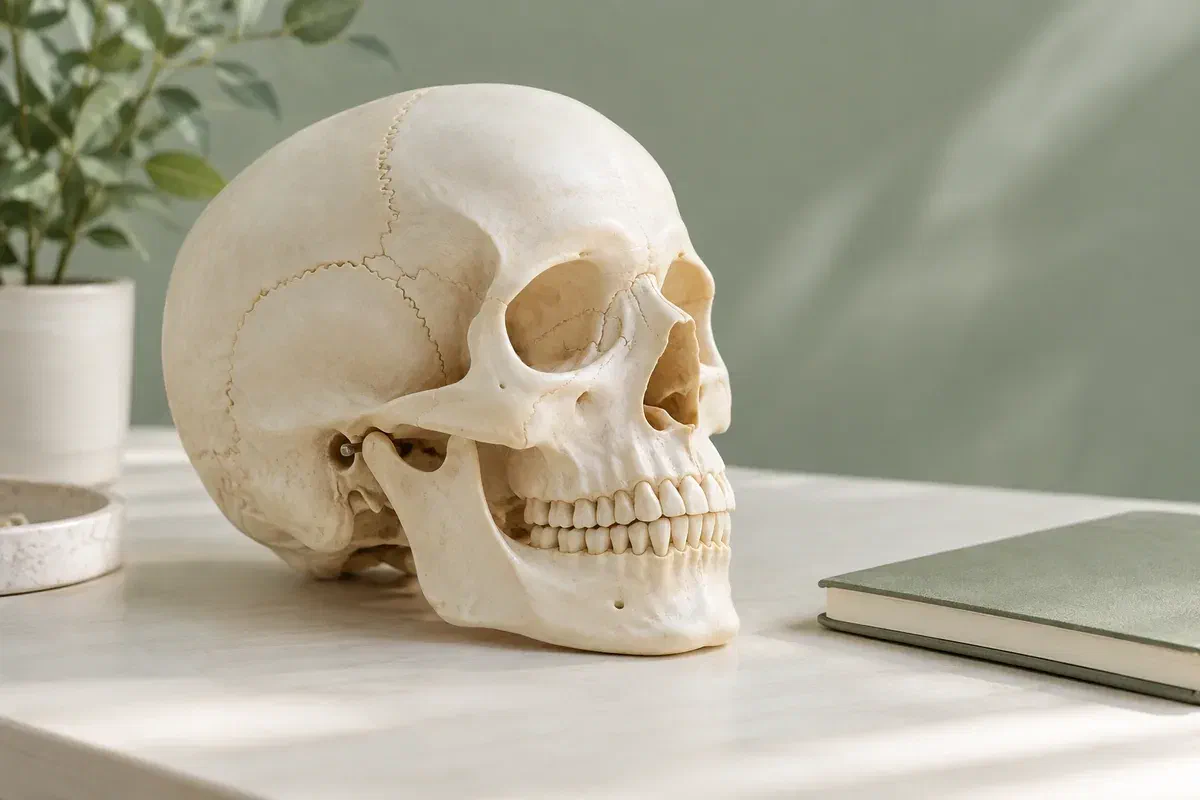
Illustrative anatomical skull teaching model with its jaw attached beside a notebook
Before and after

What changed, and when

Biting hard on the new tooth again and again to test it can make things harder to read. Thinking back over the days since the treatment usually gives a clearer picture than anything you can provoke at the appointment.

How the discomfort has unfolded

Did it start right after the appointment or later? Is it worse in the morning, after meals or toward evening, and on which side? Note how long episodes last. A timeline helps guide questions, but it cannot by itself prove the dental work is responsible.

Bite and tooth sensations

Say whether the teeth feel as if they touch first on the new work, whether that tooth hurts to bite on or reacts to cold, and whether the jaw opens, closes or moves with pain. An injury or other recent treatment also matters. These signs help decide where to look.

Other care and health factors

Mention any appliance you wear, exercises, medicines, physiotherapy and previous assessments for facial pain, along with their effect. Note anything that made it worse. Your broader health, other pain conditions and recent stress or illness may also be relevant.

Discomfort that follows dental treatment is not automatically caused by it, nor is it automatically a temporomandibular disorder. Other explanations may need consideration before anything is adjusted or a muscle-focused plan is chosen.

Why it is worth checking carefully

Sort coincidence from cause

The goal is to understand what is going on, not to adjust or redo something just because the timing lines up. Ask the dentist which findings point to the new work, which suggest the muscles or jaw, and which raise other possibilities. An honest statement that the link is uncertain is far more useful than a quick fix based on an assumption.

Decide together what would count as improvement. That could mean biting evenly again, eating comfortably on that side, or no longer waking with an aching cheek. Using those markers, a follow-up can judge real change in function and pattern, not only whether a muscle is tender when pressed.

Patient information: NIDCR — a graduated approach to temporomandibular disorder care

The new work, the bite and the muscles reviewed together

The dentist can examine the restoration, nearby teeth, your bite, jaw movement and muscle tenderness in one visit. Ask whether a finding on the new tooth explains the pain or is just present at the same time. A slightly high spot or a change in feel is not automatic proof.

Measured, reversible steps

If a minor issue with the restoration is found, the dentist will explain what correcting it involves. If a jaw-muscle problem fits better, discuss gentle reversible measures and when they will be reviewed. Know what to try, what to avoid and when to call.

Coordination with the clinician who did the work

If another office placed the restoration, it can help to share findings with them. Some patterns also call for a physician or orofacial pain professional. Ask what any referral is meant to answer and which records to send along.

The visit, step by step

Timeline, history, examination, then a decision

Even when the timing seems obvious, there is rarely a single finding that explains facial pain. The dentist combines everything and tells you whether more information is needed before changing anything.

  1. Build the timeline

    We ask when the discomfort started relative to the treatment, where it is, what it feels like and what triggers it. Mention spreading or brief, sharp episodes. A rough timeline is enough, so there is no need to wait and collect weeks of notes.

  2. Review health and treatment records

    We go over medicines, health conditions, injuries and past investigations, plus details of the recent dental work. Bring any appliance you use and explain its purpose. Mention earlier treatment that changed your bite or worsened symptoms.

  3. Check the tooth, bite, jaw and muscles

    Depending on your history, the dentist may test the new restoration, check how the teeth meet, watch jaw movement and feel for muscle tenderness. Tell us if anything hurts. An X-ray is considered when it would answer a particular question about that tooth or area.

  4. Agree on the next move

    We explain what the findings point to, what is still uncertain, and whether a small adjustment, a reversible trial, more tests or referral is most sensible. Agree on a review time and what changes should prompt an earlier call.

Over the following weeks

Watch how things settle, without testing the tooth

Instructions depend on what was found and whether anything was adjusted. Ask what to expect in the days afterward and what to do if discomfort increases instead of easing.

Record a handful of observations

Note real shifts in bite, comfort, chewing or sleep, and any measures you tried. A short entry every few days is plenty. Bring the notes to your review so the dentist can compare them with what you hoped would change.

Avoid heavy self-treatment

Do not try to grind the bite in yourself, chew hard on the tooth to test it, or begin forceful stretches or massage meant for another problem. Ask whether a technique suits you and how to do it gently. If advised care makes the pain worse, stop and call.

Keep us informed about guards and medicines

If an appliance no longer fits comfortably over the new work or leaves your bite feeling wrong, stop wearing it and contact the clinician who made it. Use medicines only as prescribed and do not change regular prescriptions yourself. Practical concerns are worth raising.

Once the picture is clearer

Adjust, manage, investigate, or wait and see

For any suggestion, ask how it connects with the findings and what alternatives exist. A recent restoration nearby does not on its own mean the restoration is the problem.

Where a muscle or jaw-related cause fits best

Conservative care for jaw and muscles

Options might include self-care, temporary changes in how you chew, or therapy coordinated with another clinician, with a review of how you respond. Ask for a short, practical set of steps. The first plan should be easy to follow and clear enough to measure.

Where the cause is unclear or something else may be involved

Further dental or medical assessment

If the findings do not fit neatly, another assessment may need to come before any treatment. Ask what question is still open. A referral is valuable when it brings in the right expertise, not when it repeats what has already been checked.

Where more permanent changes to teeth or bite are proposed

Care before further irreversible changes

Small corrections to a new restoration are different from reshaping the whole bite, something seldom justified for facial muscle pain. Ask about evidence, risks and alternatives, and whether a second opinion would help, before agreeing to wider grinding, more restorations or surgery.

Questions after dental treatment

When aching follows new dental work

These answers are general preparation. Whether your pain is connected to recent treatment can only be judged after an assessment of your history and findings.

(905) 876-4488
Can a new crown or filling make my face ache?
It can sometimes contribute, for example if the bite feels different or the tooth itself is irritated. It is not always the cause, though. The dentist checks the restoration, your bite and the muscles and explains whether the findings support a link.
My bite feels slightly high since my filling. Should I wait for it to settle?
It is reasonable to call rather than wait, especially if the tooth hurts on biting or your face has started to ache. The dentist can check how the teeth meet. Please do not try to adjust it yourself.
Could a long appointment with my mouth open have caused jaw soreness?
Some people notice temporary jaw tiredness after a long appointment. If soreness persists or is accompanied by limited opening or other symptoms, mention it, so it can be assessed rather than assumed to be temporary.
The work was done at another office. Can I still be assessed here?
Yes. Bring whatever details you have about the treatment, and with your permission records can be requested. Findings can be shared with the dentist who placed the work if that helps coordinate care.
Does cheek pain near the new tooth mean the chewing muscles are involved?
Not necessarily. Location helps, but the tooth, the muscles and other causes can all produce aching in the same region. The assessment looks at the full pattern before reaching a conclusion.
Could sharp, electric jolts after dental work need a different assessment?
Yes. Describe those episodes clearly, including triggers and duration. Some nerve-related conditions need medical or specialist evaluation. The description is not a diagnosis, but it should not be grouped automatically with muscle soreness.

Patient information: NIDCR — why different facial pain patterns need appropriate diagnosis

Booking from Puslinch

Tell us about the treatment and how your face has felt since

Call our Bronte Street practice to arrange a facial muscle pain assessment from Puslinch. Bring details of the recent dental work, any earlier reports and a note of what you have tried, so the findings and options can be reviewed together.

Whether the pain is linked to recent work, suitable care, imaging, referral and fees all depend on assessment. We cannot guarantee a particular diagnosis or relief from any adjustment, appliance or treatment.

Visit Milton Dental Clinic
Unit 1, 342 Bronte St. S, Milton, ON L9T 5B7
Get directions Clinic hours
Monday–Thursday
11am–7pm
Friday–Sunday
By appointment only

Areas we serve

  • Milton
  • Oakville
  • Mississauga
  • Georgetown
  • Halton Hills
  • Acton
  • Campbellville
  • Brampton
  • Burlington
  • Puslinch
  • Rockwood
  • Erin
  • Caledon
  • Etobicoke
  • Old Milton
  • Bronte Meadows
  • Timberlea
  • Dorset Park
  • Dempsey
  • Clarke
  • Beaty
  • Coates
  • Harrison
  • Scott
  • Willmott
  • Ford
  • Bowes
  • Cobden
  • Walker
  • Mountain View
  • Milton Heights
  • Hawthorne Village
  • Valley View
  • Fallingbrook
  • Nassagaweya
  • Trafalgar
  • Esquesing
  • Nelson
  • Brookville
  • Moffat
  • Glen Williams
  • Norval
  • Limehouse
  • Stewarttown
  • Ashgrove
  • Hornby
  • Silver Creek
  • Speyside
  • Scotch Block
  • North Oakville
  • River Oaks
  • Glen Abbey
  • West Oak Trails
  • Palermo
  • Bronte Creek
  • College Park
  • Joshua Creek
  • Uptown Core
  • Preserve
  • Iroquois Ridge
  • Lisgar
  • Meadowvale
  • Meadowvale Village
  • Churchill Meadows
  • Erin Mills
  • Central Erin Mills
  • Streetsville
  • East Credit
  • Creditview
  • Heartland
  • Sheridan
  • Mount Pleasant
  • Credit Valley
  • Huttonville
  • Churchville
  • Springbrook
  • Northwest Brampton
  • Bram West
  • Fletcher's Meadow
  • Fletcher's Creek South
  • Alton Village
  • Orchard
  • Millcroft
  • Headon Forest
  • Tansley
  • Brant Hills
  • Tyandaga
  • Kilbride
  • Lowville
  • Aberfoyle
  • Morriston
  • Arkell
  • Hillsburgh
  • Freelton
  • Carlisle
  • Waterdown
  • Flamborough
  • Mountsberg

How can we help?

Milton Dental Clinic

Have a question about your smile? Choose the option that works best for you.

For urgent dental concerns, please call.
Messages are reviewed during clinic hours.