

Illustrative adult patient discussing an oral tissue assessment with a clinician
Specialized Care

Frenectomy in Etobicoke

A frenectomy decision usually takes more than one conversation, so planning matters when you’re coming from Etobicoke. We help you prepare for an efficient assessment, understand the options, and know where to turn for urgent help closer to home.

Frenectomy planning for Etobicoke

Make each appointment count.

When the trip is a longer one, it is natural to want everything settled in a single visit. A frenulum decision rarely works that way, and that is a good thing. The frenulum is a fold of tissue under the tongue or joining the lip to the gum. Frenectomy takes it away, frenotomy cuts through it, and frenuloplasty reshapes it, and each suits different situations.

Whether any of these is appropriate depends on function. The clinician needs to understand the concern, see how the tongue or lip moves, and judge whether the attachment is really part of the problem. A thick-looking band, or a friend’s suggestion that it looks tied, does not decide that on its own.

For households in Etobicoke, the most helpful preparation is gathering paperwork before the first appointment. Send or bring referral letters, therapy or feeding reports, and orthodontic notes. That lets us use the visit for assessment and discussion, and plan any referral or follow-up with your travel in mind.

Start organizing your consultation
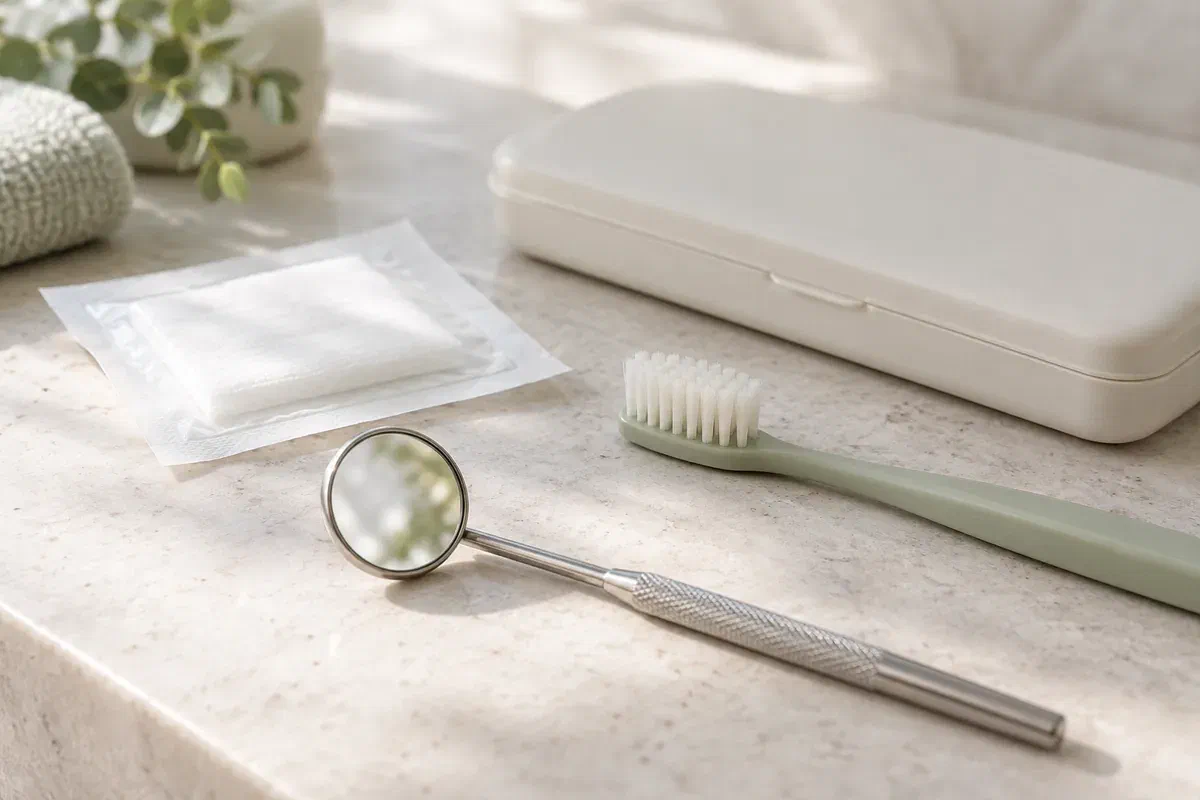
Illustrative dental mirror and gentle oral-care supplies beside a closed instrument case
Know what you’re asking about

A clear question makes the first visit far more useful.

Before you set out, write down what prompted the referral and who raised it. Reports from other professionals let the assessment build on work that has already been done rather than repeating it.

Movement of the tongue or lip

Jot down what seems limited, since when, and whether it is constant. Ask how function will be checked during the exam. Notes about real situations, such as eating or cleaning, will help more than photos compared against pictures on the internet.

Orthodontic or gum planning

If an orthodontist or periodontist mentioned the attachment, bring their notes and ask which finding the procedure would address. When a space between teeth is involved, sequencing with their treatment is often the central question to resolve.

Feeding or speech in children

Bring copies of feeding or speech-language assessments and describe the difficulty clearly. Feeding concerns need medical and feeding support; speech concerns may need a speech-language professional. A noticeable attachment does not mean surgery will solve the problem.

Where dental, feeding, speech, and orthodontic care overlap, a coordinated plan avoids wasted trips and helps establish whether treatment is warranted at all. A normal frenulum needs no treatment.

Leaving with a plan

Know the aim, the limits, and the next date before you head home.

When the exam confirms a significant restriction or a tissue-related dental concern, a procedure can be part of the answer. Before leaving, make sure you know what change is expected and how it will be assessed at follow-up. The goal should be concrete and tied to the original problem, not a broad promise about speech, sleep, or wellbeing.

Ask about limits too. Some contributors to a difficulty sit outside the frenulum, and they may still need support after healing. Knowing this before committing to more trips helps you decide whether the plan is worth it for you or your child.

A finding that justifies the trip

The clinician should explain which attachment is involved and which observation supports treatment. Ask how it differs from a normal variation. If more assessment is recommended, find out whether it can be arranged closer to home.

Alternatives and sensible timing

Observation, therapy, another professional’s opinion, or aligning with orthodontic care may be appropriate. Ask what would happen if the procedure waited. Timing should reflect the clinical reason, the patient’s development, and practical scheduling where safe to do so.

Practical procedure details

Ask about technique, anaesthetic, stitches, risks, recovery time, and who would provide treatment and where. A conversation about a procedure here does not mean that every method, anaesthetic choice, or age group is treated in our office.

A well-organized sequence

Fewer visits, each one with a clear purpose.

The number of appointments depends on the attachment, age, and concern. Assessment and treatment are not usually combined automatically, because an informed decision deserves time.

  1. Send information ahead

    Share the referral, relevant reports, and a summary of medical history, medications, and allergies before the first appointment where possible. Ask whether any further assessment should be completed beforehand so the visit is as productive as possible.

  2. Assessment and discussion in one sitting

    The clinician examines the attachment in relation to the concern and explains the findings in the same visit. Ask whether appearance and function agree. If the indication is unclear, the reasons should be discussed before you leave.

  3. Decide and schedule with travel in mind

    Review benefit, limits, alternatives, fees, and recovery. If a frenectomy is appropriate, ask how extensive it will be, whether stitches are planned, and what the anaesthetic will be. Plan the treatment date with time for recovery at home.

  4. Arrange follow-up that fits your schedule

    Confirm aftercare instructions and agree on a review that checks function as well as healing. Ask which questions can be handled by phone and when an in-person check is needed. If other professionals are involved, clarify who will see you and when.

Recovering at home in Etobicoke

Know which concerns are a phone call and which are an emergency.

Aftercare is specific to each procedure and patient. Take written instructions home, and avoid using an exercise or wound routine designed for another age group or a different treatment.

Follow the eating and cleaning plan

Find out how to clean the site, when brushing can return to normal, and what to expect from stitches. Follow advice about numbness and soft foods. If discomfort is interfering with the plan, call the treating office for guidance.

Get urgent help close to home when needed

Ask which symptoms are expected. Persistent bleeding, increasing swelling, fever, or trouble eating or drinking should be reported promptly. For breathing or swallowing difficulty, call 911 or go to the nearest emergency department rather than travelling to us.

Check the goal at review

A healed-looking site does not by itself confirm that the original concern has improved. Attend the review and explain what is different now. Ongoing difficulty should be assessed rather than automatically put down to reattachment.

Patient information: American Academy of Pediatrics — infant frenotomy selection and aftercare

Options to weigh before booking

Not every concern ends in a procedure.

Ask which option suits the documented problem and why. A frenulum is normal anatomy, so any recommendation to treat it should explain the specific problem being addressed.

When there is no significant surgical problem

Watchful monitoring

You may be advised to observe and return if things change, or to seek another assessment. Ask what changes should prompt a call. Not operating is a sound plan when findings do not support a procedure, and it can save unnecessary trips.

When feeding, speech, gums, or orthodontics are involved

Coordinated support for the function

A therapist, feeding team, or orthodontist may need to take part, and some of that care may be available nearer home. Ask how each provider’s work connects to the goal. Removing tissue should not replace a look at the wider reasons for difficulty.

When the assessment supports it

An indicated frenulum procedure

If the findings point this way, you should hear exactly which operation is planned and what it is expected to change. Weigh that against the other choices and the possible downsides: soreness, bleeding, infection, scarring, or a concern that persists. Ask what research backs the method; a device name or technique label proves nothing by itself.

Questions about planning

Practical answers for a longer trip.

Bring the recommendation and your questions. These answers focus on planning the process sensibly, without assuming that every attachment needs surgery.

(905) 876-4488
Can the assessment and procedure happen on the same day to save a trip?
Not automatically. An informed decision benefits from time to consider the findings, alternatives, and risks. Ask during the assessment whether combining steps would be appropriate in your situation and what that would involve.
What can I send ahead so the first visit is productive?
Referral letters, reports from therapists or feeding specialists, orthodontic notes, a medication list, and a short description of the concern. Having these in advance allows more of the appointment to be spent on assessment and discussion.
If a problem comes up after treatment, should I come back to your office?
For breathing or swallowing difficulty, seek emergency care near home immediately. For heavy bleeding or rapidly worsening symptoms, use the closest urgent or emergency service. For other questions, call the treating office for advice.
How long does recovery usually take?
It varies with the procedure, the site, and the patient. Ask the treating clinician what to expect for comfort, eating, and healing in your case, and plan a few quieter days at home if possible.
Does a visible attachment automatically need to be treated?
No. Many attachments are normal and cause no problems. The question is whether this one contributes to a specific functional or dental concern, which an examination can help answer.
Should I prepare anything at home before the procedure day?
Ask for the written aftercare instructions ahead of time so you can stock suitable soft foods and plan the day. If sedation or another anaesthetic is used, ask whether someone needs to accompany you or your child.

Patient information: AAPD — procedure definitions and orthodontic timing considerations · Royal Cornwall — avoiding preventive tongue-tie procedures without a current functional indication

Arranging a consultation

Organize the paperwork, then book one focused visit.

Call our Bronte Street practice to plan a frenectomy consultation from Etobicoke. Send referral letters and reports beforehand where you can, so the first appointment can cover assessment, alternatives, and any shared or specialist care.

Whether a procedure is indicated, suits the patient’s age, and is offered at our office or through referral, along with technique, anaesthetic, fees, and the likely benefit, is decided case by case. We cannot promise any change in how someone feeds, speaks, or how teeth are spaced.

Visit Milton Dental Clinic
Unit 1, 342 Bronte St. S, Milton, ON L9T 5B7
Get directions Clinic hours
Monday–Thursday
11am–7pm
Friday–Sunday
By appointment only

Areas we serve

  • Milton
  • Oakville
  • Mississauga
  • Georgetown
  • Halton Hills
  • Acton
  • Campbellville
  • Brampton
  • Burlington
  • Puslinch
  • Rockwood
  • Erin
  • Caledon
  • Etobicoke
  • Old Milton
  • Bronte Meadows
  • Timberlea
  • Dorset Park
  • Dempsey
  • Clarke
  • Beaty
  • Coates
  • Harrison
  • Scott
  • Willmott
  • Ford
  • Bowes
  • Cobden
  • Walker
  • Mountain View
  • Milton Heights
  • Hawthorne Village
  • Valley View
  • Fallingbrook
  • Nassagaweya
  • Trafalgar
  • Esquesing
  • Nelson
  • Brookville
  • Moffat
  • Glen Williams
  • Norval
  • Limehouse
  • Stewarttown
  • Ashgrove
  • Hornby
  • Silver Creek
  • Speyside
  • Scotch Block
  • North Oakville
  • River Oaks
  • Glen Abbey
  • West Oak Trails
  • Palermo
  • Bronte Creek
  • College Park
  • Joshua Creek
  • Uptown Core
  • Preserve
  • Iroquois Ridge
  • Lisgar
  • Meadowvale
  • Meadowvale Village
  • Churchill Meadows
  • Erin Mills
  • Central Erin Mills
  • Streetsville
  • East Credit
  • Creditview
  • Heartland
  • Sheridan
  • Mount Pleasant
  • Credit Valley
  • Huttonville
  • Churchville
  • Springbrook
  • Northwest Brampton
  • Bram West
  • Fletcher's Meadow
  • Fletcher's Creek South
  • Alton Village
  • Orchard
  • Millcroft
  • Headon Forest
  • Tansley
  • Brant Hills
  • Tyandaga
  • Kilbride
  • Lowville
  • Aberfoyle
  • Morriston
  • Arkell
  • Hillsburgh
  • Freelton
  • Carlisle
  • Waterdown
  • Flamborough
  • Mountsberg

How can we help?

Milton Dental Clinic

Have a question about your smile? Choose the option that works best for you.

For urgent dental concerns, please call.
Messages are reviewed during clinic hours.