

Illustrative patient discussing gum health with a clinician and a small dental model
Specialized Care

Gingivitis Treatment in Brampton

It has been a while since your last cleaning, your gums bleed, and you are bracing to hear the words deep cleaning. Gingivitis care for Brampton households explains what the examination shows first, so any cleaning recommended has a clear reason behind it.

Coming back after a gap

Been a few years? Here is what a gum visit involves.

Life gets busy. Work shifts, family commitments and the odd move can push dental visits down the list, and by the time you book again your gums may bleed when you brush. That is often gingivitis, an inflammation of the gum tissue, and coming back is the right step, not something to feel awkward about.

Many people worry they will be told they need extensive treatment. The truth is that the plan depends on what is found. Plaque-related gingivitis frequently responds to an appropriate professional cleaning plus a steady routine at home. Periodontitis, where the support around the teeth has been affected, needs a different approach, and some gum changes have another cause altogether.

For people making the trip from Brampton, we keep the first conversation straightforward. Tell us how long it has been, what you have noticed and how you clean now. We examine your gums, explain what we see in everyday language and describe the cleaning we recommend, including why it fits your findings.

Book a return visit for your gums
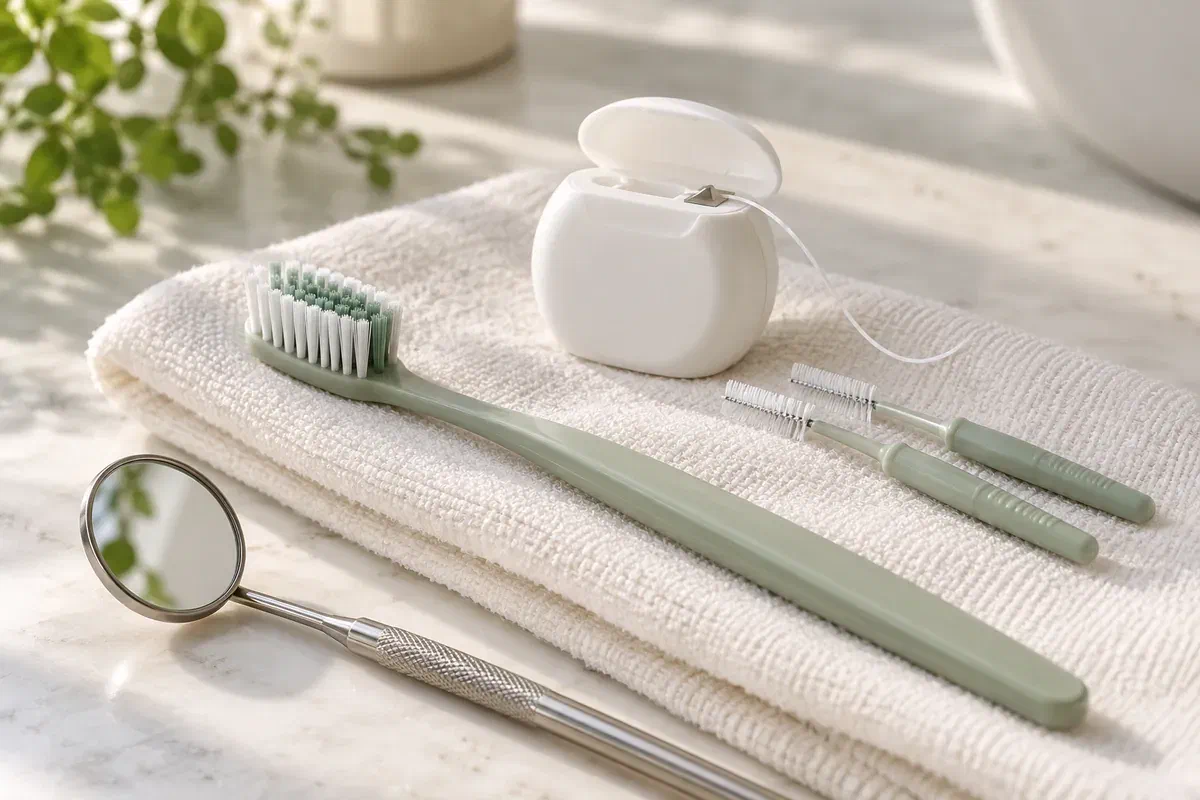
Illustrative soft toothbrush, floss, interdental brushes, and dental mirror on an ivory towel
Things to tell us

Nothing you have noticed is too small to mention.

Share where you see a change, roughly how long it has been there and whether it comes and goes. Changes in your health, medications, products or past dental work may matter too, so mention them and let the examination sort out which details are important.

Bleeding that has crept up over time

Tell us whether bleeding is widespread or concentrated in certain areas. The clinician can examine the gums and review how you clean. Brushing around the bleeding spots or pressing harder both tend to make things worse, so learning a comfortable method helps.

Puffy gums around certain teeth

Show us any areas that look swollen or feel tender, including near fillings, crowns or places where food collects. Ask what the examination points to. A particular site may need targeted care rather than a blanket instruction to brush more.

A change in breath you have been noticing

Persistent bad breath may accompany gum inflammation but is not a diagnosis on its own. Describe how long it has been noticeable and any dryness or discomfort. A strong mouthwash may disguise it without addressing the source, so it is worth raising during your visit.

Please mention bleeding that starts without brushing, unusual swelling, mouth sores or symptoms that affect the rest of your body. Not every gum issue is ordinary plaque-related gingivitis.

The point of treatment

Cleaning that is explained, and a routine you can restart.

A useful plan joins what the clinician finds with a routine that fits your life. Ask which areas need focus, which cleaning is recommended and how we will measure improvement. Returning after a gap is a fresh start, and a difficult area is something to solve together, not a reason for guilt.

The assessment also sets out what your diagnosis is, and what it is not. Gingivitis is inflammation of the gums alone; periodontitis involves loss of attachment and supporting bone. If the findings suggest the latter or something else, ask how that changes the plan and whether more assessment is needed.

Patient information: NIDCR — plaque, gum inflammation, professional cleaning, and individualized treatment

Tartar removal sized to the findings

Hardened deposits need professional removal. Ask where they are and what the cleaning involves. A longer gap between visits can mean more buildup, but the examination, not the calendar, should decide whether a more extensive procedure is needed.

A home routine that fits a busy week

Different areas may be easier with different tools. Ask to be shown how to clean the places that bleed or trap food. Your spacing, dental work, dexterity and schedule all matter, because the best routine is one you can actually keep.

A review to confirm progress

It is worth checking how the gums respond instead of assuming one visit is enough. Ask when to return and what symptoms should prompt a call before then. If inflammation remains, the review can reconsider the diagnosis, remaining deposits, local factors or the routine.

What happens at your visits

A clear order of steps, from catching up to checking in

Knowing the sequence makes it easier to plan around work and family. Depending on the findings, your comfort and the care needed, the assessment and cleaning may take place in one appointment or over several.

  1. Catch us up

    Tell us how long it has been since your last visit, where you notice bleeding or redness and what products you use. We review your medical history and medications. Questions about toothbrushes, rinses or cleaning aids are welcome so the advice fits your routine.

  2. Examine the gums and supporting tissue

    The clinician checks the areas of concern and assesses whether the findings fit gingivitis or suggest another condition. Gum measurements and relevant images can help. Ask which findings matter most and how they shape the recommendation.

  3. Explain, then clean

    We go through the recommended care, comfort options, fees and the number of visits likely before beginning. Cleaning removes the deposits found, and a quick demonstration helps you carry the advice home. Let us know if an area feels sensitive or you would like to pause.

  4. Reassess and adjust

    Return at the recommended time and tell us what has improved and what remains difficult. We check how the tissue has responded and refine the plan. If the gums have not improved as expected, ask about further evaluation or a change in approach.

Getting back into a routine

Start small and stay consistent.

Ask for instructions that make clear where to clean and how. A short routine you can manage on busy days is more useful than an ambitious one that slips after a week.

Brush the gumline with the method you learned

Use the suggested brush and fluoride toothpaste, paying attention to the areas we highlighted. If brushing hurts in a particular spot, describe where and what movement causes it. The answer is usually a gentler technique or another look at the tissue, not more force.

Add between-teeth cleaning one step at a time

Ask which interdental aid suits your spaces and how to use it gently. If it is hard to manage, bring it to your next visit so we can help. You can start with the areas that bleed most and build from there.

Use a rinse only as part of the plan

If a rinse is recommended, clarify why, for how long and any cautions. A stronger product will not fix persistent redness on its own. Continue with the cleaning plan and contact us about symptoms that remain or become more uncomfortable.

Which cleaning, and why

Is it a regular cleaning, or something more?

The name of the cleaning matters less than the reason for it. Gums that are only inflamed, gums with lasting periodontal damage and a change with some other cause each point toward a different kind of care.

When plaque-related gingivitis is diagnosed

Professional cleaning and focused home care

Deposits are removed and your daily routine is built around the affected areas. Ask how improvement will be checked and what maintenance suits you. The plan should cover both the professional cleaning and the habits you keep between visits.

When the supporting tissue is involved

Periodontal treatment and maintenance

If periodontitis is found, ask how that changes the plan. More thorough cleaning, reassessment, regular periodontal maintenance or referral to a specialist may be discussed. The recommendation should explain your findings rather than labelling every bleeding gum the same way.

When the gums need another explanation

Further assessment of an unusual change

A local irritant, health factor or different tissue condition may be involved. Ask what remains uncertain and whether further examination or referral would help. Lasting symptoms deserve review rather than one new product after another.

Questions about returning

Coming back to the dentist after a long break

These questions can turn general advice into a specific discussion of your diagnosis, the cleaning recommended and the follow-up that fits your mouth and your schedule.

(905) 876-4488
Will I automatically need a deep cleaning after years away?
Not automatically. A longer gap can mean more buildup, but the type of cleaning should follow the examination and diagnosis. Ask what any proposed procedure is meant to treat and how the findings support it.
Is it embarrassing to come in with bleeding gums?
There is no need to feel embarrassed. Bleeding gums are a common reason people book, and the team’s focus is on understanding the cause and helping you plan. Being open about your routine makes the advice more useful.
What is the difference between a regular cleaning and scaling and root planing?
A routine cleaning removes plaque and tartar around the teeth and gumline. Scaling and root planing goes below the gumline and is generally used when periodontitis is present. Ask the clinician which one fits your diagnosis and why.
Can gingivitis get worse if I put off treatment?
Gingivitis can persist, and in some people gum inflammation may progress to periodontitis over time. Not everyone follows the same course, which is why an examination is useful. Ask what your findings suggest about your situation.
Should my whole family come in if I have gingivitis?
Each person’s gums are assessed individually. If family members have noticed bleeding or have not been in for a while, it may be convenient to book visits close together. Mention this when booking and the team can help coordinate.
How many visits does gingivitis treatment usually take from Brampton?
It varies with your findings and comfort. Some people need an assessment, a cleaning and a review; others combine steps. Mention your schedule when booking so visits can be planned sensibly around the trip.
Gum care for Brampton

Pick up where you left off, without judgment.

Contact our Bronte Street practice about redness, bleeding or soreness along your gums. Let us know how long it has been so we can plan the right amount of time for your visit.

Every mouth is different, so the cleaning you need, how often we review it and how quickly the gums settle are decided case by case.

Visit Milton Dental Clinic
Unit 1, 342 Bronte St. S, Milton, ON L9T 5B7
Get directions Clinic hours
Monday–Thursday
11am–7pm
Friday–Sunday
By appointment only

Areas we serve

  • Milton
  • Oakville
  • Mississauga
  • Georgetown
  • Halton Hills
  • Acton
  • Campbellville
  • Brampton
  • Burlington
  • Puslinch
  • Rockwood
  • Erin
  • Caledon
  • Etobicoke
  • Old Milton
  • Bronte Meadows
  • Timberlea
  • Dorset Park
  • Dempsey
  • Clarke
  • Beaty
  • Coates
  • Harrison
  • Scott
  • Willmott
  • Ford
  • Bowes
  • Cobden
  • Walker
  • Mountain View
  • Milton Heights
  • Hawthorne Village
  • Valley View
  • Fallingbrook
  • Nassagaweya
  • Trafalgar
  • Esquesing
  • Nelson
  • Brookville
  • Moffat
  • Glen Williams
  • Norval
  • Limehouse
  • Stewarttown
  • Ashgrove
  • Hornby
  • Silver Creek
  • Speyside
  • Scotch Block
  • North Oakville
  • River Oaks
  • Glen Abbey
  • West Oak Trails
  • Palermo
  • Bronte Creek
  • College Park
  • Joshua Creek
  • Uptown Core
  • Preserve
  • Iroquois Ridge
  • Lisgar
  • Meadowvale
  • Meadowvale Village
  • Churchill Meadows
  • Erin Mills
  • Central Erin Mills
  • Streetsville
  • East Credit
  • Creditview
  • Heartland
  • Sheridan
  • Mount Pleasant
  • Credit Valley
  • Huttonville
  • Churchville
  • Springbrook
  • Northwest Brampton
  • Bram West
  • Fletcher's Meadow
  • Fletcher's Creek South
  • Alton Village
  • Orchard
  • Millcroft
  • Headon Forest
  • Tansley
  • Brant Hills
  • Tyandaga
  • Kilbride
  • Lowville
  • Aberfoyle
  • Morriston
  • Arkell
  • Hillsburgh
  • Freelton
  • Carlisle
  • Waterdown
  • Flamborough
  • Mountsberg

How can we help?

Milton Dental Clinic

Have a question about your smile? Choose the option that works best for you.

For urgent dental concerns, please call.
Messages are reviewed during clinic hours.