

Illustrative patient discussing gum health with a clinician and a small dental model
Specialized Care

Gingivitis Treatment in Burlington

Shelves of gum-care toothpastes and rinses all promise help, yet none can tell you why your gums are inflamed. For people in Burlington, our gingivitis care puts an examination first, then matches cleaning and home products to what is actually happening at the gumline.

Beyond the pharmacy aisle

A new rinse is not a diagnosis.

Picture the moment: you spot blood after brushing, head to the store and come home with a gum-protection toothpaste and a strong mouthwash. A week later the bleeding is still there. That experience is common, and it usually means the source of the irritation has not been found yet.

Gingivitis is inflammation of the gums, often triggered by plaque sitting along the gumline. In those cases, a professional cleaning together with a sensible daily routine can frequently calm things down. Some bleeding or redness, though, comes from periodontitis, where support around the teeth has been lost, or from causes that have little to do with plaque. Only an examination can sort that out.

Our approach for anyone coming from Burlington is to begin with your experience: what you noticed, what you tried and what seemed to help or not. We then explain the findings, suggest cleaning that fits them and help you decide which products, if any, are worth keeping in your routine.

Get your gums examined
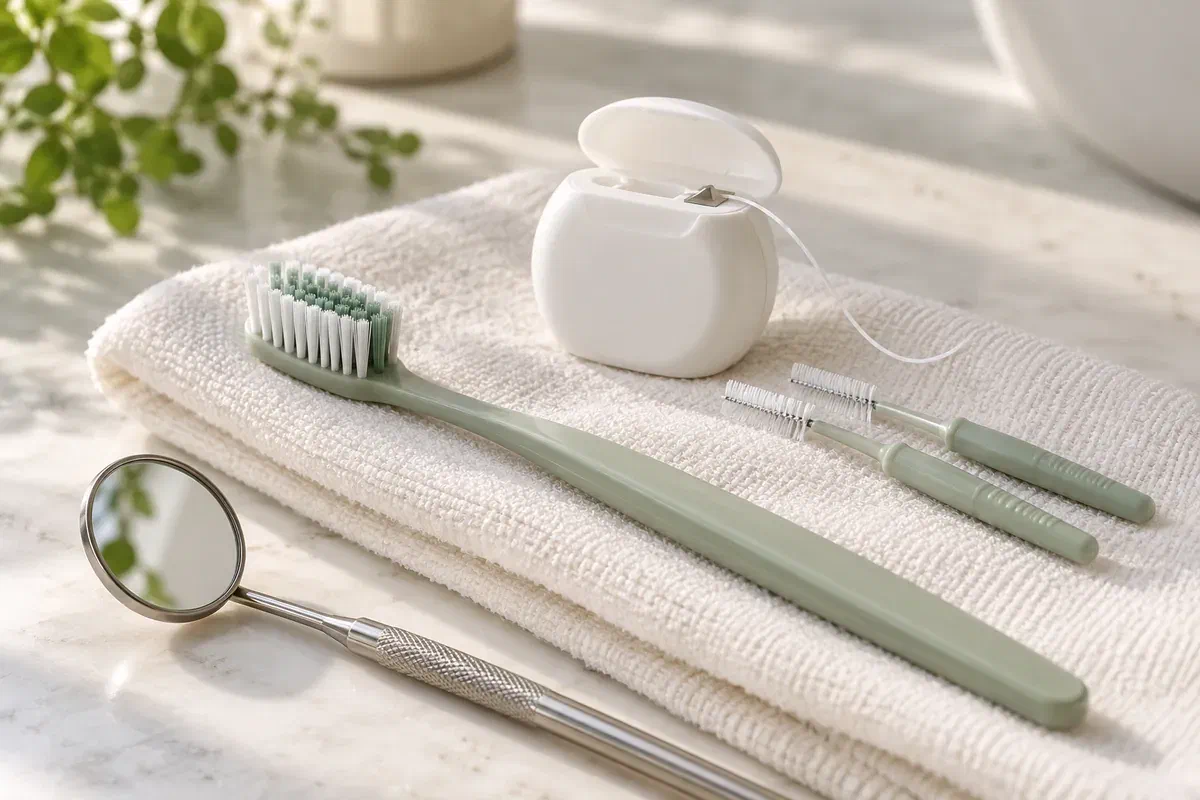
Illustrative soft toothbrush, floss, interdental brushes, and dental mirror on an ivory towel
Worth raising at your visit

What have you noticed, and where?

Location, timing and pattern all help. Say when the change began and whether it is steady or on and off, and mention any recent switch in products, new dental work, medication or health changes. The examination can then weigh which details are relevant.

Bleeding that a new toothpaste has not stopped

Tell us whether it happens in one place or many, and what you have already tried. The team can look at the tissue and at how you brush. Leaving a bleeding area alone tends to let plaque linger, while aggressive brushing brings problems of its own, so a demonstration is often the most useful step.

Gums that look swollen or feel sore in patches

Show us any area that seems puffy or tender, particularly beside fillings, crowns or spots where food gets stuck. Ask what the clinician thinks is causing it. A patch with its own local reason may need a targeted plan, not just more brushing.

Stale breath that mouthwash only covers

Breath that returns soon after rinsing can be linked to gum inflammation, but it can have other sources as well. Describe how long it has been going on and whether your mouth feels dry. Since a rinse can mask the issue, the change is worth bringing up for assessment.

Bleeding that happens without brushing, swelling that seems out of the ordinary, sores, or symptoms beyond your mouth are all worth telling us about. Gum problems are not always simple plaque-related gingivitis.

Why treatment helps

Fewer guesses, more targeted care

The value of a gingivitis visit lies in linking what the clinician finds to what you do at home. You should know which areas are inflamed, what cleaning we recommend and how we will judge progress. A difficult spot simply needs a better tool or technique; it says nothing about your effort.

A proper assessment also sets limits on the diagnosis. Gingivitis is reversible inflammation of the gums, while periodontitis involves lost attachment and calls for a different conversation. When the findings suggest more than gingivitis, ask how the plan changes and whether further assessment is worthwhile.

Patient information: NIDCR — plaque, gum inflammation, professional cleaning, and individualized treatment

Tartar removed where products cannot reach

No toothpaste or rinse can lift hardened deposits; that takes professional cleaning. Ask where tartar is present and what the cleaning includes. The amount of treatment should reflect the examination, not simply how long it has been since your last appointment.

Products and tools chosen with you

We can help you decide which brush, interdental aid or toothpaste makes sense, and which purchases you can skip. Ask to be shown how to use them at the sites that bleed. Spacing, dental work, dexterity and comfort all shape the right choice.

A planned check on progress

Rather than assuming a single cleaning finishes the job, plan to have the response reviewed. Ask when that should happen and what symptoms warrant an earlier call. If inflammation persists, the review can reconsider the diagnosis, deposits, local factors or how practical your routine has been.

What to expect

Here is how the visits usually go.

Knowing the order of things helps you prepare, particularly if you are fitting appointments around a working day in Burlington. Some people complete the assessment and cleaning in one sitting, while others need more than one appointment because of what is found or how comfortable they are.

  1. Bring your products and your questions

    Tell us where you see bleeding or redness and when it started, and feel free to bring the toothpaste, rinse or gadgets you have been using. We go over your health history and medications so the advice suits you and your real routine.

  2. A thorough gum examination

    The clinician checks the areas you mentioned and considers whether the findings fit gingivitis or something else. Measuring the gum around each tooth and taking images where appropriate can add to the picture. Ask which observations mattered most.

  3. Cleaning, comfort and coaching

    We talk through the recommended care, comfort options, fees and likely number of visits before starting. The cleaning removes the deposits identified, and we show you how to keep those areas clean at home. Tell us if anything feels sensitive or you need to pause.

  4. A follow-up to see what changed

    At the agreed interval, let us know what improved and what still feels hard to manage. We check the tissue response and refine your technique or tools. If the gums have not settled, ask what further evaluation or change in approach might help.

Home care that holds up

Simple tools, used well, every day.

Ask for clear directions on where and how to clean. A short routine is more likely to last when you understand why each step matters and the tools you have actually fit your teeth.

Brush the gumline with a gentle, angled stroke

Stick with the brush and fluoride toothpaste we discussed, and give extra attention to the areas we pointed out. If one spot is uncomfortable, tell us exactly where and which motion triggers it. A small change in angle often helps more than extra force.

Pick one interdental method and practise it

Floss, picks and small brushes each work differently, so ask which suits your spaces and how to guide it in gently. If it feels clumsy, bring it to your next appointment and we will help you adjust or switch.

Treat any rinse as a short-term, specific tool

If we suggest a rinse, check what it is meant to do, how many days or weeks to use it and whether there are cautions. A stronger rinse is not a fix for redness that will not settle. Keep up the cleaning plan and call us if symptoms continue or worsen.

Different findings, different care

Your examination decides which path fits.

Ask how the plan you are offered connects to what was seen. Gum-only inflammation, established periodontal damage and an unrelated tissue issue each call for a different response.

When plaque-related gingivitis is found

Cleaning and a focused home routine

Deposits are cleaned away and your daily routine is shaped around the inflamed areas. Ask how progress will be checked and what ongoing maintenance looks like. Clear instructions should cover both what happens in the chair and what you do at home.

When the tooth-supporting tissue is affected

Periodontal treatment beyond a standard cleaning

With periodontitis, ask how the diagnosis changes the plan. Options may include more thorough cleaning, reassessment, regular periodontal maintenance or a specialist's opinion. The reasoning should be tied to your findings, not to the assumption that every bleeding gum is the same.

When something else may be going on

A closer look at an unusual gum change

Local irritation, a health factor or a separate tissue condition can all play a part. Ask what remains unclear and whether a further examination or referral is advisable. Swapping products repeatedly without an answer is no substitute for a review.

Frequently asked

Products, cleanings and what really helps

Use these questions to turn general advice about gum care into a focused discussion of your diagnosis, the cleaning you need and how follow-up will work for you.

(905) 876-4488
Do gum-care toothpastes actually work?
Some toothpastes are formulated to support gum health, but no paste can remove hardened tartar or explain why an area is inflamed. Fluoride toothpaste with good technique is the foundation. Ask the team whether a particular product has a place in your plan.
Is an electric toothbrush better for gingivitis?
Either type can work well when used properly. Some people find a powered brush easier, especially with limited dexterity. Bring your brush to your appointment, and the clinician can check whether it is reaching the gumline effectively.
Can a water flosser replace floss or interdental brushes?
It may be a helpful option for some mouths, particularly around dental work, but suitability varies. Ask whether it fits your spaces and whether it should be used alongside another between-teeth aid rather than instead of one.
If I use mouthwash every day, can I skip flossing?
No. Rinsing cannot clean plaque off the sides of teeth the way mechanical cleaning does. If cleaning between your teeth is painful or causes heavy bleeding, contact us for guidance instead of stopping altogether.
My gums look worse after trying several products. What now?
Stop adding new items and book an assessment. Bring the products so the clinician can see what you have used. A different explanation, a local factor or a technique issue may be involved, and that is easier to find with a proper examination.
Does gingivitis always come from not brushing enough?
Plaque is a common cause, but technique, hard-to-reach dental work, dry mouth, hormonal changes and some health conditions can all play a part. The examination looks at the whole picture rather than assuming one reason.
Burlington gum care

Swap the guesswork for a clear answer.

Reach out to our Bronte Street practice about bleeding, redness or tender gums. Let us know what you have already tried so the appointment can focus on what still concerns you.

Your diagnosis, cleaning needs, review schedule and the way your gums respond will depend on the examination and your circumstances.

Visit Milton Dental Clinic
Unit 1, 342 Bronte St. S, Milton, ON L9T 5B7
Get directions Clinic hours
Monday–Thursday
11am–7pm
Friday–Sunday
By appointment only

Areas we serve

  • Milton
  • Oakville
  • Mississauga
  • Georgetown
  • Halton Hills
  • Acton
  • Campbellville
  • Brampton
  • Burlington
  • Puslinch
  • Rockwood
  • Erin
  • Caledon
  • Etobicoke
  • Old Milton
  • Bronte Meadows
  • Timberlea
  • Dorset Park
  • Dempsey
  • Clarke
  • Beaty
  • Coates
  • Harrison
  • Scott
  • Willmott
  • Ford
  • Bowes
  • Cobden
  • Walker
  • Mountain View
  • Milton Heights
  • Hawthorne Village
  • Valley View
  • Fallingbrook
  • Nassagaweya
  • Trafalgar
  • Esquesing
  • Nelson
  • Brookville
  • Moffat
  • Glen Williams
  • Norval
  • Limehouse
  • Stewarttown
  • Ashgrove
  • Hornby
  • Silver Creek
  • Speyside
  • Scotch Block
  • North Oakville
  • River Oaks
  • Glen Abbey
  • West Oak Trails
  • Palermo
  • Bronte Creek
  • College Park
  • Joshua Creek
  • Uptown Core
  • Preserve
  • Iroquois Ridge
  • Lisgar
  • Meadowvale
  • Meadowvale Village
  • Churchill Meadows
  • Erin Mills
  • Central Erin Mills
  • Streetsville
  • East Credit
  • Creditview
  • Heartland
  • Sheridan
  • Mount Pleasant
  • Credit Valley
  • Huttonville
  • Churchville
  • Springbrook
  • Northwest Brampton
  • Bram West
  • Fletcher's Meadow
  • Fletcher's Creek South
  • Alton Village
  • Orchard
  • Millcroft
  • Headon Forest
  • Tansley
  • Brant Hills
  • Tyandaga
  • Kilbride
  • Lowville
  • Aberfoyle
  • Morriston
  • Arkell
  • Hillsburgh
  • Freelton
  • Carlisle
  • Waterdown
  • Flamborough
  • Mountsberg

How can we help?

Milton Dental Clinic

Have a question about your smile? Choose the option that works best for you.

For urgent dental concerns, please call.
Messages are reviewed during clinic hours.