

Illustrative patient discussing gum health with a clinician and a small dental model
Specialized Care

Gingivitis Treatment in Erin

Most gingivitis care happens at home, at your own sink, long after the appointment ends. For people in Erin village, Hillsburgh and the surrounding countryside, we pair an examination and cleaning with a routine short enough to keep, so progress continues between visits.

Gingivitis care that travels home

A routine you will still be doing next month

Advice given in a dental chair can feel very manageable on the day and surprisingly hard to remember a fortnight later. That matters with gingivitis, an inflammation of the gums that typically shows as redness, puffiness or bleeding when you clean. Whatever happens at the appointment, the gums respond to what you do every morning and evening.

With plaque-related gingivitis, professional cleaning followed by steady home care often allows the tissue to recover. A routine only helps if the diagnosis is right, though. The examination checks whether inflammation is confined to the gums, whether periodontitis has affected the support around the teeth, or whether a different cause needs looking into.

When you travel from Erin, we try to make the time count. You tell us what you have noticed and what your current habits really are, including the days they slip. We examine your gums, explain what we see, and agree on a few steps that fit your mornings and evenings, along with a sensible review date.

Start a gum plan you can keep
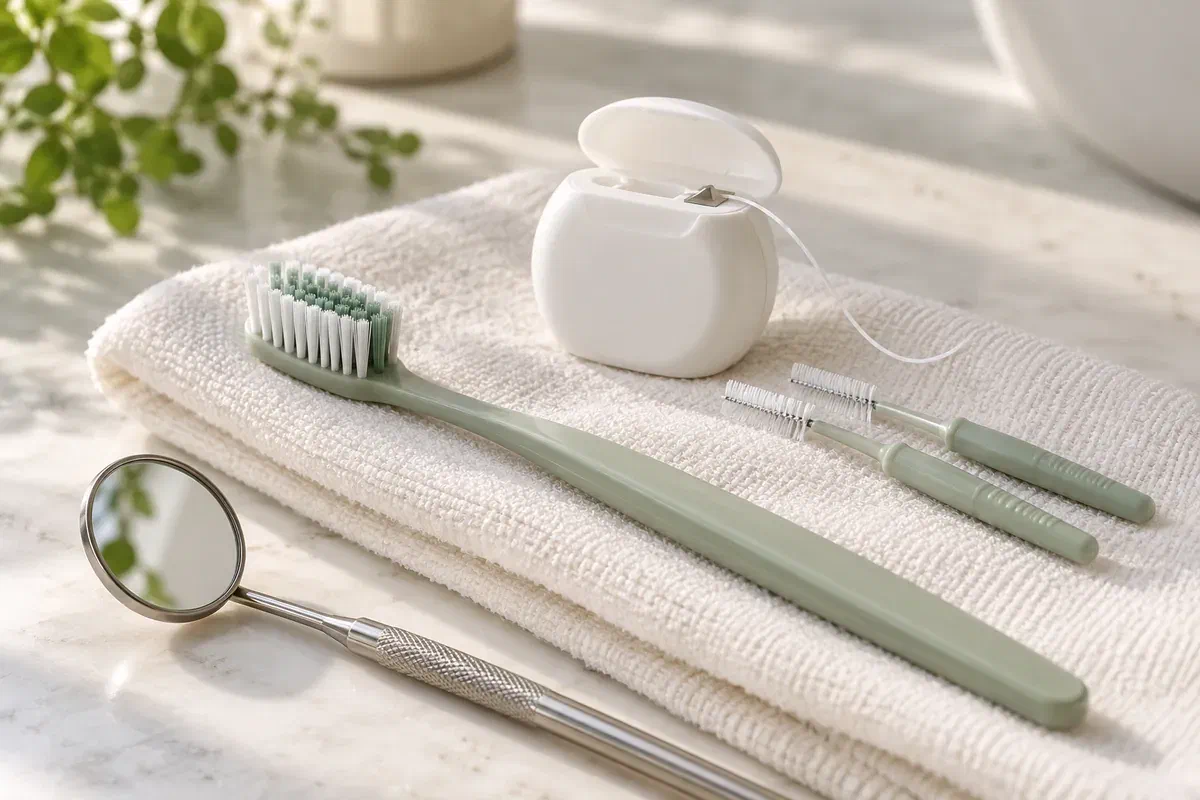
Illustrative soft toothbrush, floss, interdental brushes, and dental mirror on an ivory towel
Noticing changes at home

Your bathroom mirror is the first place to look.

Glance at the gumline now and then and note any spots that bleed, swell or look darker, when that started and whether it varies. Mention product changes, dental work, medicines or health changes, and let the examination decide which ones are relevant.

Bleeding that shows up on some days and not others

Intermittent bleeding is still worth mentioning. Tell us where it happens and whether it follows days when cleaning was rushed. Skipping a tender area or scrubbing it hard both tend to backfire, so a gentle, regular approach is usually the better habit.

Gum that looks swollen in one or two areas

Show us spots that look puffy or feel tender, especially near restorations or places food collects. These often turn out to be the areas your routine needs to focus on. A site with a local cause may need its own small adjustment rather than a longer routine overall.

Breath that changes through the day

Persistent bad breath can accompany gum inflammation, though other factors may be involved. Mention when you notice it and whether your mouth feels dry. Relying on a strong rinse may cover the issue, so it is better brought up at your visit.

Tell us about bleeding that happens without cleaning, unusual swelling, mouth sores or symptoms affecting the rest of your body. These point beyond everyday plaque-related gingivitis and need attention.

What you gain

Small habits, steady improvement

The best gingivitis plan is one that links your examination findings to a routine you can carry out on an ordinary, busy day. Ask which areas need attention, what cleaning we recommend and how we will tell if things are improving. Missing a day happens; the aim is a pattern you can return to easily.

A clear diagnosis also shapes what to expect. Gingivitis involves only the gums, while periodontitis means some of the tissue anchoring the teeth has been lost and leads to a different treatment discussion. If findings suggest more than gingivitis, ask how the plan changes and whether further assessment would help.

Patient information: NIDCR — plaque, gum inflammation, professional cleaning, and individualized treatment

A clean starting point

Professional cleaning removes the tartar that home care cannot. Ask where it had built up and what the cleaning involved. Its extent should follow the examination findings, not simply the length of time since your last appointment.

A short list of steps that fit your day

Rather than a long list, ask for the two or three steps that matter most for your mouth, demonstrated on the sites that bleed. Tools should suit your spacing, dental work, dexterity and comfort, so they become part of your day.

A review that keeps you on track

Plan a recheck and ask what would justify calling earlier. At the review, we can see what is working. If inflammation remains, we may question the original diagnosis, look for leftover tartar or a local trouble spot, or simplify the routine.

Visit by visit

Listen, examine, clean, then agree on the routine.

Each stage has a purpose, and knowing them helps you plan. Depending on the findings and your comfort, the assessment and cleaning may happen in one appointment or across two.

  1. Describe your real routine

    Describe where you see bleeding or redness and since when, and how you clean on a normal day and a rushed one. We go over your health history and medications. Honest detail helps us suggest changes you will actually keep.

  2. A thorough gum examination

    The clinician checks the areas of concern and determines whether the picture fits gingivitis, periodontitis or another condition. Measurements and images may help where appropriate. Ask what the key findings are and how they shape the plan.

  3. Cleaning and a practical routine

    Before treatment, we explain what is planned, how comfort is managed, the fees and expected visits. Cleaning removes the deposits identified, and then we agree on a short routine and practise it together. Tell us if an area is tender or you need a break.

  4. Review and simplify if needed

    At your follow-up, share what you kept doing and what fell away. We check how the gums have responded and adjust the routine so it is easier to sustain. If the tissue has not settled, ask about further evaluation or a different approach.

Morning and evening

Two minutes at the gumline, a few seconds between each tooth

Ask for instructions you can remember without a leaflet. A short routine sticks when each step has a clear reason and your tools are easy to reach and comfortable to use.

Brush where tooth meets gum

A soft brush and fluoride toothpaste, tilted toward the gum, is the core of it. Give the areas we pointed out a few extra seconds each time. If a spot is uncomfortable, note where and which movement bothers it so we can check it at your review. Gentle and thorough beats firm and quick.

Keep your interdental aid where you will see it

Leaving floss or brushes beside your toothbrush makes them harder to forget. Ease them in gently. If the aid is awkward, bring it to your review so we can find something that suits you better.

Use a rinse only when there is a reason

If a rinse is recommended, ask what job it does, when to stop and whether the label carries warnings. It does not replace brushing or cleaning between teeth. Keep the routine going and contact us if symptoms remain or worsen.

Matching the plan to the problem

Routine first, or something more?

Ask how the recommended approach follows from your examination. Gum-only inflammation, lasting periodontal damage and a change with a different cause each lead to their own plan.

When plaque-related gingivitis is diagnosed

Professional cleaning with a few daily steps

We remove the buildup, then settle on a handful of habits aimed at the sites that bled. You will know when the gums are due for a recheck and roughly how often cleanings should follow. Both halves, what we do at the visit and what you do at your own sink, should be written down or explained clearly enough to remember.

When supporting tissue is involved

Periodontal treatment and maintenance

If periodontitis is found, ask how that changes things. More thorough cleaning, reassessment, periodontal maintenance or a specialist's input may be discussed. The plan should be explained using your findings.

When the cause may lie elsewhere

Further evaluation of an unusual change

Irritation from dental work, a health factor or a separate tissue condition could be behind it. Find out what is still unclear and whether another examination or referral is advisable. A change that persists deserves review, not a cupboard of new products.

Routine questions

Keeping gum care going at home

These questions can help you turn advice from the chair into a home routine that suits your gums and your days.

(905) 876-4488
How long should I spend brushing each time?
A common guideline is about two minutes, twice a day, with attention to the gumline. The time matters less than reaching every surface gently. Ask the team whether any area needs extra focus in your case.
Is once a day enough for cleaning between my teeth?
Once a day is a common recommendation, but your clinician may advise differently depending on your findings. What matters most is that it happens regularly and reaches the areas that bleed.
What should I do if I miss a few days of my routine?
Simply pick it back up without trying to make up for lost time by brushing harder. Some bleeding may return when you restart; gentle, regular cleaning usually helps it ease again. If bleeding is heavy or persists, contact the team.
Is there anything I can do at night to help my gums?
Cleaning thoroughly before bed, including between the teeth, is often recommended. If you have a dry mouth at night, mention it, since it may affect your gums and comfort.
Can diet affect gingivitis?
Frequent snacking on sugary or starchy foods can feed plaque bacteria. A balanced diet supports general health. Ask the team whether any habits might be contributing to your gum inflammation.
How can I plan reviews from Erin without too many trips?
Ask the team to book your review before you leave and mention your schedule. Depending on findings and comfort, steps may sometimes be combined. Call ahead if anything changes so the visit can be adjusted.
Booking from Erin

Let us help you set up a routine that sticks.

Contact our Bronte Street practice to discuss red, bleeding or tender gums. Tell us what your current routine looks like so we can start from where you are.

Your diagnosis, cleaning needs, review timing and response depend on the examination and your individual circumstances.

Visit Milton Dental Clinic
Unit 1, 342 Bronte St. S, Milton, ON L9T 5B7
Get directions Clinic hours
Monday–Thursday
11am–7pm
Friday–Sunday
By appointment only

Areas we serve

  • Milton
  • Oakville
  • Mississauga
  • Georgetown
  • Halton Hills
  • Acton
  • Campbellville
  • Brampton
  • Burlington
  • Puslinch
  • Rockwood
  • Erin
  • Caledon
  • Etobicoke
  • Old Milton
  • Bronte Meadows
  • Timberlea
  • Dorset Park
  • Dempsey
  • Clarke
  • Beaty
  • Coates
  • Harrison
  • Scott
  • Willmott
  • Ford
  • Bowes
  • Cobden
  • Walker
  • Mountain View
  • Milton Heights
  • Hawthorne Village
  • Valley View
  • Fallingbrook
  • Nassagaweya
  • Trafalgar
  • Esquesing
  • Nelson
  • Brookville
  • Moffat
  • Glen Williams
  • Norval
  • Limehouse
  • Stewarttown
  • Ashgrove
  • Hornby
  • Silver Creek
  • Speyside
  • Scotch Block
  • North Oakville
  • River Oaks
  • Glen Abbey
  • West Oak Trails
  • Palermo
  • Bronte Creek
  • College Park
  • Joshua Creek
  • Uptown Core
  • Preserve
  • Iroquois Ridge
  • Lisgar
  • Meadowvale
  • Meadowvale Village
  • Churchill Meadows
  • Erin Mills
  • Central Erin Mills
  • Streetsville
  • East Credit
  • Creditview
  • Heartland
  • Sheridan
  • Mount Pleasant
  • Credit Valley
  • Huttonville
  • Churchville
  • Springbrook
  • Northwest Brampton
  • Bram West
  • Fletcher's Meadow
  • Fletcher's Creek South
  • Alton Village
  • Orchard
  • Millcroft
  • Headon Forest
  • Tansley
  • Brant Hills
  • Tyandaga
  • Kilbride
  • Lowville
  • Aberfoyle
  • Morriston
  • Arkell
  • Hillsburgh
  • Freelton
  • Carlisle
  • Waterdown
  • Flamborough
  • Mountsberg

How can we help?

Milton Dental Clinic

Have a question about your smile? Choose the option that works best for you.

For urgent dental concerns, please call.
Messages are reviewed during clinic hours.