

Illustrative patient discussing gum health with a clinician and a small dental model
Specialized Care

Gingivitis Treatment in Georgetown

Treating gingivitis is not a single event; it is a short cycle of assessment, cleaning, home care and a check on how your gums responded. For people coming down from Georgetown, we explain each stage, including what improvement should look like and what happens if it does not arrive.

Measuring gum health

How will we know your gums are improving?

That question is a good place to begin, because gingivitis care works best when everyone knows what success means. Inflamed gums tend to bleed easily, look redder or puffier than usual and sometimes feel tender. As the tissue settles, those signs usually lessen, and the review appointment is where that change is checked rather than assumed.

First, though, the examination must establish what is going on. Plaque-related gingivitis can often recover with professional cleaning and dependable care at home. Periodontitis, which involves the structures that hold the teeth, needs a broader plan, and an occasional gum change has an entirely different cause. Knowing which applies sets realistic expectations from the outset.

With people from Georgetown, we talk through what you have seen and how you currently clean, record the findings and explain them plainly. You leave with a picture of where the inflammation is, what we will do about it and how we will judge, together, whether the plan is working.

Start with a gum assessment
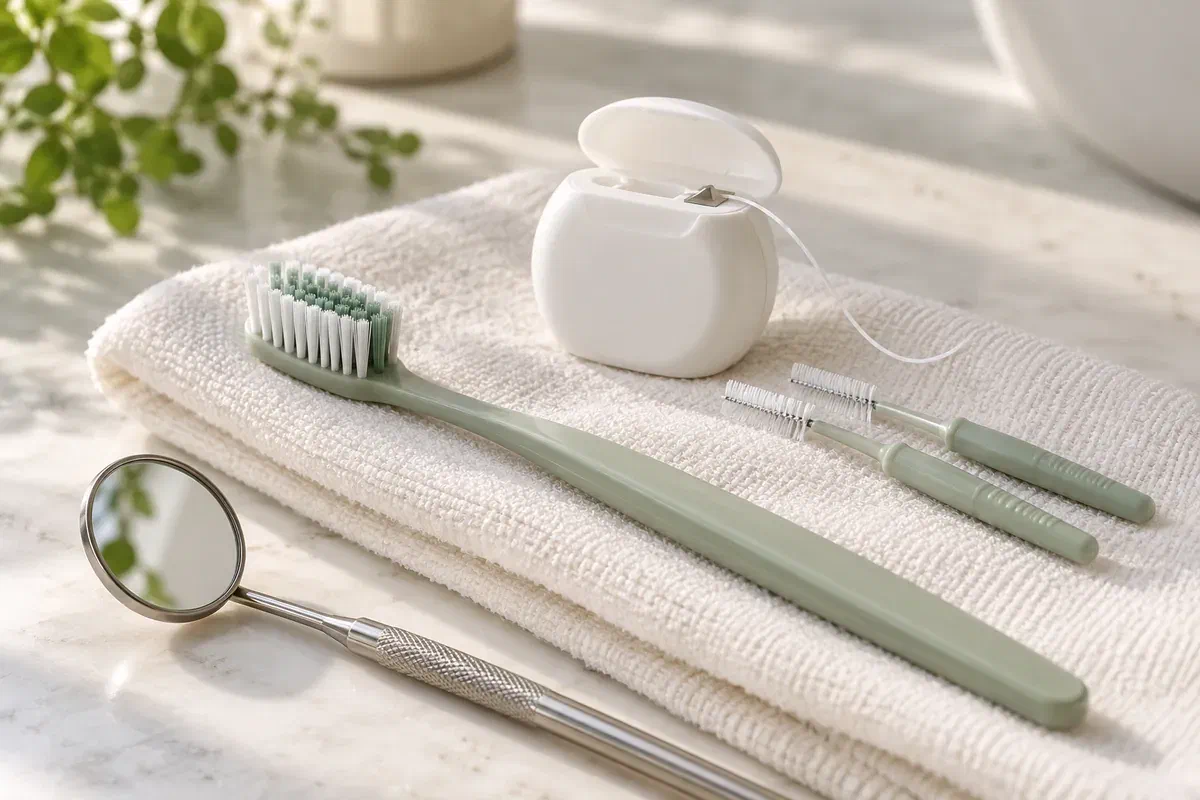
Illustrative soft toothbrush, floss, interdental brushes, and dental mirror on an ivory towel
Your starting point

Record the changes so you can compare later.

Notes on where the bleeding or redness occurs, when it began and whether it fluctuates help at the first visit and again at the review. Mention any new products, dental work, medications or changes in your health too.

How much, and where, your gums bleed

It can help to notice whether bleeding happens every time or only sometimes, and in which areas. Share that with the clinician, who can also observe your technique. Gentle, consistent cleaning is usually more helpful than either avoiding a site or scrubbing at it.

Areas of swelling or tenderness

Point out the spots that look puffy or feel sore, including near restorations or food traps. These sites are often the ones to watch at the review. A specific area may need a tailored approach rather than a general reminder about brushing.

Ongoing changes in breath

Bad breath that persists may be related to gum inflammation, although it can have other causes. Tell us how long you have noticed it and whether dryness or discomfort comes with it. Covering it with mouthwash makes it harder to track, so raise it at the assessment.

Spontaneous bleeding, unusual swelling, sores or symptoms elsewhere in your body deserve a mention. Not every gum complaint follows the pattern of ordinary plaque-related gingivitis.

What progress looks like

Less bleeding, calmer tissue and a routine you trust

A clear plan links today's findings with tomorrow's routine and the next check. You should hear where the inflammation sits, what cleaning is recommended and which signs we will compare at the review. If one area is slow to improve, that is useful information, not a mark against you.

Understanding the diagnosis also tells you what kind of improvement is realistic. Gingivitis affects the gums alone, whereas periodontitis involves loss of supporting tissue that changes the discussion. If the findings suggest the latter, ask how the plan and its goals change and whether more assessment is needed.

Patient information: NIDCR — plaque, gum inflammation, professional cleaning, and individualized treatment

A clean baseline

Professional cleaning removes the hardened deposits that home care cannot. Ask where they were and what the cleaning involved. The extent should reflect the examination; an overdue appointment does not on its own justify a more extensive procedure.

Home habits you can measure yourself

Ask for a demonstration at the sites that bleed, and pay attention to whether bleeding there lessens over the following weeks. Tools should suit your spacing, dental work, dexterity and comfort so the routine can be repeated reliably.

A review with something to compare

Agree on when the gums will be rechecked and what would warrant coming in sooner. At the review, the clinician compares the tissue with the earlier findings. If inflammation persists, the diagnosis, deposits, local factors or the routine may need reconsidering.

The treatment cycle

Assess, clean, practise and compare.

Each stage builds on the one before. Depending on what is found and how comfortable you are, the assessment and the cleaning might happen together or in separate appointments, with a review afterward.

  1. Set the baseline

    Tell us where you notice bleeding or redness, how long it has been happening and what you use to clean. We go through your medical history and medications. Your description becomes part of the picture we compare against later.

  2. Record the gum findings

    The clinician examines the areas of concern and judges whether the picture fits gingivitis or points elsewhere. Gum measurements and images, where relevant, help document the starting point. Ask which findings will matter most at the review.

  3. Treat and teach

    Before we begin, you will hear what is planned, how comfort is handled, what it costs and how many visits to expect. Cleaning removes the deposits identified, and a demonstration helps you continue at home. Say so if a site is sensitive or you need a break.

  4. Compare and decide

    At the recommended interval, the clinician checks the gums against the earlier findings and asks what you have noticed. If things have improved, we discuss maintenance. If not, we look at whether more evaluation or a different approach is needed.

The weeks after cleaning

Your daily routine is where improvement happens.

Ask for clear instructions on where and how to clean, and what you should expect to notice. A short, steady routine with comfortable tools is more likely to show results by the time of your review.

Brush gently at the gumline every day

Use the brush and fluoride toothpaste we discussed, concentrating on the areas we highlighted. If a spot hurts, note where and which motion causes it so we can check. A small technique change often helps more than extra pressure.

Keep up between-teeth cleaning

Use the interdental aid we suggested and guide it in without forcing, even on days when time is short. If it becomes difficult, bring it to your review so we can check the size and method. Watching whether bleeding at those sites lessens is a useful sign to report.

Follow any rinse instructions as given

If you were advised to use a rinse, keep to the stated purpose, length of use and cautions. A stronger product does not speed up healing on its own. Continue cleaning as planned and contact us if symptoms persist or become uncomfortable.

Plans and expectations

Different diagnoses lead to different goals.

Ask how the suggested approach connects to your findings and what improvement it aims for. Gingivitis alone, established periodontal damage and an unrelated gum condition each set a different course.

When the diagnosis is plaque-related gingivitis

Cleaning and a targeted routine

Deposits are removed and your routine focuses on the inflamed areas. Ask when the gums will be reviewed and what maintenance is suitable afterwards. Both the in-office care and your daily habits should be clearly explained.

When supporting tissue is affected

Periodontal treatment with ongoing monitoring

If periodontitis is identified, ask how treatment and its goals change. More thorough cleaning, reassessment, regular periodontal maintenance or a specialist referral may be part of the plan. The reasoning should be grounded in your own findings.

When the gums do not behave as expected

Further evaluation if the response is unexpected

A local irritant, a health factor or another tissue condition may explain a slow or unusual response. Ask what remains unclear and whether further examination or referral is sensible. Repeated product changes are not a substitute for a diagnosis.

Questions about progress

What to expect after gingivitis treatment

These questions can help you understand what improvement may look like, how it is checked and when it makes sense to change course.

(905) 876-4488
How long does it take for inflamed gums to settle?
It varies with the cause, the amount of buildup and how consistently the areas are cleaned afterwards, so there is no fixed timeline. Your clinician can suggest when a review makes sense. Ask what signs of improvement to look for in the meantime, such as less bleeding at the sites that were inflamed.
Is some bleeding normal in the first days after a cleaning?
Gums can be a little tender or bleed slightly after a professional cleaning. Keep cleaning gently as shown. If bleeding is heavy, does not ease or comes with swelling or pain, contact the team.
What will the clinician check at my review appointment?
Typically they look at the tissue, check the areas that were inflamed and compare with the earlier findings. They may also ask about your routine and any difficulties. Bring up anything that has changed since your last visit.
What happens if my gums have not improved by the review?
The clinician may look again at whether the diagnosis was right, whether tartar remains, whether something local is interfering, or whether the routine has been workable. Sometimes further evaluation or a different approach is needed. Persistent redness does not automatically mean you must brush harder.
Can my teeth feel sensitive after a gum cleaning?
Some people notice temporary sensitivity after deposits are removed. Mention it to the team, especially if it persists or is significant. They can suggest suitable measures and check whether anything else needs attention.
How often will I need cleanings once my gums are healthier?
The maintenance interval depends on your findings, history and how well the gums respond. Ask the clinician to explain the recommended schedule and what would prompt a change. If you are coming from Georgetown, booking the next visit before you leave can make the schedule easier to keep.
Gingivitis care for Georgetown

Begin with a clear baseline.

Reach our Bronte Street practice to discuss bleeding, redness or soreness at the gumline. Tell us what you have noticed so the first visit can start with the areas you most want checked.

The diagnosis, cleaning involved, timing of reviews and the response you can expect all vary with the examination and your own circumstances.

Visit Milton Dental Clinic
Unit 1, 342 Bronte St. S, Milton, ON L9T 5B7
Get directions Clinic hours
Monday–Thursday
11am–7pm
Friday–Sunday
By appointment only

Areas we serve

  • Milton
  • Oakville
  • Mississauga
  • Georgetown
  • Halton Hills
  • Acton
  • Campbellville
  • Brampton
  • Burlington
  • Puslinch
  • Rockwood
  • Erin
  • Caledon
  • Etobicoke
  • Old Milton
  • Bronte Meadows
  • Timberlea
  • Dorset Park
  • Dempsey
  • Clarke
  • Beaty
  • Coates
  • Harrison
  • Scott
  • Willmott
  • Ford
  • Bowes
  • Cobden
  • Walker
  • Mountain View
  • Milton Heights
  • Hawthorne Village
  • Valley View
  • Fallingbrook
  • Nassagaweya
  • Trafalgar
  • Esquesing
  • Nelson
  • Brookville
  • Moffat
  • Glen Williams
  • Norval
  • Limehouse
  • Stewarttown
  • Ashgrove
  • Hornby
  • Silver Creek
  • Speyside
  • Scotch Block
  • North Oakville
  • River Oaks
  • Glen Abbey
  • West Oak Trails
  • Palermo
  • Bronte Creek
  • College Park
  • Joshua Creek
  • Uptown Core
  • Preserve
  • Iroquois Ridge
  • Lisgar
  • Meadowvale
  • Meadowvale Village
  • Churchill Meadows
  • Erin Mills
  • Central Erin Mills
  • Streetsville
  • East Credit
  • Creditview
  • Heartland
  • Sheridan
  • Mount Pleasant
  • Credit Valley
  • Huttonville
  • Churchville
  • Springbrook
  • Northwest Brampton
  • Bram West
  • Fletcher's Meadow
  • Fletcher's Creek South
  • Alton Village
  • Orchard
  • Millcroft
  • Headon Forest
  • Tansley
  • Brant Hills
  • Tyandaga
  • Kilbride
  • Lowville
  • Aberfoyle
  • Morriston
  • Arkell
  • Hillsburgh
  • Freelton
  • Carlisle
  • Waterdown
  • Flamborough
  • Mountsberg

How can we help?

Milton Dental Clinic

Have a question about your smile? Choose the option that works best for you.

For urgent dental concerns, please call.
Messages are reviewed during clinic hours.