

Illustrative patient discussing gum health with a clinician and a small dental model
Specialized Care

Gingivitis Treatment in Mississauga

Sometimes the whole problem seems to live in one gap: food packs in, the gum swells, and floss comes out pink. Gingivitis care for people travelling from Mississauga looks at that site in detail, cleans what has built up and shows you how to keep it healthy.

When one gap causes trouble

The same spot, every time you floss

Food catches between two back teeth after dinner. You pick it out, the gum there feels a little tender, and the next morning it bleeds again. Inflammation that keeps returning to one site is a classic way gingivitis shows itself, and it deserves a look even when the rest of your mouth seems fine.

Gingivitis means the gum tissue is inflamed. When plaque collecting in a hard-to-reach place is the reason, the area often recovers once deposits are professionally removed and you have a cleaning method that actually gets in there. A localized problem can also have other causes, such as a gap that lets food pack in, an edge on a filling or loss of supporting tissue. The examination helps tell these apart.

From Meadowvale, Churchill Meadows or elsewhere in Mississauga, the first visit begins with you showing us the spot. We look at the tissue, the teeth on either side and how you have been cleaning it, then explain what we found and what the plan for that site, and the rest of your mouth, should involve.

Have that stubborn spot assessed
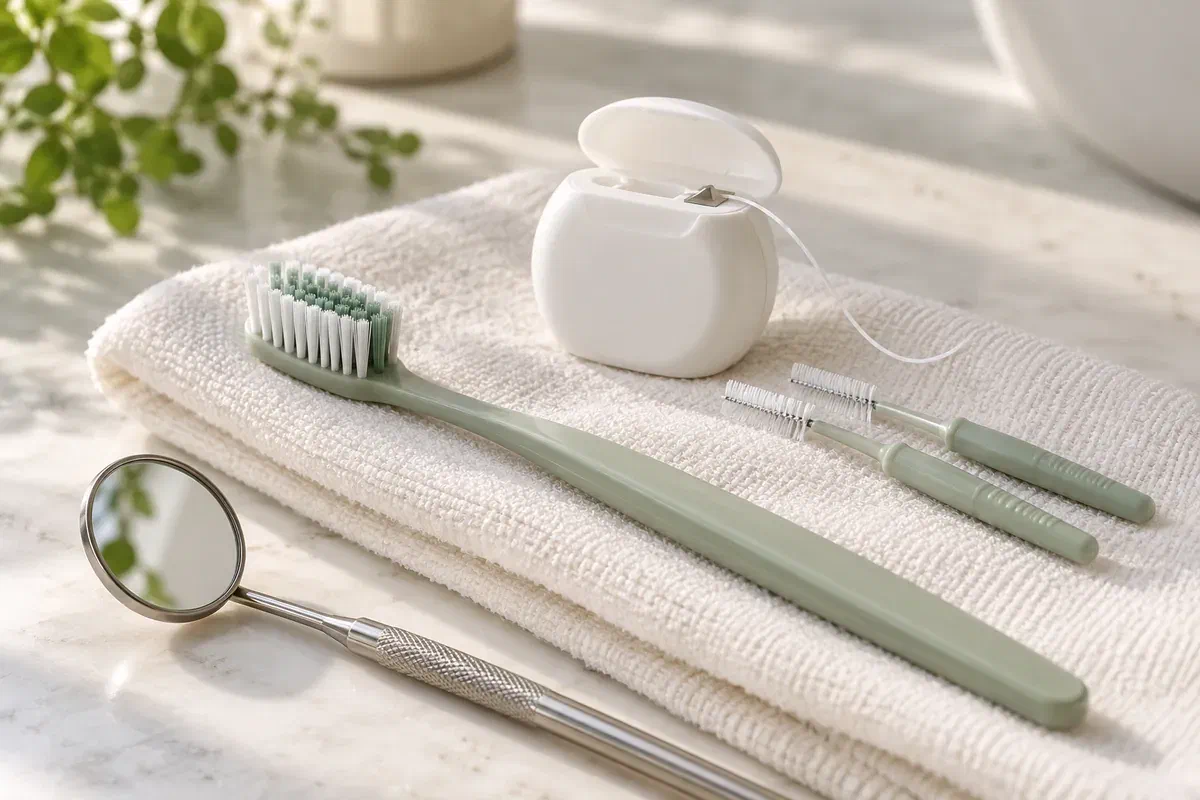
Illustrative soft toothbrush, floss, interdental brushes, and dental mirror on an ivory towel
Clues the clinician can use

Tell us exactly where it happens.

Precise details help more than general ones. Mention which teeth are involved, when you first noticed the change and whether it is constant or flares up after certain foods. Recent dental work, medicines and health changes are also worth sharing.

One site that bleeds when you clean

Point to the exact location and say whether other areas ever bleed too. Ask the clinician to watch how you clean it. Avoiding the site can let plaque settle in, while digging at it with a pick may bruise the tissue, so the right technique matters.

Swelling where food tends to pack

Food trapping can be a sign of a gap between teeth, a worn contact or a restoration edge. Mention which foods cause it and how often. That kind of local factor may need its own attention in addition to cleaning, rather than a general reminder to floss more.

A bad taste coming from one area

An unpleasant taste or odour that seems to come from a particular spot can go along with gum inflammation, though it does not pin down a cause on its own. Describe it at your visit instead of relying on a strong rinse, which may hide a clue the examination could use.

Mention bleeding that occurs without any cleaning, swelling that looks unusual, sores, or symptoms affecting your general health. A gum problem is not always routine plaque-related gingivitis.

Goals of care

Settle the inflamed site and keep it clean.

Effective treatment ties the clinical findings to something you can do every day. Ask which site, or sites, need attention, what cleaning is planned and how we will know whether the gum is improving. A spot that is genuinely hard to reach is a practical puzzle, not a sign you have been careless.

The assessment also helps confirm what is and is not going on. Gingivitis affects the gums alone, whereas periodontitis includes a loss of the tissue that holds the tooth in place and needs a different conversation. If findings at that site go beyond gingivitis, ask how the plan changes.

Patient information: NIDCR — plaque, gum inflammation, professional cleaning, and individualized treatment

Professional cleaning of trapped deposits

Once plaque hardens into tartar, it has to be removed professionally. Ask where it has built up and what the cleaning will involve. The scope should follow your findings; how long it has been since your last cleaning does not on its own explain a more extensive procedure.

The right size of tool for the gap

Interdental brushes come in many sizes, and floss suits some spaces better than others. Have us demonstrate on the exact site that bleeds. Spacing, restorations and your comfort should guide the choice so you can repeat it daily.

A check to confirm the site has settled

Plan to have the area reviewed rather than assuming one visit is enough. Ask when to come back and what should prompt an earlier call. If the inflammation persists, the review can reconsider the diagnosis, remaining deposits, a local factor such as food trapping or how workable the routine is.

How care proceeds

Show us, let us examine, then clean and review.

Each stage has its own purpose, and knowing them helps you ask the right questions. The assessment and cleaning might happen together or over separate visits, depending on what is found and how comfortable you feel.

  1. Point out the site and your routine

    Show us where the bleeding or swelling is, how long it has been happening and what you use to clean there. We go through your medical history and medications. Bring the floss, pick or brush you have been using so we can see what works and what does not.

  2. Examine the area and the teeth around it

    The clinician examines the gum, the neighbouring teeth and any dental work at that site, and considers whether the findings fit gingivitis or something else. Gum measurements and images may be used where relevant. Ask what stands out and what it suggests.

  3. Remove deposits and practise the technique

    Before starting, we set out what we plan to do, how we keep you comfortable, what it costs and how many visits it may take. Cleaning removes the deposits found, and then we practise reaching the site together so the method feels familiar at home. Mention any tenderness or if you need a pause.

  4. Recheck the site

    Come back at the interval we suggest and tell us whether bleeding has eased and how cleaning has gone. We look at the tissue response and fine-tune your approach. If the site has not settled, ask what further evaluation or change is appropriate.

Daily care for a tricky spot

Reach the gap gently, once a day, every day.

Ask for instructions that cover the exact site and how to clean it. A routine you can manage in a minute or two is more likely to stick when the tool fits and each step makes sense.

Brush toward the gumline at that tooth

Use the brush and fluoride toothpaste we recommended, tilting the bristles toward the gum at the area we discussed. If it is sore, tell us which tooth and which stroke causes it. A slight change of angle or a second look at the tissue is better than scrubbing.

Clean the gap with the aid you were shown

Slide the interdental brush or floss in without forcing it. If it feels too tight or too loose, bring it back so we can check the size. There is usually another option if the first one does not suit the space.

Keep rinses in their place

If we suggest a rinse, find out its purpose, the number of days to use it and any label cautions. It will not clear food from a gap or replace cleaning. Stick with the routine and call us if the site remains sore or becomes more uncomfortable.

Approaches that match the cause

Local cause, local plan; broader cause, broader plan.

Ask how the recommendation connects to your findings. Gum inflammation at one site, established periodontal damage and an unrelated tissue concern are each managed in their own way.

When plaque-related gingivitis explains the findings

Cleaning with site-specific home care

Deposits are removed and your routine is built around the problem site and any others found. Ask how progress will be reviewed and what maintenance makes sense. You should know both what we do at the visit and what you need to do at home.

When supporting tissue has been affected

A periodontal plan for deeper involvement

Should periodontitis be found, ask how it alters the approach. More thorough cleaning, reassessment, periodontal maintenance or a specialist's input may be discussed. The plan should reflect what was seen rather than treating every bleeding area as identical.

When the site needs a different explanation

Addressing a local factor or another cause

A food trap, a rough filling edge, a health factor or another tissue condition could be the real issue. Ask what is still uncertain and whether further examination or referral is sensible. A spot that will not settle deserves a review, not another product.

Questions we hear

When the problem is mostly in one place

These questions can help you turn a vague reminder to look after your gums into a clear conversation about your diagnosis, the cleaning you need and the follow-up that suits you.

(905) 876-4488
Why does food keep getting stuck in the same place?
It can happen when there is a gap between teeth, a contact that has opened up or an uneven filling edge. Trapped food can irritate the gum. The clinician can examine the site and explain whether something there should be addressed beyond cleaning.
Can one inflamed spot be gingivitis if the rest of my gums look healthy?
Yes. Gingivitis can be localized. Show the team exactly where it is and mention any dental work nearby. The examination will clarify whether the problem is limited to that site or more widespread than it appears.
Is it safe to use a toothpick on a sore gum?
Prodding at inflamed tissue can irritate it further. Ask which tool is suitable for that gap and how to use it gently. If a wooden pick is your usual choice, bring it along and the clinician can check whether it suits the space.
Could my bite or a worn filling be involved?
Restorations and the way teeth meet can affect how plaque and food collect. Mention any filling or crown near the sore area. The examination can show whether a local factor contributes and what options exist to address it.
Will the bleeding at that site stop after one cleaning?
It may improve, but that depends on the cause and how consistently the area is cleaned afterwards. The review appointment checks the response. If the gum is still inflamed, the plan can be adjusted rather than repeated.
How can I fit a gum review around a Mississauga work schedule?
Mention your availability when booking, including the evenings we are open. Where it suits your findings and comfort, an assessment and cleaning may be arranged together, and the team can explain when a separate visit is needed.
Arranging a visit from Mississauga

Bring the spot that keeps bothering you.

Contact our Bronte Street practice to talk about a gum area that bleeds, swells or traps food. Point it out at the start of your visit so the appointment begins where it matters most.

The diagnosis, cleaning required, timing of reviews and how the site responds will depend on your examination and circumstances.

Visit Milton Dental Clinic
Unit 1, 342 Bronte St. S, Milton, ON L9T 5B7
Get directions Clinic hours
Monday–Thursday
11am–7pm
Friday–Sunday
By appointment only

Areas we serve

  • Milton
  • Oakville
  • Mississauga
  • Georgetown
  • Halton Hills
  • Acton
  • Campbellville
  • Brampton
  • Burlington
  • Puslinch
  • Rockwood
  • Erin
  • Caledon
  • Etobicoke
  • Old Milton
  • Bronte Meadows
  • Timberlea
  • Dorset Park
  • Dempsey
  • Clarke
  • Beaty
  • Coates
  • Harrison
  • Scott
  • Willmott
  • Ford
  • Bowes
  • Cobden
  • Walker
  • Mountain View
  • Milton Heights
  • Hawthorne Village
  • Valley View
  • Fallingbrook
  • Nassagaweya
  • Trafalgar
  • Esquesing
  • Nelson
  • Brookville
  • Moffat
  • Glen Williams
  • Norval
  • Limehouse
  • Stewarttown
  • Ashgrove
  • Hornby
  • Silver Creek
  • Speyside
  • Scotch Block
  • North Oakville
  • River Oaks
  • Glen Abbey
  • West Oak Trails
  • Palermo
  • Bronte Creek
  • College Park
  • Joshua Creek
  • Uptown Core
  • Preserve
  • Iroquois Ridge
  • Lisgar
  • Meadowvale
  • Meadowvale Village
  • Churchill Meadows
  • Erin Mills
  • Central Erin Mills
  • Streetsville
  • East Credit
  • Creditview
  • Heartland
  • Sheridan
  • Mount Pleasant
  • Credit Valley
  • Huttonville
  • Churchville
  • Springbrook
  • Northwest Brampton
  • Bram West
  • Fletcher's Meadow
  • Fletcher's Creek South
  • Alton Village
  • Orchard
  • Millcroft
  • Headon Forest
  • Tansley
  • Brant Hills
  • Tyandaga
  • Kilbride
  • Lowville
  • Aberfoyle
  • Morriston
  • Arkell
  • Hillsburgh
  • Freelton
  • Carlisle
  • Waterdown
  • Flamborough
  • Mountsberg

How can we help?

Milton Dental Clinic

Have a question about your smile? Choose the option that works best for you.

For urgent dental concerns, please call.
Messages are reviewed during clinic hours.