

Illustrative patient discussing gum health with a clinician and a small dental model
Specialized Care

Gingivitis Treatment in Old Milton

Gums often show irritation first around the crowns, bridges and fillings that have served you for years. Gingivitis care for Old Milton looks closely at those edges, removes what has built up, and shows you how to keep older dental work and the tissue around it clean.

Old Milton gum care

Why does the gum beside my crown look different?

It is a question many people ask after years of dental work. The tissue next to a crown, under a bridge or along an older filling can look redder or feel puffier than the rest of the mouth. That can be gingivitis, which is inflammation of the gums, and it is worth checking even when nothing aches.

Plaque likes to collect where a restoration meets the tooth, and when that is the main cause, professional cleaning combined with consistent home care often helps the gum settle. Other explanations are possible, though. An examination can tell apart inflammation confined to the gumline, periodontitis affecting the structures that support the tooth, and a problem with the restoration itself or another tissue concern.

Many people in Milton's historic downtown have long dental histories, and that history is useful. We ask what work you have had, how you clean around it and what has changed lately. From there, we explain what we find, which areas need the most attention and what a sensible follow-up looks like.

Have the gums around your dental work checked
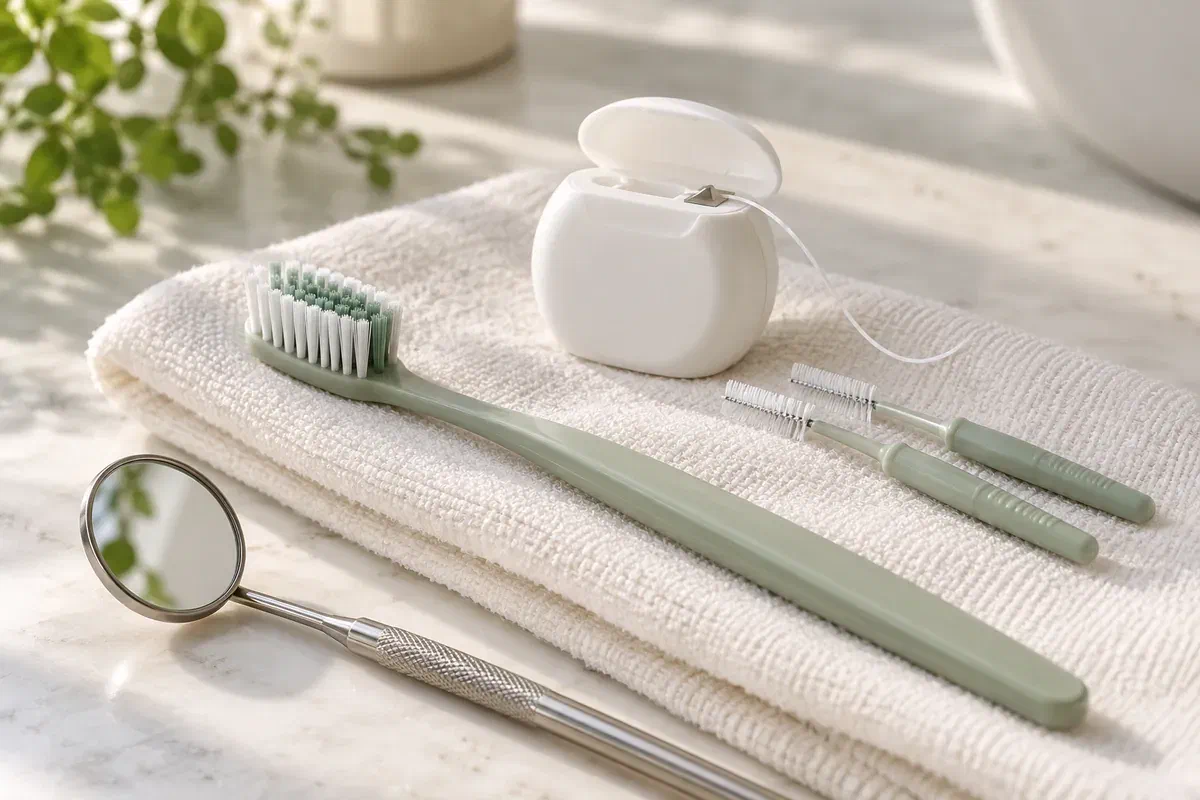
Illustrative soft toothbrush, floss, interdental brushes, and dental mirror on an ivory towel
What to point out

Bring up any spot that bleeds, swells or tastes off.

Describe the location, how long it has been going on and whether it is constant or occasional. A recent filling, a loose-feeling crown, a new medicine or a health change could all be relevant, so mention them and let the examination determine which one matters.

Bleeding along the edge of a restoration

Say whether it happens at one crown or filling or around several teeth. The clinician can check the tissue and the margin of the dental work. Avoiding the area lets plaque stay put, while scrubbing it hard can irritate the gum further, so a demonstration of a suitable method helps.

Tender or swollen tissue under a bridge

The space beneath a bridge, or between a crown and its neighbour, can be tricky to reach. Point out where food tends to lodge or the gum looks puffy. That one awkward site may need its own cleaning tool and plan, rather than the general advice to brush more often.

A bad taste or breath that lingers

A persistent taste or odour can go along with gum inflammation, yet it does not confirm a cause. Mention when you notice it and whether your mouth feels dry. Covering it with a strong rinse may hide a useful clue, so tell us about it during the assessment.

Tell us about bleeding that happens on its own, unusual swelling, sores in the mouth or symptoms elsewhere in your body. Not every gum complaint is routine plaque-related gingivitis, and those details guide the examination.

Aims of treatment

Healthier tissue around the work you already have.

Treatment should connect the examination with a home routine that reaches the edges of your dental work. Ask which sites are inflamed, what cleaning we recommend and how improvement will be measured. A bridge that is hard to clean under is a design challenge to work around, not a reflection on how carefully you brush.

The assessment also clarifies what gingivitis does not include. Periodontitis means some of the tissue supporting the teeth has been lost, and that leads to a different treatment discussion. If the findings point beyond the gums alone, ask how this affects the plan and whether more assessment is needed.

Patient information: NIDCR — plaque, gum inflammation, professional cleaning, and individualized treatment

Professional removal of built-up deposits

Tartar around crowns and fillings needs professional cleaning. Ask where it has formed and what the cleaning will involve. The extent of treatment should follow the findings; time since your last cleaning is not by itself an explanation for a deeper procedure.

Aids that fit around crowns and bridges

Threaders, small interdental brushes and other aids each suit different spaces. Ask to see how to clean the specific places that bleed or catch food. Hand comfort, dexterity and the shape of your dental work should guide the choice so the routine is one you can keep.

A review of how the tissue responds

It is worth checking progress rather than assuming one cleaning settles everything. Ask when the gums will be looked at again and what should prompt an earlier call. If inflammation persists, the review can revisit the diagnosis, remaining deposits, the restoration margins or how practical the routine is.

Step by step

Listen, examine, clean, then check again.

A clear sequence makes it easier to know what to ask and when. Depending on the findings, your comfort and the care required, assessment and treatment may share an appointment or be spread across several.

  1. Share your dental history and routine

    Tell us which teeth have crowns, bridges or larger fillings, where you see bleeding and what products you use. We go over your medical history and medicines. Bring any cleaning aid you have been unsure about so the guidance reflects what you really do.

  2. Examine the gums and the restoration edges

    The clinician looks at the areas of concern, including where dental work meets the gum, and considers whether the findings fit gingivitis or suggest another condition. Gum measurements and appropriate images may help. Ask what the main findings are and what they mean.

  3. Clean and demonstrate

    We discuss the recommended care, comfort measures, fees and expected visits before starting. Professional cleaning removes the deposits identified, and a demonstration shows how to clean around your particular work at home. Let the team know if an area is sensitive or you need a pause.

  4. Return for reassessment

    At the suggested interval, tell us what improved and what still feels awkward. The visit checks how the tissue has responded and refines your cleaning method. If the gum has not settled as expected, ask whether further evaluation or a different approach is warranted.

Keeping it up at home

Steady, careful cleaning beats pressure.

Ask for directions that cover exactly where and how to clean around each piece of dental work. A short routine lasts longer when every step is clear and the aids fit the spaces comfortably.

Brush the gumline at each restoration

Use the brush and fluoride toothpaste we suggested, angling toward the edges discussed at your visit. If a spot is sore to brush, tell us which tooth and which motion bothers it. Adjusting the technique or checking the tissue is better than simply pushing harder.

Clean under bridges and between crowns daily

Ask which aid suits each space and how to guide it in without forcing it. If a threader or small brush is hard to handle, bring it to your next appointment so we can try another option. An awkward spot can usually be reached with the right help.

Use a rinse only as directed

If a rinse is recommended, check what it is meant to do, how many weeks to keep going and any cautions. A stronger product is not a cure for lingering redness. Keep following the cleaning plan, and call if symptoms remain or become more uncomfortable.

Choosing the approach

What is inflamed, and why, decides the treatment.

Ask how the suggested option follows from what was found. Inflammation limited to the gumline is managed differently from established periodontal damage or a problem with a restoration or other tissue.

When plaque-related gingivitis is confirmed

Professional cleaning and a tailored home routine

This combines removing the deposits found with a daily plan aimed at the inflamed sites, including those beside dental work. Ask how progress will be reviewed and what maintenance suits you. Instructions should cover both the in-office cleaning and what you do between visits.

When supporting tissue is affected

A more comprehensive periodontal plan

If periodontitis is found, ask how that alters treatment. More extensive cleaning, reassessment, ongoing periodontal maintenance or a specialist referral may be discussed. The plan should explain the findings instead of grouping every bleeding gum into one category.

When the cause may lie elsewhere

Investigating a gum change that does not fit

A rough restoration edge, a health factor or another tissue condition may be the real culprit. Ask what remains uncertain and whether further examination or referral makes sense. A persistent change deserves a proper review rather than one product after another without a diagnosis.

Your questions

Gum questions about older dental work and more

These questions can help you move from a general instruction to look after your gums toward a specific discussion of diagnosis, cleaning and follow-up that suits your mouth.

(905) 876-4488
Could an older crown or filling be contributing to my gum inflammation?
It can. Plaque tends to gather where a restoration meets the tooth, and an uneven edge can make cleaning harder. The clinician can examine the margin and the gum beside it, then discuss whether the restoration, your technique or something else needs attention.
How do I clean under a fixed bridge?
A floss threader, a specially designed floss or a small interdental brush may help, depending on the space. Ask the team to show you on your own bridge. If the method feels awkward, bring the aid back so the approach can be adjusted.
Does gum bleeding at one tooth mean my whole mouth has gingivitis?
Not necessarily. Inflammation can be localized to one site while the rest of the gums look healthy. Point out the exact spot and mention any dental work or food trapping there. The examination will show whether the problem is local or more widespread.
Do gums change as we get older?
Gum health can change over time, and factors such as dry mouth from medicines, reduced dexterity or more dental work can make cleaning harder. Gingivitis is not simply a normal part of aging, though, so let the team assess any new redness or bleeding.
Will a professional cleaning damage my crowns or veneers?
Mention all your restorations before treatment so the clinician can choose suitable instruments and techniques. If you have concerns about a particular piece of work, ask how it will be cleaned. The team can explain what to expect around each restoration.
Is it worth having one red patch checked if I feel fine?
Yes. Gum inflammation is often painless, so comfort is not a reliable guide. A quick look can show whether the patch reflects plaque, a local irritant or something that needs further evaluation. Early attention keeps the discussion simpler.
Visit us from Old Milton

Let us take a closer look at the gums around your dental work.

Get in touch with our Bronte Street practice, close to Old Milton, about redness, bleeding or tenderness at the gumline. Mention which teeth concern you so the visit can begin there.

Diagnosis, cleaning needs, review intervals and how the gums respond depend on the examination and your individual situation.

Visit Milton Dental Clinic
Unit 1, 342 Bronte St. S, Milton, ON L9T 5B7
Get directions Clinic hours
Monday–Thursday
11am–7pm
Friday–Sunday
By appointment only

Areas we serve

  • Milton
  • Oakville
  • Mississauga
  • Georgetown
  • Halton Hills
  • Acton
  • Campbellville
  • Brampton
  • Burlington
  • Puslinch
  • Rockwood
  • Erin
  • Caledon
  • Etobicoke
  • Old Milton
  • Bronte Meadows
  • Timberlea
  • Dorset Park
  • Dempsey
  • Clarke
  • Beaty
  • Coates
  • Harrison
  • Scott
  • Willmott
  • Ford
  • Bowes
  • Cobden
  • Walker
  • Mountain View
  • Milton Heights
  • Hawthorne Village
  • Valley View
  • Fallingbrook
  • Nassagaweya
  • Trafalgar
  • Esquesing
  • Nelson
  • Brookville
  • Moffat
  • Glen Williams
  • Norval
  • Limehouse
  • Stewarttown
  • Ashgrove
  • Hornby
  • Silver Creek
  • Speyside
  • Scotch Block
  • North Oakville
  • River Oaks
  • Glen Abbey
  • West Oak Trails
  • Palermo
  • Bronte Creek
  • College Park
  • Joshua Creek
  • Uptown Core
  • Preserve
  • Iroquois Ridge
  • Lisgar
  • Meadowvale
  • Meadowvale Village
  • Churchill Meadows
  • Erin Mills
  • Central Erin Mills
  • Streetsville
  • East Credit
  • Creditview
  • Heartland
  • Sheridan
  • Mount Pleasant
  • Credit Valley
  • Huttonville
  • Churchville
  • Springbrook
  • Northwest Brampton
  • Bram West
  • Fletcher's Meadow
  • Fletcher's Creek South
  • Alton Village
  • Orchard
  • Millcroft
  • Headon Forest
  • Tansley
  • Brant Hills
  • Tyandaga
  • Kilbride
  • Lowville
  • Aberfoyle
  • Morriston
  • Arkell
  • Hillsburgh
  • Freelton
  • Carlisle
  • Waterdown
  • Flamborough
  • Mountsberg

How can we help?

Milton Dental Clinic

Have a question about your smile? Choose the option that works best for you.

For urgent dental concerns, please call.
Messages are reviewed during clinic hours.