

Illustrative patient discussing gum health with a clinician and a small dental model
Specialized Care

Gingivitis Treatment in Rockwood

When gums bleed, the instinct is to brush harder. That rarely helps, and it can make the gumline sorer. Gingivitis care for people from Rockwood looks at what is inflaming the tissue, removes buildup professionally and retrains your technique so gentleness does the work.

Rethinking how you brush

Ease off the pressure.

Splayed bristles after a month are a giveaway. Many conscientious people scrub firmly, reasoning that more force means cleaner teeth, yet their gums keep bleeding. Gingivitis, meaning inflamed gums, usually comes from plaque left at the gumline, and a heavy hand can sweep right over that edge while irritating the tissue around it.

Where plaque is the cause, gingivitis frequently improves once a professional cleaning has removed hardened deposits and you have a technique that reaches the margin gently. Even so, bleeding is a symptom, not a diagnosis. An examination is needed to rule in or out periodontitis, which damages the support around the teeth, and other causes of gum changes.

Coming in from Rockwood, you can expect us to watch how you brush rather than simply hand you a leaflet. We listen to what you have noticed, examine the gums, explain the findings and then work on angle, pressure and tool choice with you, so the change feels manageable once you are home.

Book a gum and technique check
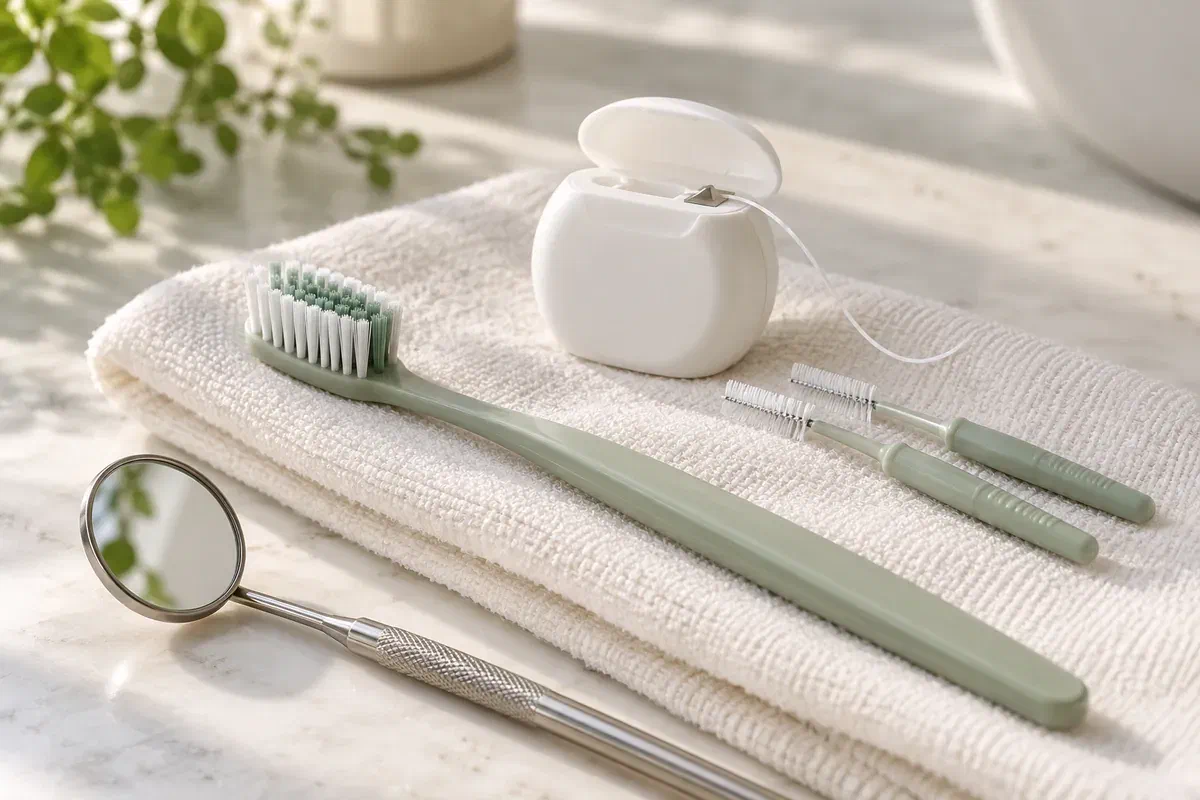
Illustrative soft toothbrush, floss, interdental brushes, and dental mirror on an ivory towel
Signs your technique may need adjusting

Bleeding, soreness and worn bristles tell a story.

Note where the bleeding or soreness occurs, how long it has gone on and whether it varies. Also mention how firmly you brush, what brush you use, and any recent dental work, medicines or health changes. The examination can then make sense of it.

Bleeding despite firm, frequent brushing

Say whether it happens in one area or many, and describe how you brush. The clinician can look at the gums and at your stroke. Heavy pressure can miss the gumline and bruise the tissue, while skipping the area lets plaque stay. A softer, better-aimed method often helps more.

Puffy or tender gum in particular places

Point out areas that look swollen or feel sore, including next to fillings, crowns or food traps. A spot that stays inflamed despite vigorous brushing may have a local factor behind it and need a specific plan rather than extra effort.

Breath that seems off despite your effort

Lingering bad breath may go hand in hand with gum inflammation, yet other causes are possible too. Mention how long it has lasted and whether your mouth feels dry. A strong rinse might disguise it, so raise it at the assessment.

Spontaneous bleeding, swelling that seems unusual, sores or symptoms in other parts of the body are worth reporting. Not every gum complaint is ordinary plaque-related gingivitis, however carefully you clean.

What changes with treatment

Less force, better results

Effective care connects the examination with a technique you can repeat every day. Ask which areas are inflamed, what cleaning is recommended and how improvement will be checked. Brushing hard comes from good intentions, and learning a gentler way is a skill to practise, not a criticism.

The assessment also clarifies the diagnosis. Gingivitis affects the gums alone; periodontitis involves loss of the tissue that holds the teeth and changes what treatment is discussed. If the findings point beyond gingivitis, ask how the plan changes and whether further assessment is appropriate.

Patient information: NIDCR — plaque, gum inflammation, professional cleaning, and individualized treatment

Professional removal of hardened deposits

No amount of brushing will remove tartar once it has formed. Ask where it is and what the cleaning involves. How extensive that cleaning is should depend on the examination, not just the length of time since your previous appointment.

Technique coaching at the chair

We can show you the angle that reaches the gumline, the pressure that is enough and the brush head size that suits your mouth. Spacing, dental work, dexterity and comfort all shape the advice, and practising it with us makes it easier at home.

A follow-up to see the difference

Plan to have the gums rechecked instead of assuming one visit is enough. Ask when to return and what would justify an earlier call. If inflammation lingers, the review can reconsider the diagnosis, any deposits, local factors or whether the new technique has been workable.

Inside the appointment

We watch, examine, clean and coach.

Knowing the sequence lets you prepare questions. The assessment and cleaning may happen together or across separate visits, depending on the findings and how comfortable you feel.

  1. Show us your brushing

    Tell us where bleeding or redness appears and since when, and bring your toothbrush. We may ask you to demonstrate your usual stroke. We also review your medical history and medications so the advice suits your circumstances.

  2. Assess gums and supporting tissue

    The clinician examines the areas of concern, looks for signs of brushing injury and judges whether the picture fits gingivitis, periodontitis or another cause. Measurements and images may be used where helpful. Ask which findings stood out.

  3. Clean, then practise a gentler technique

    First we explain what is planned, comfort options, fees and how many visits are likely. Cleaning removes the deposits identified, and then we practise angle and pressure together. Let us know if any area is tender or you need a pause.

  4. Recheck and refine

    At the suggested interval, tell us how the new technique feels and what has changed. We check the tissue and adjust as needed. If the gums have not settled, ask whether more evaluation or a different plan is warranted.

Practising at home

Light touch, right angle, every day

Ask for clear instructions on where to brush, at what angle and how firmly. Back home in Rockwood, a short routine done gently and consistently will usually achieve more than a long, forceful one, and old habits fade faster when you practise the new stroke daily.

Brush with a soft head and light pressure

Hold the bristles toward the gumline with a fluoride toothpaste and let them do the work. If you use a powered brush, guide it slowly rather than scrubbing. Tell us if a spot still hurts, since that may need another look.

Clean between teeth without forcing

Use the interdental aid we chose and ease it into each space. Snapping floss down or pushing a brush through can injure the gum. If the aid feels awkward, bring it to your next visit so we can adjust.

Use any rinse for its intended purpose

If we suggest a rinse, check why, for how many days and what the label warns about. It cannot make up for technique, and swishing harder does no more than brushing harder. Keep practising the routine and call us if symptoms continue or become more uncomfortable.

From findings to treatment

A diagnosis first, then the right kind of care

Ask how the recommendation follows from what was found. Gingivitis, established periodontal damage and gum changes from injury or another cause each need different management.

When plaque-related gingivitis is confirmed

Cleaning plus technique coaching

Here the work is twofold: we clear away the buildup, and you swap a forceful habit for a lighter, better-aimed one at the sites that were bleeding. Find out when your gums will be looked at again and how often cleanings should happen after that. You should leave clear on what we did in the chair and what is now yours to keep doing.

When supporting tissue has been lost

Periodontal therapy

If periodontitis is found, ask how that changes the approach. More extensive cleaning, reassessment, periodontal maintenance or referral to a specialist may be discussed, with each step explained using your findings.

When the pattern suggests something else

A closer look at brushing injury or another cause

Gum damage from brushing, a local irritant, a health factor or another condition may be involved. Ask what remains unclear and whether a further examination or referral would help. A change that persists deserves review, not more force or more products.

Brushing questions

Is harder brushing hurting or helping?

These questions can help you replace a forceful habit with a technique that suits your gums, and understand how cleaning and follow-up fit in.

(905) 876-4488
Can brushing too hard damage my gums?
Yes. Excessive force or a hard-bristled brush can irritate the gums and, over time, may contribute to gum recession and tooth wear. A soft brush with gentle, well-aimed strokes is generally recommended. The clinician can check for signs of brushing injury.
How do I know if I am pressing too hard?
Bristles that splay quickly, sore gums after brushing or worn areas near the gumline can be signs. Some powered brushes have pressure indicators. Bring your brush to the appointment and ask the team to watch your technique.
What angle should I hold my toothbrush at?
Bristles are commonly angled toward the gumline so they reach where tooth and gum meet. The ideal technique can vary with your teeth and dental work, so ask for a demonstration in your own mouth.
How often should I replace my toothbrush?
A common guideline is every few months, or sooner if bristles are frayed. Frayed bristles clean less effectively and can be a sign of heavy pressure. Ask the team what suits your situation.
Is gum recession the same as gingivitis?
No. Recession means the gum has moved back from the tooth, which can have several causes. Gingivitis is inflammation of the gum. They can occur together, and the examination can tell you which applies.
Does a hard-bristled brush clean better?
Not usually. Soft bristles can remove plaque effectively when used with good technique and are kinder to the gums and the enamel near the gumline. Ask whether your current brush is suitable before buying a new one, and bring it along so the team can see the bristles.
Visiting from Rockwood

Bring your toothbrush. We will take it from there.

Contact our Bronte Street practice to discuss bleeding, sore or red gums. Let us know if you suspect your brushing is part of the problem so we can make time to work on technique.

Diagnosis, cleaning needs, review intervals and the way your gums respond depend on the examination and your own circumstances.

Visit Milton Dental Clinic
Unit 1, 342 Bronte St. S, Milton, ON L9T 5B7
Get directions Clinic hours
Monday–Thursday
11am–7pm
Friday–Sunday
By appointment only

Areas we serve

  • Milton
  • Oakville
  • Mississauga
  • Georgetown
  • Halton Hills
  • Acton
  • Campbellville
  • Brampton
  • Burlington
  • Puslinch
  • Rockwood
  • Erin
  • Caledon
  • Etobicoke
  • Old Milton
  • Bronte Meadows
  • Timberlea
  • Dorset Park
  • Dempsey
  • Clarke
  • Beaty
  • Coates
  • Harrison
  • Scott
  • Willmott
  • Ford
  • Bowes
  • Cobden
  • Walker
  • Mountain View
  • Milton Heights
  • Hawthorne Village
  • Valley View
  • Fallingbrook
  • Nassagaweya
  • Trafalgar
  • Esquesing
  • Nelson
  • Brookville
  • Moffat
  • Glen Williams
  • Norval
  • Limehouse
  • Stewarttown
  • Ashgrove
  • Hornby
  • Silver Creek
  • Speyside
  • Scotch Block
  • North Oakville
  • River Oaks
  • Glen Abbey
  • West Oak Trails
  • Palermo
  • Bronte Creek
  • College Park
  • Joshua Creek
  • Uptown Core
  • Preserve
  • Iroquois Ridge
  • Lisgar
  • Meadowvale
  • Meadowvale Village
  • Churchill Meadows
  • Erin Mills
  • Central Erin Mills
  • Streetsville
  • East Credit
  • Creditview
  • Heartland
  • Sheridan
  • Mount Pleasant
  • Credit Valley
  • Huttonville
  • Churchville
  • Springbrook
  • Northwest Brampton
  • Bram West
  • Fletcher's Meadow
  • Fletcher's Creek South
  • Alton Village
  • Orchard
  • Millcroft
  • Headon Forest
  • Tansley
  • Brant Hills
  • Tyandaga
  • Kilbride
  • Lowville
  • Aberfoyle
  • Morriston
  • Arkell
  • Hillsburgh
  • Freelton
  • Carlisle
  • Waterdown
  • Flamborough
  • Mountsberg

How can we help?

Milton Dental Clinic

Have a question about your smile? Choose the option that works best for you.

For urgent dental concerns, please call.
Messages are reviewed during clinic hours.