

Illustrative adult describing a dental concern to a clinician in a consultation room
Specialized Care

Gum Abscess Treatment

A painful gum swelling needs prompt attention and an explanation of its source. Call our Milton team to discuss assessment, appropriate urgent care, and the follow-up needed after the immediate problem has been addressed.

A closer look at gum abscess treatment

Treat the swelling as a reason to call, even if the pain changes.

A gum abscess is a localized collection of infection involving the gum or the tissues around a tooth. It may appear as a tender swelling, sometimes with a bad taste or drainage. A new lump on the gum needs assessment because its position alone does not establish where the problem began.

An infection associated with a periodontal pocket and an infection arising inside a tooth can require different treatment. The clinician needs to examine the swelling, the tooth, and the surrounding support rather than choose care from a photograph or description alone. Relief of pressure is not the same as resolving the underlying source.

At Milton Dental Clinic, call about suspected gum infection and describe how the symptoms are changing. We can discuss appointment availability and the next step. If we cannot assess you promptly and you need immediate dental care, contact another available emergency dental provider rather than waiting for an online reply.

Request an assessment of gum swelling
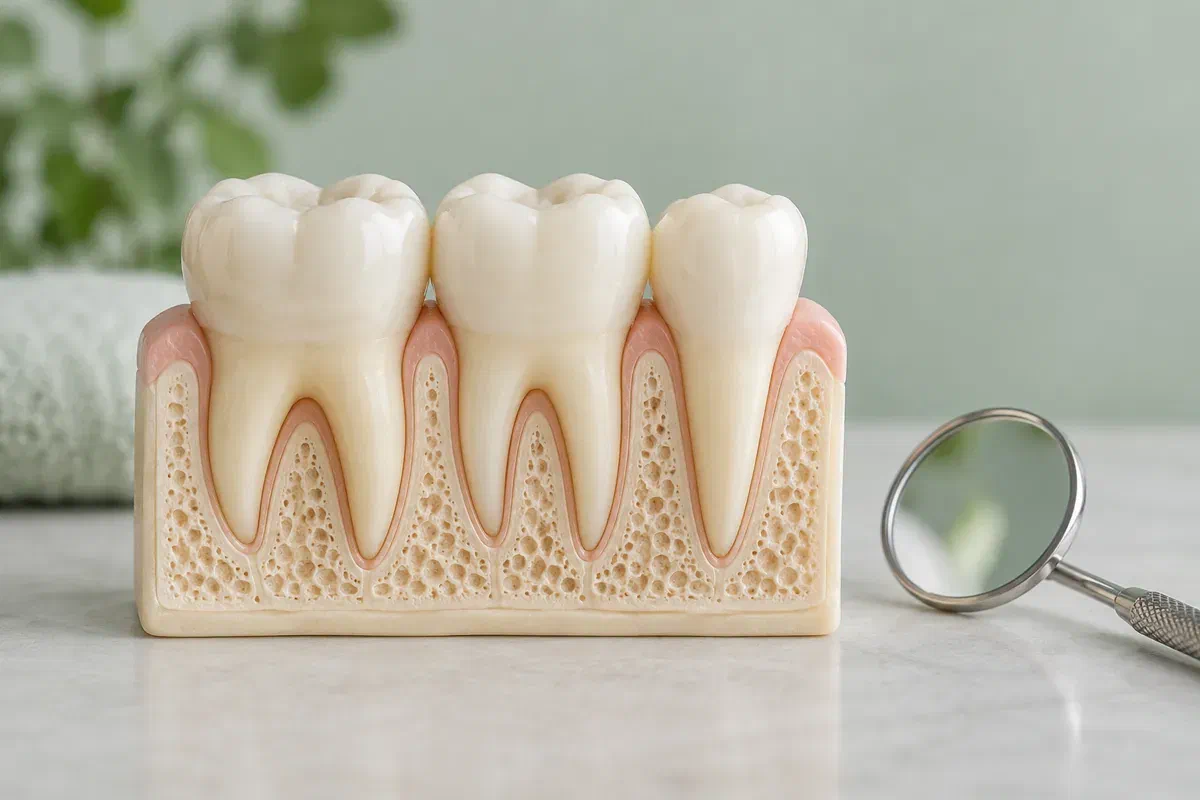
Illustrative physical model showing teeth supported by gum tissue and underlying bone
Information that helps with urgency

Tell the team about the swelling, the tooth, and how you feel overall.

When you call, explain where the problem is, when it started, and whether it is worsening. Mention relevant health conditions and medicines, especially anything that affects your ability to fight infection.

A tender lump or swelling beside a tooth

Describe the location and whether the area is painful to touch or uncomfortable when biting. Mention a history of gum pockets, recent dental treatment, or something becoming trapped in the area. These details guide the assessment but do not replace examining the source.

Drainage, a bad taste, or pain that suddenly eases

Tell the clinician if fluid has drained or the swelling seems smaller. A change in pressure may alter symptoms without completing treatment. Do not cancel an assessment simply because the lump has opened, and do not try to squeeze or puncture the area yourself.

Swelling that spreads or symptoms beyond the gum

Report facial swelling, fever, feeling unwell, or increasing difficulty opening your mouth. The appropriate setting for care may change as symptoms develop. Make clear if the problem has progressed since you first arranged an appointment rather than assuming the original plan remains suitable.

Seek emergency medical care for trouble breathing, speaking, or swallowing, swelling or pain around the eye, vision changes, or substantial mouth swelling with difficulty opening. Call 911 for an immediate emergency; do not wait for a callback form.

What urgent care needs to address

Find the source and distinguish immediate relief from the longer plan.

The first visit may focus on assessing severity and providing appropriate local treatment. Ask the clinician to explain what is being done today and what still needs attention afterward. Understanding that distinction helps prevent an improvement in discomfort from being mistaken for completion of all necessary care.

The condition of the affected tooth and its surrounding tissues influences the options. Ask what the examination shows about the possibility of retaining the tooth and whether further periodontal or root canal assessment is required. Neither a visible gum lump nor a single episode of swelling automatically decides the tooth's future.

Patient information: SDCEP — local treatment and appropriate antibiotic use for dental abscesses · SDCEP — periodontal abscess management and review

Treatment directed at the identified cause

An appropriate local measure may involve drainage and cleaning of an affected area, while a tooth-origin infection can require a different route of care. Ask which source has been identified and what the proposed intervention is intended to accomplish. Similar-looking swellings do not always need identical procedures.

A considered decision about antibiotics

Antibiotics are not a substitute for addressing the local source of infection. The clinician considers factors such as spread, systemic illness, the ability to provide drainage, and your health circumstances. Ask why a prescription is or is not appropriate rather than assuming every gum abscess needs the same medicine.

A defined follow-up instead of repeated temporary relief

Ask when the area should be reviewed and what care may follow once the urgent problem is controlled. If an underlying pocket or tooth problem remains, the plan needs to explain how it will be managed. Repeated swelling deserves reassessment even when previous episodes settled for a time.

How the assessment guides treatment

Check the extent, establish the source, and agree on the next stage.

The sequence depends on the examination and how unwell you are. Severe or spreading infection may require care in a different setting, while a localized problem may be managed with an appropriate dental treatment plan.

  1. Review the history and current urgency

    Explain the onset of swelling, changes in pain, drainage, and any fever or facial symptoms. Review medicines, allergies, medical conditions, and recent treatment. Tell the clinician about any antibiotics already taken, including the reason they were prescribed and whether symptoms changed.

  2. Examine the gum, tooth, and relevant supporting tissues

    The clinician assesses the area and may use tooth tests, gum measurements, or relevant radiographs to clarify the source. Ask what the findings establish and whether any uncertainty remains. The visible opening or swelling is one part of the assessment, not the entire diagnosis.

  3. Discuss and provide appropriate urgent treatment

    Review the proposed local care, comfort measures, possible limitations, and fees. Depending on the cause, treatment may address a periodontal pocket, an infected tooth, or another identified problem. If referral or hospital assessment is needed, clarify the reason and the immediate next step.

  4. Set out review and completion of care

    Confirm what should improve, which symptoms require urgent contact, and when reassessment is needed. Ask whether the visit completed treatment or only addressed the acute stage. Record any further periodontal, restorative, root canal, or extraction discussion so the remaining plan is clear.

After urgent gum-abscess care

Follow the local instructions and keep the review in place.

Aftercare depends on what was done and where the infection originated. Ask for instructions specific to your treatment rather than combining advice from someone else's extraction, root canal procedure, or gum surgery.

Clean as advised without disturbing the treated area

Ask how to brush and clean around the site, including any temporary adjustment to your usual routine. Do not probe, squeeze, or repeatedly press on the gum to check it. If a recommended method is too uncomfortable to manage, contact the treating team for practical guidance.

Use medicines only according to the agreed directions

Tell the clinician or pharmacist about your other medicines and health conditions before choosing pain relief. If an antibiotic is prescribed, follow its directions and ask about side effects or concerns. Do not use leftover antibiotics, share a prescription, or increase doses because discomfort persists.

Report the course of recovery accurately

Notice whether swelling, comfort, and function are improving as explained. Contact the provider if symptoms worsen, return, or do not follow the expected course. Keep the planned review even when you feel better so the source and any remaining treatment can be reassessed.

Choosing treatment for the source

A swelling on the gum does not identify one universal procedure.

Ask the clinician to connect each recommendation to the diagnosis and the condition of the tooth. The appropriate plan may include local treatment now and a different form of care after the acute episode.

When the gum pocket or supporting tissues are involved

Periodontal treatment for an infection around the tooth

Local management may be followed by reassessment and treatment of the underlying periodontal condition. Ask what remains to be addressed after drainage or cleaning, how the tooth's support affects the outlook, and whether specialist periodontal advice would be useful.

When the assessment identifies a tooth-origin source

Treatment for an infection arising inside the tooth

Root canal treatment may be considered for a suitable tooth, with an appropriate final restoration afterward. The fact that drainage appears on the gum does not make it solely a gum-cleaning problem. Ask about restorability, alternatives, and whether an endodontic referral is needed.

When retention is unsuitable or the infection requires escalation

Extraction or another level of care when indicated

A severely compromised tooth may need removal, while spreading infection can require urgent care beyond a routine dental setting. Ask why the recommended option fits the findings. The decision should reflect clinical need, possible alternatives, and your health circumstances rather than a blanket rule for abscesses.

Gum abscess questions

Ask what caused the swelling and what still needs treatment.

These answers can help you prepare for the assessment. They cannot determine the source or urgency of a particular swelling without a clinical examination and a review of your symptoms.

(905) 876-4488
If a gum abscess drains overnight, should I still attend the dental assessment?
Yes. Drainage can change pressure and discomfort while leaving the underlying problem in place. Tell the clinician what happened and whether swelling or pain changed. Keep the assessment so the source can be identified and an appropriate treatment and review plan arranged.
Can a bump on the gum come from an infection inside a tooth?
Yes. The visible location does not always identify where an infection began. Tooth tests, examination of the surrounding tissues, and relevant images can help distinguish possible sources. Treatment needs to follow that diagnosis rather than the appearance of the bump alone.
Will antibiotics alone permanently resolve a periodontal abscess?
They should not be relied on as a replacement for local assessment and treatment of the cause. A clinician decides whether antibiotics have an additional role based on the circumstances. Ask what definitive care and follow-up are needed even if a prescription reduces symptoms.
Is it safe to press on a gum abscess to release more fluid?
No. Do not squeeze, puncture, or attempt to drain it yourself. Arrange prompt dental care and describe any spontaneous drainage. Professional assessment is needed to identify the source and select appropriate treatment; home manipulation does not establish that the infection has been addressed.
Does a gum abscess always mean the nearby tooth must be extracted?
No. The options depend on the infection’s source, the tooth’s condition, and the support around it. Some situations may allow treatment aimed at retaining the tooth, while others do not. Ask what the examination shows and why the proposed approach is suitable.
What should I do if gum swelling spreads toward my eye before my appointment?
Seek emergency medical assessment, especially with eye pain, swelling, or changes in vision. Breathing or swallowing difficulty is also an emergency. Do not wait for a routine dental slot or an email reply; call 911 if immediate emergency assistance is needed.
Gum abscess assessment in Milton

Call about the swelling so the next step can be discussed promptly.

Contact our Bronte Street practice at (905) 876-4488 to discuss an urgent gum concern and availability. Describe spreading swelling or systemic symptoms clearly. Email and online requests are for non-urgent enquiries.

Urgent appointment availability is not guaranteed. Seek another available emergency dental provider when needed, or emergency medical care for serious symptoms.

Visit Milton Dental Clinic
Unit 1, 342 Bronte St. S, Milton, ON L9T 5B7
Get directions Clinic hours
Monday–Thursday
11am–7pm
Friday–Sunday
By appointment only

How can we help?

Milton Dental Clinic

Have a question about your smile? Choose the option that works best for you.

For urgent dental concerns, please call.
Messages are reviewed during clinic hours.