

Illustrative adult describing a dental concern to a clinician in a consultation room
Specialized Care

Gum Abscess Treatment in Etobicoke

A painful gum swelling and a longer trip make planning matter. From Etobicoke, phone before you leave so we can weigh urgency, decide whether we are the right first stop and keep follow-up visits organised and few.

Travelling from Etobicoke

Plan the trip around the infection, not the other way round.

Coming in from the west end of Toronto takes some organising, and a gum abscess does not always give you much notice. It is an infection that has gathered in one spot, in the gum itself or in the tissue that keeps a tooth anchored, and it can arrive as a throbbing lump, a nasty taste or a trickle of fluid.

What it looks like says little about where it began. Some start in a pocket that has formed between gum and root; others travel out from an infected nerve inside the tooth. Treatment differs between the two, so we test the tooth and check the gum and bone before deciding. Pressure relief feels like progress, but the source still needs work.

Ring us before setting off and describe how the swelling has changed. Together we can judge whether to make the journey today or whether closer urgent care makes more sense. If we are unable to offer a time that suits an urgent problem, contact an emergency dental provider nearer to you instead of waiting on an email.

Plan a gum abscess visit
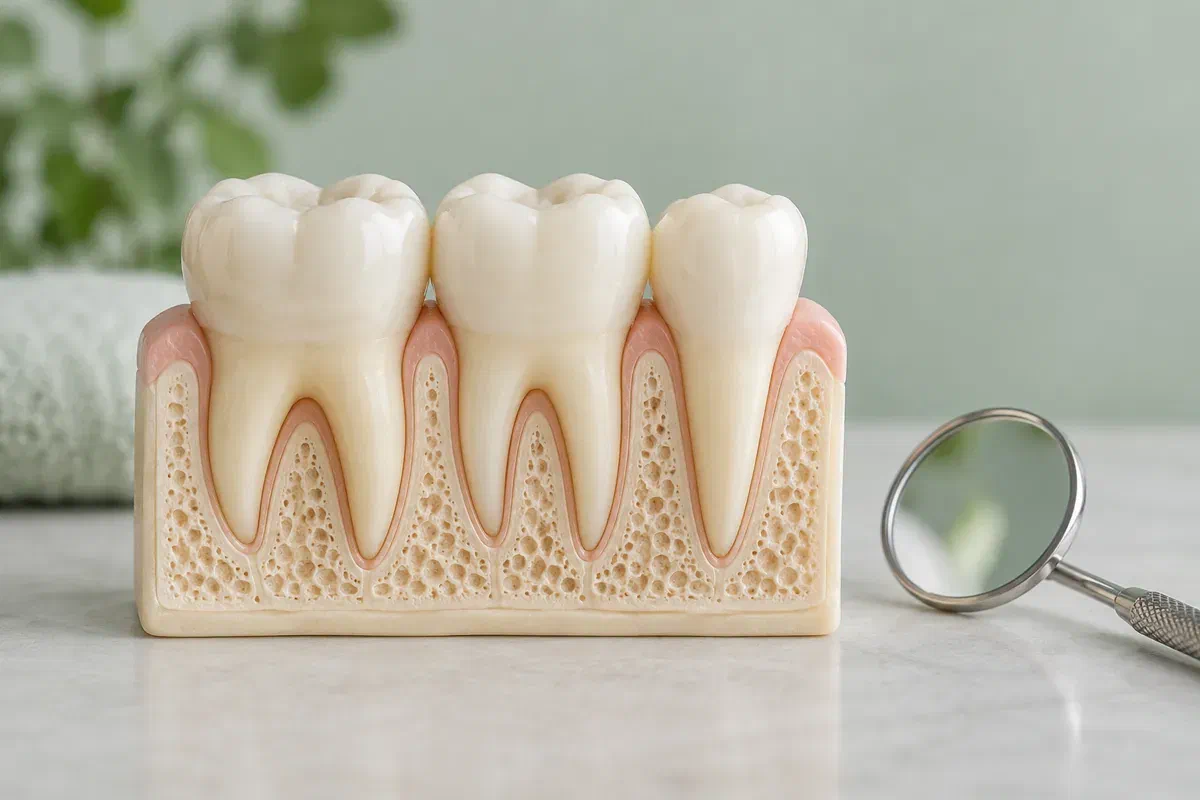
Illustrative physical model showing teeth supported by gum tissue and underlying bone
Before the drive

Is today’s trip the right call?

A few facts help us decide quickly: where the swelling is, when it started and its direction of travel. Mention medical conditions and medicines, especially any that make infections harder for your body to control.

One sore, swollen spot by a tooth

Tell us which side and which tooth, and whether pressing or biting makes it worse. Earlier gum trouble, a recent filling or crown, or a bit of food stuck under the gum all help us plan. Examination is still what pins down the cause.

Drainage, a sour taste or sudden comfort

Fluid escaping can make pain melt away because the pressure has gone. That is relief, not treatment. Keep the appointment, tell us when it drained, and do not press or puncture the lump to coax out more.

Swelling spreading or feeling feverish

Facial swelling, a temperature, general illness or a jaw that will not open fully may mean you need care closer to home or in a medical setting. Call before travelling if any of these have appeared or worsened since you booked.

If breathing, swallowing or speaking becomes hard, if the eye area swells or hurts, if your vision changes or if mouth swelling stops you opening properly, get emergency medical care nearby rather than driving to a dental office. Call 911 for an immediate emergency.

Making each visit count

Fewer trips, with nothing left vague.

An urgent appointment typically assesses severity and gives local treatment suited to what is found. For a longer trip, it helps to leave with a clear split between what was done that day and what is still to come. A calmer gum is welcome, yet it does not mean every stage is complete.

The tooth’s health and the support around it determine the options. Ask whether the findings favour keeping it and whether a further gum or root canal assessment will be needed, so later visits can be grouped sensibly. One swelling does not, on its own, decide what happens to the tooth.

Patient information: SDCEP — local treatment and appropriate antibiotic use for dental abscesses · SDCEP — periodontal abscess management and review

Treatment that targets the real source

Infection in a gum pocket may be drained and the area cleaned. Infection from inside the tooth generally needs a separate approach. Ask what was identified and what today’s step is designed to do, since two swellings that look alike can require different work.

A thought-through decision on antibiotics

Medicine does not replace treating the cause. The clinician looks at spread, whether you feel unwell overall, whether drainage is achievable and your medical history. Ask why a prescription is or is not right for you, instead of assuming each abscess is managed identically.

Review visits planned ahead

Book the recheck before you leave and ask what treatment may follow once the acute stage is controlled. If a pocket or damaged tooth remains, find out how it will be handled and whether steps can share an appointment. A returning swelling still needs reassessment.

The visit itself

Assess, explain, treat, then plan the return.

How things proceed depends on the findings and how unwell you are. A spreading or severe infection may need another setting, while a contained one can usually be treated within a suitable dental plan.

  1. Catch up on what has happened

    Expect questions about when the swelling appeared, how pain has changed, any drainage, fever or facial swelling. We go over medicines, allergies, health conditions and recent dental care. Bring details of any antibiotics already taken, including why and what effect they had.

  2. Examine and narrow down the cause

    The clinician looks at the gum and tooth and may run tooth tests, measure pockets or take suitable X-rays. Ask which findings are firm and which remain open. The visible bump is part of the evidence, not the whole answer.

  3. Agree and provide today’s care

    We set out the proposed local treatment, comfort measures, limitations and fees before starting. Depending on what was found, treatment may focus on the gum, the inside of the tooth or another problem. If referral or hospital care is needed, we explain why and help you with the next move.

  4. Organise what follows

    Leave knowing what should improve, which symptoms mean calling straight away and when your review falls. Ask whether today completed treatment or only the acute stage. Record plans for further gum work, restoration, root canal care or extraction so future trips are clear.

Recovering after the trip home

Know who to call if things change.

Aftercare depends on what was done and where the infection started. Ask for instructions that match your treatment, not tips taken from a neighbour’s extraction, root canal or gum surgery.

Careful cleaning near the area

Find out how to brush and clean near the site and whether to modify your routine for a little while. Leave the gum alone rather than prodding it to check. If cleaning as advised is too uncomfortable, phone us for a practical alternative before your next visit.

Medicines used as agreed

Before choosing pain relief, tell the clinician or a pharmacist about your other medicines and conditions. Take any antibiotic as directed and ask about side effects. Do not use leftover tablets, share a prescription or take more than directed because the area aches.

A clear sense of progress

Swelling, comfort and chewing should improve as explained. If they worsen, return or do not follow the expected course, call us, and consider closer urgent care if the change is significant. Keep the review even if you feel well so the source can be rechecked.

What treatment may involve

Each cause leads to a different plan.

Ask the clinician to tie every recommendation to the diagnosis and to the state of your tooth. You may get local care today and different treatment once the acute phase settles, which helps when planning trips.

If the pocket or supporting tissue is the source

Gum treatment around the tooth

Immediate care may be followed by reassessment and treatment of the gum disease involved. Ask what remains after drainage or cleaning, how the tooth’s support affects its prospects and whether a periodontist’s opinion would add value.

If testing traces infection to the tooth’s interior

Root canal care inside the tooth

A suitable tooth may be offered root canal treatment and then a lasting restoration. Drainage on the gum does not make it a matter of cleaning alone. Ask if the tooth is restorable, what other choices exist and whether an endodontist should take part.

If the tooth cannot be kept or infection is spreading

Extraction or care at a different level

A tooth that is badly compromised may need removal, while spreading infection can require urgent care beyond a general dental office. Ask why the suggested option fits. The choice should reflect clinical need, alternatives and your health rather than one rule for all abscesses.

Questions about travel and timing

Practical answers for a longer journey

These answers help you plan. They cannot judge the source or urgency of your own swelling without an examination and a full account of your symptoms.

(905) 876-4488
When should I find urgent dental care closer to Etobicoke instead?
If we cannot see you soon enough, if symptoms are worsening quickly or if travelling would delay care you need now, an emergency dental provider nearer to you is the better option. Serious signs such as breathing difficulty need emergency medical care right away.
Can several treatment steps be combined into one visit?
Sometimes, depending on the diagnosis and how the area responds. Urgent care may come first, with further gum or tooth treatment after the acute stage settles. Ask the clinician which steps can reasonably be grouped and which need separate appointments.
Is it safe to drive myself to the appointment?
If you feel well enough and have no serious symptoms, many people do. If you have a fever, feel unwell, are taking medicine that affects alertness or expect sedation, arrange a ride. Severe symptoms need emergency care rather than a drive.
Does a drained gum abscess mean I can skip the trip?
Not usually. Drainage often relieves pain without dealing with what caused the infection. Phone to discuss it, and plan to keep the assessment so the source can be found and an appropriate treatment plan arranged.
Can I send a photo instead of coming in?
A photo may help describe the swelling, but it cannot replace an examination, tooth tests or X-rays. The source of a gum abscess has to be assessed in person. Call us to discuss urgency rather than relying on an image or email.
What should I bring to the appointment?
Bring a list of your medicines and health conditions, details of any antibiotics already taken and notes on how the swelling has changed. If you have had recent dental treatment elsewhere, information about it can be helpful too.
Before you leave Etobicoke

Call first; we will help you decide where to go.

Phone (905) 876-4488 to discuss an urgent gum concern with our team on Bronte Street and to check availability. Tell us right away about spreading swelling or feeling unwell. Email and web requests are for non-urgent matters.

Urgent availability is not guaranteed. Seek an emergency dental provider closer to you when needed, or emergency medical care for serious symptoms.

Visit Milton Dental Clinic
Unit 1, 342 Bronte St. S, Milton, ON L9T 5B7
Get directions Clinic hours
Monday–Thursday
11am–7pm
Friday–Sunday
By appointment only

Areas we serve

  • Milton
  • Oakville
  • Mississauga
  • Georgetown
  • Halton Hills
  • Acton
  • Campbellville
  • Brampton
  • Burlington
  • Puslinch
  • Rockwood
  • Erin
  • Caledon
  • Etobicoke
  • Old Milton
  • Bronte Meadows
  • Timberlea
  • Dorset Park
  • Dempsey
  • Clarke
  • Beaty
  • Coates
  • Harrison
  • Scott
  • Willmott
  • Ford
  • Bowes
  • Cobden
  • Walker
  • Mountain View
  • Milton Heights
  • Hawthorne Village
  • Valley View
  • Fallingbrook
  • Nassagaweya
  • Trafalgar
  • Esquesing
  • Nelson
  • Brookville
  • Moffat
  • Glen Williams
  • Norval
  • Limehouse
  • Stewarttown
  • Ashgrove
  • Hornby
  • Silver Creek
  • Speyside
  • Scotch Block
  • North Oakville
  • River Oaks
  • Glen Abbey
  • West Oak Trails
  • Palermo
  • Bronte Creek
  • College Park
  • Joshua Creek
  • Uptown Core
  • Preserve
  • Iroquois Ridge
  • Lisgar
  • Meadowvale
  • Meadowvale Village
  • Churchill Meadows
  • Erin Mills
  • Central Erin Mills
  • Streetsville
  • East Credit
  • Creditview
  • Heartland
  • Sheridan
  • Mount Pleasant
  • Credit Valley
  • Huttonville
  • Churchville
  • Springbrook
  • Northwest Brampton
  • Bram West
  • Fletcher's Meadow
  • Fletcher's Creek South
  • Alton Village
  • Orchard
  • Millcroft
  • Headon Forest
  • Tansley
  • Brant Hills
  • Tyandaga
  • Kilbride
  • Lowville
  • Aberfoyle
  • Morriston
  • Arkell
  • Hillsburgh
  • Freelton
  • Carlisle
  • Waterdown
  • Flamborough
  • Mountsberg

How can we help?

Milton Dental Clinic

Have a question about your smile? Choose the option that works best for you.

For urgent dental concerns, please call.
Messages are reviewed during clinic hours.