

Illustrative adult describing a dental concern to a clinician in a consultation room
Specialized Care

Gum Abscess Treatment in Georgetown

A popcorn hull or seed wedged under the gum can be where a painful swelling starts, though it is not the only cause. From Georgetown, phone us to discuss how urgent it seems, what the first visit involves and the follow-up.

Georgetown: when something gets stuck

It started with a husk between the teeth.

You felt it lodge during a snack, tried to floss it out, and a few days later the gum beside that tooth is swollen and sore. Debris pushed below the gum line is one recognised trigger for a gum abscess, which is infection collected in the gum or in the tissue surrounding a tooth. A recent filling edge or a deep pocket can play a similar part.

Still, the obvious explanation is not always the right one. A swelling in exactly the same place could come from infection inside the tooth that has worked its way out. The two are treated differently. That is why the clinician examines the gum, tests the tooth and looks at its support before choosing care. Easing pressure is a start rather than a finish.

Call our team from Georgetown and tell us what happened and how the swelling has changed. We will discuss availability and what should come next. If the problem cannot wait and we have no suitable time, please contact another emergency dental provider rather than waiting for an online message to be answered.

Get a swollen gum looked at
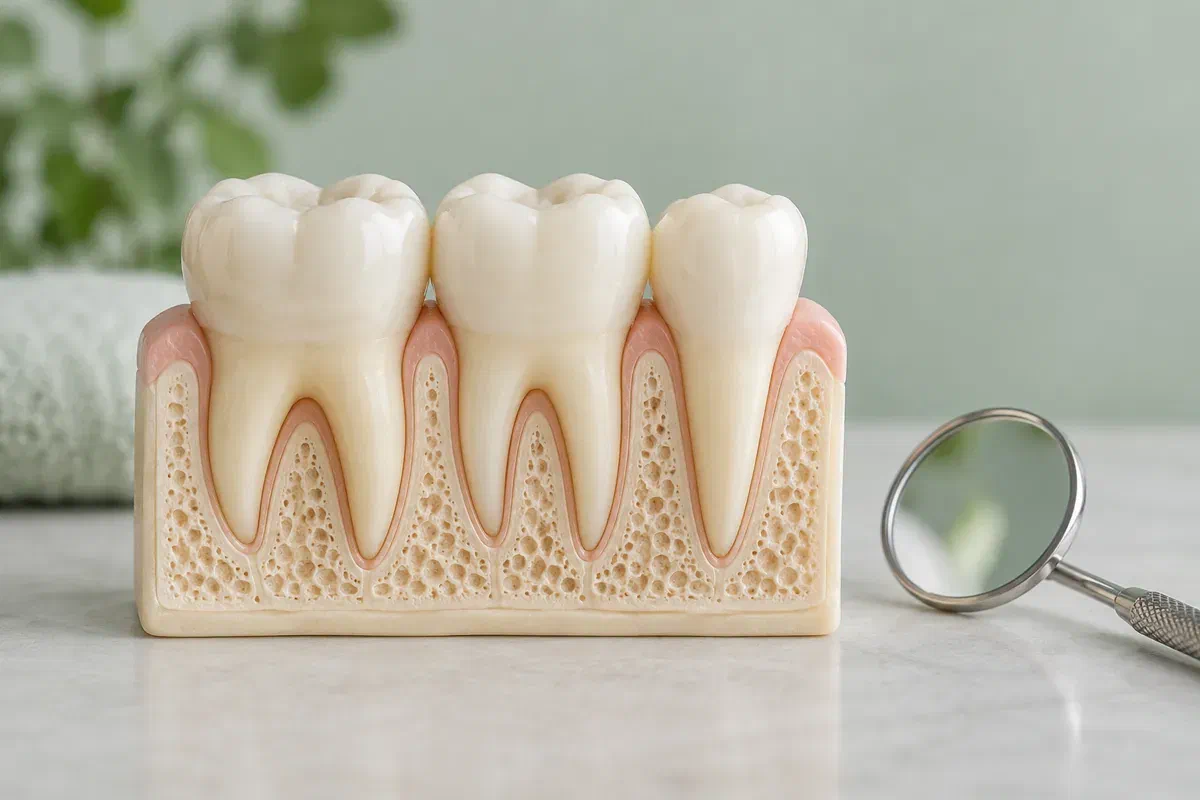
Illustrative physical model showing teeth supported by gum tissue and underlying bone
Details that guide us

What got stuck, where it hurts, and how you feel

Let us know when the swelling began, whether it is spreading and what may have triggered it. Mention health conditions and medicines too, particularly any that reduce your body’s ability to fight infection.

Tender gum beside a tooth after food got trapped

Describe the spot and whether it hurts to bite or touch. Tell us what you think lodged there, how you tried to remove it and whether the tooth had recent dental work. These clues help, though only an examination shows the true source.

Fluid coming out, or the ache suddenly easing

Drainage can bring quick comfort while trapped debris or another cause stays in place. Mention it, keep the appointment, and avoid digging at the gum with picks, pins or fingernails to free anything or squeeze out fluid.

Swelling in the face, fever or a stiff jaw

These suggest the infection is reaching beyond the gum, and the right place for care may change. Tell us promptly. If things have worsened since you booked, say so plainly rather than expecting the original plan to fit.

Any difficulty breathing, swallowing or talking, pain or swelling around an eye, changes to your eyesight, or mouth swelling so severe it limits opening requires emergency medical care. In an immediate emergency, call 911; please do not wait for a callback.

More than removing the debris

Clear the cause, then check what else is going on.

Urgent care begins by gauging severity and providing the local treatment that suits it, which can include removing anything trapped and cleaning the area. Ask what is finished that day and what is still to come. Feeling better quickly can tempt people to skip the rest.

Trapped debris often affects an area that was already vulnerable, such as a deep pocket. Ask what the examination shows about the tooth’s support and whether a further gum or root canal assessment is warranted. One swelling, even a dramatic one, does not determine whether the tooth can be kept.

Patient information: SDCEP — local treatment and appropriate antibiotic use for dental abscesses · SDCEP — periodontal abscess management and review

Care chosen for the source

If the gum pocket is the problem, removing debris, draining and cleaning may be appropriate. If the tooth is the origin, a separate route is needed. Ask what was identified and what the treatment aims to do, since look-alike swellings may need different procedures.

A justified view on antibiotics

Removing the cause matters more than medicine. Your clinician considers spread, general illness, whether drainage can be achieved and your health background. Ask why a prescription is or is not recommended in your case.

Follow-up so it does not happen again

Agree on a recheck and on any treatment that should follow the acute stage. If a pocket or a rough filling edge made the area a food trap, ask how it will be dealt with. A recurring swelling deserves fresh assessment even if previous ones cleared.

At your appointment

How we find out what is behind the swelling

The order of care follows the findings and how unwell you feel. Severe or spreading infection may need a different setting, while a localized abscess can often be handled with a fitting dental plan.

  1. Hear what happened

    Tell us about the snack or event, when swelling began, how pain has changed, any drainage and any fever or facial symptoms. We review medicines, allergies, conditions and recent dental care, along with any antibiotics already taken and what they did.

  2. Look, measure and test

    The clinician examines the gum and tooth, checks for trapped material and may measure pockets, test the tooth or take suitable X-rays. Ask what those findings show and what remains unknown. What you can see is only part of the story.

  3. Provide today’s treatment

    We explain the local care planned, comfort measures, limitations and fees before beginning. The focus might be clearing a gum pocket, treating the inside of a tooth or addressing another finding. If you need a referral or hospital assessment, we explain why and what to do immediately.

  4. Settle the rest of the plan

    Find out what should get better, which changes mean calling right away and when you will be reviewed. Ask if treatment is complete or only the urgent part. Any later gum care, filling or crown work, root canal treatment or extraction should be noted.

Caring for the area

Keep it clean, leave it alone and return for the check.

Aftercare depends on the treatment and where the infection originated. Ask for instructions designed for you, rather than following what someone else heard after an extraction, root canal or gum procedure.

Clean thoughtfully near the site

Ask whether to floss that space, how gently to brush and whether to change your routine for a few days. Skip toothpicks or other tools in the area unless the clinician recommends them. If cleaning is too sore, phone the team for advice.

Medicines exactly as directed

Tell the clinician or pharmacist what else you take and about your health conditions before choosing pain relief. Follow any antibiotic directions and mention side effects. Avoid leftover antibiotics, someone else’s prescription and extra doses because the gum is still tender.

Report how it settles

Swelling, tenderness and chewing should improve as described. If they worsen, return or follow a different course, get in touch. Keep the review so the clinician can confirm the area has settled and address anything still outstanding.

Next steps in care

Debris, pocket or tooth: each needs its own approach.

Ask how each recommendation follows from the diagnosis and the state of your tooth. Local care today may be followed by different treatment once the acute stage is past.

When trapped debris or gum disease is the cause

Periodontal care for the pocket

After the area is cleared, the clinician may recheck it and treat any gum disease involved. Ask what remains after cleaning or drainage, how well the tooth is supported and whether a periodontist’s view would help.

When testing shows infection starting inside

Root canal care for the tooth

For a suitable tooth, root canal treatment and a lasting restoration may be recommended. A swelling on the gum can still have a tooth origin. Ask if the tooth can be restored, what alternatives exist and whether an endodontist should be consulted.

When the tooth cannot be kept or the infection is spreading

Extraction or urgent escalation

A severely damaged tooth may need to be removed, while spreading infection can require urgent care beyond a dental office. Ask why the proposed route suits the findings. The decision should come from clinical need, alternatives and your health.

Stuck-food and swelling questions

What Georgetown callers often want to know

These answers are general and can help you prepare. They cannot confirm the cause or urgency of your swelling without an examination and a discussion of your symptoms.

(905) 876-4488
Can a popcorn hull really cause a gum abscess?
It can. A hull, seed or other fragment forced below the gum line can trap bacteria and lead to infection, especially where a pocket already exists. The clinician will look for debris and also check whether another source is involved.
Should I keep flossing to get the piece out?
Gentle flossing is reasonable, but avoid forcing tools under the gum or repeatedly digging at it. If it will not come out and the area swells, arrange an assessment. Aggressive attempts can irritate the gum further.
My gum swelled after a recent filling. Is that related?
It may or may not be. A restoration edge can sometimes trap food, and the tooth itself can be the source of a problem. Tell us when the work was done and where, so it can be considered during the examination.
If the swelling drains, is the debris gone too?
Not necessarily. Drainage relieves pressure, but material may still be trapped and the pocket or tooth may still need care. Keep your appointment and describe what happened.
Can I eat normally while I wait for my appointment?
Chewing on the other side and choosing softer foods may feel more comfortable. Avoid hard, sharp or small foods that could lodge in the area. If swelling grows or you feel unwell, call promptly.
Do I need antibiotics after the debris is removed?
Not always. If the area can be cleaned and drained and you are not unwell overall, local treatment may be enough for the acute stage. The clinician will explain whether medicine has a role and what follow-up is needed.
Booking from Georgetown

Give us a ring and tell us what happened.

Call (905) 876-4488 to discuss an urgent gum concern with our Bronte Street team and to check when we can see you. Describe spreading swelling or feeling unwell clearly. Email and online requests are for non-urgent enquiries.

Urgent availability cannot be guaranteed. Contact another emergency dental provider when you need care sooner, or emergency medical services for serious symptoms.

Visit Milton Dental Clinic
Unit 1, 342 Bronte St. S, Milton, ON L9T 5B7
Get directions Clinic hours
Monday–Thursday
11am–7pm
Friday–Sunday
By appointment only

Areas we serve

  • Milton
  • Oakville
  • Mississauga
  • Georgetown
  • Halton Hills
  • Acton
  • Campbellville
  • Brampton
  • Burlington
  • Puslinch
  • Rockwood
  • Erin
  • Caledon
  • Etobicoke
  • Old Milton
  • Bronte Meadows
  • Timberlea
  • Dorset Park
  • Dempsey
  • Clarke
  • Beaty
  • Coates
  • Harrison
  • Scott
  • Willmott
  • Ford
  • Bowes
  • Cobden
  • Walker
  • Mountain View
  • Milton Heights
  • Hawthorne Village
  • Valley View
  • Fallingbrook
  • Nassagaweya
  • Trafalgar
  • Esquesing
  • Nelson
  • Brookville
  • Moffat
  • Glen Williams
  • Norval
  • Limehouse
  • Stewarttown
  • Ashgrove
  • Hornby
  • Silver Creek
  • Speyside
  • Scotch Block
  • North Oakville
  • River Oaks
  • Glen Abbey
  • West Oak Trails
  • Palermo
  • Bronte Creek
  • College Park
  • Joshua Creek
  • Uptown Core
  • Preserve
  • Iroquois Ridge
  • Lisgar
  • Meadowvale
  • Meadowvale Village
  • Churchill Meadows
  • Erin Mills
  • Central Erin Mills
  • Streetsville
  • East Credit
  • Creditview
  • Heartland
  • Sheridan
  • Mount Pleasant
  • Credit Valley
  • Huttonville
  • Churchville
  • Springbrook
  • Northwest Brampton
  • Bram West
  • Fletcher's Meadow
  • Fletcher's Creek South
  • Alton Village
  • Orchard
  • Millcroft
  • Headon Forest
  • Tansley
  • Brant Hills
  • Tyandaga
  • Kilbride
  • Lowville
  • Aberfoyle
  • Morriston
  • Arkell
  • Hillsburgh
  • Freelton
  • Carlisle
  • Waterdown
  • Flamborough
  • Mountsberg

How can we help?

Milton Dental Clinic

Have a question about your smile? Choose the option that works best for you.

For urgent dental concerns, please call.
Messages are reviewed during clinic hours.