

Illustrative adult describing a dental concern to a clinician in a consultation room
Specialized Care

Gum Abscess Treatment in Oakville

Is the problem in the gum, or in the tooth underneath? A tender swelling needs an examination to answer that. Coming from Oakville, phone us to discuss urgency, a suitable first visit and the treatment that should follow.

From Oakville: sorting out the source

Gum or tooth? The answer changes the treatment.

People often assume a swelling on the gum must be a gum problem. Sometimes it is. In a gum abscess, infection collects in one spot within the gum or the structures that hold a tooth, and it can show up as a sore bump, a foul taste or a small leak of fluid. Other times, the same-looking bump is the exit point for infection from inside the tooth.

That difference is why an examination matters more than a description. A periodontal abscess forms in the pocket around a tooth; an infection that starts in the pulp travels through the root and bone first. Each route has its own treatment. Releasing pressure can make you comfortable for now without dealing with whichever source is responsible.

For anyone travelling from Oakville, a quick call first helps. Describe the swelling and whether it is changing, and we will talk about availability and the right next step. Should we be unable to see you soon enough for a problem that cannot wait, reach out to another emergency dental provider instead of holding out for a message back.

Book a gum abscess assessment
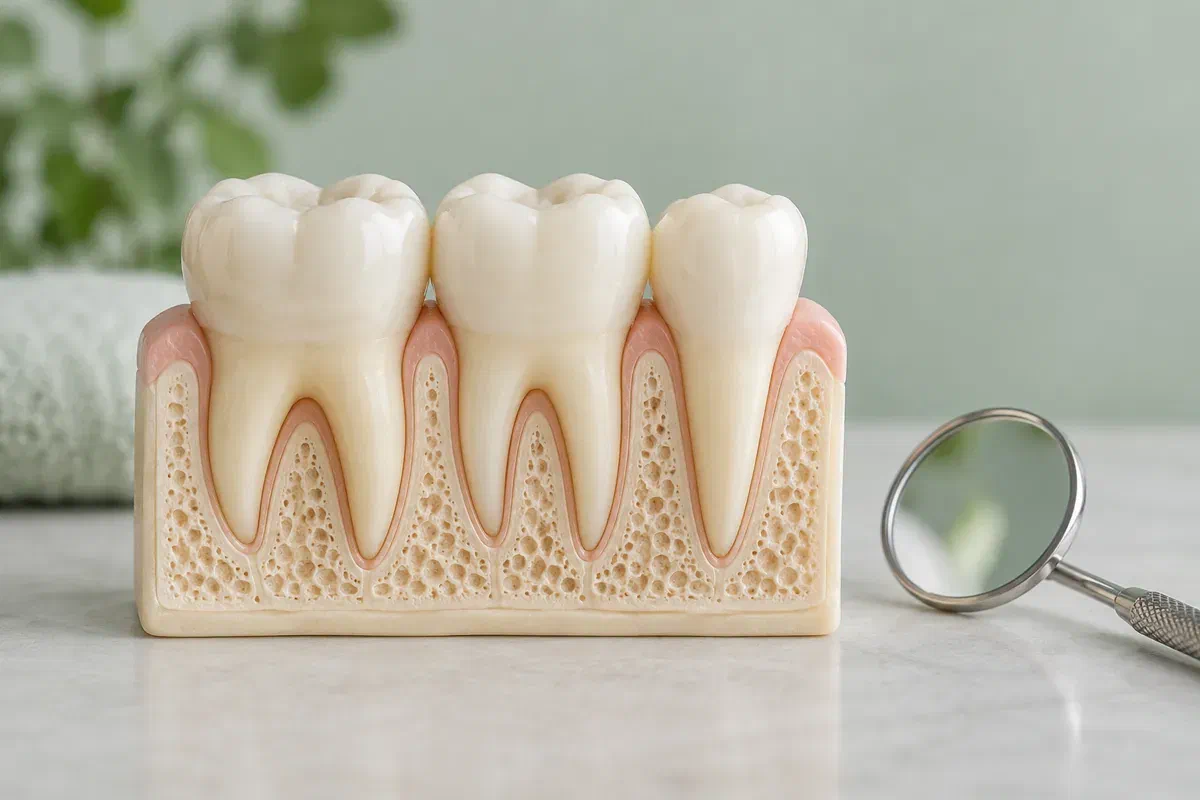
Illustrative physical model showing teeth supported by gum tissue and underlying bone
Clues worth sharing

Tell us where it is, how it has changed and how you feel.

Location, timing and direction of change all help us judge urgency. Please mention health conditions and medicines too, particularly ones that affect how well your body copes with infection.

A bump beside a tooth that is sore to touch

Explain which tooth and whether biting or pressing makes it worse. Past gum pockets, a recent filling or crown, or a seed or husk caught under the gum are all relevant. They point the assessment in a direction; examining the area still has to confirm the source.

Drainage or a sudden drop in pain

Mention whether fluid came out and whether the swelling shrank afterward. Pressure relief can quiet the pain while the cause stays untreated. An abscess that has opened is not a reason to cancel, and squeezing or puncturing it yourself can do more harm than good.

Swelling moving into the face, or feeling ill

Report facial swelling, fever, feeling generally unwell or difficulty opening your mouth as soon as you notice them. These can change where you should be seen. If things have moved on since you made the appointment, say so rather than keeping to a plan that may no longer suit.

Swelling near or around an eye, blurred or changed vision, struggling to breathe, swallow or speak, or a mouth so swollen it will hardly open all call for emergency medical care. When it cannot wait at all, phone 911 instead of sending a callback request.

Getting the diagnosis right

Today’s relief and the longer plan are two separate things.

An urgent visit tends to concentrate on how severe the infection is and on suitable local treatment. Ask the clinician to spell out what is happening today and what still needs to be done later. Knowing that distinction keeps a quieter, less painful gum from being mistaken for a completed course of care.

The tooth and the tissues around it shape every option. Ask what the examination shows about keeping the tooth and whether a further gum assessment or root canal evaluation is called for. Neither the location of the lump nor one bout of swelling automatically settles what happens to the tooth.

Patient information: SDCEP — local treatment and appropriate antibiotic use for dental abscesses · SDCEP — periodontal abscess management and review

Care chosen for the source, not the symptom

If the gum pocket is responsible, local care may involve drainage and cleaning. If the tooth is responsible, a different route is usually needed. Find out what the clinician believes started it and what today’s treatment should achieve, because two swellings that look identical may not need the same procedure.

Antibiotics judged case by case

Treating the local source cannot be replaced by a prescription. The clinician considers spread, signs of wider illness, whether drainage can be achieved and your health history. Ask why medicine is or is not recommended in your situation instead of assuming one approach fits every gum abscess.

A review date and a defined next stage

Ask when the area will be checked and which treatment comes after the acute phase is controlled. If a pocket or a problem tooth remains, the plan should state how it will be handled. A swelling that returns, even after settling on its own before, deserves a new look.

Inside the visit

History, tests, treatment, review

How the appointment runs depends on what is found and how unwell you are. A severe or spreading infection may need a different setting, whereas a contained one can often be managed through a suitable dental plan.

  1. Start with what you have noticed

    Tell us when the swelling appeared, how the pain has behaved, whether anything drained and whether you have had fever or facial symptoms. We check medicines, allergies, conditions and recent dental work. If you have already taken antibiotics, share why and whether anything changed.

  2. Test to locate the source

    The clinician examines the gum and tooth and may use pulp tests, pocket measurements or suitable radiographs to work out where the infection began. Ask what the results establish and what remains unclear. The visible swelling is part of the evidence, not the full diagnosis.

  3. Agree on urgent treatment

    We explain the proposed local care, comfort measures, its limits and the fees. The work itself might focus on a gum pocket, on the inside of a tooth or on something else the tests turned up. Should you need a referral or a hospital visit, we tell you why and what to do straight away.

  4. Confirm the follow-up

    You leave knowing what should improve, which symptoms mean calling right away and when you will be reviewed. Ask whether treatment is finished or whether only the acute stage was handled. Any further gum, restorative, root canal or extraction discussion goes into the plan so nothing is lost.

Once the urgent part is done

Small, steady habits while it heals

Home care varies with the treatment you received and the place the infection started. Ask for instructions that apply to you rather than piecing together advice from another person’s extraction, root canal or gum procedure.

Clean near the site the way you were shown

Check what brushing and flossing should look like near the treated gum for the next while. Leave the spot alone rather than pressing it to see how things feel. If the method you were given is too uncomfortable to manage, call the treating team for practical advice.

Keep medicines to the agreed plan

Before choosing pain relief, let the clinician or a pharmacist know what else you take and any health conditions you have. If an antibiotic is prescribed, take it as directed and raise any concerns or side effects. Do not reach for leftover antibiotics, borrow a prescription or raise the dose because it still hurts.

Be honest about how it is going

Note whether swelling, comfort and chewing are improving in the way that was explained. Call if things get worse, flare up again or simply do not go as described. Attend the planned review even if you feel well, so the clinician can recheck the cause and anything still left to treat.

Matching care to the cause

Three directions treatment can take

Ask the clinician how each suggestion follows from what was diagnosed and what shape the tooth is in. You may receive local treatment now and a different kind of care after the acute episode.

When the infection lives in the gum and bone support

Periodontal care when infection surrounds the tooth

After the immediate care, the gum disease behind the abscess may need its own treatment and a recheck. Ask what remains after drainage or cleaning, how the tooth’s support affects its prognosis and whether a periodontist’s input would be useful.

When testing identifies the tooth as the source

Endodontic care when infection begins inside

If the tooth is a good candidate, root canal treatment and a lasting final restoration may be discussed. Drainage appearing on the gum does not make this purely a matter of cleaning the gum. Ask whether the tooth can be restored, what else could be done and whether an endodontist should see it.

When keeping the tooth is unwise or the infection needs more

Extraction or escalation when it is the safer route

Removal may be advised for a tooth with too little left to save, and an infection that is spreading may need urgent care outside a regular dental office. Ask why the suggested option fits what was found. The decision should rest on clinical need, alternatives and your health rather than a blanket rule.

Oakville questions, answered

Before you come in

These answers are general preparation. Only an examination, together with a conversation about your symptoms, can show where your own swelling came from and how quickly it needs care.

(905) 876-4488
How can you tell whether my swelling started in the gum or in the tooth?
The clinician combines an examination of the gum with tooth tests, pocket measurements and, where appropriate, X-rays. Together these help show whether the infection began in a periodontal pocket or within the tooth. The answer guides which treatment is recommended.
What is a periodontal pocket?
It is a deepened space between the gum and the root of a tooth, often linked to gum disease. Bacteria and debris can collect there, and a periodontal abscess may form. Treating the pocket is usually part of preventing another episode.
Can I rinse with salt water while I wait to be seen?
Warm salt-water rinses are commonly suggested to help keep the area clean, but they do not treat the source. Use them gently if you choose, avoid pressing on the swelling and keep your appointment. Call promptly if symptoms worsen.
Do I need antibiotics before you can treat the abscess?
Not usually as a routine. Local treatment of the source is the main step. Whether medicine adds anything depends on spread, how unwell you are and your health history, and your clinician will explain that judgment. Ask what definitive care is still needed if a prescription is given.
Is it all right to pop the swelling to relieve the pressure?
Please do not. Squeezing or puncturing it yourself does not treat the infection and can irritate the area. If it drains on its own, note when that happened and tell the clinician. A professional assessment is still needed to find and treat the source.
What should I do if my face starts to swell on the drive over?
Spreading facial swelling, especially near the eye, or any trouble breathing or swallowing needs emergency medical assessment rather than a dental appointment. Call 911 if you need immediate help. For less severe changes, phone us so we can talk about the right setting.
Oakville to our Bronte Street practice

A short call first helps us plan your visit.

Ring (905) 876-4488 to reach our Bronte Street team about a gum problem that feels urgent and to hear when we can see you. Describe any spreading swelling or general illness clearly. Keep email and online requests for non-urgent questions.

We cannot promise urgent availability. Contact another emergency dental provider when necessary, or get emergency medical help if symptoms are serious.

Visit Milton Dental Clinic
Unit 1, 342 Bronte St. S, Milton, ON L9T 5B7
Get directions Clinic hours
Monday–Thursday
11am–7pm
Friday–Sunday
By appointment only

Areas we serve

  • Milton
  • Oakville
  • Mississauga
  • Georgetown
  • Halton Hills
  • Acton
  • Campbellville
  • Brampton
  • Burlington
  • Puslinch
  • Rockwood
  • Erin
  • Caledon
  • Etobicoke
  • Old Milton
  • Bronte Meadows
  • Timberlea
  • Dorset Park
  • Dempsey
  • Clarke
  • Beaty
  • Coates
  • Harrison
  • Scott
  • Willmott
  • Ford
  • Bowes
  • Cobden
  • Walker
  • Mountain View
  • Milton Heights
  • Hawthorne Village
  • Valley View
  • Fallingbrook
  • Nassagaweya
  • Trafalgar
  • Esquesing
  • Nelson
  • Brookville
  • Moffat
  • Glen Williams
  • Norval
  • Limehouse
  • Stewarttown
  • Ashgrove
  • Hornby
  • Silver Creek
  • Speyside
  • Scotch Block
  • North Oakville
  • River Oaks
  • Glen Abbey
  • West Oak Trails
  • Palermo
  • Bronte Creek
  • College Park
  • Joshua Creek
  • Uptown Core
  • Preserve
  • Iroquois Ridge
  • Lisgar
  • Meadowvale
  • Meadowvale Village
  • Churchill Meadows
  • Erin Mills
  • Central Erin Mills
  • Streetsville
  • East Credit
  • Creditview
  • Heartland
  • Sheridan
  • Mount Pleasant
  • Credit Valley
  • Huttonville
  • Churchville
  • Springbrook
  • Northwest Brampton
  • Bram West
  • Fletcher's Meadow
  • Fletcher's Creek South
  • Alton Village
  • Orchard
  • Millcroft
  • Headon Forest
  • Tansley
  • Brant Hills
  • Tyandaga
  • Kilbride
  • Lowville
  • Aberfoyle
  • Morriston
  • Arkell
  • Hillsburgh
  • Freelton
  • Carlisle
  • Waterdown
  • Flamborough
  • Mountsberg

How can we help?

Milton Dental Clinic

Have a question about your smile? Choose the option that works best for you.

For urgent dental concerns, please call.
Messages are reviewed during clinic hours.