

Illustrative adult describing a dental concern to a clinician in a consultation room
Specialized Care

Gum Abscess Treatment in Puslinch

The first worry with a swollen gum is often whether the tooth can be saved. That depends on the source and the support left. From Puslinch, call us to talk about urgency, the assessment and the options that may follow.

A question from Puslinch: keep or lose?

Will this tooth survive the abscess?

It is a fair question, and the honest answer is that it depends. A gum abscess is infection that has gathered in the gum or the supporting tissue beside a tooth. It may look alarming, swell quickly and taste foul when it drains. None of that, by itself, tells anyone whether the tooth can be kept.

What does help is knowing where the infection started and how much healthy support the tooth still has. A pocket between gum and root may respond to periodontal care. An infection beginning inside the tooth may be treatable with root canal therapy. Some teeth, unfortunately, have too little left. Draining the swelling buys comfort, not a verdict.

Rural households often plan trips carefully, so phone from Puslinch first and tell us how the swelling is behaving. We can discuss availability and the next step. If we cannot see you soon enough and you need dental help right away, go to another emergency dental provider without waiting for a reply to an online request.

Find out what can be done for the tooth
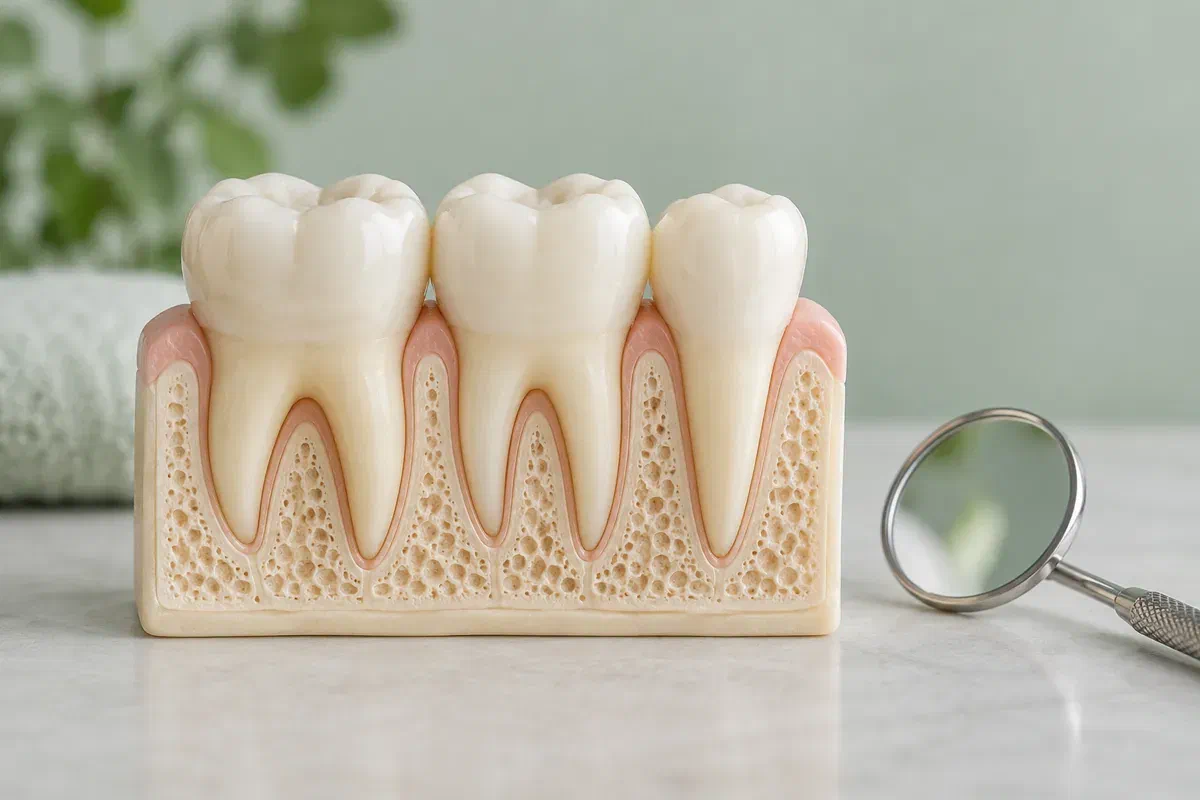
Illustrative physical model showing teeth supported by gum tissue and underlying bone
What helps us prepare

Clues about the tooth, the swelling and your health

Share when the swelling began, how it has changed and whether it is spreading. Tell us about medical conditions and medicines, especially those affecting how your body handles infection or healing.

Swelling and soreness around one tooth

Mention which tooth, whether it feels loose or tall when you bite and whether the gum is sore to touch. A history of gum pockets, large fillings, a crown or recent treatment on that tooth is helpful. The source is still confirmed by examination.

Discharge, a bad taste or easing pressure

Report any fluid or a swelling that has suddenly gone down. Lower pressure can make the tooth feel fine for a while without treating anything. Keep the assessment and avoid pressing or puncturing the gum.

Signs of wider infection

Facial swelling, fever, feeling unwell or difficulty opening your mouth should be reported right away. The right setting for care can change as these develop. If you are worse than when you booked, say so instead of assuming the original plan still works.

Trouble breathing, swallowing or speaking, swelling or pain near an eye, any vision change or marked swelling in the mouth with limited opening requires emergency medical care. Call 911 for an immediate emergency rather than waiting on a callback.

What decides the outcome

The source and the support, not the size of the swelling

Urgent care starts by gauging severity and providing appropriate local treatment. Ask the clinician to separate what was done today from what still needs to happen, and when the tooth’s long-term outlook will be discussed. A comfortable gum is not the same as a completed plan.

The tooth’s structure and the bone and gum around it shape every option. Ask what the examination reveals about keeping it, how much support is left and whether a further gum or root canal assessment would help answer the question. A single abscess rarely settles the tooth’s future on its own.

Patient information: SDCEP — local treatment and appropriate antibiotic use for dental abscesses · SDCEP — periodontal abscess management and review

Treatment fitted to the cause

A periodontal source may be managed with drainage and cleaning of the pocket. A tooth-origin infection generally needs another route. Ask which cause was identified and what the treatment intends to achieve, since swellings that look similar can lead to different procedures.

Antibiotics as a considered extra

No medicine replaces treating the local source. The clinician weighs spread, general illness, whether drainage is possible and your health history. If you want to understand why a prescription was or was not given, ask about it directly.

A review that revisits the tooth’s prospects

Arrange when the area will be rechecked and what care may come once the acute problem settles. Often the outlook is clearer after healing begins. If a pocket or problem tooth remains, there should be a plan. A swelling that recurs calls for reassessment.

Working out the tooth’s future

Four stages, from first look to final plan

Each step depends on the findings and how unwell you feel. Severe or spreading infection may need care in another setting, while a localized abscess can usually be handled within a dental plan.

  1. Background and symptoms

    We ask how the swelling started, how pain has changed, whether there was discharge and whether you have had fever or facial swelling. Medicines, allergies, conditions and previous work on the tooth are reviewed, along with any antibiotics already taken.

  2. Assessment of support and source

    The clinician examines the gum and tooth, checks for movement and may use tooth tests, pocket measurements or suitable X-rays to see the bone level and where the infection began. Ask what the findings say about the tooth and what is still uncertain.

  3. Urgent treatment and its limits

    We describe the proposed local care, comfort measures, what it can and cannot accomplish and the fees. Treatment may target a gum pocket, the inside of the tooth or another problem. If referral or hospital assessment is necessary, we explain why and what to do next.

  4. Options for keeping or replacing the tooth

    Confirm what should improve, which symptoms mean calling straight away and when the review is. Ask whether treatment is finished or only started. Note any further gum care, root canal treatment, restoration or extraction being considered so you can weigh the choices.

While the gum settles

Protect the tooth while you decide what is next.

Aftercare depends on what was done and the source of infection. Ask for instructions that fit your treatment rather than combining advice from someone else’s extraction, root canal or gum surgery.

Clean the area with care

Ask how to brush and floss near the treated site and whether to ease off temporarily. If the tooth feels tender, chewing on the other side may help. Avoid pressing or wiggling the tooth or gum to test it, and call if cleaning is too painful.

Medicines used as agreed

Tell the clinician or pharmacist about other medicines and conditions before choosing pain relief. Take any antibiotic as directed and report side effects. Do not use leftover antibiotics, share prescriptions or take extra doses because the tooth still aches.

Watch how the tooth responds

Notice whether swelling, tenderness and biting comfort improve as described. Call if symptoms worsen, return or follow an unexpected course. Keep the review even when the tooth feels fine, since that is often when its long-term outlook is discussed.

Saving, treating or replacing

Three possible answers to the same swelling

Ask how each recommendation relates to the diagnosis and the tooth’s condition. Local care may come first, with a decision about the tooth’s longer-term treatment once the acute episode passes.

When the pocket and supporting tissue are the source

Keep the tooth with gum treatment

Local care may be followed by reassessment and treatment of the gum disease involved. Ask what remains to address, how much support the tooth has and whether a periodontist could improve its prospects.

When the infection began inside the tooth

Save it through root canal treatment

A suitable tooth may be treated with root canal therapy and then restored to protect it. Drainage on the gum does not make it a gum-only issue. Ask whether there is enough tooth left to restore, what alternatives exist and whether an endodontist should advise.

When keeping it is not advisable or infection is spreading

Remove the tooth, or escalate care

A tooth with too little support or structure may need extraction, and spreading infection may require urgent care beyond a dental office. Ask why the option fits the findings and what replacement choices exist later. The decision should rest on clinical need and your health.

Keeping the tooth: your questions

What affects whether a tooth can stay

These answers can help you prepare for the conversation. They cannot predict the outcome for your tooth without an examination, testing and a review of your symptoms.

(905) 876-4488
What makes a tooth with an abscess impossible to save?
Severe loss of supporting bone, a crack that extends deep into the root or too little tooth structure to restore can make keeping it unsuitable. The clinician will explain the findings and whether any alternatives exist.
My tooth feels loose since the swelling began. Is that permanent?
Not always. Swelling and infection can make a tooth feel looser for a time, and it may firm up once the area settles. Lasting looseness can also reflect bone loss. The clinician will assess and recheck it.
If the tooth has to come out, what are the replacement options?
Options may include a bridge, a removable denture or an implant, depending on your mouth and health. These are usually discussed once the infection has been dealt with. Ask about the advantages and limits of each.
Can I ask for a specialist opinion before deciding?
Yes. A periodontist or endodontist can offer another view on whether the tooth can be kept. Ask the clinician whether a referral makes sense, keeping in mind that urgent symptoms may need treatment first.
Does a large swelling mean the tooth is worse off?
Not necessarily. The size of a swelling does not reliably show how much damage the tooth has. Its source and the amount of support left are what matter, and both need examination and testing.
Is it better to just remove the tooth to be done with it?
That depends on your situation. Removal ends one problem but creates a gap that may need replacing. If the tooth can be treated and kept, that may be worth discussing. Ask about all suitable options before deciding.
Planning from Puslinch

Call, and we will help you plan the visit.

Phone our Bronte Street team at (905) 876-4488 about a gum swelling and how soon we can see you. Describe any spreading swelling or feeling unwell clearly. Email and online requests are for non-urgent questions.

Urgent openings cannot be guaranteed. Contact another emergency dental provider if needed, or seek emergency medical care for serious symptoms.

Visit Milton Dental Clinic
Unit 1, 342 Bronte St. S, Milton, ON L9T 5B7
Get directions Clinic hours
Monday–Thursday
11am–7pm
Friday–Sunday
By appointment only

Areas we serve

  • Milton
  • Oakville
  • Mississauga
  • Georgetown
  • Halton Hills
  • Acton
  • Campbellville
  • Brampton
  • Burlington
  • Puslinch
  • Rockwood
  • Erin
  • Caledon
  • Etobicoke
  • Old Milton
  • Bronte Meadows
  • Timberlea
  • Dorset Park
  • Dempsey
  • Clarke
  • Beaty
  • Coates
  • Harrison
  • Scott
  • Willmott
  • Ford
  • Bowes
  • Cobden
  • Walker
  • Mountain View
  • Milton Heights
  • Hawthorne Village
  • Valley View
  • Fallingbrook
  • Nassagaweya
  • Trafalgar
  • Esquesing
  • Nelson
  • Brookville
  • Moffat
  • Glen Williams
  • Norval
  • Limehouse
  • Stewarttown
  • Ashgrove
  • Hornby
  • Silver Creek
  • Speyside
  • Scotch Block
  • North Oakville
  • River Oaks
  • Glen Abbey
  • West Oak Trails
  • Palermo
  • Bronte Creek
  • College Park
  • Joshua Creek
  • Uptown Core
  • Preserve
  • Iroquois Ridge
  • Lisgar
  • Meadowvale
  • Meadowvale Village
  • Churchill Meadows
  • Erin Mills
  • Central Erin Mills
  • Streetsville
  • East Credit
  • Creditview
  • Heartland
  • Sheridan
  • Mount Pleasant
  • Credit Valley
  • Huttonville
  • Churchville
  • Springbrook
  • Northwest Brampton
  • Bram West
  • Fletcher's Meadow
  • Fletcher's Creek South
  • Alton Village
  • Orchard
  • Millcroft
  • Headon Forest
  • Tansley
  • Brant Hills
  • Tyandaga
  • Kilbride
  • Lowville
  • Aberfoyle
  • Morriston
  • Arkell
  • Hillsburgh
  • Freelton
  • Carlisle
  • Waterdown
  • Flamborough
  • Mountsberg

How can we help?

Milton Dental Clinic

Have a question about your smile? Choose the option that works best for you.

For urgent dental concerns, please call.
Messages are reviewed during clinic hours.