

Illustrative adult describing a dental concern to a clinician in a consultation room
Specialized Care

Gum Abscess Treatment in Rockwood

What you do in the days after urgent gum care matters almost as much as the visit. From Rockwood, call us to discuss timing and assessment, then leave with home instructions and a review that fit your treatment.

Rockwood: thinking past the first visit

Healing happens at home.

Most of a gum abscess’s story plays out after you leave the chair. The infection itself is a localized build-up in the gum or the tissue that cradles a tooth, often first noticed as a sore swelling, a sour taste or a little drainage. Treatment begins in the clinic, but the next week of brushing, medicines and watching symptoms shapes how it goes.

Good aftercare depends on knowing what was actually treated. An infection living in a pocket beside the root is handled differently from one that started inside the tooth and drained out through the gum. Each leaves different instructions and a different follow-up. Simply feeling less pressure does not tell you which one you had or whether it is resolved.

So when you call from Rockwood, describe how the swelling is changing and we will talk about availability and the next step. Planning ahead for the review saves a second trip at short notice. If we cannot see you promptly for something urgent, reach another emergency dental provider instead of relying on an online form.

Book a gum abscess appointment
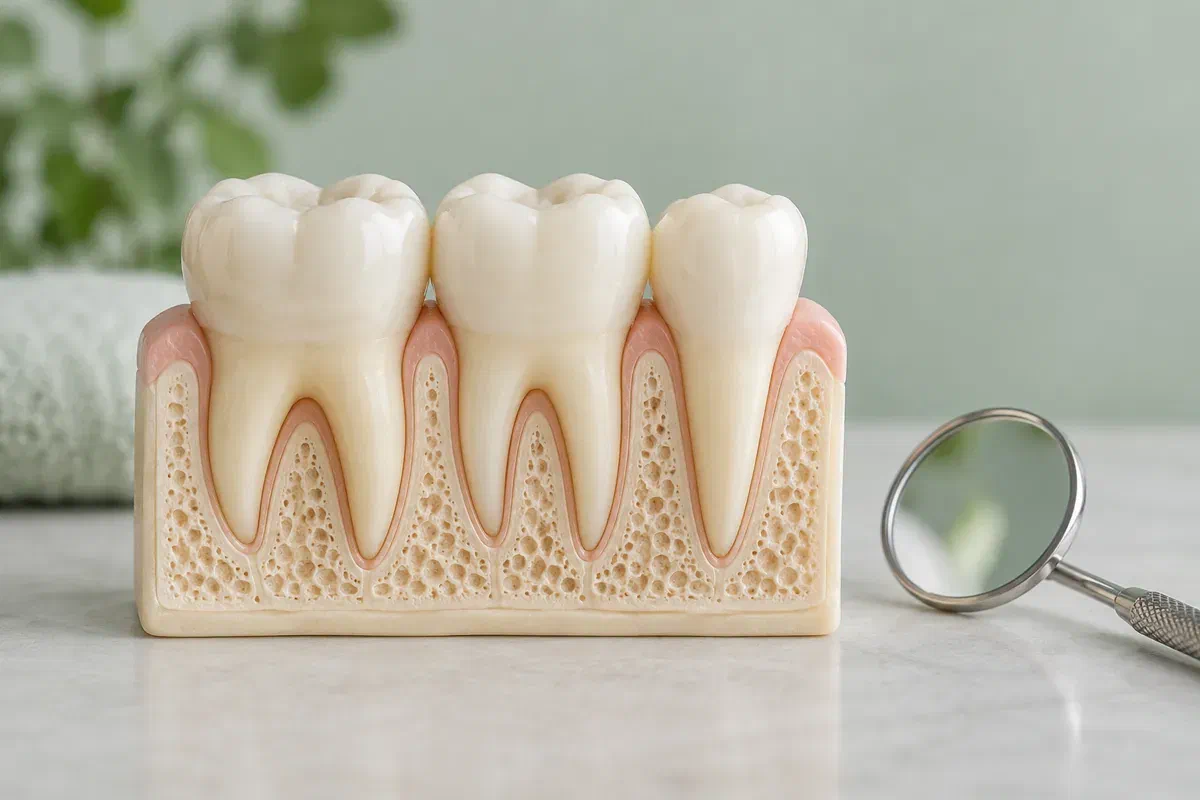
Illustrative physical model showing teeth supported by gum tissue and underlying bone
Getting the first visit right

Clear information now makes recovery smoother later.

Explain where the swelling is, when it appeared and whether it is getting worse. Tell us about health conditions and medicines too, particularly any that reduce your ability to fight infection or affect healing.

A swollen, tender area by a tooth

Mention which tooth and whether chewing or touching it hurts. Earlier gum problems, recent work on that tooth or something trapped under the gum are useful details. They help focus the visit, though the source is only confirmed by examination.

It has drained, or the pain dropped off

Tell us about any drainage or sudden comfort. Lower pressure often eases pain while the cause carries on. Keep the appointment, and do not squeeze, press or pierce the gum in an effort to help it along.

Swelling or illness beyond the mouth

Report facial swelling, fever, feeling unwell or trouble opening your mouth without delay. These signs can mean a different setting is needed. If you are worse than when you booked, let us know rather than assuming the first plan still suits.

If swallowing, breathing or speaking becomes difficult, if the area around an eye swells or hurts, if your vision changes or if your mouth is too swollen to open properly, get emergency medical care. For an immediate emergency, call 911 instead of waiting for a callback.

Know what was done

Leave with a clear picture of today and next time.

Urgent care usually focuses on judging severity and providing appropriate local treatment. Before going home, ask the clinician to name what was treated, what was not and what the next appointment is for. That clarity is what turns a short-term fix into a full recovery plan.

The tooth’s condition and its gum and bone support decide the longer-term options. Ask whether the findings point toward keeping the tooth and whether further gum or root canal assessment is coming. One swelling does not settle the tooth’s future, and the review is often where that is discussed.

Patient information: SDCEP — local treatment and appropriate antibiotic use for dental abscesses · SDCEP — periodontal abscess management and review

Treatment matched to the source

An infection in a gum pocket may be drained and cleaned. Infection from within the tooth often needs a separate route. Ask which source was found and what the treatment aimed to fix, since that shapes both your aftercare and the follow-up.

A clear reason for any antibiotics

Medicine is not a stand-in for treating the local cause. The clinician considers spread, general illness, whether drainage was achieved and your health. Ask why you were or were not prescribed something, and how long to take it if you were.

A review set before you leave

Agree on the recheck date and what may follow once the acute stage is controlled. If a pocket or problem tooth still needs work, the plan should explain how. A swelling that returns, even after earlier ones settled, should prompt another assessment.

The appointment

What happens before you go home

The sequence depends on the findings and how unwell you feel. A spreading or severe infection may need care elsewhere, while a contained one can usually be managed with a dental plan that fits it.

  1. Talk about the swelling

    Expect questions about the first sign of trouble, any discharge, how the ache has risen or settled, and whether a temperature or cheek swelling has appeared. We go over your medicines, allergies, conditions and recent dental care, including any antibiotics already taken.

  2. Look for the source

    A close look at the gum is paired, where useful, with checks of the tooth’s nerve, probing of the pocket depth and an appropriate radiograph. Ask what was confirmed and what is still uncertain. The visible swelling is one clue among several.

  3. Provide urgent care

    We describe the local treatment planned, comfort options, its limits and the fees. What we treat depends on what the tests showed, whether that is a pocket, the nerve space of the tooth or something else. Where a specialist or hospital is the better place, you will hear the reason and exactly what to do next.

  4. Go through aftercare together

    Before you leave, we explain how to clean the area, how to take any medicine, what should improve and which signs mean calling right away. Ask whether the visit completed treatment and note any further gum, restorative, root canal or extraction plans along with your review date.

Your first week at home

Clean gently, take medicines carefully and watch the trend.

Aftercare depends on what was done and where the infection started. Ask for instructions that fit your own treatment instead of mixing in advice meant for someone else’s extraction, root canal or gum surgery.

A modified cleaning routine

Ask whether to brush the area normally, use a softer brush for a few days or pause flossing there briefly. Keep the rest of your mouth clean as usual. Avoid poking, pressing or squeezing the gum, and call if the routine you were given is too uncomfortable.

Pain relief and antibiotics used properly

Check with the clinician or pharmacist about your other medicines and conditions before choosing pain relief. If antibiotics were prescribed, follow the instructions and mention any side effects. Do not use leftover pills, share a prescription or take more because it still feels sore.

Signs that things are on track

Swelling should shrink, comfort should improve and chewing should get easier as described. Call if symptoms worsen, come back or follow a different path. Keep the review even if you feel fully recovered, so the source and remaining treatment can be checked.

What may come later

The follow-up depends on what caused it.

Ask how each recommendation connects to the diagnosis and the condition of your tooth. Local care now may be followed by a different treatment once things have settled.

If a periodontal pocket was the source

Ongoing gum care

Once the flare-up is under control, the gum disease beneath it usually needs its own course of care and then regular maintenance visits. Ask what still needs doing after the initial drainage or cleaning, what the remaining bone means for the tooth and whether a periodontist could help.

If the infection began inside the tooth

Root canal treatment and restoration

A suitable tooth may be considered for root canal therapy and a lasting restoration. A swelling seen on the gum can still come from within the tooth. Ask whether it can be restored, what alternatives exist and whether an endodontist should be involved.

If the tooth cannot be kept or infection is spreading

Extraction or a higher level of care

Some teeth are too weakened to keep and are better taken out, and an infection that keeps spreading can need hospital-level attention. Ask why the option suits the findings and what aftercare it involves. The choice should reflect clinical need, alternatives and your health.

Recovery questions

Answers for the days after treatment

These answers are general guidance. Your own aftercare depends on the treatment you received, the source of infection and your health, which only your clinician can assess.

(905) 876-4488
How soon should a gum abscess start to feel better after treatment?
Many people notice some improvement within a few days, but it varies with the cause and what was done. Ask what to expect in your case, and call if things are getting worse rather than better.
Can I brush the treated area?
Usually, gentle brushing is encouraged to keep the area clean, but follow the specific instructions you were given. If brushing is too painful, call the team for an alternative way to keep the site clean.
What foods should I eat while it heals?
Soft foods that do not need much chewing on the treated side are often more comfortable. Avoid very hard, crunchy or small foods that might lodge in the area. Return to normal eating as comfort allows.
Is it normal for the area to feel tender for a while?
Some tenderness after treatment is common and should gradually ease. Pain that grows, swelling that returns or new symptoms such as fever are reasons to call. Serious signs need emergency medical care.
Can I smoke or vape while the gum is healing?
Smoking and vaping can slow gum healing and are linked with gum disease. Avoiding them, especially during recovery, is a good idea. If you would like help quitting, your physician or pharmacist can offer support.
Why do I need a review if I feel fine?
Feeling better does not confirm that the source has been fully dealt with. The review lets the clinician check healing, see whether a pocket or tooth problem remains and plan any further treatment.
From Rockwood

Book the urgent visit and the review in one call.

Call (905) 876-4488 to reach our Bronte Street team about an urgent gum concern and appointment times. Mention spreading swelling or feeling unwell straight away. Save email and the website form for questions that can wait.

Urgent availability is not guaranteed. When you cannot wait, another emergency dental provider or, for severe symptoms, emergency medical care is the right call.

Visit Milton Dental Clinic
Unit 1, 342 Bronte St. S, Milton, ON L9T 5B7
Get directions Clinic hours
Monday–Thursday
11am–7pm
Friday–Sunday
By appointment only

Areas we serve

  • Milton
  • Oakville
  • Mississauga
  • Georgetown
  • Halton Hills
  • Acton
  • Campbellville
  • Brampton
  • Burlington
  • Puslinch
  • Rockwood
  • Erin
  • Caledon
  • Etobicoke
  • Old Milton
  • Bronte Meadows
  • Timberlea
  • Dorset Park
  • Dempsey
  • Clarke
  • Beaty
  • Coates
  • Harrison
  • Scott
  • Willmott
  • Ford
  • Bowes
  • Cobden
  • Walker
  • Mountain View
  • Milton Heights
  • Hawthorne Village
  • Valley View
  • Fallingbrook
  • Nassagaweya
  • Trafalgar
  • Esquesing
  • Nelson
  • Brookville
  • Moffat
  • Glen Williams
  • Norval
  • Limehouse
  • Stewarttown
  • Ashgrove
  • Hornby
  • Silver Creek
  • Speyside
  • Scotch Block
  • North Oakville
  • River Oaks
  • Glen Abbey
  • West Oak Trails
  • Palermo
  • Bronte Creek
  • College Park
  • Joshua Creek
  • Uptown Core
  • Preserve
  • Iroquois Ridge
  • Lisgar
  • Meadowvale
  • Meadowvale Village
  • Churchill Meadows
  • Erin Mills
  • Central Erin Mills
  • Streetsville
  • East Credit
  • Creditview
  • Heartland
  • Sheridan
  • Mount Pleasant
  • Credit Valley
  • Huttonville
  • Churchville
  • Springbrook
  • Northwest Brampton
  • Bram West
  • Fletcher's Meadow
  • Fletcher's Creek South
  • Alton Village
  • Orchard
  • Millcroft
  • Headon Forest
  • Tansley
  • Brant Hills
  • Tyandaga
  • Kilbride
  • Lowville
  • Aberfoyle
  • Morriston
  • Arkell
  • Hillsburgh
  • Freelton
  • Carlisle
  • Waterdown
  • Flamborough
  • Mountsberg

How can we help?

Milton Dental Clinic

Have a question about your smile? Choose the option that works best for you.

For urgent dental concerns, please call.
Messages are reviewed during clinic hours.