

Illustrative patient discussing a gum-health assessment with a clinician
Specialized Care

Gum Disease Assessment

Understand what your gum measurements and examination findings mean. Arrange a gum disease assessment in Milton to review inflammation, the support around your teeth, relevant risk factors, and the care or monitoring appropriate for your mouth.

A closer look at gum disease assessment

Give the numbers a meaning and the findings a next step.

A gum disease assessment looks at the tissues that surround and support your teeth. It brings together your history, clinical findings, and relevant images to establish whether there is inflammation, loss of support, or another concern. The purpose is to explain the condition of your mouth and guide an appropriate plan.

You may arrange an assessment because your gums bleed, a tooth feels different, or another provider has recommended periodontal care. You may also have few obvious symptoms. A comfortable mouth does not supply all the information needed about the gums, and a photograph cannot replace measurements and examination.

At Milton Dental Clinic, ask for the findings to be connected to practical decisions. Which areas need attention, what treatment is being proposed, and how will progress be reviewed? An assessment is most useful when you leave understanding both the diagnosis and what it means for the next stage of care.

Request a gum disease assessment
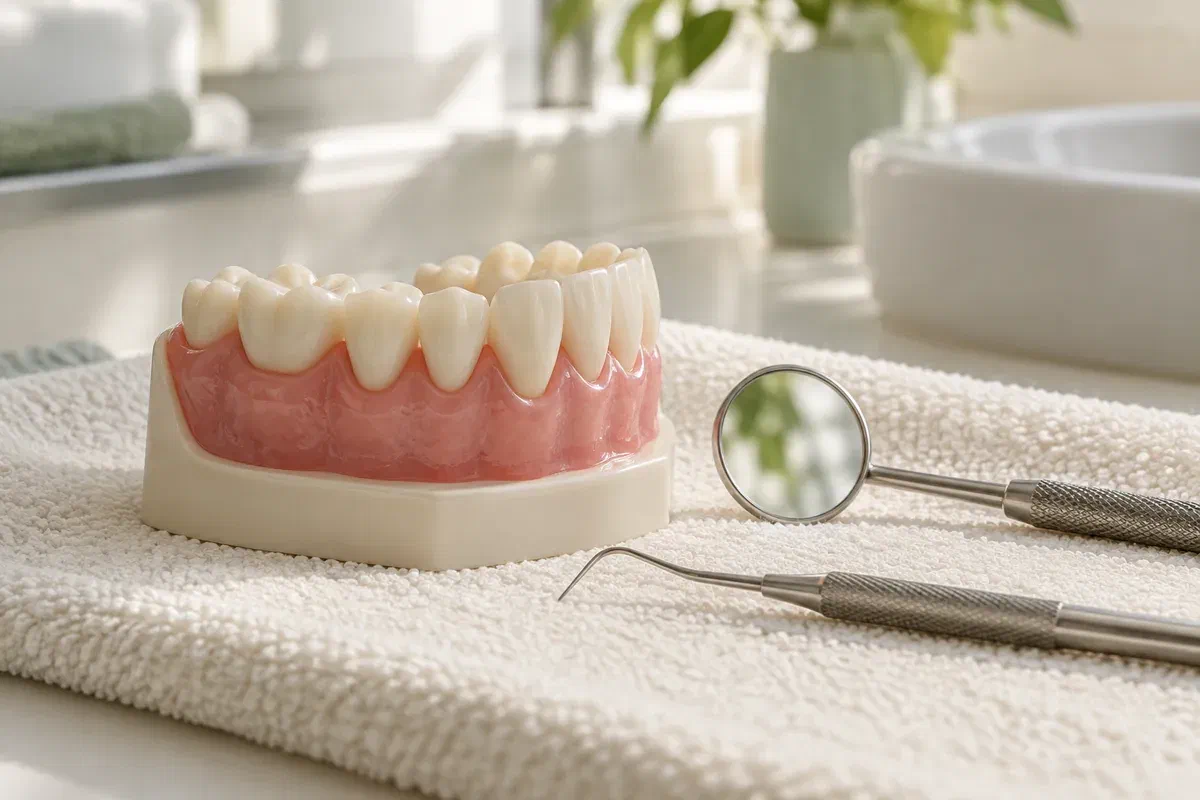
Illustrative tooth-and-gum model beside a periodontal probe and dental mirror
Reasons to review your gum health

Bring the symptoms, earlier records, and questions that prompted the visit.

Describe changes in your mouth without trying to assign them a diagnosis first. If you have been told you need deep cleaning or specialist care, bring the recommendation and ask which findings support it.

Bleeding, recession, or a change around the gumline

Point out where the change occurs and whether it is new, recurring, or longstanding. Mention tenderness, food trapping, or difficulty reaching an area when cleaning. These observations help focus the discussion, while examination establishes how the visible change relates to the tissues beneath it.

A tooth that feels loose or different when chewing

Explain what you notice and when it happens. A change in movement or chewing comfort needs evaluation rather than a home test of how much the tooth moves. The clinician considers the tooth and its support together and can discuss whether more than one issue is involved.

A history or risk factor that deserves ongoing review

Tell the team about previous periodontal treatment, tobacco use, diabetes, relevant medicines, and changes in health. Bring earlier records when available. Risk factors help inform planning, but they do not establish the extent of disease without assessing what is happening in your own mouth.

A painful gum swelling, pus, or rapidly changing symptoms should be reported when booking. An urgent infection assessment may be needed before a routine comprehensive discussion of long-term gum care.

What a useful assessment can establish

Understand the current condition before choosing the treatment.

Gum measurements can sound like a string of unexplained numbers. Ask the clinician to identify which findings are important and how they fit together. Pocket depth, bleeding, recession, and the level of support each contribute information; no isolated number should be treated as a complete explanation of your situation.

The assessment also creates a record for future comparison. Ask what can reasonably be concluded now and what requires reassessment or earlier records. A clear starting point helps the team discuss response to care, while avoiding the assumption that one examination can predict exactly how every site will behave.

Patient information: American Academy of Periodontology — the components of a comprehensive periodontal evaluation

A diagnosis distinguished from a symptom

Bleeding is a finding, while gingivitis or periodontitis describes a condition established from the assessment. Ask which diagnosis applies and whether the concern is localized or more widespread. This distinction helps explain why a treatment recommendation may differ from the cleaning you have received before.

A reason for each proposed investigation

If images or additional measurements are recommended, ask what question they are intended to answer. Earlier records may provide useful context when available and suitable. The clinician should connect the information being gathered to the assessment rather than present every test as an automatic package.

A plan that includes treatment, review, and maintenance

Ask which steps are intended to address current disease and which support ongoing monitoring. Clarify the expected visits, fees, and any referral discussion. Understanding the sequence makes it easier to distinguish an active course of treatment from the maintenance that may follow.

What happens during a gum assessment

Combine the history, measurements, and images into an understandable explanation.

The scope depends on the reason for the visit and what information is already available. Tell the clinician if you are anxious or tender, and ask how you can request a pause during the examination.

  1. Review your symptoms and periodontal history

    Describe changes in bleeding, gum position, chewing, or tooth stability. Discuss earlier gum treatment, your cleaning routine, medical history, and medicines. If another clinician has recommended care, share the report so the current assessment can address the question behind that recommendation.

  2. Record the relevant clinical findings

    The clinician examines the gums and uses a periodontal probe to assess spaces around the teeth. Bleeding, recession, and other findings help interpret those measurements. Ask for an explanation if the process is unfamiliar, and mention any sensitive area before it is examined.

  3. Review tooth support and relevant diagnostic information

    Images may be used where indicated to assess supporting bone and other concerns. The clinician considers them alongside the clinical examination and available history. Ask which findings are established and whether further records, assessment, or specialist input would make the treatment discussion more complete.

  4. Explain the diagnosis and agree on priorities

    Review which areas need care, what the proposed treatment aims to achieve, and how response will be checked. Ask about alternatives and what postponing care could mean. Confirm the next appointment's purpose so assessment, treatment, and maintenance are not confused with one another.

Using the findings after the visit

Turn the assessment into a plan you can follow and review.

An assessment may be the beginning of care rather than the treatment itself. Keep the agreed next steps and ask for clarification before making changes to a prescribed routine or deciding that another visit is unnecessary.

Focus home care on the areas discussed

Ask which cleaning methods and tools suit the sites identified during the examination. If reaching an area is difficult, request a demonstration. Explain barriers such as hand discomfort, tight spaces, or complicated dental work so the advice addresses the problem you actually encounter at home.

Keep treatment and reassessment appointments distinct

Check whether the next visit is intended to provide care, measure the response, or maintain an improved condition. Those visits can have different purposes. If your schedule or finances make the plan difficult, discuss the issue early and ask how priorities can be explained clearly.

Update the team when symptoms or health information change

Report new swelling, increased discomfort, or a change in tooth stability rather than waiting silently for the next routine visit. Also mention changes in medicines or relevant medical care. The plan may need review when new information changes the context of the original assessment.

Choosing care after the assessment

The findings determine whether the next step is prevention, treatment, or referral.

Ask what supports the recommendation and how success will be reviewed. The appropriate option depends on the diagnosis, affected sites, tooth support, risk factors, and the care you have already received.

When the findings support a less extensive approach

Preventive support and management of gum inflammation

Professional cleaning and tailored home-care guidance may be discussed where appropriate. Ask which areas need attention and when to review the response. A preventive plan should still have a clear purpose; it is not simply a decision to ignore symptoms because they seem mild.

When established periodontal disease needs treatment

Active periodontal care followed by reassessment

The clinician may recommend treatment directed at affected sites, followed by a review of healing and remaining needs. Ask what is included in each stage and how the maintenance plan will be determined. A single initial appointment does not necessarily complete the course of care.

When complexity or remaining uncertainty warrants another opinion

Specialist periodontal assessment or coordinated care

A periodontist may help evaluate advanced, complex, or persistent concerns. Ask what question the referral is intended to answer and which records will accompany it. Clarify how general dental care and specialist recommendations would be coordinated so responsibilities and follow-up remain understandable.

Gum assessment questions

Ask how the findings fit together before deciding what they mean.

The most useful questions connect measurements with a diagnosis and a care plan. Bring previous reports if you would like to understand how a new recommendation relates to earlier advice.

(905) 876-4488
Does one deep gum-pocket measurement prove the whole mouth has advanced disease?
No. A measurement needs interpretation alongside the site, other clinical findings, relevant images, and the wider pattern in your mouth. Ask whether the concern is localized or generalized and what supports the diagnosis. One number is not a complete periodontal assessment.
Can a gum disease assessment be useful when my teeth and gums do not hurt?
Yes. Symptoms do not reveal every aspect of gum health or tooth support. An examination can identify findings you have not noticed and clarify whether treatment or monitoring is appropriate. Ask what the assessment shows rather than using comfort alone as a measure of health.
Why might the clinician compare gum recession with pocket measurements?
These findings describe different aspects of the tissues around a tooth and help the clinician interpret the level of support. Ask for the explanation using a specific site in your mouth. The combination is more informative than treating either measurement as an isolated score.
Will a periodontal assessment always require a new set of dental X-rays?
Not automatically. Imaging should be selected for the clinical question, your history, and the information already available. Bring details of recent images and ask whether they can be obtained and used. The clinician can explain why additional views are or are not needed.
Is the gum disease assessment appointment the same as the treatment appointment?
Not necessarily. Assessment establishes the findings and plan; treatment addresses the diagnosed problem. Some care may be possible at the same visit, but this should be confirmed rather than assumed. Ask what the booked appointment includes and what visits may follow.
What should I ask if a periodontist referral is recommended after my gum assessment?
Ask which findings prompted referral, what the specialist is being asked to evaluate, and whether anything should be done while you wait. Confirm which records will be shared and how recommendations will return to your usual dental provider. This helps keep the overall plan coordinated.
Gum disease assessment in Milton

Leave with an explanation of your gum health and the next step.

Contact our Bronte Street practice to arrange an assessment of your gums and tooth support. Bring earlier periodontal records or recommendations when available, along with the questions you most want the visit to answer.

Assessment scope, imaging, treatment, maintenance intervals, and specialist referral are determined individually. Findings and response to care guide the plan.

Visit Milton Dental Clinic
Unit 1, 342 Bronte St. S, Milton, ON L9T 5B7
Get directions Clinic hours
Monday–Thursday
11am–7pm
Friday–Sunday
By appointment only

How can we help?

Milton Dental Clinic

Have a question about your smile? Choose the option that works best for you.

For urgent dental concerns, please call.
Messages are reviewed during clinic hours.