

Illustrative patient discussing a gum-health assessment with a clinician
Specialized Care

Gum Disease Assessment in Brampton

Diabetes, a new prescription, or a change in your health can matter for your gums too. Our gum disease assessment, open to people coming from Brampton, reviews inflammation, tooth support, and your medical picture, then sets out whether treatment or monitoring is the sensible path.

Brampton gum health

Your medical history belongs in the gum conversation.

Perhaps your family doctor mentioned that diabetes and gum health are linked, or a pharmacist noted that a new medicine can dry your mouth. Questions like these are a good reason for a gum disease assessment. The visit reviews your history and medicines, examines the gums closely, and uses images when indicated, to see whether there is inflammation or loss of support around the teeth.

Health changes are one route in. Bleeding when brushing, gums that look lower than before, or a tooth that feels unsteady are others, and some people simply have not had their gums checked in detail. A mouth that feels fine is not proof of healthy gums, and a photo of the gumline cannot do what a measured examination does.

Coming from Brampton, it helps to bring a current medication list and any recent relevant results you are comfortable sharing. Ask the clinician how your health and your gum findings relate, which areas need care, and how progress will be checked. You should leave with a diagnosis and a clear sense of the next step.

Schedule an assessment
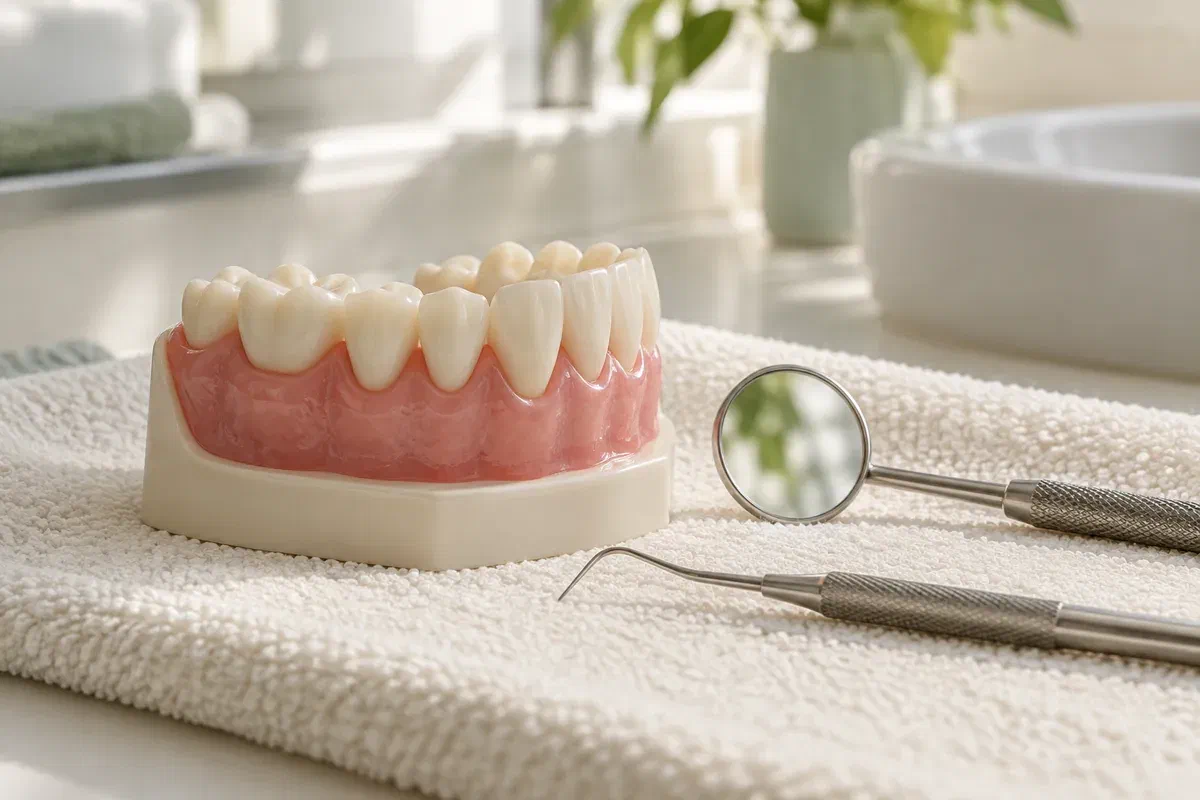
Illustrative tooth-and-gum model beside a periodontal probe and dental mirror
Reasons people book

Changes in your health, changes in your gums, or both

Explain what you have noticed without trying to diagnose it. If you have been told you need deep cleaning or a periodontist, bring that recommendation, and mention any medical advice that seems relevant so the whole picture can be considered together.

Bleeding, tenderness, or receding gums

Say where it happens and whether it is new, recurring, or longstanding. Puffy edges, a bad taste, or food that collects in one place are useful details. The examination then shows how what you see at the surface relates to the gum and bone underneath.

A tooth that feels mobile or bites unevenly

Describe the sensation and when it occurs. Rather than checking the tooth yourself, let it be assessed at the chair. The clinician looks at the tooth and its support together and can explain whether more than one issue might be involved.

Diabetes, medicines, and other health factors

Tell the team about diabetes, tobacco use, medicines, pregnancy, recent surgery, or other changes in your health, along with any earlier gum treatment. These factors guide planning and may call for coordination with your physician, but only an examination shows what is happening in your mouth.

If your gum is swollen and painful, there is pus, or symptoms are changing quickly, say so when booking. A prompt infection visit may be needed before a broader gum-health review.

Why it is worth the visit

Connect the dots between your health and your gum findings.

A periodontal chart is easier to understand when someone explains it alongside your health history. Ask which findings stand out and how they relate to each other. Pocket depth, bleeding, recession, and bone levels each describe something different, and none is a full explanation on its own.

The assessment also becomes a reference for later visits. Ask what is certain now and what needs a re-measurement or older records to decide. A baseline is especially useful if your health is changing, because it allows you and the team to see how the gums respond over time, without assuming every site will behave identically.

Patient information: American Academy of Periodontology — the components of a comprehensive periodontal evaluation

A diagnosis, separate from the symptom

Bleeding is a sign. Gingivitis and periodontitis are diagnoses established through the full assessment. Ask which applies and whether it is localized or widespread. This explains why the advice may differ from the cleanings you have had in the past.

Each test justified

When images or extra measurements are suggested, ask what they are meant to clarify. Recent records from another office may be suitable to use. Every investigation should be linked to the assessment rather than included by default.

Treatment, review, and maintenance in sequence

Ask which steps address current disease and which are for ongoing monitoring. Discuss expected visits, fees, any referral, and whether your physician should be informed. Seeing the sequence makes it easier to understand where treatment ends and maintenance begins.

What to expect

Your health, your gums, and what the two together suggest

The scope depends on why you came and the information already available. If you are nervous or a spot is tender, tell the clinician before starting and agree on a signal to stop for a moment.

  1. Review medical and dental history

    Describe changes in bleeding, gum position, chewing, or tooth stability. The clinician goes over earlier gum care, your cleaning routine, health conditions such as diabetes, and your current medicines. If another provider has made a recommendation, share it so the question behind it can be answered.

  2. Take periodontal measurements

    A thin, marked probe is eased into the gap where gum meets tooth at several points, and each depth is noted. The clinician also records where the gums bleed and how far they have receded, since diabetes and some medicines can influence both. Mention any sore area before it is checked.

  3. Consider images where they are needed

    Where indicated, images help assess the bone supporting your teeth and other concerns. They are read in combination with the clinical examination and history. Ask which findings are confirmed and whether more information or a specialist opinion would be useful.

  4. Agree on a plan that fits your health

    You hear the diagnosis in plain terms, where it is concentrated, the goal of any proposed care, and how improvement will be gauged. Ask about alternatives, the effects of waiting, and whether anything should be coordinated with your doctor. Confirm the purpose of the next appointment.

Keeping on track

Follow the plan, and keep both care teams informed.

An assessment is often the first step in a course of care. Keep to the agreed next steps, and check before altering a recommended routine or deciding that a follow-up is unnecessary.

Focus home care where it was advised

Ask which brushes, floss, or interdental aids suit the areas identified. A short demonstration can help with hard-to-reach spots. If dry mouth, hand discomfort, or complex dental work makes cleaning harder, say so, so the guidance matches what you can manage daily.

Keep each appointment's purpose clear

Treatment, re-measurement, and maintenance visits serve different goals. Planning the trip from Brampton is simpler when you know which visit is next. If scheduling or finances make the plan difficult, talk about it early and ask which steps matter most.

Share new health information promptly

Call about new swelling, increased discomfort, or a tooth that feels less stable, rather than waiting. Tell the team about new diagnoses, changes in medicines, or upcoming medical procedures. These updates can change how the original findings and plan should be viewed.

Choosing the next step

Prevention, periodontal care, or a specialist: matched to the findings

Ask what supports the recommendation and how success will be judged. The best option depends on the diagnosis, the sites involved, tooth support, your health and risk factors, and the care you have already had.

When a lighter approach is supported

Preventive care and inflammation control

Professional cleaning and home-care guidance adapted to your health may be discussed. Ask which areas need attention and when they will be reviewed. Prevention still requires a clear purpose and is not a reason to dismiss symptoms that seem mild.

When periodontitis needs to be treated

Active periodontal treatment and reassessment

The clinician may propose deeper cleaning of the involved pockets, then a later visit to see how well they have settled, which can be influenced by blood sugar control. Ask what the course involves and how maintenance will be set. The first treatment appointment may not be the last one.

When complexity or medical factors call for another opinion

Periodontist referral or coordinated care

A periodontist may help assess advanced, complicated, or persistent problems. Ask why a specialist is being suggested and what paperwork goes along. Find out how your dentist, the specialist, and where relevant your physician will share information.

Health and gums

Questions about your health and gum care

Helpful questions tie the findings to a diagnosis and a plan. If you have medical information or earlier dental reports that seem relevant, bring them along.

(905) 876-4488
Why does a dental office ask so many questions about diabetes?
Diabetes is a recognized risk factor for gum disease, and gum health can be relevant to overall health management. Knowing your history helps the clinician interpret findings and plan care. Share what you are comfortable sharing, and ask how it affects your plan.
Can my medicines affect my gums?
Some medicines can affect the mouth, for example by causing dryness or changes in the gum tissue. Bring a current list, including over-the-counter products, so the clinician can consider whether any of them are relevant to your findings.
Should I tell my doctor about the results of my gum assessment?
That can be helpful, particularly if you have a condition such as diabetes. Ask the clinician whether a summary would be useful and how information can be shared with your physician if you would like it to be.
Can gums be unhealthy even when they do not hurt?
Yes. Many gum changes develop without pain. An examination may reveal findings you have not noticed and clarify whether monitoring or treatment is appropriate, so comfort should not be your only guide.
Why compare recession with pocket depth instead of looking at just one?
They measure different aspects of the tissue around a tooth. Taken together, they give a better idea of how much support has been lost. Ask the clinician to explain using one of your own teeth.
Is the assessment appointment also my treatment appointment?
Not necessarily. The assessment establishes the findings and plan, and treatment addresses the diagnosed problem, sometimes at a later visit. Confirm what your booking includes and what may follow.
Booking from Brampton

One visit to see how your health and your gums fit together

Reach our Bronte Street practice by phone or online and let the team know about any health conditions when you book. Bring a current medication list, any earlier periodontal records or advice, and the questions you would most like answered.

Assessment scope, imaging, treatment, maintenance timing, and referral are determined for each person, guided by findings, health factors, and response to care.

Visit Milton Dental Clinic
Unit 1, 342 Bronte St. S, Milton, ON L9T 5B7
Get directions Clinic hours
Monday–Thursday
11am–7pm
Friday–Sunday
By appointment only

Areas we serve

  • Milton
  • Oakville
  • Mississauga
  • Georgetown
  • Halton Hills
  • Acton
  • Campbellville
  • Brampton
  • Burlington
  • Puslinch
  • Rockwood
  • Erin
  • Caledon
  • Etobicoke
  • Old Milton
  • Bronte Meadows
  • Timberlea
  • Dorset Park
  • Dempsey
  • Clarke
  • Beaty
  • Coates
  • Harrison
  • Scott
  • Willmott
  • Ford
  • Bowes
  • Cobden
  • Walker
  • Mountain View
  • Milton Heights
  • Hawthorne Village
  • Valley View
  • Fallingbrook
  • Nassagaweya
  • Trafalgar
  • Esquesing
  • Nelson
  • Brookville
  • Moffat
  • Glen Williams
  • Norval
  • Limehouse
  • Stewarttown
  • Ashgrove
  • Hornby
  • Silver Creek
  • Speyside
  • Scotch Block
  • North Oakville
  • River Oaks
  • Glen Abbey
  • West Oak Trails
  • Palermo
  • Bronte Creek
  • College Park
  • Joshua Creek
  • Uptown Core
  • Preserve
  • Iroquois Ridge
  • Lisgar
  • Meadowvale
  • Meadowvale Village
  • Churchill Meadows
  • Erin Mills
  • Central Erin Mills
  • Streetsville
  • East Credit
  • Creditview
  • Heartland
  • Sheridan
  • Mount Pleasant
  • Credit Valley
  • Huttonville
  • Churchville
  • Springbrook
  • Northwest Brampton
  • Bram West
  • Fletcher's Meadow
  • Fletcher's Creek South
  • Alton Village
  • Orchard
  • Millcroft
  • Headon Forest
  • Tansley
  • Brant Hills
  • Tyandaga
  • Kilbride
  • Lowville
  • Aberfoyle
  • Morriston
  • Arkell
  • Hillsburgh
  • Freelton
  • Carlisle
  • Waterdown
  • Flamborough
  • Mountsberg

How can we help?

Milton Dental Clinic

Have a question about your smile? Choose the option that works best for you.

For urgent dental concerns, please call.
Messages are reviewed during clinic hours.