

Illustrative patient discussing a gum-health assessment with a clinician
Specialized Care

Gum Disease Assessment in Milton

Heard a string of numbers called out at your last cleaning and never learned what they meant? A gum disease assessment close to home in Milton explains those readings, the support around each tooth, your risk factors, and what care or monitoring fits.

Your gums, explained in Milton

What were all those numbers about?

Many people first meet periodontal charting as a voice reading out twos, threes and fours while they lie back in the chair. Those readings are only one part of a gum disease assessment. The visit combines your history, a careful examination, and images where they are needed to work out whether the gums are inflamed, whether support around the teeth has been lost, or whether something else is going on.

Some people book because their gums bleed when they floss or a tooth suddenly feels different. Others come in because a hygienist suggested a closer look, and they feel perfectly fine. Feeling comfortable does not settle the question, and a phone photo of your gums cannot stand in for measurements taken at the chair.

For busy households in Milton, the most useful result is a clear answer you can act on. Expect to hear which areas matter, what is being recommended, and how anyone will know whether it is working. You should walk out knowing the diagnosis and what the next appointment is meant to do.

Book a gum disease assessment
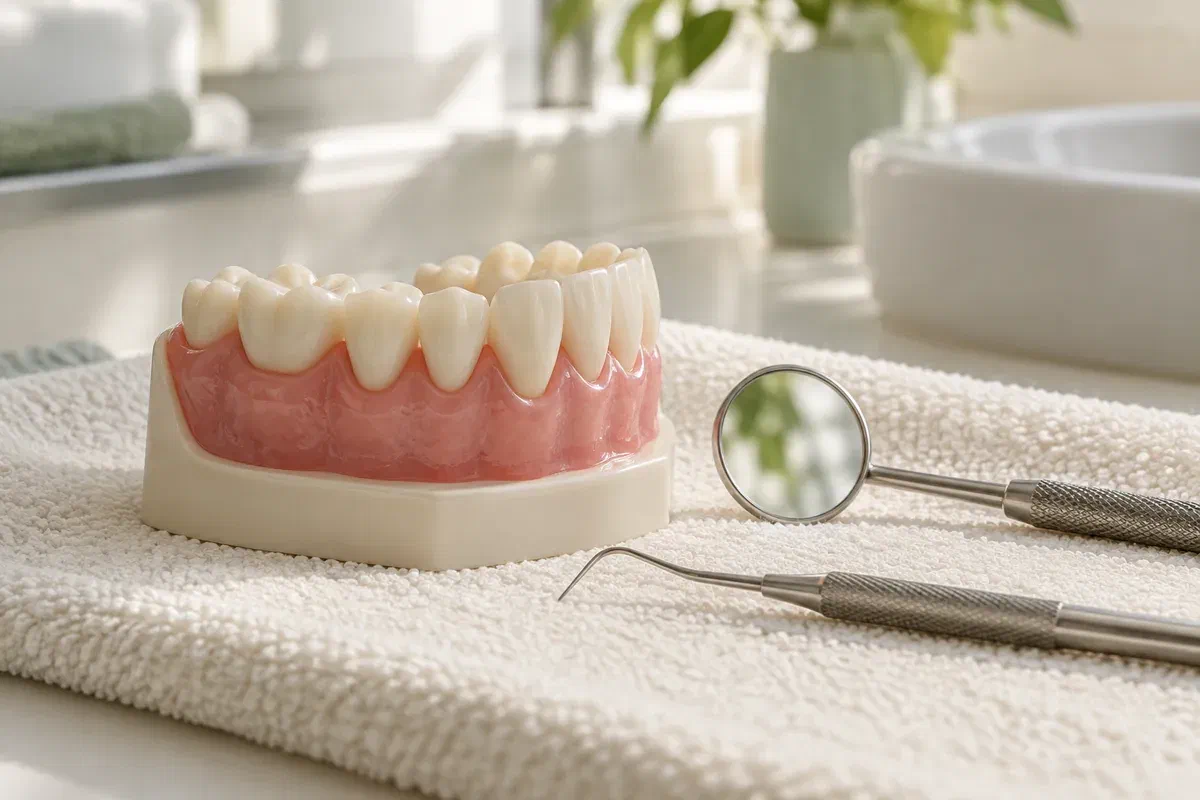
Illustrative tooth-and-gum model beside a periodontal probe and dental mirror
What brings people in

Small changes at the gumline are worth mentioning.

You do not need to name the problem before you arrive. Describe what you have seen or felt, and if someone has already told you that you need a deep cleaning or a specialist, bring that advice along so the team can look at what sits behind it.

Gums that bleed, pull back, or look different

Show the clinician the spot and say how long it has been happening, whether it comes and goes, or whether it has been there for years. Food catching, tenderness, or a corner your brush never quite reaches are all worth sharing. What you see on the surface is then compared with what the examination finds below it.

A tooth that moves or bites strangely

Describe the feeling and when you notice it, such as while chewing something firm. Please avoid testing the tooth by pushing it with your tongue or finger. The clinician looks at the tooth together with the bone and gum supporting it, and can tell you if more than one cause may be involved.

Health history that deserves a second look

Let the team know about earlier gum treatment, smoking or vaping, diabetes, new prescriptions, or other changes in your health. Older dental records help too. These factors shape the plan, yet on their own they cannot show how much disease is present; only an examination of your mouth can do that.

If you have a painful swelling on the gum, pus, or symptoms that are changing quickly, say so when you call. That may need an infection visit first, before any longer conversation about gum health.

What you can learn

A clear picture now, so treatment choices make sense later.

A periodontal chart can look like a page of random digits. Ask which readings are important and how they relate to each other. Pocket depth, bleeding points, recession, and the amount of supporting bone all add something, and no single figure tells the whole story of your mouth.

Today's findings also become a baseline. You can ask what is certain now and what needs a second measurement or older records to judge. Having that starting point lets the team talk about how you respond to care later, without pretending that one visit can forecast how every site will behave.

Patient information: American Academy of Periodontology — the components of a comprehensive periodontal evaluation

Knowing the condition, not just the sign

Bleeding gums are something you notice. Gingivitis and periodontitis are diagnoses reached through the assessment. Ask which one applies to you, and whether it involves a few teeth or many. That difference often explains why the proposed care is not the same as a routine cleaning.

A purpose behind every test

When X-rays or extra measurements are suggested, it is fair to ask what each one will tell the clinician. Recent records from another office can sometimes be used. Each step should connect to the question being answered, rather than arrive as a bundle you are expected to accept.

A sequence you can follow

Ask which visits are meant to treat active disease and which are meant to keep watch afterwards. Talk through the number of appointments, the fees, and whether a referral might come up. Seeing the order makes the difference between treatment and maintenance much easier to grasp.

Inside the appointment

Four parts, one explanation.

How much is covered depends on why you came and what records already exist. If you feel nervous or a spot is sore, tell the clinician at the start and agree on a simple signal for when you need a break.

  1. Talk through what has changed

    You describe bleeding, shifting gums, chewing changes, or a tooth that feels less steady. The conversation covers past gum care, how you clean at home, your medical history, and current medicines. If another provider made a recommendation, bring the report so today's visit can respond to it directly.

  2. Measure and look closely

    The gums are examined and a slim periodontal probe is used to check the small spaces around each tooth. Bleeding, recession, and other signs help make sense of those readings. Point out any sensitive area beforehand, and ask what is happening if the process is new to you.

  3. Check the support below the gums

    Where they are justified, images help show the bone holding your teeth and any other concern. The clinician reads them together with the examination and your history. You can ask which findings are confirmed and whether more records, tests, or a specialist's view would help.

  4. Agree on what comes first

    You go over the areas that need care, what the suggested treatment is trying to achieve, and how progress will be checked. Ask about alternatives and the effect of waiting. Before leaving, confirm what your next appointment is for, so assessment, treatment, and maintenance stay separate in your mind.

Between visits

Make the findings part of your everyday routine.

Often the assessment is where care starts rather than where it ends. Stick with the steps you agreed on, and check with the team before changing a routine they set out or deciding a follow-up is not needed.

Aim your cleaning at the problem areas

Ask which brushes, floss, or interdental cleaners suit the sites that were flagged. If a back corner is hard to reach, ask to be shown how. Mention anything that gets in the way, such as sore hands, tight contacts, or bridgework, so the advice fits the mouth you actually clean each night.

Know what each upcoming visit is for

One visit may deliver treatment, another may re-measure, and a later one may simply maintain progress. Those are different jobs. With school runs and work shifts to juggle in Milton, raise scheduling or cost concerns early, and ask the team to explain which steps matter most.

Speak up when something changes

Call if swelling appears, discomfort grows, or a tooth starts to feel looser, instead of waiting quietly for your next booking. A new medicine or medical diagnosis is worth reporting too. Fresh information can change the context of the original findings, and the plan may need adjusting.

After the findings

Prevention, treatment, or a specialist: the evidence decides.

Ask what the recommendation is based on and how you will both know it has worked. The right path depends on the diagnosis, which sites are affected, how much support remains, your risk factors, and what care you have had before.

When the findings point to a lighter approach

Prevention and control of gum inflammation

A professional cleaning and home-care advice tailored to you may be suggested where suitable. Ask which areas to focus on and when the response will be checked. Even a preventive plan needs a clear aim; it should never mean brushing past symptoms simply because they feel minor.

When periodontitis is present and needs care

Periodontal treatment, then a re-check

Treatment may be aimed at the affected sites, followed by a visit to see how the tissues have healed and what remains. Ask what each stage includes and how your maintenance schedule will be set. The first treatment appointment is not always the last.

When the situation is complex or still unclear

A periodontist's opinion or shared care

A periodontist can help with advanced, complicated, or stubborn problems. Ask what the referral should answer and which records will be sent. Find out how your regular dental care and the specialist's advice will fit together, so everyone knows who handles each part of the follow-up.

Questions from the chair

Common questions about gum checks

Good questions link the readings to a diagnosis and then to a plan. If earlier reports exist, bring them so you can see how new advice compares with what you were told before.

(905) 876-4488
What do the numbers called out during gum charting actually measure?
They describe how far the probe gently slides into the space between gum and tooth at several points around each tooth, in millimetres. Lower readings are generally healthier, but the clinician reads them together with bleeding, recession, and images. Ask to see which readings concern them.
My gums bleed a little when I floss. Should I stop flossing?
Not without advice. Bleeding is a sign worth assessing rather than a reason to avoid the area. An examination can show whether inflammation is present and how your technique or tools might change. Mention how long the bleeding has been happening and where it occurs.
How is gingivitis different from periodontitis?
Gingivitis is inflammation of the gums without loss of the supporting attachment and bone. Periodontitis involves loss of that support. The assessment helps tell them apart, which matters because the recommended care and follow-up usually differ between the two.
If nothing hurts, is a gum assessment still worth booking?
It can be. Gum problems often develop without pain, so comfort is not a reliable guide. The examination may find changes you had no way of noticing and clarify whether treatment or simple monitoring makes sense for you.
Does an assessment always mean I will need new X-rays?
No. Images are chosen for the specific question, your history, and what records are already available. Tell the team about any recent X-rays from another office, and ask why further views would or would not help.
Will treatment happen on the same day as the assessment?
Sometimes part of it can, but that is worth confirming in advance. The assessment sets out the findings and plan, while treatment deals with the diagnosed problem. Ask what your booking covers and what further appointments may be needed.
Book in Milton

Find out where your gums stand.

Call or book online with our Bronte Street practice to arrange a look at your gums and the support around your teeth. Bring past periodontal charts or advice if you have them, plus the questions you most want answered.

The scope of the assessment, any imaging, treatment, maintenance timing, and referrals are decided individually, based on what is found and how you respond to care.

Visit Milton Dental Clinic
Unit 1, 342 Bronte St. S, Milton, ON L9T 5B7
Get directions Clinic hours
Monday–Thursday
11am–7pm
Friday–Sunday
By appointment only

Areas we serve

  • Milton
  • Oakville
  • Mississauga
  • Georgetown
  • Halton Hills
  • Acton
  • Campbellville
  • Brampton
  • Burlington
  • Puslinch
  • Rockwood
  • Erin
  • Caledon
  • Etobicoke
  • Old Milton
  • Bronte Meadows
  • Timberlea
  • Dorset Park
  • Dempsey
  • Clarke
  • Beaty
  • Coates
  • Harrison
  • Scott
  • Willmott
  • Ford
  • Bowes
  • Cobden
  • Walker
  • Mountain View
  • Milton Heights
  • Hawthorne Village
  • Valley View
  • Fallingbrook
  • Nassagaweya
  • Trafalgar
  • Esquesing
  • Nelson
  • Brookville
  • Moffat
  • Glen Williams
  • Norval
  • Limehouse
  • Stewarttown
  • Ashgrove
  • Hornby
  • Silver Creek
  • Speyside
  • Scotch Block
  • North Oakville
  • River Oaks
  • Glen Abbey
  • West Oak Trails
  • Palermo
  • Bronte Creek
  • College Park
  • Joshua Creek
  • Uptown Core
  • Preserve
  • Iroquois Ridge
  • Lisgar
  • Meadowvale
  • Meadowvale Village
  • Churchill Meadows
  • Erin Mills
  • Central Erin Mills
  • Streetsville
  • East Credit
  • Creditview
  • Heartland
  • Sheridan
  • Mount Pleasant
  • Credit Valley
  • Huttonville
  • Churchville
  • Springbrook
  • Northwest Brampton
  • Bram West
  • Fletcher's Meadow
  • Fletcher's Creek South
  • Alton Village
  • Orchard
  • Millcroft
  • Headon Forest
  • Tansley
  • Brant Hills
  • Tyandaga
  • Kilbride
  • Lowville
  • Aberfoyle
  • Morriston
  • Arkell
  • Hillsburgh
  • Freelton
  • Carlisle
  • Waterdown
  • Flamborough
  • Mountsberg

How can we help?

Milton Dental Clinic

Have a question about your smile? Choose the option that works best for you.

For urgent dental concerns, please call.
Messages are reviewed during clinic hours.