

Illustrative patient discussing a gum-health assessment with a clinician
Specialized Care

Gum Disease Assessment in Mississauga

Watched a parent lose teeth to gum disease and wondered about your own? People from Mississauga can book a gum disease assessment at our Milton clinic to review inflammation, tooth support, personal risk factors, and whether treatment or regular monitoring makes sense.

Mississauga gum assessments

It runs in the family. Does it run in your mouth?

A relative who wore dentures early, or who talked about loose teeth for years, can leave you wondering what lies ahead. Family history is worth taking seriously, but it is only a clue. A gum disease assessment looks at your own gums and the structures that hold your teeth, bringing together history, examination, and images where needed to see what is actually there.

Often people book with no complaint at all. They simply want to know. Others have noticed bleeding, gums that seem to be shrinking, or a tooth that feels slightly different. Either way, the absence of pain says little about gum health, and a photo cannot replace a careful measurement.

From the western side of Mississauga, near Meadowvale or Churchill Meadows, or from farther east, the visit should leave you with something concrete. Ask how your findings compare with the risk you were worried about, what care is suggested, and how it will be reviewed. You deserve to understand the diagnosis and what comes next.

Arrange an assessment
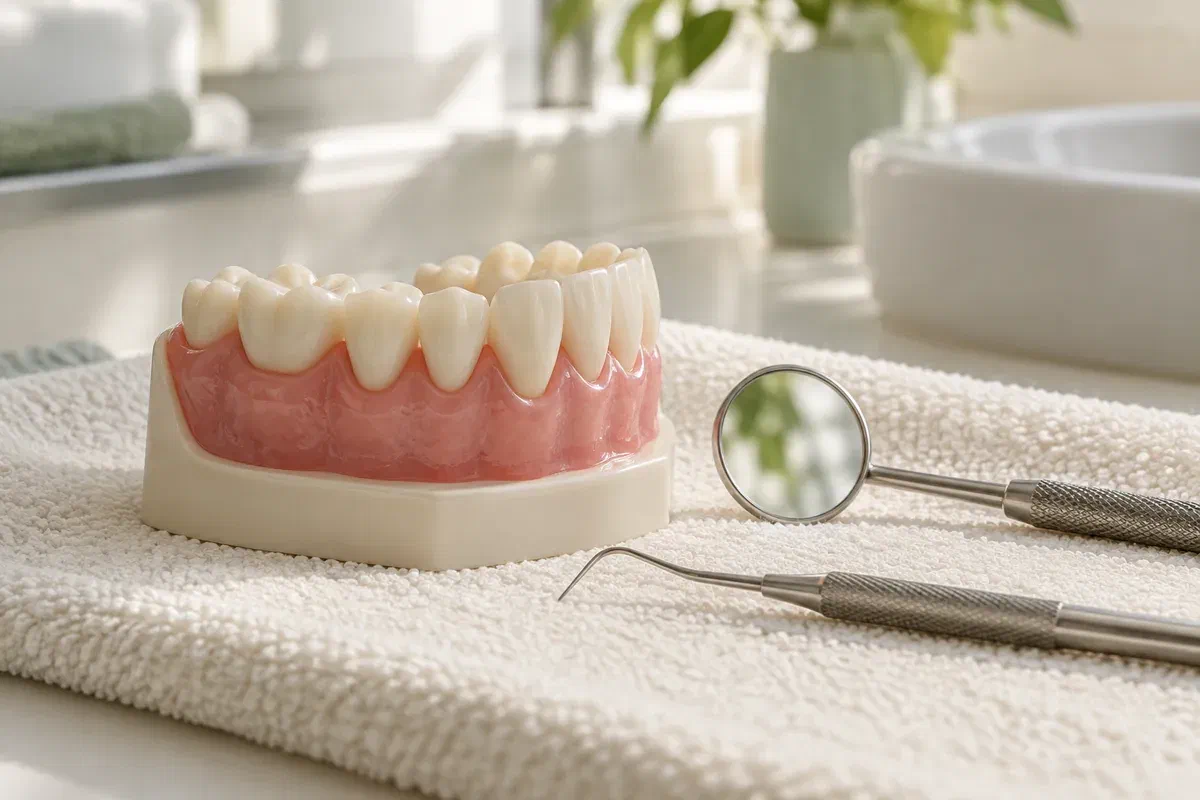
Illustrative tooth-and-gum model beside a periodontal probe and dental mirror
Things to share

Tell us about your mouth and about your family.

Describe what you have noticed, even if it seems minor, and mention relatives who had gum problems. If another clinician has recommended deep cleaning or a periodontist, bring that advice so the findings behind it can be reviewed.

Gum changes you have spotted

Bleeding, puffiness, receding edges, or a spot where food gets stuck are all useful. Say whether they are new or have been around a while. These observations focus the examination, which then shows how the visible change relates to the tissue and bone beneath.

A bite or tooth that feels different

If a tooth seems to have shifted or chewing feels uneven, describe when it happens. Avoid pressing on the tooth to test it. The clinician examines the tooth and its support together, and can explain whether one or several factors might be involved.

Family history and other risk factors

Relatives with early tooth loss, tobacco use, diabetes, certain medicines, and recent health changes are all relevant. Older dental records help too. Risk factors inform the plan, but they cannot tell anyone how much disease is present until your own mouth is assessed.

A painful swollen gum, pus, or rapidly worsening symptoms should be mentioned when you book. Infection may need urgent attention before any long-term gum health discussion.

Turning worry into information

Know your own baseline, not just your family's story.

Hearing that gum disease runs in families can make every bit of bleeding feel ominous. An assessment replaces that guesswork with findings. The clinician can explain how pocket depth, bleeding, recession, and bone levels fit together, and why no single figure should be treated as the verdict.

The visit also creates a reference point for the future. Ask what is clear today and what would need re-measuring or older records to judge. A documented baseline lets you and the team see later whether anything has changed, without assuming one visit can predict how each tooth will fare.

Patient information: American Academy of Periodontology — the components of a comprehensive periodontal evaluation

A diagnosis rather than a fear

Bleeding is a sign; gingivitis and periodontitis are conditions confirmed by assessment. Ask which, if either, applies and whether it is localized or widespread. That is a far more useful answer than a vague sense of being at risk.

Investigations with a stated purpose

If X-rays or further measurements are proposed, ask what each will show. Previous images may sometimes be requested from another office. The point of every test should be clear, rather than part of a routine package.

A plan that fits your level of risk

Ask which steps address current disease, which are for monitoring, and how often you should be seen. Clarify likely visits, fees, and any referral. Knowing the sequence helps you separate active treatment from the maintenance that may follow.

The visit, in order

A conversation, a measured exam, and a plan in plain words

What is included depends on your reasons for coming and the information already on file. If you feel anxious or have a tender area, mention it first and ask how to signal when you need to stop.

  1. Share your history and your family's

    Talk about bleeding, changes in gum level, chewing, or how secure your teeth feel, and about relatives' gum problems. The clinician reviews any earlier treatment, your home care, medical history, and medicines, plus reports from other providers.

  2. Examine and measure the gums

    The gums are checked visually and with a periodontal probe that measures the spaces around each tooth. Bleeding, recession, and other signs help interpret the numbers. Point out sensitive areas ahead of time, and ask what is happening if it is unfamiliar.

  3. Review bone support when images are justified

    Images can help show the bone that supports your teeth and other issues, where there is a clinical reason for them. They are read together with the examination and history. Ask which findings are firm and whether further assessment would help.

  4. Talk through the findings and priorities

    The clinician tells you whether your gums match the worry you came in with, which teeth if any need care, and how change will be tracked. Ask about alternatives, the risks of waiting, and how your family history factors in. Confirm what the next appointment is for before you go.

Living with the results

Small daily habits, guided by what was found

An assessment is frequently a starting point. Follow the agreed steps, and ask questions before changing a recommended routine or deciding you no longer need a follow-up.

Put extra care where it counts

Ask which cleaning tools suit the sites flagged during the exam, and request a demonstration if a spot is hard to reach. Mention hand discomfort, crowding, or dental work so the advice matches the routine you can realistically keep each day.

Understand what each appointment will do

Some visits treat, some re-measure, and some maintain. Knowing which is which helps you plan the trip from Mississauga around work and family. If the schedule or the cost is difficult, raise it early and ask which steps are the highest priority.

Keep the team informed

Fresh swelling, a growing ache, or a tooth with new movement is a reason to call rather than wait. Let the team know about new medicines or health diagnoses as well. Updated information can change how the original findings should be understood.

What follows the assessment

Where the findings point, the plan follows.

Ask what evidence supports the suggested approach and how its success will be judged. The right option depends on the diagnosis, which sites are involved, tooth support, your risk factors including family history, and previous care.

When the gums are healthy or only mildly inflamed

Preventive care and closer monitoring

Professional cleaning, tailored home-care advice, and an agreed review interval may be suggested. Ask which areas to watch and when you will be re-checked. A preventive plan still needs a clear aim; it should not mean brushing off mild symptoms.

When periodontitis is confirmed

Periodontal treatment, then re-evaluation

Cleaning below the gumline at the involved teeth may be advised, and a later appointment then shows how the tissue has responded. Find out how many stages there are and how the maintenance schedule will be chosen. A single treatment visit does not always finish the course.

When advanced or unusual findings need a specialist view

Referral to a periodontist

A periodontist may assess advanced, complex, or persistent concerns. Ask what the referral is meant to answer and which records will be sent. Clarify how your regular dentist and the specialist will coordinate, so everyone knows who is following up.

Family history questions

When gum disease has touched your family

The most helpful questions link your findings to a diagnosis and a plan. If relatives or earlier dentists have given you information, bring it so it can be put in context.

(905) 876-4488
If my parents had gum disease, will I definitely get it too?
Not definitely. Family history can be one risk factor among several, but it does not decide the outcome. An assessment shows what is happening in your own mouth now, and the clinician can explain how your history and habits fit into the plan.
Should I book a gum assessment even though nothing feels wrong?
It can be worthwhile. Gum disease frequently causes little or no discomfort in its earlier stages. An examination can find changes you would not notice yourself and clarify whether monitoring or treatment is the better approach for you.
At what age should someone start paying attention to gum health?
Gum health matters at every age, and regular dental check-ups usually include some assessment of the gums. If you have risk factors or symptoms, ask whether a more detailed periodontal evaluation would be useful now.
Does probing the gums hurt?
Most people feel pressure rather than pain, though inflamed areas can be tender. Tell the clinician beforehand about sensitive spots, and agree on a signal to pause. Your comfort can be discussed before and during the examination.
Is a single deep reading proof that the disease is advanced?
No. One measurement is interpreted alongside other findings at that site, images, and the pattern across your mouth. Ask whether the concern is local or general and what supports the clinician’s view.
What should I ask if I am referred to a periodontist?
Ask which findings led to the referral, what the specialist is being asked to assess, and whether anything should be done in the meantime. Confirm which records will be shared and how the specialist’s advice will return to your regular dental team.
From Mississauga

Swap the uncertainty for a clear gum-health picture.

Contact our Bronte Street practice and say that family history is part of the reason you are booking. Bring any earlier periodontal records or advice, a note of relatives' gum history if you know it, and your questions.

The scope of the assessment, imaging, treatment, maintenance intervals, and referral are decided individually and guided by findings and response to care.

Visit Milton Dental Clinic
Unit 1, 342 Bronte St. S, Milton, ON L9T 5B7
Get directions Clinic hours
Monday–Thursday
11am–7pm
Friday–Sunday
By appointment only

Areas we serve

  • Milton
  • Oakville
  • Mississauga
  • Georgetown
  • Halton Hills
  • Acton
  • Campbellville
  • Brampton
  • Burlington
  • Puslinch
  • Rockwood
  • Erin
  • Caledon
  • Etobicoke
  • Old Milton
  • Bronte Meadows
  • Timberlea
  • Dorset Park
  • Dempsey
  • Clarke
  • Beaty
  • Coates
  • Harrison
  • Scott
  • Willmott
  • Ford
  • Bowes
  • Cobden
  • Walker
  • Mountain View
  • Milton Heights
  • Hawthorne Village
  • Valley View
  • Fallingbrook
  • Nassagaweya
  • Trafalgar
  • Esquesing
  • Nelson
  • Brookville
  • Moffat
  • Glen Williams
  • Norval
  • Limehouse
  • Stewarttown
  • Ashgrove
  • Hornby
  • Silver Creek
  • Speyside
  • Scotch Block
  • North Oakville
  • River Oaks
  • Glen Abbey
  • West Oak Trails
  • Palermo
  • Bronte Creek
  • College Park
  • Joshua Creek
  • Uptown Core
  • Preserve
  • Iroquois Ridge
  • Lisgar
  • Meadowvale
  • Meadowvale Village
  • Churchill Meadows
  • Erin Mills
  • Central Erin Mills
  • Streetsville
  • East Credit
  • Creditview
  • Heartland
  • Sheridan
  • Mount Pleasant
  • Credit Valley
  • Huttonville
  • Churchville
  • Springbrook
  • Northwest Brampton
  • Bram West
  • Fletcher's Meadow
  • Fletcher's Creek South
  • Alton Village
  • Orchard
  • Millcroft
  • Headon Forest
  • Tansley
  • Brant Hills
  • Tyandaga
  • Kilbride
  • Lowville
  • Aberfoyle
  • Morriston
  • Arkell
  • Hillsburgh
  • Freelton
  • Carlisle
  • Waterdown
  • Flamborough
  • Mountsberg

How can we help?

Milton Dental Clinic

Have a question about your smile? Choose the option that works best for you.

For urgent dental concerns, please call.
Messages are reviewed during clinic hours.